| @C |
0° - 100°
|
CD |
Portugese duo consisting of MIGUEL CARVALHAIS & PEDRO TUDELA with one long electroacoustic composition, lim. 500
|
2010 |
€12.50 |

|
| AHTI, MARJA |
Still Lives
|
LP |
the promising female Finnish sound artist with her third LP of "liminal", very focused experimental collages and ambience, pieces like vanitas paintings or shrines... - "AHTI forges vivid electroacoustic environments from field recordings, analog synthesizers, acoustic feedback, magnetic tape and digital processing, resulting in a set of articulate, prickly, and surprising compositions." - ed. of 300 copies
|
2021 |
€20.00 |
|
| ALE HOP |
The Life of Insects
|
LP |
behind ALE HOP we find a female experimental composer from Peru (living in Berlin) who also released on KARLrecords recently => influenced by the physical presence of various types of insects in her home studio, she began composing these vital seven tracks with elements of electroacoustic and electronica, using (distorted) guitar sounds and sampling techniques... truly avantgardish and unexpected (song?) structures appear, a psychedelic experience.. lim. 300
|
2020 |
€21.50 |
|
| ALIZADEH, SABA |
I may never see you again
|
LP |
after the tremendous success of his debut LP on KarlRecords this 2nd album by the Kamancheh (an ancient Persian violin) master is released by a new Hamburg-based label dedicated to Iranian artists: "Influenced by Iranian harmonics, musique concrète and sophisticated, forward-looking beat science, Saba Alizadeh's "I May Never See You Again" represent an incredibly exciting act of mutual inspiration - when Iranian scales and Western electroacoustic understanding powerfully unite."
|
2021 |
€24.50 |
|
| ARTIFICIAL MEMORY TRACE / GERALD FIEBIG / EMERGE / PBK |
Fiction Circuit
|
LP |
four experimental collaborations on this colourful designed LP, feat. re-workings of A.M.T. and PBK basic materials... "one will experience, thoroughout the whole album, a change between very different sonic textures and temperaments that showcase the wide range of expressive possibilities of electroacoustic music. This is not the product of good luck, but of planned collective composition.." lim. 300 copies on green-marbled vinyl, hand-numbered and with download code
|
2019 |
€18.00 |
|
| B°TONG (B*TONG / B-TONG/ BTONG) |
Un_b°tong
|
mCDR-box |
6 short pieces (rather studies) of extreme manipulation from unmusical sounds, mainly human voices -> like a daring from of audio poetry mixed with electroacoustic detailness, this presents new surrealistic paths for the great Swiss artist! Comes in mini DVD box on the excellent ATTENUATION CIRCUIT label from Augsburg, Germany
|
2011 |
€6.50 |
|
| BARRETT, NATASHA |
Reconfiguring the Landscape
|
CD |
the result of an research project "how 3-D electroacoustic composition and sound-art can evoke and provoke a new awareness of our outdoor sound environment." -
|
2023 |
€17.50 |
|
| BROWN, HANNIS |
Severe Insomnia
|
CD |
second album by this experimental composer from New York beyond categorization, ranging from electroacoustic arrangements to orchestral & instrumental surrprises.. lim. 500
|
2011 |
€13.00 |
|
| CHAUVEAU, SYLVAIN |
S.
|
10inch |
Five pieces composed for a dance theatre by the prolific composer from France, very reduced minimal electroacoustics with a focus on guitar sounds and sublime micropatterns,..- * Since his 2000 debut Le Livre Noir Du Capitalisme, Chauveau has been a pioneering figure in the world of modern classical/electronic music. This status has seen him inhabit the same creative space as Max Richter, Jóhann Jóhannsson and Ryan Teague... * - lim. 500 copies, last copies found!
|
2007 |
€12.50 |
|
| CHESSEX, ANTOINE |
Subjectivation
|
LP |
impressive solo LP by the radical Swiss sax-player and sound artist, based on live-material recorded 2010-2015, with two very different approaches to sounds and textures on each side; "...a formidable tour-de-force, a developing field of distortion in which tenor saxophone adds on a metal-tinged sludgy tonality, wedged through dense masses of sound.... a rapid-fire of voices from the horn that gets enveloped in a back-and-forth between electroacoustic structures, psychoacoustics, and pure tone." lim.323
|
2019 |
€17.00 |
|
| COULOMBE SAINT-MARCOUX, MICHELINE |
Impulsion
|
CD |
five pieces from this Canadian electroacoustic pioneer, created 1970-1982 !
|
2001 |
€12.00 |
|
| DRUMM, KEVIN |
Inexplicable Hours
|
do-LP & CD |
good times for KEVIN DRUMM fans. after the massive "Elapsed Time" CD-box here are seven new long pieces, spread on two LPs, wonderfully designed; "Unusual electroacoustic experimentation, tense ambient, airy drone made with audio generators, field recordings and various electronic devices" - "These pieces, despiste their lenght, are like perfect miniatures, timeless puzzles that you try and unravel through close listening." [The Wire] 6 panel double gatefold, + CD version, lim. 700
|
2018 |
€27.00 |
|
| DRYGIANAKIS, COSTIS |
Άδηλα Καί Κρύφια (Adila & Kryfia)
|
CD |
new album by this long active Greek composer of sound art and electroacoustic music (who started one of the earliest experimental bands in Greece in the 80's), interesting collages made of many different sources, field recordings, found sounds, etc.. ... lim. 200 numbered ed., comes with 10 page booklet in Greek and English
|
2015 |
€13.00 |
|
| ELECTRIC URANUS / X-NAVI:ET |
Voices of the Cosmos II
|
CD |
second album of the new project from Poland formed by RAFAL IWANSKI (HATI) and WOJCIECH ZIEBA (aka INFAMIS), dedicated to combine real exterrestrial 'space' sounds (radio telescope) and electroacoustic experimentation - this time focused on radio signals related to sun activities; much of the material has been recorded at a Planetarium in Grudziadz => the perfect soundtrack to Aurora Borealis phenomena !!
|
2013 |
€12.00 |
|
| ELEH |
Radiant Intervals I
|
LP |
re-mastered re-issue of the deleted LP from 2010 by this US project dedicated to the exploration of the "analog synthesis".... "Eleh create highly minimal and deeply personal/spiritual pure analog electroacoustic music with emphasis on tonal juxtapositions, harmonic intervals, bass tones and various acoustic phenomenon. Eleh's work emphasizes the physical presence of sound as it has been inspired by the physical world."
|
2016 |
€26.00 |
|
| ELOY, JEAN-CLAUDE |
Butsumyôe / Sappho Hiketis (Chants pour l'autre Moitié du Ciel Part I & II)
|
CD+BOOK |
book (188 pages! english edition) around the 5 piece cycle "Songs for the other Half of the Sky" (1989) + the CD contains the first two works of this cycle for voice, percussions & electroacoustics, BUTSUMYOE & SAPPHO HIKETIS, performed at a festival 1994 in Warsaw, using ancient Japanese recitations... strong works merging the Eastern (purely acoustic) and Western (electro-acoustic) traditions... first world publication!
|
2012 |
€22.50 |
|
| EMERGE |
Reeligible Redye
|
mCD-R |
finally a new release by this Drone Records-artist (DR-64) from Augsburg, Germany; dark & deep 'electroacoustic drone-ambience', fantastic sounds & atmosphere on this one-tracker (20+ min.); comes in hand-assembled clear blue 5" cases
|
2009 |
€6.00 |
|
| ENSTRÖM, ROLF |
TNT
|
LP |
three challenging & ultra dynamic electroacoustic pieces by this Swedish composer: SEKVENS I BLATT (1978), DAGBROTT (1983), and the 3 x 7min parts of TNT on side B (1985) that can be played simultaneously - the three pieces are cut parallel next to each other, not sequentially !! Last NEW copies of this classic in stock !!
|
1986 |
€18.00 |
|
| FERRARI, BRUNHILD |
Exterieur-Jour
|
LP |
two unreleased pieces, "Movies for the Ears" with cinematic qualities, electroacoustic compositions with a great share of environmental field recording sources...
- "It comes across as a meditation on the loss and reappearance of memory and silence." - on C. HEEMANN's label
|
2024 |
€33.00 |
|
| GRUBBS, DAVID & TAKU UNAMI |
Comet Meta
|
LP |
2nd fruitful collab album by the GASTR DEL SOL & BASTRO legend, with Japanese sound artist TAKU UNAMI... "GRUBBS and UNAMI are fully in third-mind territory after their touted 2018 debut, 'Failed Celestial Creatures'. From pindrop twin-guitar focus to Grubbs’s piano maneuvering in Unami’s electroacoustic forcefields, to unclassifiable throbs, ceiling fans, and the exultation of the crowd at the NYC marathon, Comet Meta casts a gorgeous avant spell."
|
2020 |
€25.00 |
|
| GUIONNET, JEAN-LUC |
Tournures Cessent / Tournures Cessent Orchestrales
|
CD |
amazing work by the composer from Lyon, forming a kind of "Sonic BOLI" (= a fetish object of Indigenous People in Mali, it can be an animal, human placenta or any other material), filled with memories from a full year in a non-hierarchical way to create this way extraordinary capabilities..=> two versions of the piece: 1. electroacoustic studio version commissioned for INA-GRM / 2. a version for orchestra (ONCEIM & MOTUS) - this music speaks with a very own language... comes w. 24 p. booklet
|
2025 |
€13.00 |
|
| KASSEL JAEGER |
Shifted in Dreams
|
LP |
complex electroacoustic drones forming an intermediate state, \"when the reality of signs looses its consistency\", based on various sources (ARP 2500 synth, organ, gutars, the slamming of windows, etc.) - * Shifted in Dreams explores a wide range of instruments and techniques, going seamlessly from instrumental improvisation to field recording, via micro-editing and the use of asynchronous loops..* - masterful atmospheric and captivating again !
|
2023 |
€27.50 |
|
| LEJEUNE, JACQUES |
Early Works 1969-1970
|
LP |
three of the earliest compositions by the influential French musique concrete composer, one piece is previously unpublished on vinyl: "D'une Multitude En Fete" (1969), "Geodes" (1970, concert version), and the incredible "Petite Suite" collage reminding on the weirder NURSE WITH WOUND pieces (1970)! [all of this material has NOT been included on the recent 'Parages and other Electroacoustic Works' 3 CD]
|
2015 |
€26.50 |
|
| MAROS, MIKLOS |
Maros at EMS. 1970-1979
|
CD |
eight electroacoustic compositions realized at the EMS (Stockholm Electronic Music Studio) from 1970-1979 by this Hungarian-Swedish pioneer; evocative stuff combining weird analog electronic sounds & instruments, drones and vocal work...sounds still fresh & unusual, to discover
|
2012 |
€13.00 |
|
| MNEM |
Engrama
|
LP |
re-release of the early 10" from 2000 plus one long (13+ min) unreleased track.. "Undoubtedly calmer than the 'Golyma' LP yet still intensive experimental industrial with post-electroacoustic undertones. Organically flowing drones and hypnotic, grinding loop sounds of vintage analog sound processing via old reel-to-reel tape recorders and treatments.."lim. 270, black sleeves with cut n'pasted front and back covers; BACK IN STOCK
|
2007 |
€15.00 |
|
| NORDHEIM, ARNE |
Electric
|
do-LP |
re-stored / re-mastered (by HELGE STEN aka DEATHPROD, from the original analogue tapes) new collection of all five ELECTRONIC pieces by the influential Norwegian composer, originally recorded 1968-1970; gatefold cover, new liner notes, lim. 500 "NORDSHEIM's electroacoustic music is distinguished by the use of human voice, ring modulation and a fondness for bell timbres" [Joran Rudi]
|
2017 |
€45.00 |
|
| NOVA, JACQUELINE |
Creacion de la Tierra - Ecos palpitantes de Jacqueline Nova: Musica electroacustica e instrumental (1964-1974)
|
do-LP |
the very first collection of the most important electronic and radical instrumental / vocal works by this Colombian composer, created 1964-1974; very challenging material all around.. - "astounding acoustic, electroacoustic, and electronic works that entirely upend the Eurocentric historic experimental music...the album doubles as a crucial illumination of the feminist and queer struggle for liberation through sound in Latin America during this period" (Soundohm) - lim. 300 with extensive 12" x 12" booklet
|
2022 |
€34.00 |
|
| NU & APA NEAGRA |
Descantecul Apei negre
|
CD |
third album by this interesting Romanian band combining Turkish & Romanian folklore with "electroacoustic madness" for spaced out psychedelia mind trips ! Experimental, dark droney, weird ! The album title translates as "Black Water Incantation"
|
2012 |
€13.00 |
|
| RLW |
 Fading Pictures Fading Pictures
|
CD |
newest album by RLW who moves into very strong electroacoustic realms with eerie, powerful soundwalls and his hallmark of surprising sounds and changes with great dynamics.. - *His music is impossible to pigeonhole into one simple bracket. It is neither industrial or musique concrete, nor computer music nor improvisation.* - really challenging + disturbing stuff on 9 tracks, out on BLACK ROSE, the UK label from STEPHEN MEIXNER / CONTRASTATE !!
|
2025 |
€13.00 |
|
| SHEFFIELD, COLIN ANDREW |
Images
|
LP |
sister release to the "Don't Ever Let Me Know" LP on Auf Abwegen, all tracks were entirely made out of heavly edited samples from Jazz records, with astonishing, versatile results on 8 tracks, best ambient / experimental "Plunderphonics" you can imagine! - *These eight electroacoustic mosaics range in style from lush ambient loops to jarring tones like the wails of the damned... These song-length explorations are detailed, atmospheric, and surprising.* - lim. 200 black vinyl
|
2023 |
€20.00 |
|
| SHENTOV, IVAN / ANGEL SIMITCHIEV / MARTIN LUKANOV |
Palimpsest
|
MC |
four long-form drone ambient pieces based on several live & studio sessions by these three Bulgarian artists (also known with their projects KRALLAR, MYTRIP, MOTHER SPIT) => "delicate traces of raw ambient, found sounds and field recordings, processed guitar and electroacoustic improvisation." - Limited cassette release, prof. design, 66 copies
|
2022 |
€8.00 |
|
| TANKRED, KENT |
There is Nothing to Attain
|
do-CD |
ten years after the original release (same title) a full reworking by the Swedish master of 'massive electroacoustic dronescapes' => different from the source material these are often shorter and more noisy / attacking pieces, like wild droning and jerking (sound) machines, liberated from any human input, but there are also more silent tracks.. - "The music is naked, or rather unclothed, inhuman, at the first encounter reminding you of everything you would prefer to avoid." - ed. of 200 copies
|
2021 |
€17.50 |
|
| TREMBLAY, PIERRE-ALEXANDRE |
Alter ego
|
DVD-A |
first album of works from this Canadian composer now teaching Electroacoustic Composition at the University of Birmingham (UK)
|
2006 |
€12.00 |
|
| V.A. (VARIOUS ARTISTS) (COMPILATIONS) |
Six Winners: The Stockholm Electronic Arts Award 1991-1996
|
CD |
outstanding electroacoustic compositions from: RAY GUILETTE, MARK WINGATE, AKE PARMERUD, GILLES GOBEIL, MATHEW ADKINS, JOHN YOUNG - these were the winners of the "Stockholm Electronic Arts Award" from 1991-1996; complex & dynamic NEW music to discover !! Comes with booklet.
|
1999 |
€15.00 |
|
|
5 Composers - 3rd Hearing
|
CD |
ROLF ENSTRÖM, LARS LARSSON, ERIK PETERS, CRISTIAN MARINA, PATRIK THORELL - the third CD compilation on FYLKINGEN with exciting new electroacoustic music from Sweden
|
1995 |
€12.50 |
|
|
5 Composers - Second Coming
|
CD |
the oldest available FYLKINGEN CD at this time, presenting Swedish electroacoustic music: ANDERS BLOMQVIST, JONAS BROBERG, AKEMI ISHIJIMA, TAMAS UNGVARY, AKOS ROZMANN; "expressive, dramatic, monumental and humoristic music gives the CD features of a journey within different landscapes of sound"
|
1994 |
€12.50 |
|
| |
DRONE-MIND // MIND-DRONE Vol. 9
|
LP |
OUT NOW, the new DRONE MIND chapter, "drones of the world / for your mind"!! => DAINA DIEVA (deep emotional drone-poesis from Lithuania) - LIVING TEMPLES (shamanic tunes made in connection wtih the Curonian landscape) - ADRIANO ZANNI (spatial electroacoustic drones derived from field recordings + electronics. Italy) - ARE MUNDAL (surrealistic, phantasmagoric drones from Norway). lim. 400 copies, three-colour "Green Leaves" vinyl
|
2024 |
€18.00 |
|
| XENAKIS, IANNIS |
Persepolis
|
LP |
the Non Plus Ultra version of XENAKIS famous piece which was premiered in 1971 in Iran, comissioned by the Persian Shah (!) => XENAKIS longest electroacoustic composition (54 min) was now re-mastered by MARTIN WURMNEST (ZEITKRATZER) from the original 8 track tapes, and cut by RASHAD BECKER; comes with inlay & liner notes by REINHOLD FRIEDL; first vinyl re-issue since the 70's !!
|
2018 |
€18.00 |
|
|
Diamorphoses / Concret PH / Orient Occident / Bohor
|
LP |
a collection of XENAKIS early electroacoustic (master-)pieces (1957-1962) , incl. Diamorphoses, his one and only "Musique Concrete" tape piece made out of many self recorded sound snippets... plus: the famous "Concret PH" (1958), "Orient Occident" (1960), "Bohor" (1962)...
|
2022 |
€20.00 |
|
| |
Taurhiphanie
|
LP |
this LP concentrates on XENAKIS late electroacoustic works that became purely electronic, four strangely spiralling and staggering electronic pieces (1987-1997), "explicit computermusic'" hardly to compare with anything else: with the UPIC machines drawings are transfered directly into sounds & noises, on the last two electronic pieces he created random-based digital samples which were running through a "composing machine"...
|
2022 |
€20.00 |
|
| 3/4HADBEENELIMINATED |
Speak to me
|
LP |
"Black Truffle present Speak To Me, the sixth full-length release from 3/4HadBeenEliminated, the Italian trio of Stefano Pilia, Claudio Rocchetti and Valerio Tricoli. Based on source material recorded in Bologna and Berlin over the course of several years, the album is made up of two side-long pieces meticulously constructed in post-production by Tricoli in his singularly dense and unpredictable style. Although their live performances have always been entirely improvised, in their recorded work the group focuses on using improvised recordings as source material for compositions built up through layering, editing and analog manipulation, extending the practices of Teo Macero, Faust and This Heat. Melancholic instrumental ruminations sit alongside cracked electronics, concrete sounds and Tricoli's whispered vocals, drawn together into dense assemblages animated by gradual transformations and sudden jump cuts. Beginning from the abstractions of their self-titled debut release in 2004, the group embarked on a trajectory that saw them move toward near-song structures, Tricoli's voice becoming a dominant element amid an increasingly dense and layered production style. On Speak To Me, however, the listener feels confronted by the ghost of music, sonic memories echoing across a psychedelic expanse. Evacuated of any clear structure, the music becomes a reverb-saturated morass, from which crystalline details momentarily emerge: shimmering echoed guitar, bowed double bass, tactile hand percussion, skittering electronics. Suffused with a darkly pensive atmosphere, Speak To Me is an elegant summation of the distinctive blend of electroacoustic techniques, instrumental improvisation and contemporary psychedelia pioneered by 3/4HadBeenEliminated over the last decade. LP design by Stephen O'Malley with striking artwork by Stefano Pilia. Vinyl cut by Rashad Becker at Dubplates & Mastering, Berlin."
www.blacktrufflerecords.com
|
2016 |
€17.50 |
|
| 300 BASSES |
Sei Ritornelli
|
CD |
"Alfredo Costa Monteiro (accordion, objects), Jonas Kocher (accordion) and Luca Venitucci (accordion, objects). Recorded on november 23th-25th 2011 during a residency at l'Arc Romainmôtier, Switzerland. Mixed by Alfredo Costa Monteiro and mastered by Giuseppe Ielasi. Consisting of Alfredo Costa Monteiro, Jonas Kocher and Luca Venitucci, the trio 300 Basses transforms the conventional accordion approach, and enhances new practices leading to creative and innovative musical paths. 300 Basses states that accordion is ' a box with bellows and buttons. The box was for the resonance, the bellows for vibration and the buttons for building a sonic identity that has remained virtually frozen for centuries. But what would happen if the buttons began to vibrate, the bellows would resonate and the box should start to deconstruct this identity? ' Focusing on a collective sound approach, the three accordionists have a strong fascination for noisy static sounds, complex textures, and their powerful physicality. The trio was formed in 2010 and has performed concerts in Rome, Lyon, Geneva, Biel/Bienne, Lausanne, Zürich, Milano. �Alfredo Costa Monteiro. After having studied sculpture/installation with Christian Boltanski at Les Beaux-Arts in Paris, Alfredo Costa Monteiro moved to Barcelona in 1992 and became involved in improvised music, concentrating on electric guitar and accordion. His installations and sound pieces, all of a low-fi character, have in common an interest for unstable processes, raw materials and gestures, where the manipulation of objects as instruments or instruments as objects has a strong phenomenological aspect. Alfredo Costa Monteiro runs several ongoing projects: Cremaster (with Ferran Fages), i treni inerti (with Ruth Barberán), Atolón (with Ferran Fages and Ruth Barberán), and duos with Tim Olive or Pascal Battus. �Jonas Kocher. Accordion player and composer born in 1977, Jonas Kocher collaborates regularly in improvised and conceptual contexts with musicians such as Michel Doneda, Christian Wolfarth, Olivier Toulemonde, Duo Diatribes, Jacques Demierre, Burkhard Beins, Bertrand Gauguet, Thomas Lehn, Urs Leimgruber, Lee Patterson... Jonas Kocher's work explores the relationships between tone, noise and silence and the processus of listening. As a composer, he realises projects which are situated between composed theater, installation and concert pieces. Jonas Kocher is also involved as an organizer of different events in Switzerland and runs the label Flexion Records.�Luca Venitucci. Living in Rome, Luca Venitucci started from the end of the eighties to take part to the activities of the improvised music scene in Italy and Europe. During the next decade, he played with a large number of musicians, among which Mike Cooper, Peter Kowald, Otomo Yoshihide, Thomas Lehn, Axel Dorner, Tim Hodgkinson, John Butcher, Mario Schiano, Alessandro Bosetti, Michael Renkel... In 1995, with Fabrizio Spera, Elio Martusciello and Maurizio Martusciello, he co-founded Ossatura a major electroacoustical improvising group. From 1996 to 2002 he has been part of Zeitkratzer ensemble, with whom he did performed and recorded contemporary music partitures (Cage, Glass, Stockhausen, LaMonte Young, Tenney) and made original projects and collaborations with several experimental musicians and composer such as Butch Morris, Carsten Nicolai, Keith Rowe, Masami Akita, Mario Bertoncini, Phill Niblock, Radu Malfatti, Thierry Thaemelitz, Lee Ranaldo. In 2001 he realised together with Ulrich Krieger the transcription and arrangement of an ensemble version of Lou Reed's Metal Machine Music." [label info]
www.potlatch.fr
"A trio of accordion players from the world of improvised music - that's perhaps something new. For me it is. The unknown player here is Luca Venitucci, who was from 1996 to 2002 a member of Zeitkratzer, and before that a founding member of Ossatura. The other two players I think should be known if you read these pages every now and then. Alfredo Costa Monteiro and Jonas Kocher have regularly new releases. Maybe you think its cheating, but both Venitucci and Monteiro are also playing objects on their accordion, which seems to expand the sound quite considerably. If you think that this trio will focus on playing sustaining, lengthy pieces of drone music, then you are wrong. In 'Abbandonato' and 'Mala Carne' for instance they sound like an all acoustic noise ensemble, with lots of scratching, scraping and bending of the bellows. Its followed by 'Maledetto', in which the accordion sing like sine waves, carefully but also piercingly loud as the piece progresses. In 'Gira Bile' and 'Fantasma' they reach for a beautiful piece of drone music. Six pieces and almost as many approaches to the world of the accordion. Six pieces of a wonderful great, improvised music on a single instruments, times three." [FdW/Vital Weekly]
|
2012 |
€15.00 |
|
| ADLER, GUNTER |
Douches Dames
|
mCD-R |
"Jürgen Hall? Bei so einem musikalischen Namen hätte man sich doch nicht so nibelungendeutsch umtaufen müssen. Der mit dem Grönland Orchester (mit G. Reznicek) und Augsburger Tafelkonfekt (mit S. Reier) und Soloreleases auf Staubgold und Mik unter seinem Nom de plume bekannt gewordene Aachener, der nach seinem Studium in Hamburg hängen geblieben ist, steuert zur 1000füssler-Reihe drei überdurchschnittlich attraktive Tracks bei. Das 13-min. Titelstück entstand für eine Installation im Brüsseler Bains::Connective, das in den Räumlichkeiten eines einstigen Jugendstil-Damenbads untergebracht ist. Das hat Adler offenbar zu entsprechend spritzigen Sounds und zu Unterwasserklang angeregt, durchsetzt mit knackend rumorendem Klingklang, zunehmendem Stimmengewirr und Plantschgeräuschen und einer ganz feinen harmonischen Zierlinie, zu der punktuell heptatonische Skalen getupft werden. Das kurze ‚Scheppertones‘ danach meint eigentlich einen Tauchgang auf der Shepard-Tonleiter, jenem scheinbar unendlich absinkenden Glissando aus Sinuswellenfrequenzen, das auch schon Komponisten wie Tenney oder Risset reizte und das Adler mit furzelndem Geprassel durchsetzt. ‚Mousse-Touch‘ schließlich lautmalt einen nuanciert bebenden Fond, mal flirrend aufgehellt, mal wummernd abgesenkt und von Pfeiftönen durchschwirrt aus Zeiten, als Weltraumfahrer noch Nick oder Laika hießen." [Bad Alchemy]
"Douches Dames was part of an ancient indoor swimming pool in Forest/Brussels. Today this elegant Art Nouveau building hosts the eclectic art laboratory Bains::Connective. The music, originally intended as a sound installation, is an amalgam made of field recordings from inside the building, antique heptatonic scales and synthetically produced sounds spread out painstakingly in the first movement, infinitely transposed downwards in the second (Shepard Tones) and finally hidden inside a shady atmosphere in the third, where another stimulating motif is aperiodically interrupted by sudden violent curves. In addition Gunter Adler has compiled a jumbled array of electroacoustic samples forming a zigzagged rather than streamlined path through his archives. During the roaring times, after the melting of the polar caps had begun, visual artist Isabelle Rouquette showed works on this theme from a diversity of sources and engraved them into the trapezoidal patterned floor of the pool. On the day of the opening the interior was illuminated by flowing zebra skin light projections while the music was presented in a sort of live performance, a soundtrack accompanied by a sweeping improvisation on a synthesizer and twiddling with delay effects. It has an opulent and festive character and is at home in both ancient and modern contexts.
Douches Dames 12‘55
Scheppertones 3‘31
Mousse-Touch 5‘00
About the Artist:
Born and raised in Aachen, Germany. At the age of 17 he starts experimentating with synthetically produced sounds (Commodore 64, all data lost). Moves to Hamburg, Germany in order to study physics, philosophy, music theory. From 1992 to 96 works under the nome de plume ANUBIS (see Stora Compilation from 1993). Works out his first sound installations and in 1998 co-founds the GROENLAND ORCHESTER with G.Reznicek.
Invents his alter ego GUNTER ADLER and releases his solo debut on Staubgold. Additionally works on animation film and film scores. Toured continuosly with Groenland Orchester and Gunter Adler and teams up in the duo-improv group AUGSBURGER TAFELCONFECT with Sebastian Reier since 2002. The same year he releases a split album with Klangkrieg, again on Staubgold. Following up to this his next record Minutemusic is released by the polish Mik.Musik label [run by Wojt3k from Retro*Sex*Galaxy] in 2003. Since October 2003 he is running a net label for exquisite electronic music plakatif.net. www.gunter-adler.de "
[label info]
"After reading the press text that comes with this release, I must admit I still have not much idea what it is about. It was originally intended for a sound installation and uses field recordings from ancient indoor swimming pool in Brussels. The text also mentions something about the opening, a live performance and a soundtrack, but Gunter Adler lost me there. Adler is perhaps best known as a member of Groenland Orchester (together with G. Reznicek), and later with Augsburger Tafelconfect and solo as Adler (which is not his real name). The three pieces on this release are made of highly processed field recordings, of which we no longer recognize the origins. Gliding tones, sine wave like, objects that fall to the ground and sound effects working overtime. This is quite a nice, sweet, short and highly enjoyable release, for those who love their microsound to be much more free and not tied to the strict conventions of that scene. Nice indeed." [FdW / Vital Weekly]
www.1000fussler.com
|
2008 |
€6.00 |
|
| AGLAIA |
Intangible Opacity
|
CD |
"Aglaia is a great project from Italy, but probably still not appreciated as much as it deserves. The artist releases his albums in Stefano Musso’s Hic Sunt Leones, and it seems that his work remains in Alio Die’s shadow. Aglaia could be even bigger, but I think that Gino Fioravanti, sometimes aided by Gianluigi Toso, doesn’t really care about worldwide recognition – I figure he’s fine with his current position.
By all means however, Aglaia isn’t an Alio Die clone. Although the points of convergence can be easily noticed, Aglaia sounds less organic and prefers to focus on electroacoustics and the creation of an atmosphere by the use of more or less sophisticated electronics. This is no different in the case of “Intangible Opacity”, one of the two Aglaia albums recently published by Hic Sunt Leones.
On “Intangible Opacity” Gino Fioravanti dares to visit the place where the Earth’s atmosphere ends and the infinity of space begins, following the physical and chemical processes that occur in the ionosphere. The sound is based on warm but at the same time somehow distanced synthetic textures, and classical “el-music” as we used to say in Poland. I suspect that Fioravanti didn’t use any other instruments or field recordings on the album. Synths only.
Despite the strict nature of the music, it has a soul. Composed of zeros and ones, enchanted in the tiny box filled with chips and integrated circuits, but not allowing for the treatment of “Intangible Opacity” as only a virtually emotional, but in fact dry and mathematical record of the aforementioned processes that continually start, progress and end tens of thousands of kilometers above our heads. There’s no blackness, the sound is painted with thousands of hues, the blue and green of the earth being the parent colors. The title composition, the second to last, probably contains the most decent amount of space; the horizon seems to stretch widely, though all the tracks remain on a relatively equal level.
After several listens, I conclude that there are earlier Aglaia releases which I cherish more and will come back to more often in the future. I miss some element raging on the surface of Mother Earth. A wind shaking the barley, or wild fires. A thimble of organic sound appears in “Protonosfera”, the last one: Gino Fioravanti, at least for a while, gets back to where you can breathe fresh air, as if in spite of the title.
It’s still worth buying a ticket to the place from where there’s still a possibility to return. Aglaia still holds the fashion." [Stark / Santa Sangre]
aliodie.bandcamp.com/album/intangible-opacity
|
2014 |
€15.00 |
|
| AKIYAMA, MITCHELL |
If night is a weed and day grows legs
|
CD |
Sehr poetische und tagträumerische piano & violin-ambience, mit digitalen Effekten durchsetzt, minimal und fliessend, manchmal versinkt alles in grobkörnigem Rauschen....aber auch fragmentarischerer, spärlicher klingende tracks......sphärische FENNESZ oder TIM HECKER sind hier oft wirklich nicht weit.....
“Recorded in Montréal, Canada, If Night Is A Weed And Day Grows Less, the 4th solo cd by Mitchell Akiyama, marks a more concerted return to Akiyama's classical roots. ll eight pieces grew out of four piano compositions that were torn apart and reassembled - fragments of one piece contaminating another - reordered melodies, hidden references, obscured refrains. It is weeds fighting the hegemony of the lawn, it is the possibility of anarchy resulting
in fleeting orders of beauty, it is the progeny of Steve Reich, Michel Foucault and Marcel Duchamp.
The clear melodic beauty of Christian Fennesz but with a piano…
The slow growing form of Akiyama Mitchell Akiyama's career in the arts has followed a reasonably circuitous path. A student of creative writing and literature before switching to interdisciplinary studies,
Akiyama's work as a composer of electronic music and video artist has come to incorporate disparate disciplines, aesthetics and theoretical traditions. He has beenbased in Montreal since 1998 and has thoroughly absorbed the currents of electroacoustics, visual art and modern dance for which the city has always been famous. Akiyama's musical output began with his debut album, intr_verse which he released himself on his nascient intr_version imprint in 1999. A warm, complex work of beat-driven electronica, the record received several glowing reviews and managed to find its way into a few year end lists despite its small run and limited availability.
A 2001 follow-up was released on Canadian label Alien8's sublabel, Substractif. It was met with near unanimous acclaim from critics and propelled Akiyama to prominence in the Canadian experimental electronic music scene. He recently released a collaborative work with Cincinnati musician Joshua Treble. The project, Désormais marks a more organic, compositional direction for Akiyama. Brimming with deconstructed guitars, pianos and field recordings, it is a lush and sometimes jarring work. His third solo full length, Temporary Music, was recently released by renowned German label Raster-Noton.
Akiyama has performed extensively in Canada, Japan, The USA and Europe at festivals (such as Montreal's Mutek and Barcelona's Sonar), art galleries and clubs. Video once seemed like an unlikely milieu for Akiyama. Upon taking a class in video production and history he had no background in film, video or photography. He was inspired by the interface of the still reasonably new phenomenon of digital non-linear editing which he found similar to his digital
music working environment. Three videos emerged - re:sound, the argument and the static industry - all of which played extensively at film and video festivals in Canada. He has since been involved mainly in creating "video paintings" which accompany him whenever he performs musically. Recently these two disciplines, music and video, along with graphic design (which is one of the many way through which Akiyama earns a living) have been collapsing in on each other. Videomusic performances, multimedia cd-roms and an altered way of seeing and hearing have come out of this fusion. With the locus of Akiyama's work being the computer and the inter-relatedness and similarity of sound, video and design software, these fusions are sure to yield strange new fruit.” [press release]
|
2004 |
€14.00 |
|
| ALDINUCCI, GIULIO / MATTEO UGGERI |
Bureau
|
CD |
Matteo Uggeri : Field Recordings and Beats
Giulio Aldinucci : Field Recordings and Drones
In 2016 Matteo Uggeri took hundreds of pictures during his working days in 70’s building aimed at training and desk work located in the surroundings of Milan
Later that winter the photographs served as inspiration for this album themed on alienation of offices working life. Tracks are based on outdoor field recordings
looped, treated and re-shaped in order to be transformed into beats,rhythms, (Matteo) drones and melodies (Giulio)
https://adnrecords.com/album/giulio-aldinucci-matteo-uggeri-bureau/
"An emotionally absorbing, vibrant and sensitive personal voyage
Matteo Uggeri is one multifaceted and emblematic sound/noise designer artist from Italy—also one founder member of the chamber post-rock collective Sparkle in Grey. His usual signature can be described as composite ambient sceneries where sonic textures meet story-telling minimal sketches and expanding downtempo vibes.
In this new release he collaborates with Giulio Aldinucci, who is a seducing and creative electroacoustic soundscaper whose production (in solo or in collaboration, notably with Francesco Giannico) is largely recognized in the DIY indie community with a fancy for mesmeric, chilled-out then discreet electronic ambient music.
Bureau is an emotionally absorbing, vibrant and sensitive personal voyage through a vast array of emotions, tone colors, flexible tones and kinetic electronic impulses. This is mostly one electronic and ambient-centered atmospheric album with a stylistic inclination for hypnotic organic textures (as in the ravishing “Fire Dome”) and minimal-tinged chilled out soundscapes with more abstract sounds and airy clicks and cuts (in “Inceneritore” “Ghiaccio”), even flirting with glitch-esque vibes (“Ghiaccio”) and hauntology (in the eerie and weirdly “Zoo”).
An easily recommended listening and catchy electronic effort to consider if you are into post-minimal techno, IDM and syncretic ambient waves. Somewhere between Christian Fennesz, Microstoria, Oval, Hecq, and Beequeen."
[Philippe Blache (Igloo Magazine) August 23, 2020]
"Somewhere in the back of my mind, I had already registered the return of ADN Records, erstwhile a cassette label with some great releases (New 7th music, Amok, Pascal Comelade, Bourbonese Qualk etc) in the 80s. They were called (not by me) the Italian version of Recommended Records. They have come back, already some time ago and picked up on a generation of ‘younger’ musicians. Matteo Uggeri took hundreds of photos of his workplace in a ’70s building and that became the inspiration for this work with Giulio Aldinucci. They both use field recordings, but Aldinucci melts the re-processed field recordings into drones and Uggeri into beats. These beats should not be understood as a bunch of big 4/4 rhythms, but minimalist drum patterns of a dark nature. It fits the ditto dark drones as produced by Aldinucci, that are sometimes pretty straight forward sustaining clouds of sound, but most of the time also add a small melodic touch to them. I have no idea where these field recordings were made, only recognizing the fanfare on the street in ‘Chinese New Year‘ and some wind/rain/water sounds in other pieces, or vast empty parking space. Sometimes the beats produced by Uggeri seem almost absent, such as in ‘Inceneritore‘, but maybe they are even more spaced out here. I think it is quite a clever move to work with field recordings in the way these gentlemen do; just treating them into big chunks of abstract ambient music has been done quite enough, but adding minimalist rhythms and re-shaping field recordings into lovely chunks of melodic ambient is also perhaps not unique, but it is not done to death yet (at least, not that I know) and as such, this is a great album." Frans De Waard (Vital Weekly n. 1246)
|
2020 |
€13.00 |
|
| ARTIFICIAL MEMORY TRACE (AMT) |
Paradox of Paradox / Interception I
|
do-CDR |
"Over the course of more than two decades, Slavek Kwi aka Artificial Memory Trace has developed a body of work that encompasses live performance, sound installations, music and sound workshops with autistic children, and of course a large number of recordings published by small labels around the globe. This double CD in Attenuation Circuit’s Reissues series makes available again two albums originally published in 2004 that are characteristic for Artificial Memory Trace’s style of electroacoustic music that is characterised by a very elegant use of field recordings.
As the project name says, Artificial Memory Trace is always conscious of the fact that field recordings from nature are never natural in themselves, but become artificial in the very process of recording. Thus, even the toads that can be heard on “Paradox of Paradox” are not simply left to speak for themselves or “nature” per se, as in many pieces of “acoustic ecology” recordings. Instead, the recordings are subtly arranged to make an abstract compositional statement. Other sound sources include Christmas carols, a dysfunctional piano, and, on “Interception”, a dialogue of whistles between Kwi and an autistic child. One theme of both albums then seems to be an investigation into the ways that communities of different species, from amphibians to humans, make sense of their condition through sound. Philosophical considerations apart, the musical attractiveness of these works is based on the treatment of the field recordings which always retain just enough crispness to be recognisable as ambient noises, keeping the listener’s ears pricked up trying to find out their possible origins, while at the same time constantly being on the verge of vanishing into singing oceans of frequencies at times reminiscent of the later phases of Alvin Lucier’s “I am sitting in a room”." [label info]
www.wix.com/attenuationcircuit/attenuation-circuit
"Planktone Unlimited Editions was the label by Slawek Kwi, better known as Artificial Memory Trace. I must admit I didn't know this, so I have no idea why he is no longer working as such. Two of the works released on that label find now their way on a double CDR by Germany's Attenuation Circuit. Like much of his work, if not all, here too we have field recordings at the very foundation of the compositions. Compositions, because its Kwi's idea to use field recordings, alter them a little bit, and put them together, and not present them as pure phenomena of sound. Its music that one doesn't take too easily. There are lots of moments when sound drops to a low volume and for some time stays there, with just the sound of chirping insects. But then it cuts with a loud sound/event into something new and then a whole new world opens up. Its not easy to say what kind of techniques are used, but my best guess would be that its simply the result of layering various sound events together and then find the right compositional balance with these sounds, through editing, cutting and fading. Throughout, the music of Artificial Memory Trace isn't very loud so one has to keep full attention to this. Which makes these two discs, one that lasts seventy-six minutes and one that lasts fifty-eight, not something one would digest in one go easily, unless you either fully concentrate or 'use' it as ambient music: let it come as it comes. Either way of perceiving this music I think is pretty valid. It contains lots of beauty, poetic beauty actually, like the some what cryptic notes on the cover. Long in duration, massive in beauty." [FdW/Vital Weekly]
|
2012 |
€12.50 |
|
| ASHTRAY NAVIGATIONS |
Cabin Exterior
|
CD |
a new album from Phil Todd's well established project. In Phil's words: "a largely rockless voyage into electroacoustic juxtapositions, feeled recordings and trippy noises, that kind of thing. Think this one is beaut". packaged in a full colour digipak in an edition of 300
https://ashtraynavigations.bandcamp.com/album/cabin-exterior
|
2022 |
€13.00 |
|
| BALESTRAZZI, SIMON |
Ultrasonic Bathing Apparatus
|
CD |
Simon Balestrazzi is an electronic/electroacoustic composer and sound artist active since the 80's and one of the leading figures of italian post-industrial scene. In 1981 he co-founded T.A.C. (Tomografia Assiale Computerizzata), a long-lived and outstanding Italian band operating on the border between experimental music, leftfield rock and post-industrial. Between 1986 and 1988 he created the dark-chamber ensemble Kino Glaz while in 1991 he joined Kirlian Camera, with whom he worked for seven years releasing several albums and performing live throughout Europe.
He has so far performed live or recorded with the following musicians and groups: Gianluca Becuzzi, Maurizio Bianchi/MB, Bron Y Aur, Marco Cappelli, Elia Casu, Fabio Cerina, Paulo Chagas, Mattia Coletti, Compoundead, Sylvie Courvoisier, Deison, Max Eastley, Andrea 'Ics' Ferraris, Forbici Di Manitù, Henning Frimann, Hermetic Brotherhood Of Lux-or, Tim Hodgkinson, Dalila Kayros, M.S. Miroslaw, Ikue Mori, Clara Murtas, Phill Niblock, Noisedelik, Victor Nubla, Alessandro Olla, Plasma Expander, Maja Ratkje, Paolo Sanna, Damo Suzuki, TH26, Uncodified, VipCancro, Z’EV, Francesco Paladino.
He's currently working as a solo artist and with experimental duos Dream Weapon Ritual (with Monica Serra), Candor Chasma (with Corrado Altieri), Sarang (with Enrico Marani) and the improv ensemble A Sphere Of Simple Green (with Adriano Orrù and Silvia Corda).
Ultrasonic Bathing Apparatus is an apotheosis of the deep sound. Built around the concept of numbness and sensorial deprivation, the album unfolds in seven movements. An ideal path that alternates between dives alienating themselves from external tension and re-emergences, where the sounds become palpable and consistent. A continuous transition from deep tense drones, making you feel disconnected from body perception, and actual sounds, that make you fall quickly back into the outside world. Until the last dive, a massive final drone, where you get lost and can only concentrate on your own self. A work composed with surgical precision and great arrangement care, supported by a very skilled composition and containing a touching poetics of progressive estrangement. Psychological tension constantly on! Are you ready for this?
https://sincoperec.bandcamp.com/album/simon-balestrazzi-ultrasonic-bathing-apparatus-cd |
2015 |
€10.00 |
|
|
Asymmetric Warfare
|
CD |
"Simon Balestrazzi is an electronic/electroacoustic composer and sound artist active since the 80's and one of the leading figures of italian post-industrial scene. In 1981 he co-founded T.A.C. (Tomografia Assiale Computerizzata), a long-lived and outstanding Italian band operating on the border between experimental music, leftfield rock and post-industrial.
He's currently working as a solo artist as well as with experimental duos Dream Weapon Ritual (with Monica Serra), Candor Chasma (with Corrado Altieri), Hidden Reverse (with Massimo Olla), Sarang (with Enrico Marani) and the improv ensemble A Sphere Of Simple Green (with Adriano Orrù and Silvia Corda).
He has so far performed live or recorded with many musicians and groups, foremost among them: Gianluca Becuzzi, Bron Y Aur, Fabio Cerina, Paulo Chagas, Compoundead, Sylvie Courvoisier, Deison, Max Eastley, Andrea 'Ics' Ferraris, Forbici Di Manitù, Henning Frimann, Hermetic Brotherhood Of Lux-or, Tim Hodgkinson, Dalila Kayros, M.S. Miroslaw, Ikue Mori, Clara Murtas, Phill Niblock, Noisedelik, Victor Nubla, Alessandro Olla, Francesco Paladino, Plasma Expander, Maja Ratkje, Paolo Sanna, Damo Suzuki, TH26, Uncodified, VipCancro and Z’EV."
https://azothrecordings.bandcamp.com/album/simon-balestrazzi-asymmetric-warfare
|
2015 |
€12.00 |
|
| |
Atti Innaturali
|
CD |
st.an.da.2249
CD, 6-panel digisleeve, ltd. 200 copies
Simon Balestrazzi
Atti Innaturali
Simon Balestrazzi’s new effort make use of a rather sparse instrumentation. The prepared strings of a battered Ukrainian tsymbaly (a percussion-stringed instrument similar to the hammered dulcimer) are excited with an eBow and only occasionally struck. Also they are processed in real time through a ring modulator, a digital spectral delay and a looper, stretching the sonic possibilities in an unnatural way. This iridescent mass, sometimes rich in abrasive clatters, sometimes in profound resonating harmonics, is intertwined with the droning undulations of a vintage VCS3 synthesizer. Finally the rare tolls of UFIP Ogororo plates offer a sombre punctuation.
These few elements conjure a deep and subtle tangle of flickering forms that guide us through a meditative and almost trance-inducing process. Conceived as a three part suite, “Atti Innaturali” stretches the listener across time and space.
Simon Balestrazzi is an electronic/electroacoustic composer and sound engineer active since 1979. In 1981 he founded the long-lived Italian cult band T.A.C. (Tomografia Assiale Computerizzata). Moreover, as well as working as a solo artist, during the years he has created or has been a member of many bands and projects: Dream Weapon Ritual, DAIMON, A Sphere of Simple Green, Hidden Reverse, Candor Chasma, Kino Glaz, Sarang, Kirlian Camera, Deep Engine, MOEX.
He has so far performed live or recorded with countless musicians and groups; among them: Paolo Angeli, Gianluca Becuzzi, Maurizio Bianchi/MB, Bron Y Aur, Daniele Ciullini, Sylvie Courvoisier, Deison, Bruno Dorella & Stefania Pedretti, Max Eastley, Andrea 'Ics' Ferraris, Le Forbici di Manitù, Henning Frimann, Fuzz Orchestra, Gerstein, Hermetic Brotherhood of Lux-or, Tim Hodgkinson, Xabier Iriondo, Limbo, Maisie, Elio Martusciello, MS Miroslaw, Ikue Mori, Clara Murtas, Phill Niblock, Victor Nubla, Alessandro Olla, Massimo Olla, Francesco Paladino, Plasma Expander, Nicola Quiriconi, Maja Ratkje, Claudio Rocchetti, Jared Russell, Paolo Sanna, Mauro Sciaccaluga, Damo Suzuki, Teatro Satanico, Testing Vault, TH26, Thelema, Uncodified, VipCancro, Giorgio Vivaldi and Z'EV.
store.silentes.it/catalogue/standa2249.htm
|
2022 |
€13.00 |
|
| BARRETT, NATASHA |
Heterotopia
|
LP |
"Persistence of Sound presents a new solo LP from one of the world’s leading voices in electroacoustic music. Natasha Barrett is known internationally for her intense explorations of the movement of sounds through space. Whilst studying with Jonty Harrison at the University of Birmingham, Barrett worked with Beast (Birmingham ElectroAcoustic Sound Theatre), which led to a doctoral composition degree supervised by composer Denis Smalley.
Barrett has since established an international reputation as a composer of 3D audio and ambisonics. She treats spatialisation as a musical parameter, and told the New York Times, “I’m really concerned with the idea of tangibility. Sound is invisible, but we can do things that make you want to reach out and touch it.”
Barrett describes her inspiration as coming from the immediate sounding matter of the world around us, as well as the way it behaves. Barrett's works are performed and commissioned throughout the world, and have received a long list of prizes, including the Giga-Hertz Award and the Bourges International Electroacoustic Music Awards.
Persistence of Sound was founded by composer Iain Chambers, of the musique concrète ensemble Langham Research Centre. Its releases span electroacoustic music, field recordings, and the unclassifiable music between these genres." [press release]
Heterotopia and Urban Melt in Park Palais Meran are in 7th order 3D Ambisonics. The versions here are made especially for this stereo release.
All tracks composed, mixed and mastered by Natasha Barrett
Supported by Arts Council Norway
“Natasha Barrett's intriguing compositions come across as mysterious sonic spaces that exist nowhere on earth” Richard Allen in A Closer Listen
acloserlisten.com/2022/03/03/natasha-barrett-heterotopia/
https://natashabarrett.bandcamp.com/album/heterotopia
|
2022 |
€26.00 |
|
| BATCHELOR, PETER |
Kaleidoscope
|
CD & DVD-R |
"This release of electroacoustic music by composer Peter Batchelor contains the original (and preferred) 8 channel versions of the works (DVD-ROM) along with stereo versions (CD) for easier/speedier listening.
The idea for the Kaleidoscope works came from the composers? memories of playing with the prismatic toy of the same name as a child. The toy, of course, consists of colored beads in a tube of mirrors, whose reflections generate complex symmetrical patterns that change dramatically in density and texture as the tube is turned. With these pieces the aim was to emulate such dynamic spatial activity through sound, distributing fragmentary materials in space and immersing the listener in a rich and ever-changing sonic environment. They have been composed for an eight-channel listening environment, the speakers arranged equally in a circle surrounding the audience, and the spatial language consists of peripheral, rotational, oppositional and envelopment activities and relationships (in contrast to left/right and back/front as in stereo works and traditional concert diffusion). The works should therefore be spatially and musically coherent irrespective of audience position or orientation, and listeners should receive similar subjective weightings (relative levels) of front, sides and rear wherever they happen to be situated (even if the positions and trajectories of spatial gestures are perceived differently by each).
Peter Batchelor is a composer and sound artist living in Birmingham, UK. He has studied with Jonty Harrison and Andrew Lewis and lectures at De Montfort University, Leicester. Predominantly working with fixed-media, his output ranges from two-channel 'tape' compositions for concert diffusion to large-scale multi-channel installation work."
[label info]
www.pogus.com
"..The DVD has the original 8-channel piece of 'Kaleidoscope', but I don't have the playback for such a thing, so I am stuck with the stereo version. I never heard of Batchelor, who is a composer from Birmingham, UK and who studied with Jonti Harrison and Andrew Lewis. He works 'predominantly with fixed-media, his output ranges from two-channel 'tape' composition for concert diffusion to large-scale multi-channel installation work'. Playing with a prismatic toy as a kid inspired ‘Kaleidoscope’ and perhaps it's not difficult to see that relating to the music piece. Just like light makes different colours of different intensities, so that this music move back and forth, from front to back and back, top to bottom, left to right. I can surely imagine how this sounds on an 8-channel set-up: even better than it does on a stereo version, I imagine. This is from the world of serious electronic composing, say the world of Canada's Empreintes Digitales, but whereas works released over there are not always to my liking, I surely liked this one a lot. The gliding of tones, the processed white noise, the overall vibrancy of the pieces, the constant motion of the sounds used. This is all in the world of computerized sounds, I would think, and whatever went in to generate this sound material is something we not longer can hear. And perhaps it's also something that one should not care about? It's the result that matters and that result is great." [FdW/Vital Weekly]
|
2014 |
€13.00 |
|
| BAYLE, FRANCOIS |
Fabulae
|
CD |
"Electroacoustic sound images in four movements beyond categorization, composed 1990/1992. sounds are changing morphologically like landscapes of sound. very lively and strange music." [Anomalous Records]
“in these apologues, we may thus hear the voice that speaks in the language that existed before sounds and tells of the native land – that of the unconscious.”
|
1998 |
€13.00 |
|
| BECUZZI, GIANLUCA |
(In)Visible Fields
|
do-CD |
"INVISIBLE FIELDS is collection of tracks created in order to non-compositional works: sound and video installations, theatre, performances, live set. The first CD includes 5 tracks from various installations and theatre pieces: FOR E.A.P. is a reworked audio section for a theatre piece based on E.A. POE novel "The Pit and the Pendulum. THE CAGE is a performance made for the art exhibition "Strade Bianche". Gianluca Becuzzi played, into an etruscan barrel, a big empty aviary, scraping and beating it. RADIO TRANS IT was composed for an installation by Pietro Riparbelli / K11 entitled "Camera Sonora for 4 Radiodramas" presended at eXperimenta 02. WATER MEMORIES is the title of a site specific work presented at eXperimenta 03. BREATHS is the soundtrack of a series of video portraits by Francesco Arena. The second CD includes the long title track (IN)VISIBILITY, a semi-impro electroacoustic live set. The performance was created with a laptop playing a backing track (field-recordings, processed frequencies, concrete sounds) and objects (paper and stones of different form and size)." [label info]
www.silentes.net
|
2011 |
€13.00 |
|
| BECUZZI, GIANLUCA & FABIO ORSI |
Muddy speaking Ghosts through my machines
|
CD |
Zweite VÖ dieses Jahr für das italienische Duo, experimentelle electronica-ambience die mit Blues & Folk-Versatzstücken sowie field recordings angereichert ist, was zu erstaunlich stimmigen Ergebnissen führt.
"Muddy Speaking Ghosts Through My Machines' is the brand new album released together by Fabio Orsi and Gianluca Becuzzi. This album will be certainly followed by other cooperations, considering the big friendly artistic sodality between them. Fabio e Gianluca are a strange duo, considering the big differences of their artistic back-ground. Fabio Orsi is a young and unexpected talent. After his first album, "Osci" (LP, SmallVoices 2005), produced by Gianluca Becuzzi, he got a lot of positive feedbacks, worldwide, by the most important international media, confirmed by his second official release "For Alan Lomax" (CD, A Silent Place 2006) splitted with cosmical Italian duo My Cat is an Alien. Gianluca Becuzzi is a very well known character of the Italian experimental scene since from the 80s, under many different alias. Recently known as Kinetix, Gianluca latest release is the very well appreciated "Memory Makes Noise" (CD, SmallVoices 2006) a great electroacoustic pearl. The unexpected uncounter between different forces, experiences and visions of this two artists is prefectly melted in this album: strong and tied, an imaginary place where folkway and research, past and present, distance and closeness, mud and clouds, ghosts and machines meets. Shreds of ballads, guitars and old keyboards floating on the vibrant surface of this faery river and disappear, towed off by drones and rumors, pouring between distant voices and centenary blues songs from the Alan Lomax archive. Raptur and sweet lostness: this is the main sensation. It could be listed as Avant-Folk, or Experimental-Blues, Ambient- Roots or contemporary aesthetics and aching nostalgia..." [label press release]
|
2007 |
€13.00 |
|
| |
Dust Tears and Clouds
|
do-CD |
"Following the previous albums released, among others, by Last Visible Dog and Digitalis, "Dust Tears and Clouds" is the fifth full-lenght work born from the collaboration between Gianluca Becuzzi and Fabio Orsi. Becuzzi is an electronic / electroacoustic composer and sound artist active since the first half of the ’80s. Founder of the historic Darkwave / Industrial project Limbo, since 1999 his artistic production is characterized by a strong experimental imprint and by a clear tendency toward abstract aesthetic forms and micro/macro noises/sounds. Among his recent artistic production - in addition to what he has published under his own name - we should at least mention his projects Kinetix, Noise Trade Company and Grey History. On the other side, Orsi sits among the most interesting names of the European electronic and experimental scene. Following his early output on A Silent Place and Smallvoices, his music works have been published by many other labels worldwide, including Porter Records, Boring Machines and, of course, Silentes. His talent has become an estabilished reality thanks to his abilities in finding a nice balance between experimentation and melody. “Dust Tears and Clouds” combines two CDs in a single release. The first disc, entitled “Dust Tears and Skinny Legs Poets”, was recorded in 2007 and remained unreleased until now. It contains eight highly evocative tracks that feature American Folk samples recorded by Alan Lomax mixed with guitars and electronics. This work can be seen as the ideal follow-up to the acclaimed “Muddy Speaking Ghosts Through My Machines”. The second disc collects the three long tracks previously released by Foxglove back in 2007 as a 3x3” MiniCD-Rs extremely limited edition, with the welcome addition of an unreleased fourth track. Here Becuzzi and Orsi offers two solo efforts and two collaborative numbers; the voices and samples that graced the first disc are absent and the musicians create denser experimental plots soaked with field recordings, synthesizers and effects. Overall, the two Italian artists showcase a broad range of solutions and, once again, they create a rich work whose repeated listening will reveal more and more details." [label info]
www.silentes.net
"Deceivingly simple. That's what I thought when I noted on the cover 'contains american folk samples by Alan Lomax'. Lomax recorded a whole bunch people singing traditional songs, usually without any instruments, and that's true treasure vault if you want to spice up your abstract music with a more musical element. It almost immediately turns your music into a movie soundtrack or radio play. Easy stuff? The easy road of Moby? Perhaps, perhaps, the eight pieces recorded by Gianluca Becuzzi and Fabio Orsi, who use a lot a of guitars and field recordings here, and seem to have reduced the electronics, create some great music with not just their instruments, but use the Lomax archives with relatively fine sparseness. Not too much, not too little, and sometimes it seems they process a bit of that too, or just the insects in the background and create perhaps indeed easy music, but easy music that works very well. In the two parts of 'Talking With Ghosts' the original Lomax recordings are a bit too much with not enough 'anything else', but these are with three minutes each also the shortest ones. The other six pieces are longer, but are more in favor of new music with the Lomax samples to support it. Nice stuff, relaxing, ambient, micro sounding but with an odd twist. Just why did it take so long, as this was recorded in 2007, to release it? Maybe Becuzzi and Orsi weren't that sure either? As a bonus (?) there is a second CD with four longer pieces of which three were released in 2007 as three 3" CDRs by Foxglove, with one piece by Becuzzi and Orsi each solo and two duo pieces, of which one is previously unreleased. This is more familiar territory for both artists. Long pieces of ambient like sounds, in which all of the sources - field recordings, guitars, electronics - are further processed and make up some dark ambient music, but not in the strictest drone sense. It moves about in a calm and gentle way, but is perhaps also a bit long here and there, and a bit with form. It moves in irregular shapes and colors and is alright. Not great actually and perhaps a bit too much common ground?" [FdW/Vital Weekly]
|
2013 |
€16.00 |
|
| BEGG, MICHAEL |
Titan : A Crane is a Bridge
|
CD |
TITAN - WINNER of the New Music Scotland 2018 Award for New Electroacoustic / Sound Art Work.
This original commission, for Cryptic Glasgow, premiered at the Sonica '17 Festival in Glasgow.
Begg’s extraordinary electronic sound installation... with huge, swelling harmonies, occasionally building to moments of ecstatic beauty... its slow-burn, cumulative effect is one of uncompromising power and inevitable decay, both a celebration of enduring strength and a memorial to its demise
The Scotsman
Begg’s installation is perhaps the standout at Glasgow’s Sonica… The wheelhouse becomes the humming dark heart of the crane as Begg’s electronic enfolding and eroding of the raw sonic materials sets a rich and taut piece in perpetual motion… turning the iconic structure into a gently haunted compound of wind and noise.
The Wire
With Michael Begg’s instrumentation, the Titan Crane feels like a living creature. One that tells us an important story.. if only we listen.
Ambient Blog
Michael Begg makes architecture sing like no one before him.
Stephen Fruitman, Igloo
https://omnempathy.bandcamp.com/album/titan-a-crane-is-a-bridge
"For TITAN: A Crane is a Bridge, sound artist Michael Begg enlists the gigantic, titular Titan crane of Clydebank in Scotland both as a performance space and as an instrument. In the windy, beefy lattice frames and oily joints of the towering device, Begg teases out all sorts of metallic resonances and ironclad drones. Over these, he layers his own gentle instrumental additions - to great effect. At times, it resembles ‘dark ambient’ music. Only actually good. A Sonica Festival 2017 commission, the work is available on CD through Omnempathy in a glossy Japanese digipak." [Norman Rec.]
"By now there is quite a bunch of Michael Begg releases, twelve it seems, under his own name and as Human Creed and also from the group he’s a member of, Fovea Hex. A busy man, but he also finds time to create audio-visual installations and one of those was in the wheelhouse on to the Clydebank Titan, as part of the 2017 Sonic-a festival. That was quadrophonic, reduced to stereo (obviously) for the CD release. The music is made from field recordings in the area, as well as Aeolian harps Begg build over the years. The wind around the wheelhouse playing those harps is also at the foundation of the music. All of this is very ambient and as such it may seem odd (or at least I thought so) that the eight pieces are not very long; from a mere one-and half minute to six, but around four is the most usual.
It’s good to see someone who believes less is more and not plays out his ideas too much and thus spreading it thin. In all of these pieces there is an endless amount of drone material, but of a lighter nature. Delicate and sparse, rather than full and dense. I had the impression that some of these pieces consisted of just a few sounds, rather than a multitude of sources. Begg’s music may be ambient and quiet, but it is not always very gentle, which is exactly how I love these things. He knows how to add a sharp edge to his sounds, almost as if he’s aware of the hole that he can fall into, the dangerous shady world of new age music. Begg stays safely away from that world with his ringing and singing overtones, like singing wine glasses and loops of obscured field recordings (in ‘It’s All Triangles’ for instance), topped with a fine spice of dark reverb and, as easy as that may sound, that’s all you need for great album by Michael Begg." [FdW/Vital Weekly]
|
2017 |
€13.00 |
|
| BEKAERT, JACQUES |
Jacques Bekaert
|
LP |
Originally released in 1981 on the Belgian Igloo label this reissue comes with the same sleeve as originally designed by Alain Géronnez. \\\\\\\\\\\\\\\"A Late Lunch\\\\\\\\\\\\\\\" is the soundtrack to Akiko Iimura\\\\\\\\\\\\\\\'s eponymous movie realized in 1978. It is based on acoustic instruments and field recordings, brilliantly reconfigured and mixed by Bekaert to create a surreal, immersive soundscape. The technique used includes superposition and speed change of recordings, radical sound effects, and juxtaposition of sounds. The players were prominent musicians of the 1970s, including Maggi Payne, George Lewis, David Rosenboom, and Blue Gene Tyranny. \\\\\\\\\\\\\\\"A Summer Day at Stony Point\\\\\\\\\\\\\\\" was composed in 1969, with participation of David Behrman, Shigeko Kubota, and Charlotte Warren. The piece was commissioned by English composer Hugh Davies who presented it at the Harrogate festival the same year. Stony Point is a small village in New York State where John Cage co-owned a small pseudo-commune art resort where like-minded artists gathered. \\\\\\\\\\\\\\\"A Summer Day at Stony Point\\\\\\\\\\\\\\\" is nothing more than a page of a journal, a fragment of a notebook that utilizes a series of sound sources recorded at Stony Point on one beautiful day in the summer of 1968. Other electronic sound sources were recorded at the Brandeis University where Alvin Lucier was professor. The final realization of the piece was done at Henri Pousseur\\\\\\\\\\\\\\\'s APELAC Studio in Brussels, 1969. The soundtrack for Akiko Iimura\\\\\\\\\\\\\\\'s Mon Petit Album was composed on the basis of a simple description of the technique of the film and its time span. It includes David Behrman on alto, from an outdoor recording at Stony Point, plus excerpts from a Transition concert in London, the band Bekaert formed in 1971 with Michel Herr, Takehisa Kosugi, and Ryo Koike, both members of the Taj Mahal Travelers. The atmosphere is quiet and pastoral throughout with a very dreamlike flavor. Edition of 500.
\\\\\\\\\\\\\\\"... Gentle threads of instrumental and electronic sounds are mixed with outdoor rural field recordings and occasional voices of his friends speaking, whistling or singing. Bekaert creates a warm environment within which we can hear subtle individual voices of good musicians who are relating to his loosely-notated scores and verbal instructions...\\\\\\\\\\\\\\\" --David Behrman
https://metaphon2.bandcamp.com/album/jacques-bekaert
\\\\\\\\\\\\\\\"In a truly great moment for reissues, Metaphon delivers one of the best of the year: the first ever vinyl reissue of Jacques Bekaert\\\\\\\\\\\\\\\'s monumental self-titled LP for Igloo from 1981. An unprecedented window into a singular creative mind, including contributions by Takehisa Kosugi, David Behrman, David Rosenboom, Maggi Payne, Georges Lewis, and numerous others, it\\\\\\\\\\\\\\\'s a masterstroke of electroacoustic composition that achieved nothing short of holy grail status for collectors over the years, which manages to entirely recalibrate the listener\\\\\\\\\\\\\\\'s mind.
Working at a slow, meticulous pace, for a decade and half, Metaphon - the Brussels based imprint run by Timo Van Luijk - has continuously illuminated fascinating trajectories within a number of historically neglected contexts of electronic music and sound art. Primary focused on work produced in Belgium - with their own criteria of personal taste guiding them well - they’ve produced an incredibly important body of albums that endeavour to respect and supports the music and those who make it. In the midst of an incredible run - having recently released important works by Jan Bruyndonckx, Johannes Fritsch, Toshi Ichiyanagi, Michael Ranta, and Takehisa Kosugi’s - they’re back with the first ever vinyl reissue of Jacques Bekaert’s astounding self-titled LP, originally issued by the seminal Igloo imprint in 1981.
A long-standing holy grail for countless experimental music fans, its two sides gather three astounding compositions, created in collaboration with some of the most important voices in 20th Century sound: Takehisa Kosugi, David Behrman, David Rosenboom, Maggi Payne, Georges Lewis, and numerous others. Absolutely incredible and not to be missed. A truly legendary album - issued in a very limited edition of 500 copies on vinyl - has finally returned to our hands.
[By Bradford Bailey, 16 December 2022]
|
2022 |
€24.00 |
|
| BERNIER, NICOLAS |
Usure.Paysage
|
LP |
"usure.paysage combines the strongest particles of Bernier's kaleidoscopic oeuvre: an expressive mix of lively field recordings, tiny and massive electronics and sparkling relocations. The docker barks out aloud, the little insect crawls through the 19th century woodworker's atelier, forgotten voices vanish and the rest is no silence. This is truly some of the finest musique concrète ever released on vinyl - very charming.
Nicolas Bernier: electroacoustic artist, surround sound composer, occasional curator, old typewriter aficionado and sandcastle manufacturer. Careless about aesthetic tags, Bernier navigates through live electronics, installations, musique concrète, art video, performance, music for dance, theatre and cinema. In the midst of this eclecticism, his artistic concerns remain constant: the balance between the cerebral and the sensual, and between organic sound sources and digital processing. He is the founder of the sound art microorganism Ekumen, member of the media art organization Perte de Signal and the art director of Réseaux, a major Canadian electroacoustic concert producer. His works have been awarded or broadcast in festivals around the world including ZKM, Transmediale, Prix Ars Electronica, Akousma, Mutek and DotMov.
Artwork by urban9
Mastered & cut at D+M Berlin
Vinyl only, 300 copies
http://www.nicolasbernier.com" [label info]
www.hronir.de
|
2011 |
€16.50 |
|
| BESTIA CENTAURI |
Teratogenesis
|
CD |
oversized digipack
Bedrohlich klaustrophobische Welten beschwört "Teratogenesis" herauf, einengend nah und intensiv scheinen elektronische Drones & Sounds wie Waffen anzugreifen, wie eine Psycho-Geisterbahn der völlig derangierten, morphenden Art... kein typischer dark ambient, eher düster-industrielle Elektro-Akustik !
"Bestia Centauri is a solo electronic music project begun in 1999. "Teratogenesis" is its fourth release after "Ubbo-Sathla" (Somnambulant Corpse Recordings, 2002), "The Antideluvian Earth" (Afe, 2003) and "The Self Immolation Rite" (Somnambulant Corpse Recordings, 2004).
The aim of Bestia Centauri is to create sonic landscapes that convey a sense of the numinous, the horrific, and the extra-human. Its sounds have much in common with those of electroacoustic music, but the compositional structures generally display a much greater sense of flow. Although Bestia Centauri's music is (to put it mildly) very different, the early releases of Tangerine Dream (circa 1972-1975) remain a tremendous source of inspiration for the composer, along with the orchestral, choral, and organ works of the composers Gyorgy Ligeti (Atmospheres; Lux Aeterna; Lontano) and Giacinto Scelsi.
Older works of electroacoustic or tape music, such as the compositions of Basil Kirchin, Tod Dockstader, and Iannis Xenakis, offer the listener another frame of reference. With the new release, "Teratogenesis", Bestia Centauri defies once and for all the persistent mischaracterizations of its sound as belonging to the "Dark Ambient ghetto". Electroacoustic and computer music elements come brazenly to the foreground, and contribute even more so to the flow of "crawling chaos" that has always characterized and inspired Bestia Centauri’s compositions. The genesis and development of a monstrosity is the theme of this new work, which charts a course from mutated unicellular sonic DNA to the resultant life-form that reaches "from the jaws of the dragon, from the depths of the abyss". With "X" and its deranged rhythmic outbursts, which suggest a creation gone radically wrong, with "Nebular Embryo", a microtonal and minimalist homage to the work of Giacinto Scelsi, and with "E Faucibus Draconis, E Profundis Barathri", a pure electroacoustic work of epic scope, Bestia Centauri demonstrates a new-found range and mastery in its work.
Four years in the making, "Teratogenesis" represents Bestia Centauri's most mature mating to date of flowing soundscapes and electroacoustic sound design. It also represents a point of departure for even more radical works, to come.
This albums comes as an Eibon Records / Afe co-production whose artwork was designed by Chris Donovan of Somnambulant." [label description]
www.eibonrecords.com / www.aferecords.com
|
2007 |
€13.00 |
|
| BLACKSHAW, JAMES |
Lost Prayers and motionless Dances
|
CD |
James Blackshaw's second release, originally recorded in October 2004 by John Hannon, NRS. Released as a CD-R on Digitalis December 2004.
"An absolutely monumental recording, Lost Prayers and Motionless Dances re-examines many of the themes that were explored on Celeste and distills them into one brilliant 35-minute composition that is full of excitement and surprise. The piece begins with a harmonium drone and acoustic 12-string, tuned to the guitar-unfriendly C-F-C-F-C-F (I can't find any examples of this tuning being used elsewhere) and unfolds beautifully. Blackshaw moves effortlessly from Takoma-inspired picking into electroacoustic improvisation and concludes with 12-string, harmonium and ride cymbal falling into a blissed-out circular folk groove that is absolutely infectious." [Grown So Ugly]
www.tompkinssquare.com
|
2008 |
€13.50 |
|
| BODIN, LARS-GUNNAR |
Winter Nightfall
|
CD |
"Lars-Gunnar Bodin (1935), mainly active in the electroacoustic music field, in concrete poetry, and he coined the term 'Text/sound Composition'. 1. Mare Atlantica (1997) 2. Divertimento for Dalle (1991) 3. GYZO (1998) 4. Wonder-Void, text-sound-suite (1990) 5. Winter Nightfall (2000)." [label info]
www.fireworkeditionrecords.com
|
2006 |
€13.50 |
|
| BOKANOWSKI, MICHELE |
Pour un Pianiste
|
maxi-CD |
" 'Pour un Pianiste' (1973-1974). Piano and prepared piano : Gérard Frémy. Electroacoustic music edited and mixed in the composers studio (Paris) and GMEB studios (Bourges). Sound recording : GRM studio, ORTF. Sound engineer : N'Guyen Van Tuong. First performance :May 28th,1974, Bourges, Maison de la Culture,4th International Festival of Experimental Music. Mastering 2005 :Lionel Risler. Thanks to Roger Cochini.�'This work was commissioned by Gérard Frémy. I wrote the different themes, the patterns and rhytmic cells first. Gérard Frémy played them on piano as well as on prepared piano. These recordings gave me the necessary material to create the magnetic tape. All the sounds are issued from the piano with the exception of the opening clavicord clusters. I wrote another version of this work that is for concerts only. In this instance a piano partition is played live along with the magnetic tape. Pour un Pianiste is dedicated to Gérard Frémy." [label info]
www.tracelab.com
|
2005 |
€9.00 |
|
| |
La Plague
|
LP (one-sided) |
"Invisibilia - the new Canti Magnetici serie curated by Andrea Penso - is proud to introduce for the first time on vinyl a composition of Michèle Bokanowski, one of the most poetic composers in the avantgarde european music scene.
Remained unpublished until today, this composition is made as soundtrack for the short film "La Plage" (1992) created by the experimental filmmaker Patrick Bokanowski (husband of Michèle Bokanowski).
"La Plage" is probably the less "concrete" composition made by Michèle Bokanowski. It is pure liquid abstraction in sounds. It is one of those rare compositions really out of time and space.
As expressed by Pip Chodorov, editor of 4 DVDs that contain all the films directed by Patrick Bokanowski, we can feel the works created by Michèle Bokanowski and Patrick Bokanowski are a sort of "spiritual search for the overrunning of perception, and thereby oneself. Searches into abstraction in the real, mysterious blanks that recover the daily".
***
Born into a musical environment, Michèle Bokanowski studied Russian before turning to composition after reading Pierre Schaeffer’s "À la recherche d’une musique concrète".
Training in classical composition with Michel Puig, she followed a course at the Research Department of the ORTF directed by Pierre Schaeffer and was part of a group researching sound synthesis.
She composed mainly for concert and cinema (music of Patrick Bokanowski ’s short films and his two features "L’Ange" and "Un rêve solaire"), and also created music for theatre and dance performances. As a composer of electroacoustic music she skilfully employs techniques of looping, reinjection and montage scripting. Her concrete, evocative and poetic sounds find resonance within an ambiance of mystery in which expressivity is always dominant.
Single sided vinyl, limited edition of 300 copies. Unconventional 4 different cover artwork (75 copies each) on elegant embossed cardboard (2 colours version : Lavanda and Tabacco), one credit sheet inside. All on high quality recycled paper.
|
2019 |
€16.00 |
|
| BOUCHARD, CHRISTIAN |
Fractures
|
CD |
"Following the completion of his college studies in guitar, he makes his first recording in 1995, Factotum, devoted to the prepared guitar. At around the same time, he collaborates on the production of radio programs where he performs his first electroacoustic attempts. A year later, these compositions will grant him access to the Conservatoire de musique de Montréal. There he completes his master’s degree under Yves Daoust and receives the Prize in Electroacoustic Composition. He receives several prizes in composition: the SOCAN Young Composers Competition (Canada, 1998); the Canadian Electroacoustic Community’s competition Jeu de temps / Times Play (CEC, Canada, 2000); the biennial acousmatic composition competition Métamorphoses 2002 (Brussels, Belgium). His music has been broadcasted in Canada and abroad, but it can also be heard on film and in installations. Christian Bouchard also works as a soundman and sound designer for film and video.
“Angle mort” (2001-02), “Trois miniatures en suite” (1997), “Parcelles 1” (2002-03), “Parcelles 2” (2003)." [label info]
www.empreintesdigitales.com
|
2004 |
€12.00 |
|
| BROWN, CHRIS |
Talking Drum
|
CD |
27 Sound-Snaps von traditioneller Ethno-Musik und field recordings verschiedenster Lände – CUBA, BALI, TÜRKEI, PHILIPPINEN, KANADA, werden hier verbunden mit live-Aufnahmen einer Computernetzwerk–Installation zur Generierung polyrhythmischer Klänge...klingt etwas arg konstruiert, aber das Ergebnis ist sehr vital, ungewöhnlich und vielseitig ...
“Binaural motion recordings composed as a dialogue of distances. Live recordings of music for electronic network music ensemble juxtaposed with location recordings of traditional music and environmental soundscapes. Made in Bali, the Philippines,
Turkey, Europe, Cuba and America 1991-99. This compilation/composition documents nearly a decade of work that began with the recording of dense sonic environments, both 'natural' and urban. Talking Drum is an interactive installation made with four networked laptop computers programmed to explore cyclical polyrhythms in large acoustic spaces. While the performance of the entire system is synchronized by one computer, each computer station generates independent results using genetic-programming algorithms which are affected by acoustic musicians' performances. Each station in the space “grows” its own rhythmic response to the situation, like similar plants growing differently in adjustment to their locations in an environment. The musicians improvise with the rhythms, interacting with the response of the computers they play next to, and the whole is a quartet of these human-machine duets. This recording compiles moments from these performances, and the recordings that inspired their creation, into one continuous piece. Electronic music is normally thought of as a medium emphasizing unlimited access to timbre - I think this is often over-emphasized, and that, at its best, it changes our experience of space. The traditional African talking drums are played held under the arms so that their laces can be squeezed to change the pitch of the drum-head as rhythms are played. The changing pitches and rhythms imitate patterns of the tonal languages of West Africa, and can be used like musical telephony to communicate over long distances. This recording follows this design, creating conversations between different places, environments, people, rituals, and parties on a global scale.
Chris Brown (b. 1953), composer, pianist, and electronic musician, creates music for acoustic instruments with interactive electronics, for computer networks, and for improvising ensembles. Born and raised in Chicago, he moved to California to study electronic music with Gordon Mumma and composition with William Brooks at Univ. of California/Santa Cruz, and with David Rosenboom at Mills College. He was active early in his career as an inventor and builder of electroacoustic instruments; he has also performed widely as an improvisor and pianist with such groups as Room; and the Glenn Spearman Double Trio. In 1986 he co-founded the pioneering computer network music ensemble The Hub. He is also known for his recorded performances of music by Henry Cowell, Luc Ferrari, and John Zorn. He has received commissions from the Berkeley Symphony, the Rova Saxophone Quartet, the Abel-Steinberg-Winant Trio, the Gerbode Foundation, the Phonos Foundation and the Creative Work Fund. His recent music includes the poly-rhythm installation “Talking Drum”, the “Inventions” series for computers and interactive performers, and the radio performance “Transmissions” series, with composer Guillermo Galindo. His 1992 epic electroacoustic work “Lava”, for brass, percussion, and electronics is also available on Tzadik. He teaches Composition and Electronic Music at Mills College in Oakland, where he is Co-Director of the Center for Contemporary Music (CCM)” [press release]
|
2005 |
€13.00 |
|
| BRUME |
Friction
|
LP |
"'Friction' is a compression of the two first official tapes of Brume, 'Frikture' 1985 and 'Le jour du cochon' 1986/87, also including an unreleased that closes the end of side A of this vinylic reissue. A very experimental period, electro-ethnico-indus orientated because Brume went from 'all analogical' to the first numeric tests, electroacoustic, to make an hybrid synthesis until today with the computer." [label info]
www.rotorelief.com
|
2015 |
€22.00 |
|
| |
La Violence du Neant
|
CD |
Long existing project of famous French composer Christian Renou, operating between the boundaries of musique concrète, sound collage and industrial noise.
His latest full work dated from 2019 ('The Rusty Seeds' - LP 100 cps on EE Tapes).
Here is his brand-new opus, a magnificent one-tracker (69 mins!) recorded and finished between 2020-2022.
Voice manipulations, percussive fireworks, unsettling atmospheres, eerie passages etc, it's all there and more.
This could be Heaven or this could be Hell!
Filed under: abstract, electroacoustic, experimental, field recording…
Listen and order here (CD + DL):
https://eetapes.bandcamp.com/album/la-violence-du-n-ant
"We rarely find a quote from Joseph Goebbels on a record cover, something about a repeated lie becoming a reality. I believe the quote here is not an excellent translation, but alas. It might also not be from Goebbels. So, there you go, with things being untrue. The title of Brume's latest work translates as 'The violence of the
void' if Google Translate works as it could be. Brume is the long-standing project of Christian Renou. His first cassette is from 1985, and he has been active ever since, but he has periods of fewer activities. The single piece was recorded from 2020 to 2022 using reel-to-reel tapes, cassettes, field recording (bunker acoustic; maybe that means recording inside a bunker?), DIY wind instruments, percussion, metal percussion, electronic toys, voice, and a three-string guitar. Well, 'etc.' implies there is more. Even when the CD has a single, seventy-minute piece of music, the cover has twelve titles, and it's hard to say where one begins and the other stops. I have no idea why that is, and there are clear points with very few sounds, which might indicate the start of the next. Why not separate tracks, I wonder? I always hear Brume as the music project with very little silence. Sure, there is some between the various segments, but once the music is there, something is always happening.
One of the musical changes, so it seems, is that Brume plays somewhat less abstract music and works a bit more on melody and structure. It's not that he now plays pop music, but at some point, Renou might be singing; if it is his voice, we hear. The pieces are pretty diverse, but it is a very coherent album. Deep bass sounds, neatly processed field recordings, carefully placed voices, bowed instruments, atmospheric soundscapes and looped percussion. At times, dramatic music shifts back and forth, but not humourless. High-quality music, lasting over an hour and never once leaping into boredom; I never expect Brume to do that. Another consistent landmark of quality." (FdW)
|
2023 |
€13.00 |
|
| BUT I'M NOT (PAWEL GRABOWSKI) |
DAEMON TRANCES I-VI
|
CD |
This album is about trauma and PTSD.
The music portrays the emotional loop...
the continuous reminiscing about the traumatic event
the never-ending anxiety and
paralyzing panic attacks...
... from which a traumatized person simply cannot escape.
I call this state the daemon trance
(and, unfortunately, I know it far too well...)
Recorded between January and May 2021 at SINE studio, Ireland.
but I'm not is Pawel Grabowski (processed live instruments, field recordings, objects.)
Mastering - Colin Potter at IC Studio, August 2021
Cover photo: Artur Mieczkowski (www.instagram.com/anxious_93/)
https://silenceisnotempty.bandcamp.com/album/daemon-trances-i-vi
"It's been a long time since I heard music by Pawel Grabowski (check Vital Weekly 414, 424, 492 and 508, but following that flurry of releases, it all went quiet for him. That was "mostly due to family, and life in general". Now he has a new moniker and a new label. The new name is But I'm Not (lower case, except for 'I'), and on 'Daemon Traces I-IV' he wanted to compose that captures that unique state is known only to people suffering from the
aftermath of a traumatic event". According to the cover, it is something that he is "unfortunately all too familiar with". "Each of the six compositions portrays different aspects of what a traumatized person goes through, often every day - the continuous reminiscing about the traumatic event". This is one of those things of which I think "had I not known this, would I have heard it?". I guess not, but my personal view towards music is a very 'absolute' one. Music is never about anything. Anything attached to music to make it about something is not music; they are words used, descriptions, images (a record cover), that kind of thing. Grabowski explains the nature of the trauma for none of these six pieces, which leaves something to imagine, I guess, but also a hole in our knowledge (why not go all the way). Grabowski uses "processed live instruments, field recordings and objects". It is a pity that these live instruments are not specified. I hear a piano on quite a bit on the pieces,
solemnly slow bangs on the keys, Gregorian voices in the first one (which I think that Grabowski went all gothic, but, good news, he didn't), a fair bit of synthesizers and sound effects and the samples of marbles in a bowl (also in the opener). Some of the other sounds are harder to define. Throughout the music solemn, slow and very moody. A bipolar disorder, with some extreme darkness and extreme happiness, is not to be found here. Grabowski reminded me what I thought of his older releases in a private letter, but they are so far away in the past that I don't remember them. Therefore it is not easy for me to say to what extent this new one is different from his previous releases. I think this is a solid album, a severe one, and while the subject is not very well spend on me, I can see that he's serious in creating music that paints a picture of those suffering from trauma and PTSD. [FdW / Vital Weekly]
FULL PRESS RELEASE:
About daemon trances
“Daemon trances I-VI tells a story about experiences of living with trauma and PTSD.
My objective when composing this music was to capture that unique state known only to people suffering from the aftermath of a traumatic event.
And so, each of the six compositions portrays different aspects of what a traumatized person
goes through, often every day – the continuous reminiscing about the traumatic event, the
never-ending anxiety, paralyzing panic attacks...
For my use, I refer to this state as the “daemon trance,” and the music on this album perfectly
represents what I often struggle with in life.”
About Pawel Grabowski
Pawel Grabowski (b. 1977) – composer specializing in writing deeply personal electroacoustic and drone music.
Grabowski uses prepared instruments, field recordings, and objects to create meditative and
hypnotic compositions to convey emotions and create unique atmospheres.
He refers to his music as Imaginism.
Background:
● Although he doesn’t have a formal music education, between 1998 – 2001, Grabowski
studied double bass with a famous Polish jazz bassist, Janusz Mackiewicz.
● He also took private tuition in classical composition between 2000 - 2002, first with prof.
Krzysztof Olczak, then with prof. Eugeniusz Glowski
● He also participated in international composition workshops at the Academy of Music in
Gdansk, Poland, in 2002.
● In 2002, he was selected as one of the artists representing his home city, Gdansk, at the
Art Biennale - “ArtGenda” in Hamburg. He wrote music commissioned for various
projects of the biennale.
● In the same year, he composed a piece commissioned by the Baltic Cultural Centre in
Gdansk, showcased during a presentation of composition students of the Academy of
Music.
Career:
● Grabowski founded a chamber trio, Miasto Nie Spalo, in 1998 and recorded two albums
with the band: Festspielhaus (1998) and Piesni Zalobne I-VII/Threnodies I-VII (2000 -
released on the famous polish label, Obuh recs.)
● Between 2001 – 2006, Grabowski recorded solo, publishing his music on such labels as
Drone records, Laub records, Cronica, Mystery Sea, Dark Winter, and more.
● Since 2020, Grabowski performs as but I’m not and runs a small, independent record
label, Silence Is Not Empty.
|
2021 |
€12.00 |
|
| BUTTIGIEG, KURT |
Sun Recordings
|
CD-R BOX |
Konzeptionell so ziemlich das obskurste und originellste was hier in letzter Zeit ankam, von diesem inzwischen in Luxemburg (!) ansässigen Malteser (!) Künstler... „das Ergebnis von fast vier Jahren Nichts-Tun“... nur die gnadenlose Sonne brezelte auf einsame Tapes hinab und veränderte deren elektro-magnetisch aufgezeichneten Informationen.
3 Extrakte mit dumpfen Pulsationen und leicht sägende Summ-Drones, Staubsauger-Sounds, unterbrochen von Kratz- & Rauschattacken. 47 min n schöner Box mit sonniger Artwork.
“ „Sun Recordings" is a result of almost four years of doing nothing. I wanted to literally record the sound of the sun-in the same way that people want to feel a smell, look at a sound, or hear a vison. For these recordings, I took previously composed (very static) semi-electroacoustic pieces and transferred them to pre-recorded tapes that had been sitting in my desk drawer for ten years. I then left these out in the scorching Maltese sun for a duration of four years... When I got round to actually playing the sun-baked tapes, I had serious doubts that the sun would have had any noticable effect upon them---but to my amazement the sun's exposure had indeed produced a great effect on the tapes, decaying the sound and reforming harsh noises into violent bangs.” [artist info]
|
0000 |
€15.00 |
|
| BÜTTNER, GREGORY |
Nil.:Audio
|
mCD-R |
"GREGORY BÜTTNER schickte für nil:.audio (AICdisc009, 3“ cd-r) Daten in den Softwarehimmel, in dem sie gelöscht werden und alle Sorgen enden. Vorher jedoch hört man in vier Varianten mehrfach komprimierte Sequenzen aus CDRom-Werbungen (heute auch nur noch prähistorische Kuriosität). Nach der ersten Überformung sind noch die Werbestimmen vernehmbar, wenn auch schon vermulmt, verzischelt und überwummert. Mit jedem Prozess nimmt die Information ab und die Entropie zu. Sirrend, bitzelnd, schmurgelnd verteilen sich die Klangmoleküle und nähern sich über eine Phase, die vielleicht den sprichwörtlichen Traumweiden von Androiden ähnelt, mehr und mehr dem anderen Ende der Bewusstseinsund Verstehensskala, um in den elysischen Gefilden zu verlöschen." [Bad Alchemy]
"Gregory Büttner, known as member of the duo Für diesen Abend , and also for running the fine small label 1000füssler, is giving honour to AIC by this impressive concept of subversive appropriation. Quicktime movies, taken from various internet providers’ advertisement CDRoms, were used as source material for the audiovisual work “nil”. The images as well as the sound tracks of those flics from the late 1990s / early 2000s ( so, from medieval times of digital technology ) have been compressed again and again by Buettner, using different Codecs – followed by some precise compositional arrangement. “nil:.audio” documents the most prolific audio pieces of the series – dense and idiosyncratic electroacoustics." [label info]
www.0000-anti.info
|
2007 |
€7.00 |
|
| |
Schwebende Lasten
|
CD |
The basic sounds of the pieces were all created with a Buchla and some with a Serge analog modular synthesizer during my residency at EMS Stockholm, 2013. After this part of the sound creation (and with some files further digital processing), I played the results through different external loudspeakers, which I prepared with resonant objects such as tin cans, tubes, paper, metal plates, wooden boxes or small objects. This mixture of acoustic and electro-acoustic sounds was then re-recorded and assembled into the final compositions.
"..."Schwebende Lasten" is an album of fragile architectures - sonic structures suspended delicately in the air, each note and texture balanced as if on the edge of collapse. It’s a testament to the art of tension and resonance, a suite of electroacoustic compositions that transforms the mechanical into the poetic and the inert into the vividly alive.“ (…)„soundscapes that seem both alien and eerily familiar - like listening to the echoes of a machine dreaming of its origins....“ [CHAIN D.L.K.]
https://gregorybuettner.bandcamp.com/album/schwebende-lasten
|
2024 |
€13.00 |
|
| CALON, CHRISTIAN |
Les Corps Eblouis
|
maxi-CD |
“les Corps éblouis was commissioned by the Ina-GRM and the French State. It was realized in the GRM studios (1992-93) and was premiered by Francis Dhomont (sound projection) in June, 1993 in the Salle Olivier Messiaen of the Maison de Radio France (Paris, France) as part of the Son-Mu concert series. The following year, the present recast version was premiered at the National Theatre of Marseilles. les Corps éblouis was awarded the 2nd Prize at the 22nd Bourges International Electroacoustic Music Competition (France, 1994) and was also awarded Distinctions at the Prix Ars Electronica (Linz, Austria, 1995, 97).”
[label info]
www.empreintesdigitales.com
|
1998 |
€8.50 |
|
| CASTRUP, HANS / STEFFAN DE TURCK / BOBAN RISTEVSKI / GRODOCK |
Thing
|
CD-R |
"In 2022, attenuation circuit starts a new series of four-way split albums called THING. The aim is to provide a medium for exchange and presentation of a great variety of artists. As each artist spreads the copies to their network, listeners also get to know the other artists featured on the same disc. The title references the fact that the CDs are physical objects – things! – but also refers to the 'thing' or 'ding' in old Norse and other Germanic languages, which designates the place of a popular assembly or the assembly itself and thus alludes to the 'meeting-place' character of the albums on (or around) which the four artists and their audiences meet, if only virtually.
The artists featured on the third instalment of the THING series hail from Germany, the Netherlands, and Macedonia. Hans Castrup and Steffan de Turck (also known under his Staplerfahrer moniker) create pieces of a rather collage-like nature, including many quasi-referential sounds which seem to tell a story – but one that retains a large degree of mystery. It might be called 'musique anecdotique', to borrow Luc Ferrari's term, but listeners are invited to find out their own punchlines. In the second half of the album, almost as if it were a B-side, Boban Ristevski and Grodock, who is also active as label head of Grubenwehr Freiburg (which despite the name is now based in Leipzig), take us deeper into drone territory. Cartographies get more blurred than in the first two tracks, and if track 1 and 2 were a sort of sonic road movie, now we rather find ourselves out at sea. Or in space? And if so, inner or outer space? Put on this THING and find out.
File under: electroacoustic, drone"
https://emerge.bandcamp.com/album/thing-3
"David Leutkart, who calls himself Grodock, is no stranger as the maker of Grubenwehr Freiburg (in Leipzig!) and with "Der Sog / Kollaborationen". He gives here in 'Das AbWesen a meaningful cue that unbirches Lacan's abject. As the seething, rasping, predatory snorting real (dead, unconscious, evil, powerless, inexistent, counterfactual, sadistic, ugly, disgusting, creepy, excessive, obscure), which is countered by harmonically pulsating waves and a chirping harmonica." [Bad Alchemy]
" 'Thing' is, of course, a physical thing, the CDR object, but in old Norse and Germanic languages, a meeting place, a place of a popular assembly. This is a meeting of old and familiar names and newbies; well, rather new names for me. The latter constitute of Eisenlager, Wilfried Hanrath, and Hans Castrup. The latter opens up the proceedings with an exciting piece of modern electronics inspired music. Seemingly random drones and tones mingle in ever-changing configurations. Steffan de Turck (whom we better know as Staplerfahrer; I have no idea why he chooses his name for this release) has a somewhat unfocused piece with some interesting percussive loops, but, sadly, also some unimaginative turntables moves. Recently revived and active as ever, Boban Ristevski continues his excursions in drone land, and this time, the subject is acoustic sources; or so it seems. It has that warm laptop/pop sound that we used to love fifteen years ago, and which, in fact, I still do. Grodock, of the Grubenwehr Freiburg label, closes the proceedings with a descent into the underworld of darkness. Deep and mean rumbling below the earth's surface, via a monolithic synth, slowly slicing the core of the earth and unleashing a higher-pitched drone. Lovely!" [Vital Weekly]
|
2022 |
€8.00 |
|
| CATLIN, TIM |
Radio Ghosts
|
CD |
"The name Tim Catlin may not be terribly well known amongst the avant-guitarist circles; but his recorded output clearly stands amongst the best that Glenn Branca, Keith Rowe, and Jim O'Rourke have mustered from their six strings hard wired into the histories of electroacoustics, minimalism, and post-punk experimentation. Based out of Melbourne, Catlin is a guitarist who incessantly tinkers with the mechanics of his instrument, envisioning it as alternately as a mimetic sculptural object and a pure sound generator. Through his experiments with alternative tunings, atypical string gauges, and Rube Goldberg contraptions of interconnected motors, speakers, and radios, he seeks out the rasping textures of strings vibrating against each other, the acoustic phase patterns of two microtonally tuned strings, and the electrical purity of circuits feeding back upon themselves, essentially creating a polyglot drone symphony cast in smoldering monochrome. Radio Ghosts arrives nearly five years after his debut album Slow Twitch and showcases Catlin's unassuming expertise with the finer aspects of the mechanically prepared guitar. For all of its dynamic frequencies and crosshatched vibrations, Radio Ghosts is devoid of Marshall stacks, Sunn amps, and stomp boxes, as Catlin captures the acoustic phenomenon of the guitar's transient vibrations and steers clear of any tricked out sonic demolition. Instead, Radio Ghosts focuses upon the minutiae of the guitar: wood, strings, and amplifier. Through his refined, tabletop guitar techniques, Catlin prefers to set his guitar in motion, allowing the process dictate the course of action with minor edits and sleights of hand from the composer himself. Catlin's drone guitar work is simultaneously capable of expressionistic illusions (e.g. cicada choruses, industrial grind, uncanny ephemera from the radio waves, etc.) and a sonic transcendence of pure sonic introspection. Given that the final piece on Radio Ghosts replaces the guitar with a crash cymbal that Catlin agitates through similar processes, Catlin's work shows that Organum does not have exclusivity on the bowed cymbal for creating epic, tactile sound fields." [label info]
www.23five.org
|
2007 |
€13.00 |
|
| CHAOTALION |
Asabjaris
|
CD |
Chaotalion is perhaps the most eccentric spawn and the actual main project of musician and sound artist Alexander Marco who has been in the spotlight for quite a while with the more danceable sound of his Industrial Fusion project SaturmZlide. Chaotalion on the other hand, a project that was born in 1997, transgresses conventional structures of electronic music; rhythm and melody are only a minor issue on Marco's electroacoustic playground.
With experimental dark drones and ritual scapes he creates hypnotic, surreal atmospheres that transfer the inclined listener to completely different realities. The collage-like soundscapes of Chaotalion are always arranged with great detail; with an enormous archive of field recordings, his typical analogue sound and unique references to the occult, Marco gives his works a distinctive and personal character.
We now welcome Chaotalion with his new full time album on Krater Recordings. (Krater Recordings, KR05-008)
https://audiophob.bandcamp.com/album/asabjaris |
2019 |
€12.00 |
|
| CHRYSAKIS, THANOS |
Magma
|
CD |
" 'Magma' is nearly half hour long electroacoustic piece, recorded in 2011 and presenting one of the best compositions by the artist. For this work, he extensively uses electronic devices, acoustic sounds and field recordings.
Release date is 27th December 2011. Limited edition of 500 copies in jewelcase." [label info]
www.monochromevision.ru
|
2011 |
€12.00 |
|
|
ELYTRA
|
CD |
New insect music release by Greek sound artist Thanos Chrysakis
About ΕΛΥΤΡΑ
Everyone has heard the marvelous sound of crickets in the summer especially in the countryside. The sound is produced by raising and scraping against each of their protective fore-wings the elytra.
Their burrow act as a resonator bringing at times a transcendent quality to the place.
The music in this album with myriads of sounds, regular and irregular pulses, unfolds a similar transforming quality.
Thanos Chrysakis
About Thanos Chrysakis
Thanos Chrysakis is a Greek composer, musician, producer and sound-artist. He is best known for his work in electronic and contemporary music, free improvisation, and electro-acoustic music.
With several albums to his name his work has appeared in festivals and events in many countries.
His music was among the selected works at the International Competition de Musique et d'Art Sonore Electroacoustiques de Bourges 2005, in the category oeuvre d'art sonore électroacoustique, while received an honorary mention in 2006 at the 7th International Electroacoustic Competition Musica Viva in Lisbon (the jury was constituted by Morton Subotnick (USA), François Bayle (France), and Miguel Azguime (Portugal). He operates the Aural Terrains record label since 2007 where he has released part of his work until now, alongside releases by Kim Cascone, Franscisco López, Tomas Phillips, Dan Warburton, Szilárd Mezei, Michael Edwards, Wade Matthews, Dganit Elyakim, Edith Alonso, Christian Skjødt, Luis Tabuenca, Christian Kobi, Jeff Gburek, Steve Noble, and Milo Fine. He has written music for musicians of the Hyperion Ensemble, the Stockholm Saxophone Quartet, the Konus Saxophone Quartett, and the Shadanga Duo among others. Close collaborations with Tim Hodgkinson, Vincent Royer, Chris Cundy, Yoni Silver, Lori Freedman, Jason Alder, William Lang, Wilfrido Terrazas, Philippe Brunet, Wade Matthews, Ernesto Rodrigues, Abdul Moimême, Zsolt Sőrés, Ove Volquartz to name but a few.
https://aufabwegen.bandcamp.com/track/tortoise-pilgrimage
"Insekten üben seit langem eine (nicht nur) klangliche Faszination aus: Man denke an die vielen Filme, in denen das Zirpen der Zikaden fast schon ein alternativer Soundtrack ist oder an die symbolische Bedeutung der Geräusche der Grillen in einem Stück wie Sam Shephards „True West“. Eine Reihe von Musikern wurden vom Klangpotenzial der Insekten angezogen: 1986 veröffnetlichte Graeme Revell „The Insect Musicians“, sein Versuch einer auf dem Geräusch von Insekten basierenden “micro-musique” (gerade ist das Album auf Old Europa Cafe neu herausgebracht worden), jüngst erschien noch ein Album namens “The Life Of Insects” von der in Berlin lebenden Peruanerin Ale Hop.
Der 1971 in Athen geborene Thanos Chrysakis hat zahlreiche Alben veröffentlicht und betreibt das Label Aural Terrains, “a creative space for exploratory contemporary music in its different manifestations”, auf dem er u.a. Alben von Francisco López, Tomas Phillips oder Michael Edwards veröffentlicht hat.
Auf “ΕΛΥΤΡ” basieren die Stücke auf dem Klang von Grillen, der für Chrysakis fast eine “transcendent qualitiy” hat. Das das Album eröffnende 8-minütige „Alabaster Tide“ ist eine dichte Klangfläche, die anfangs in ihrer rabiaten Unruhe durchaus an einige der perkussiven Arbeiten von Z’EV denken lässst. Hier fühlt man sich, als befinde man sich geradewegs inmitten zahlloser Insekten. Das Unruhige wird aber im Verlaufe des Stücks zurückgefahren, schließlich hört man ein paar hochfrequentere Passagen und Knirschen. „Coral Aether“ knüpft mit seinem Knistern und Flüstern daran an. „Tortoise Pilgrimage“ besteht aus flirrenden und sirrenden kristallinen Sounds, die gar nicht so weit von einigen Aufnahmen Asmus Tietchens entfernt sind, dann plötzlich meint man, ein Windspiel erklinge. Eine größere Reduktion hört man auf „Tranquil Edge“ mit seinem Knistern, das den Eindruck erweckt, als ob kleine Zweige brechen würden. Dann gibt es „Delphic Maxims“ mit fast schon wasserartigen Sounds oder das Rascheln bei „Pierian Roses, das sich im weiteren Verlauf verdichtet. Schließlich endet das Album mit „ A Shadow’s Dream“ mit erratischen perkussiven Momenten, und dann plötzlich – unerwartet – etwas, das wie ein Piano klingt. Auch ohne die Faszination, die vielleicht vom Ausgangsmaterial ausgeht, ist das ein sehr starkes Album." [MG / African Paper]
|
2020 |
€13.00 |
|
| |
Manifold Vista
|
CD |
listen:
https://aufabwegen.bandcamp.com/album/manifold-vista
About Manifold Vista
Manifold Vista is the new album by composer/producer Thanos Chrysakis. Rarely can something so meticulously assembled together sound so fluid. A distinct, disciplined sense for composition emerges from each of these works, displaying formal integrity while at the same time, they are also effervescent, forceful, fiercely idiosyncratic and beautifully shaped and transformed. The album discloses an expanded and detailed vista of sound’s interiority forming a strangely pleasurable, not to mention engaging, experience.
Thanos Chrysakis is a Greek composer, musician, producer and sound-artist. He is best known for his work in electronic and contemporary music, free improvisation, and electro-acoustic music.
With several albums to his name his work has appeared in festivals and events in numerous countries, including CYNETart Festival, Festspielhaus Hellerau - Dresden, Artus Contemporary Arts Studio – Budapest, CRUCE Gallery – Madrid, Fylkingen – Stockholm, Relative (Cross) Hearings festival – Budapest, Festival Futura – Crest - Drôme, FACT Centre – Liverpool, Association Ryoanji – Ahun - Creuse, The Center for Advanced Musical Studies at Chosen Vale — Hanover - New Hampshire, Areté Gallery — Brooklyn - New York, UC San Diego – California - San Diego, Berner Münster – Bern, Fabbrica del Vapore – Milan, Grünewaldsalen – Svensk Musikvår — Stockholm, Splendor – Amsterdam, Logos Foundation – Ghent, Palacio de Bellas Artes – Mexico City, Műcsarnok Kunsthalle – Budapest, Spektrum – Berlin, Susikirtimai X – Vilnius, Festival del Bosque GERMINAL – Mexico City, ДОМ – Moscow, Oosterkerk – Amsterdam, KLANG ! – Montpellier, Nádor Terem – Budapest, Utzon Centre – Aalborg, Center for New Music – San Francisco, Västerås Konstmuseum – Västerås, Störung festival – Barcelona, BMIC Cutting Edge concert series at The Warehouse – London.
His music was among the selected works at the International Competition de Musique et d'Art Sonore Electroacoustiques de Bourges 2005, in the category oeuvre d'art sonore électroacoustique, while received an honorary mention in 2006 at the 7th International Electroacoustic Competition Musica Viva in Lisbon (the jury was constituted by Morton Subotnick (USA), François Bayle (France), and Miguel Azguime (Portugal).
He operates the Aural Terrains record label since 2007 where he has released part of his work until now, alongside releases by Kim Cascone, Franscisco López, Tomas Phillips, Dan Warburton, Szilárd Mezei, Michael Edwards, Wade Matthews, Dganit Elyakim, Edith Alonso, Luis Tabuenca, Jeff Gburek, Philippe Petit, Steve Noble, Milo Fine and David Ryan among others.
He has written music for musicians of the Hyperion Ensemble, the Stockholm Saxophone Quartet, the Hermes Ensemble, Nemø Ensemble, the Konus Saxophone Quartett, and the Shadanga Duo among others. Close collaborations with Tim Hodgkinson, Vincent Royer, Chris Cundy, Yoni Silver, Lori Freedman, Jason Alder, Julie Kjaer, Henriette Jensen, William Lang, Wilfrido Terrazas, Philippe Brunet, Wade Matthews, Ernesto Rodrigues, Abdul Moimême, Ove Volquartz to name but a few.
https://aufabwegen.bandcamp.com/album/manifold-vista
|
2023 |
€13.00 |
|
| CRESHEVSKY, NOAH |
Rounded with a Sleep
|
CD |
"Active in electronic composition since 1971, Noah Creshevsky delights in presenting extreme and unpredictable juxtapositions in which the integration of electronic and acoustic sources and processes creates virtual "superperformers" by using the sounds of traditional instruments pushed past human capacities. Creshevsky uses the term Hyperrealism to describe his electroacoustic language constructed from found sounds, handled in ways that are exaggerated or intense.
Creshevsky's first full length CD on Pogus (and hopefully not his last) works his sampling wizardry on performances by Sherman Friedland (clarinet); Lisa Barnard Kelley and Tomomi Adachi (voices); piano improvisations by Stuart Isacoff; Gary Heidt (voice and guitar); Rich Gross (lap steel/banjo); Orin Buck (bass); Juho Laitinen (cello).
As always his music needs to be heard to be believed. A truly singular voice." [label info]
" …Creshevsky's music is cosmopolitan and streetwise post modern expression…I do not exaggerate when I say that I have never heard anything like Creshevsky's music before…If you're up for an aural adventure, here's your ticket." -Josh Mailman, American Record Guide
"His works are powerful musical statements that may also become historically important…totally fascinating."
-Randy Raine-Reusch, Musicworks
"Creshevsky is as much a virtuoso of the sampler as anyone working in the field.…His sampler is a means toward not only superhuman virtuosity, but a new universality." -Kyle Gann, Village Voice
"…dazzling virtuosity and boundless imagination…simply gorgeous…one of the most interesting composers I know." -Jed Distler, Gramophone
www.pogus.com
|
2012 |
€13.00 |
|
| CRESHEVSKY, NOAH / IF, BWANA |
Favorite Encores
|
CD |
Split-Album mit vier Stücken von NOAH CRESHEVSKY und seiner HYPERREALISM-Musik, dazu 3 Stücke vom POGUS-Label Betreiber und experimentellen Urgestein IF, BWANA. Anspruchsvolle & aufregende Neue Experimentalmusik, basierend auf instrumentalen & vokalen Klangquellen..
"A split cd of works by Noah Creshevsky (4 tracks) and If, Bwana (3 tracks). While on the face of it this may seem a somewhat odd pairing, the pieces recorded here comment on and highlight each other. And as the above quotes suggest, an aural adventure is indeed in the offing.
Trained in composition by Nadia Boulanger in Paris and Luciano Berio at Juilliard, Noah Creshevsky has taught at Juilliard, Princeton University, and Brooklyn College. He was director of the Center for Computer Music (1994-2000) and is currently Professor Emeritus at Brooklyn College of the City University of New York. His musical vocabulary consists largely of familiar bits of words, songs, and instrumental music that are edited but rarely subjected to electronic processing. The result is a music that obscures the boundaries of real and imaginary ensembles though the fusion of opposites: music and noise, comprehensible and incomprehensible vocal sources, human and superhuman vocal and instrumental capacities. Creshevsky's most recent hyperrealist compositions explore the fragmentation and reconstruction of pre-existing music in combination with original synthetic and acoustic materials. Moments suggest musical environments of indeterminate ethnicity--simultaneously Western and non-Western, ancient and modern, familiar and unfamiliar.
Hyperrealism is an electroacoustic musical language constructed from sounds that are recognizable parts of our shared environment ("realism"), handled in ways that are exaggerated or excessive ("hyper"). Hyperrealist music exists in two basic genres. The first uses the sounds of traditional instruments that are pushed beyond the capacities of human performers in order to create superperformers--hypothetical virtuosos who transcend the limitations of individual performance capabilities (e.g., Mari Kimura Redux, Intrada, Favorite Encores). Hyperrealism of the second genre aims to integrate vast and diverse sonic elements to produce an expressive and versatile musical language. Its vocabulary is an inclusive, limitless sonic compendium, free of ethnic and national particularity (e.g., Shadow of a Doubt). Hyperrealism celebrates bounty, either by the extravagant treatment of limited sound palettes or by the assembling and manipulating of substantially extended palettes.
Al Margolis has been working under the musical pseudonym If, Bwana since New Year's Day 1984. There are often collaborators in this project‹both knowingly and unknowingly. Both are represented on this recording. Xyloxings was a concept-based work that in the end had the concept discarded for compositional considerations. Lisa Barnard's vocals were recorded with her direct knowledge. Scraping Scrafide uses a portion of Tony Scafide's piano part from a prior work of mine‹3 Out of 4 Ain't Bad‹and processes it. Cicada #4: Barnard Mix is part of my "discipline" series‹an open set of works‹and uses Barnard's vocals from other sessions to create one of many possible versions of this work." [press release]
"... Creshevsy choose the term 'hyperrealis' for the typical electro-acoustical music he developed. In three compositions on this cd ('Mari Kimura Redux'‚ 'Intrada' and 'Favorite Encores') Creshevsky "uses the sounds of traditional instruments that are pushed beyond the limitations of individual performance capabilities". Creshevsky is a master in the field of audio-collage and plunderphonic-like procedures and leaves us with many questions. For example we often hear violins in his work, playing in a style that we are used from normal classical music. But I'm not sure whether he takes samples from already existing (violin)works by others, or whether he composes pieces for violin first to be used consequently by him in his collage work. Comparable to how Biota works. His compositions make the impression of staying close to classical musical structures, but transcended to unknown heights through his virtuoso manipulation work. The music has an enormous speed and drive, combined with an enormous flexibility and maneuverability. In each piece we are constantly exposed to an intensity and complexity that we don't often find in music. His works open dazzling dimensions and perspectives. On the other hand the music remains fluent and accessible, very lively and of an appealing dramatic. Great work! 'Intrada' is of special interest because of the use of (samples of) the fantastic voicework by Chris Mann.
If, Bwana is the pseudonym Al Margolis uses already since 1984 for his musical output. As a guest he was present on Creshevsky's 'To know and not to know'. Between the highly informed and complex music of Creshvesky, the works of If Bwana offers us some rest. His pieces develop in a slower pace and are built from a smaller set of soundmaterial. In 'Xyloxings' and 'Cicada # 4; Version Barnard', the voice of Lisa Bernard plays a prominent role. For 'Scraping Scrafide' If, Bwana makes uses of the piano playing of Tony Scafide, taking from an earlier composition by If, Bwana. In comparison to maximalistic efforts of Creshesky, the works If Bwana are more of a minimalistic approach." [DM / Vital Weekly]
www.pogus.com
|
2008 |
€13.00 |
|
| CUTLER, CHRIS & THOMAS DIMUZIO |
Quake
|
CD |
Live-Aufnahmen von 1999 aus Portland und Lowell, MA, die die ganze Klasse der ungewöhnlichen Geräuschmusik-Collab/Improvisation zeigen. Neben mächtigen Drones & Samples gibt es perkussive, manchmal fast rituell anmutende Strukturen, aber auch feinste konkrete Mikro-Detail-Geräuschmusik, ein Clash von handgespielter & elektronisch erzeugter Klangblase.... eine Musiklandschaft, die einen auf seltsame Art und Weise innerlich vitalisiert, die voller Energie steckt, dynamisch und lebendig..
“Last year we saw the welcome reissue on ReR of Headlock (1989), the debut solo album by US electroacoustic composer Thomas Dimuzio, which is hallmarked by his sure handling of an expansive, yet detailed, sonic architecture crafted in the studio. However, Quake finds his samplers and processors feeding off Chris Cutler's percussion ('electrified' and otherwise) and sundry objects in two live improvised performances from March this year. Both events have been subdivided into numerous short, titled tracks, though in many cases the music appears to be continuous. Given the vampiric nature of the process, authorship of sounds is not always easily attributable, but the general impressions of Cutler's abrasive percussives, and gritty electronics supplying the microsonic detail, with Dimuzio expanding these textures and unleashing his own ominous stormcloud drones. The result is intelligently paced, decidedly atmospheric noise mongering.” [Chris Blackford, THE WIRE, 1999]
|
1999 |
€13.00 |
|
| D'INCISE |
Rivages sur l'Antipode
|
LP |
"Laurent Peter has produced and released electronic music under the d'incise moniker since 2002, from dub to electronica, gradually opening those styles to electroacoustic experimentations. With his projects Diatribes (an open formation with drummer Cyril Bondi) and Karst (quartet with Bondi, Luc Muller and Abstral Compost), he is also involved in free improvisation, for which he is using his laptop, live treatments and various contact miked objects. These projects have included musicians such as Barry Guy, Keith Row, Jason Kahn, Christian Weber, Norbert Moslang, Hernani Faustino, Joao Pedro Viegas, Tzii and many more. Finally, besides coordinating the insubordination netlabel, dedicated to improvised music, and being a member of the audiactiviste netlabel, Laurent Peter is also active as a graphic designer. Composed on a special request from ini.itu, “Rivages sur l'antipode” (shores on the opposite side of the earth) is his first vinyl LP and is based on similar archival material as the one used by Francisco López in his stunning “untitled #228”. Nonetheless, d'incise has achieved radically different results, combining digitally-processed textures, microsamples and humming harmonics rippling out over broken rhythms. He has collaged the least obvious bits of gamelan, many grainy soundbytes from Jakarta, Makassar, Bandung and Yogjakarta into a kaleidoscopic reinterpretation of these shattered fragments. Sudden transitions, alinear progressions and melancholic, sprawling, autumnal atmospheres reveal a very personal soundworld. This LP could evoke Kim Hiorthoy on sedatives under moist tropics, or an alter-ego of Burial in a futuristic decaying Jakarta won back by the jungle, with hints of digital crispiness from Kid606 période Mille Plateaux; a touch of the microsampling of Akufen, all of this marinated into the experiments in folk deterritorialisation made by some Ritornell artists such as Random_Inc / Sebastian Meissner. Icing on the cake, this LP was mastered by James Plotkin in Philadelphia. 250 copies, hand numbered. Some copies come with a serigraphy made by Laurent Peter himself." [label info]
www.iniitu.net
"On an entirely different nature is the album by Laurent Peter, finally we have a name for D'Incise from Switzerland, who received slighty similar sound material as Francisco Lopez did for his album for this label (see Vital Weekly 711), but Peter does something completely different with it. His main method is sampling the hell out of anything. It perhaps also reveals a bit more what Lopez used, as that was rather a mystery back then. Percussive sounds from Indonesia for instance, which D'Incise explores these for the lowest, grainy textures, chopped up to form new rhythms, cut from 'real' sound and the hiss between. Ini.itu compares this with some of the older and more experimental releases on Mille Plateaux/Ritornell, and I can see that. It shares that somewhat crude approach to sampling, the click 'n cut approach musicians like Random Inc and Kid606 had back then, but D'Incise never comes close to playing any 'dance' related music. The textures are sometimes pretty 'vague', shimmering perhaps, but I think that kind of adds nicely to the record. Its probably the best record by D'Incise I heard so far. The compositions are worked out better, and never seem to take more time than necessary. Very nice." [FdW/Vital Weekly] |
2010 |
€12.50 |
|
|
Arpenter
|
mCDR |
"...after a recent lp on ini.itu, a cd on audiotong and various netreleases on test tube or resting bell, geneva-based sound artist d'incise proposes a release based on recordings collected in poland and portugal. the two tracks mix those found sounds and electroacoustic recordings with drones for captivating soundscapes..." [label info]
www.taalem.com
"D'Incise from Geneva is quite active these days, following his AudioTong CD and LP on Ini.Itu. Here he offers two pieces based on field recordings. The first piece has sound recorded in an abandoned hospital in Chrzanow, Poland and the second in Lisbon, Portugal. Two pieces of deep end rumbling from the world of electro-acoustic music. High and mighty in the world of soundscaping these two pieces. Not presented in the form of cut-up sounds, but long form drone-like affairs. Excellently produced with lots depth and imagination. Hard to say what was actually captured on tape, I must say, although in the title piece we may or may not recognize some sort of respirator." [FdW/Vital Weekly]
|
2011 |
€5.00 |
|
|
Lethargie & autres animaux rugueux
|
CD |
" 'd'incise is a member of the Audioactivity, music & visual collective founded in 2000 in Geneva (CH). In 2002 he starded to produce different kinds of electronic music, from dub to electronica, dangerously sliding to the more experimental ways of electroacoustic. His world is made with sound fractures, nevralgic crepitations, melancolic atmospheres and a non-dissimulated fascination for rust and faded rhythms. 'Lethargie...' , his newest CD, is not far from described above. A mixture of field recordings, objects and distant melancholy makes it a very intense - and rewarding -sound experience." [label info]
www.audiotong.net
|
2010 |
€12.00 |
|
| |
(aral)
|
CD |
"Geneva based, very active and free electron of an exploratory music with diverse accents, d’incise (whose real name is Laurent Peter) keeps on eating up the miles away from arbitrary categorizations… As well as being a graphic designer, coordinating the Insubordinations label, and having collaborated with a host of artists (Cyril Bondi, Jason Kahn, Tomas Korber, Norbert Moslang, Jacques Demierre, Jonas Kocher, to name a few…), he’s also fond of sound installations, manipulations of objects, and improvisation, and tours actually quite a lot…
Borrowing from musique concrète, electroacoustic music, drone, electronica, field recordings…, d’incise plays skilfully with acoustic sources, giving birth each time to powerful sound microcosms, catalysts of engulfing listening moments…
Here, a flux of particles, an effervescent gush, like an elementary wave with countless appearances…
(aral) sprays, letting curls and sulfurous steams slip in suspension…
sizzling blanket with an irregular & intricate weft, granular quiverings in bareness, a sea that never dies/remains…always the same, ever differing…
(aral) shakes the sediments inducing minuscule frictions, lashings…
an immersion in the course of an hidden side into the muddled and the turbulent…
Beyond the roughnesses, the pseudo-linear, looms then like an evidence, the emergency of another gaze…" [label info]
www.mysterysea.net
"From the slowly growing empire of Mystery Sea and Unfathomless this week a new release on the first label by our man from Switzerland, D'Incise, behind which we find Laurent Peter, who has perhaps a likewise growing empire of releases. Other than his musical talent, he is also a designer, working for the Insubordinations labels and as an improviser he played with Cyril Bondi, Jason Kahn, Thomas Korber, Norbert Moslang and others. Looking back on his previous releases, I think there is an upwards curve in terms of sound treatment, production and composition. He seems, but that's how I perceive things like this from the outside, more and more in control of his methods and creates some interesting computer music. No doubt there are a bunch of field recordings at the core of this, but none of them are easily be traced back to their origins. One should think sea sounds, sea shores and dunes, based on the crackles and sustaining sounds intertwining each other here. It works really well, and D'Incise uses the dynamic spectrum in an excellent way. Being very low end and very high end, and the whole forty some piece is clearly divided in various parts, each with its own character. Slow and peaceful but with some nasty undercurrent. Like the sea itself!" [FdW/Vital Weekly]
|
2013 |
€13.00 |
|
| DAMAVAND |
As long as you come to my Garden
|
LP |
As long as you come to my garden, the sixth release in the cherished Die Schachtel’s series “Decay Music” as well as the debut of the duo Damāvand (Gianluca Ceccarini and Alessandro Ciccarelli) on our label, is a tribute to the Armenian troubadour Sayat Nova, through his lyrics and freely inspired by the cult movie about his life The Color of the Pomegranates (Nřan guynə, 1968, USSR) directed by Sergei Parajanov.
The feature film tells the life of the poet, who lived in the 17th Century, from childhood in the royal court, to retirement until his death in the monastery of Haghpat, through a series of episodes, static like paintings that do not tell but show, evoke, they suggest through metaphors, analogies, surrealist flair, dreamlike landscapes, liturgical pauses.
The six tracks are inspired by the dreamlike imagery contained in the movie, weaving sound textures ranging from ambient to noise, to references to the musical tradition of the Middle East.
Gianluca Ceccarini and Alessandro Ciccarelli alternate, without fixed roles, with analog synths, drones, amplified common objects, generative music, audio samples from the film and acoustic instruments such as the tar - a stringed instrument of Persian origin, the trombone and the cornet. In addition, two of the songs on the album contain Sayat Nova’s poems recited in Persian by Nahid Rezashateri.
The sound materials are revealed gradually like episodes, evoking the visual suggestions staged by Parajanov in the movie. As long as you come to my garden is intended as an imaginative journey to distant spaces and indefinite archaic times.
Hosted in the series signature cover, a silver-silkscreened deep black cardboard with an evocative photo (by the authors) of a mysterious semi-circular structure as the main image, on which the silkscreened clear plastic sleeve (another signature of the series) superimposes the “alchemic” custom lettering designed by Bruno Stucchi - dinamomilano, As long as you come to my garden is pressed on high quality heavy black vinyl in 300 copies, and may easily be one of the most exciting debuts not only on the Die Schachtel label, but on the entire landscape of the new creative Italian music.
DAMĀVAND is a musical project by Gianluca Ceccarini (electronics, electroacoustic objects, tar) and Alessandro Ciccarelli (electronics, electroacoustic objects, trombone, cornet)
Gianluca Ceccarini, guitarist, electroacoustic experimenter, luthier specialized in the restoration and construction of plucked musical instruments for early music. In 2021 his first album Starving Night was released for the netlabel Laverna and in 2022 the Sarab Label published a CD version. He also works in photographic research, video-art, graphics and independent publishing with the Sarab collective.
Alessandro Ciccarelli is an author who ranges between different languages: photography, video, sound. He is involved in several collective research projects in the musical and theatrical fields. His solo records are released under the nom de plume Elnath Project.
credits
released April 14, 2023
Composed and performed by Gianluca Ceccarini (electronics, electroacoustic objects, field recordings, tar), Alessandro Ciccarelli (electronics, electroacoustic objects, trumpet, cornet, trombone)
Vocals on tracks 1 and 6 by Nahid Rezashateri
Mixing La chambre d'Éliane
Mastering Andrea Marutti
Produced Fabio Carboni and Bruno Stucchi, Die Schachtel
Design and typography Bruno Stucchi, dinamomilano.com
Photography Gianluca Ceccarini, Alessandro Ciccarelli, Nahid Rezashateri
© SIAE DSDM06 - Die Schachtel Decay Music n.6 - ℗ 2023
https://dieschachtelrecords.bandcamp.com/album/decay-music-n-6-as-long-as-you-come-to-my-garden
|
2023 |
€28.50 |
|
| DANIELL, DAVID |
Coastal
|
CD |
Erstes (?) Solo-Album des RHYS CHATHAM-Bandleaders DAVID DANIELL, der natürlich auch Gitarrist ist, hier aber auch noch per Analog-Synth generierte Drones, Beckenklänge, leicht Perkussives, und field recordings geschickt verwebt, so dass fliessend-einnehmende "experimental Drone"-Stücke entstehen, aber auch erstklassige hypnotische Gitarrenbasierte Minimalismen. Exquisit !! 58+ minutes, 4 tracks...
"Wenn man jemals das rohe, minimale Heulen gehört hat, das von den nächtlichen Lagerfeuern im Labelcamp von Table Of The Elements aufsteigt, dann hat man auch von DAVID DANIELL gehört, auch wenn man den Namen nicht zuordnen kann. DANIELL ist sowohl der Bandleader des Ensembles von RHYS CHATHAM, als auch Gitarrist für FEBRUARY, die Band von Jonathan Kane. Dazu kommen regelmäßige Auftritte mit Doug McCombs von TORTOISE, Kollaborationen mit Tim Barnes, Thurston Moore und Loren Conners und die Arbeit mit seiner eigenen Band SAN AGUSTIN. Nach einer langen Pause steht nun mit "Coastal" die zweite Soloplatte des Umtriebigen ins Haus, die eine perfekte Synthese aller Einflüsse von David Grubbs bis FAUST destilliert. Verwurzelt im Blues, dem amerikanischen Minimalismus und den Ideologien des Punk spricht DANIELLs Gitarre schon allein wahre Bände, während ihre Fusion mit den elektroakustischen Kompositionen einem den Atem raubt. // Have you heard the raw, minimal howl that rises from the late-night, backwoods campfires at Table Of The Elements? If so, you know the work of David Daniell -- even if you don't yet recognize the name. Daniell is the head of both of composer Rhys Chatham's current ensembles; he's the lead guitarist in Jonathan Kane's rollicking band, February; he performs regularly in a duo with Tortoise's Doug McCombs; he has collaborated with the who's who of today's finest, including Tim Barnes, Thurston Moore and Loren Connors; and his guitar work with his own band, San Agustin, is the stuff of which fleeting blues-drone dreams are made. Following a long break after his debut solo release, Daniell now returns with Coastal. In all its variety, this record is a focused synthesis of influences. Tracks like 'Sunfish' and 'Glasswort' use acoustic guitar reminiscent of work by David Grubbs and Mountains, while the thick psychedelic morass of deep electric guitar, synth drone and scattered tribal percussion of 'Whelk' brings to mind early Faust, and the long-form tone poem 'Palmetto' is pure swirling electronic glacial beauty. Rooted in the blues, American minimalism and post-punk ideologies, Daniell's guitar playing is always inspired; when fused with his intricate electroacoustic compositions, the results are breathtaking." [press release]
www.tableoftheelements.com |
2006 |
€14.00 |
|
| DAS AUDIOVISUELLE KOLLEKTIV |
Verwandlung
|
CD-R |
"This live performance from the ‘Elektromagnetischer Sommer’ 2011 festival in Zurich features prepared guitar player Gerhard Zander and ‘musicien concrète’ EMERGE, on samplers and contact microphones, both interacting with the visual cues from Eazy’s live processing of abstract images on the theme of metamorphosis (‘Verwandlung’), an extract of which can be seen in the sleeve art. The 45-minute set is dominated by gently droning ambient textures and looped chords in unhurried pulses while a constant interplay with metallic, rather high-pitched samples originating from guitar and electric bass, but sometimes more reminiscent of saxophones, manages to sustain interest throughout.
Formed in 2010 by audio and video artists from Augsburg and Zurich, ‘The Audiovisual Collective’ has since developed towards an ever closer integration of the sounds that are used to communicate a sonic counterpart to the images projected during their performances. With lots of reverb and effects used on the prepared electric guitar, which is frequently played with an e-bow, thus losing its typical ‘plucked’ character, its texture often resembles the droning quality of the time-stretched samples. In turn, EMERGE adds live signals to his mix of samples, picked up through contact microphones and subjected to various forms of live processing. Its idiosyncratic mix of what could be described, depending on the listener’s preference, as aqueous 1960s sci-fi movie sounds or vintage Pierre Henry with mandala-like tranquillity, plus the occasional exhilarating outburst of semi-noisy hyperactivity towards the end, maintains harmonic structures throughout and thus makes for an accessible introduction to the world of free electroacoustic improvisation that still contains lots of interesting details for experts in that field." [label info]
www.wix.com/attenuationcircuit/attenuation-circuit
|
2011 |
€8.00 |
|
| DAUBY, YANNICK |
Sounds of HORSE. Music for Dance by Yannick Dauby
|
do-CD & BOOK |
"Publication by Atelier Hui-Kan and Horse Dance Company. 'Since 2008, French sound artist Yannick Dauby is collaborating with Horse, a taiwanese male-only contemporary dance company. During these years, he created the soundtracks for the following performances : Bones (2008, National Experimental Theater, Taipei). Growing Up (2009, Theater of Taiwan University of the Arts, Taipei). I (2010, National Experimental Theater, Taipei and Theater in Tainan). Faceless by Chou Shu-Y (2011, National Experimental Theater, Taipei). The sound material used for these projects is quite unusual for dancers and it became one of the specificity of the shows of HORSE : recordings of animal voices, urban soundscapes, industrial textures, electroacoustic abstractions sounds of HORSE is a glamorous publication documenting this collaboration. Its two CD contains more than two hours of sound works, organized and remastered for a domestic listening, and a double-folded booklet with high-quality photography of the dancers with texts by choreographers and dancers Chen Wu-Kang and Chou Shu-Yi, and Yannick Dauby. This double-CD has been published in collaboration with HORSE and Atelier Hui-Kan'." [label info]
www.kalerne.net
|
2011 |
€16.00 |
|
|
一流水 tsi̍t lâu tsuí (Penghu Experimental Sound Studio Vol. 1)
|
LP |
Yannick Dauby is a french sound artist based in Taiwan since 2007. He relentless explores the soundscapes of his adopted island through field recording, audio documentaries and community projects. He also composes electroacoustic music and he's often found performing live using found objects, analogue devices and digital processing. He has created soundtracks and sound environments for contemporary dance, public art and films as well as being involved in various ecological and local traditional activities.
Dauby stayed in Peng-Hu, an archipelago located in the Taiwan Strait during several months in the first half of 2013. His daily activities included beachcombing, study and documentation of the reef animals, field recording, some teaching and also composing musique concrète in a temporary and probably the first experimental music studio, settled in Shili, a narrow village just between the inner and outer seas. From this old building he hear the seashores and announcements of the itinerant sellers as well as the rituals from a temple nearby. Immersed in this natural and cultural environment, Yannick composed the two sides on this record, using the sounds of the underwater fauna, the omnipresent waves, soundscapes of harbours, music played during funerals, shortwave radio broadcasts , in-site or indoor improvisations using old artefacts collected on the beaches and various sessions using analog electronic instruments. This LP becomes kind of a aural sketchbook of his stay and wandering in these islands on the invitation of the Penghu Citizens Foundation (海洋公民基金會籌備處)
www.discrepant.net
|
2015 |
€18.00 |
|
| |
Echoes as Messengers
|
CD |
"This year 2015, Yannick Dauby and Wan-Shuen Tsai were part of a public art project at National Taiwan University. Yannick's work was a creation project related to the sound universe of bats and led to a series of public events, including soundwalks and exhibitions in the campus. The blog chiroptera documented the activities of field recording and creation, some in collaboration with students. Here is a new output of this project, released as a CD.
Echoes as Messengers is a kind of domestic sound installation, an electroacoustic composition which develop itself slowly and sparsely, a 'Discreet music' inspired by echolocation.
It has been composed with the ultrasonic voices of the Japanese House Bat (Pipistrella abramus) recorded in Taipei (Spring 2015), transformed and combined with the help of analogue electronics (notably the infamous Blippoo box by Rob Hordijk, the Sidrax organ by Peter Blasser and other modular synthesizers) and digital processing.
Please try to listen to it at low volume, or at dusk, or windows open.
This project as been informed and influenced by the remarkable works of Donald Griffin, Alvin Lucier, David Tudor and David Dunn." [label info]
www.kalerne.net
|
2015 |
€12.00 |
|
| DAVACHI, SARAH |
Long Gradus
|
do-LP |
https://sarahdavachi.bandcamp.com/album/long-gradus
A new longform commissioned work for any ensemble of four similar instruments. The definitive string quartet version of 'Long Gradus' is available as a 2LP and CD, and the collection of all four arrangements (strings, woodwinds, brass & organ, choir & electronics) is presented as the 'Long Gradus: Arrangements' 4CD set.
'Long Gradus' began in 2020 when Sarah Davachi was selected to participate in Quatuor Bozzini’s Composer’s Kitchen residency, which was to be a joint production with Gaudeamus Muziekweek in the Netherlands. With the postponement of the residency to the following year, the composer was given the opportunity to take a step back and look at the piece over a much longer period of time than would have ordinarily been possible. The resulting longform composition in four parts, written in its initial form for string quartet, was developed as an iteration of an ongoing preoccupation with chordal suspension and cadential structure. In this context, horizontal shifts in pitch material and texture occur on a very gradual scale, allowing the listener's perceptions to settle on the spatial experience of harmony. A system of septimal just intonation helps to further the production of a consonant acoustic environment. 'Long Gradus' uses a formalized articulation of time-bracket notation alongside unfixed indications of pitch, texture, and voicing that allow the players some discretion in determining the shape of the piece. A sense of pacing that is markedly different from that of mensural notation emerges accordingly, while the open structure of the composition results in each performance having a unique and unpredictable configuration.
The piece may be arranged in a quartet format for any instrumentation that can alter its intonation with some degree of accuracy or produce a natural seventh harmonic. Substitution of the string quartet with other instruments as desired or imagined, both acoustic and electronic, is entirely acceptable and indeed encouraged. To this end, Davachi has also offered the 'Long Gradus: Arrangements' 4CD set, which includes the string quartet version as well as arrangements for woodwinds, brass and organ, and choir and electronics. A 'gradus' is a sort of handbook meant to aid in learning a difficult practice; in this case, 'Long Gradus' is designed to considerably slow the cognitive movements of both listener and player, and to focus their attention on the relationships between moments. A rich harmonic landscape that is constantly shifting and which changes with each engagement is the listener’s return. For the player, 'Long Gradus' is an invitation to practice active listening and to immerse oneself in the stillness of psychoacoustic space and time.
Davachi comments: “I owe a huge debt of gratitude to Quatuor Bozzini for the opportunity to go through this process together, which is exceedingly uncommon in the context of chamber music. Typically, when writing for an ensemble or orchestra, the composer is given very few, if any, occasions to actually adjust their work in a meaningful way outside of perhaps one or two brief rehearsals of an essentially final score. It is extremely rare and an enormous luxury to begin with simple sketches or ideas and to actually construct a piece over a period of several months or more from a place of sonic assurance – that is, being able to listen and to explore and to continually fine tune in response to the sound itself, in conjunction with the performers. Part of the reason that my earliest compositional efforts arose within the domain of electroacoustic and acousmatic music is because of the control that it offered, to intuit sound in real time rather than through the indirect interpretation of future sound in the form of a score. Even now, when I compose work for chamber ensembles, I typically always start from a recorded version or from a demo – from the sound itself – and then work backwards to generate the score that will result in that music. It seems to be a vestige of conservatory thinking to view music performance, even in relation to new music, as a kind of reading of notes on the page that simply results in things just falling into place as expected. But, when the music goes beyond what’s on the page to include a dialogue with the acoustic space of the performance, and to require a certain patience and concentration on part of the performers, there needs to be a different approach; the Composer’s Kitchen residency offered that respect and curiosity.”
credits
released November 3, 2023
'Long Gradus' composed and arranged by Sarah Davachi, 2020/21
“Harmonic Observances In Four Parts”
for any ensemble of four similar instruments
TRACKS 1 - 4: LONG GRADUS (STRINGS)
Performed by Quatuor Bozzini
Alissa Cheung, violin
Clemens Merkel, violin
Stéphanie Bozzini, viola
Isabelle Bozzini, cello
Recorded by Zach Blackstone at the Warehouse Studio in Vancouver BC Canada, 14 & 15 March 2023
Mixed by Sarah Davachi and Sean McCann
Mastered by Sean McCann
Special thank you to Susan Gibb & Regina Greene
Made with the generous support of Western Front
TRACKS 5 - 8: LONG GRADUS (WOODWINDS)
Performed by
Rebecca Lane, flute + bass flute
Samara Dunscombe, clarinet + bass clarinet
Recorded by Sarah Davachi and Samara Dunscombe at Emmaus Kirche in Berlin Germany, 11 & 12 May 2022
Mixed by Sarah Davachi
Mastered by Sean McCann
Special thank you to Ingo Schulz, Marta Blazanovic-Drefers, & John Stevens
TRACKS 9 - 12: LONG GRADUS (BRASS & ORGAN)
Performed by Rage Thormbones
Mattie Barbier, alto trombone
Weston Olencki, tenor trombone
With Sarah Davachi, pipe organ
Recorded by Sarah Davachi and Weston Olencki at The Museum Of Jurassic Technology in Los Angeles CA USA, 1 & 2 November 2022
Pipe organ recorded by SD at Emmaus Kirche in Berlin Germany
Mixed by Sarah Davachi
Mastered by Sean McCann
Special thank you to David Wilson
TRACKS 13 - 16: LONG GRADUS (CHOIR & ELECTRONICS)
Performed by
Judith Berkson, mezzo-soprano
Sarah Davachi, sine wave oscillators
Recorded by Sarah Davachi at Alms Vert in Los Angeles CA USA, 13 July 2022 and 23 January 2023
Sine wave oscillators performed on a Korg PS-3100 synthesizer
Mixed by Sarah Davachi
Mastered by Sean McCann
|
2023 |
€32.50 |
|
| |
All my Circles run
|
CD |
All My Circles Run' is the fourth full length release by Montreal-based electroacoustic composer Sarah Davachi and her second outing for Students of Decay. In a move which may surprise followers of her previous output, the five compositions on this record eschew synthesizer entirely, each focusing on a different instrument, including strings, voice, organ and piano. What remains consistent however is the striking attention to detail and commitment to investigating tonal possibility that characterizes all of her work. The sinewy “For Strings” opens the album, with keening overtones stretching out in all directions to form a mass of slow moving, radiant sound. “For Voice” charts an even more celestial course, as wordless vocals ebb and flow to awe-inspiring effect. The stunning, melancholic “For Piano” closes the record and is something of a high watermark in Davachi’s oeuvre to date, with plaintive piano figures nestled atop a shimmering string drone to create a richly emotive, reverent atmosphere. Ultimately, 'All My Circles Run' is a confident step forward from an exciting artist whose compositional and aesthetic tendencies steer her steadfastly towards both the subjunctive and the sublime.
sarahdavachi.bandcamp.com/album/all-my-circles-run
|
2017 |
€14.00 |
|
| DE LAET, JORIS |
SEM
|
3 x LP box |
"Joris de Laet (Belgium, 1947) is a fully autodidact composer of electroacoustic music. Between 1972 and 1975 he worked at the IPEM along with Lucien Goethals and Karel Goeyvaerts and in 1973 he founded the SEM (Studio for Experimental Music) where he organised plenty of group sessions, live performances, lectures... De Laet's work is adventurous, complex and difficult to classify, due to many interesting contrasts in his style and approach academicvs intuitive, modern composition vs free improvisation, acoustic vs electronic,�sound vs noise... This selection (10 tracks) of his early recordings (1972 1979) represents an overview of his intriguingly radical and highly personal work which includes solo tape experiments, live electronics with Karel Goeyvaerts and group performances with experimental instrumentalists from the SEM ensemble : Pieter Kuyl (chapmanstick), Leo Verheyen (trombone), Paul Adriaenssens (flute and amplified objects), Maurice Verstuyft (flute). All material has been mastered from the original tapes and is previously unreleased. Edition of 300 copies." [label info]
www.metaphon.be
|
2016 |
€70.00 |
|
| DEISON |
Any Time Now
|
CD-R |
"Recorded and mixed in the last 3 years “Any Time Now” is the new solo studio work by Deison after several collaborative projects (with Mingle, Maurizio Bianchi, Uggeri, Favaron); the record is focused on small sounds, interferences and long slow-moving drones captured to explore the perception of time.
It’s a dirty electronica to suggest a different listening, any time…now!
Involved in the noise electronic area since 1991, (he played loops and voice in Meathead during 90's) he approached the world of sounds doing self released cassettes doing his own tape collages with some tape recorders, turntables and objects mainly in the field of noise and power-electronics; he established a small label (Loud!) and began to collaborate with artist like Lasse Marhaug, KK Null, Shee Retina Stimulants, etc... Influenced by the electroacoustic music, ambient minimal electronic as well as a great interest into digital music and sound design then he operated with samplers and field recordings. On Loud! he has released a couple of 7" singles and a record with Thurston Moore (Sonic Youth), plus a lot of compilation appearances . His first cd "Dirty Blind Vortex" has been released by Crionic Mind (usa). New releases show the new sound direction taken by Deison: calm waves of looping deep ambient scapes, penetrated with sample fragments and light additional noise-ambient textures form a silent, minimal frame-set. Experience this new imaginary movie soundtrack. His works have been released on Silentes Records (Italy), Aagoo (U.S.A.) and new collaboration works emerged with Candor Chasma, Sara Galan and Mingle. He also contibutes sounds for his more dark-ambient duo Cinise (with G.Santoro). He works as a dj in a indipendent local radio (Loud! radio show) playing electronic, avantgarde and experimental music and is a co-fouder of Final Muzik label.
Sounds recorded,assembled and processed by Deison (2013-2016)
Deison: electronics,field recordings,tapes,objects,synths
Ennio Mazzon : electronics on "Blissfull Moments"
Andrea "Mingle" Gastaldello : piano and synth on "Motionless pt.1 and pt.2"
Israel Martinez : field recordings on "Motionless"
Mastered by James Plotkin
Artwork by Andrea Maioli [Kanaka Project]
mfu/c 009 - L!CD09
100 copies // digipack//cd-r//limited edition
www.manyfeetunder.eu
www.deison.net
https://deison.bandcamp.com/album/any-time-now
|
2016 |
€10.00 |
|
| DEISON + GIANLUCA FAVARON |
Nearly Invisible
|
CD |
"Cristiano Deison and Gianluca Favaron met in 2011 when the latter was a guest on Deison's "Night Sessions" album on Silentes. Both involved in many projects and music collaborations - Favaron with Lasik Surgery, Maribor, Zbeen and Under The Snow, and Deison with Mingle, Matteo Uggeri and Maurizio Bianchi - during the summer of 2015, at last free from previous engagements, they finally decide to mix their sound attitudes and give life to "Nearly Invisible", an album where they process concrete sounds, field-recordings, digital impulses and analog tapes. A sort of "rational improvisation" where the two artists have a conversation talking through the sounds of their surrounding realities. A slow overlapping of contaminated drones, embedded with manipulated noises describes "nearly invisible" environments visually captured by the companion pictures taken by Stefano Gentile. Rough images, textured, dirty; details that open windows onto landscapes where you can recognize panoramas, shadows and structures. All of this is presented in a high quality package, also available as a limited "art edition".
DEISON
Deison is involved in the experimental electronic area since more than 20 years (he played in Meathead during '90s) and he approached the world of sounds doing his own tape collages with tape recorders, turntables and objects mainly in the field of experimental noise; he runs a small label (Loud!) and collaborates with artist like Lasse Marhaug, KK Null, Teho Teardo, Thurston Moore, Scanner, etc... Influenced by the experimental music, ambient minimal electronic as well as a great interest into digital music and sound design, he operates with loops, field-recordings and drones to develop swirling electronic sounds of enormous range and complex musicality. Waves of looping deep ambient scapes, penetrated with sample fragments and light additional noise-ambient textures form Deison’s silent, minimal frame-set. His records have been released on various labels in Japan, Usa, UK, Italy and Germany. Latest collaborations include works with Maurizio Bianchi, Uggeri and Mingle.
Gianluca FAVARON
An electroacoustic musician, his work focuses on the processing of concrete sounds using software made on purpose. Field-recordings, drones: an approach that uses different music languages, to elaborate, merge or transform the sounds made by everyday objects into something different, both taking them out of context and/or processing and modifying them with various effects. He currently collaborates with Corrado Altieri in the "Altieri | Favaron" project and with Stefano Gentile (Silentes) as "Under the Snow". In 2015 he has released the CD albums "Entretien" on 13/Silentes and "Forget About Any Non-Gray" on MFU /Concrete; the Ab'SHE / Uncodified (Corrado Altieri) split album "Applied Misinformation for People Control" was also released by Naked Lunch Records.
"Nearly Invisible" is released in two different editions:
- a standard edition of 230 copies (CD + Book);
- a limited "art" edition of 13 copies housed in a 12" gatefold handpainted cover that also include one original photo (size 26x26 cm) + CD + Book" [label info]
13.silentes.it
|
2015 |
€12.00 |
|
| DELPLANQUE, MATHIAS |
Chutes
|
CD |
"What a pleasure it is to see an artist develop, mature, and produce his best album yet – and, even better, for Baskaru! After 14 years of activity as a composer, Mathias Delplanque has refined his art to the point where, at age 39, he delivers a true masterpiece called Chutes.
After several years spent creating highly conceptualized sound installations and electroacoustic compositions (Ma chambre quand je n'y suis pas being one of many highlights), Delplanque has designed for himself a work station that allows him to step away from a studio's logic to record, transform, edit and mix sound sources all at once in a live setting. Using real objects, instrument samples and computer, he spontaneously builds aural gems that hide a frantic level of activity under their occasionally serene looks. And that frenzy is not fake, since all the tracks on this album are edited from live solo performances (recorded between 2010 and 2012), with no overdubs.
Mathias Delplanque is active in several new music spheres, as a composer, an improviser, a performer, a music reviewer, and a teacher. He is known in electronica circles under the monikers Lena, Bidlo, and Stensil. In the field of sound art, he makes sound installations, electroacoustic compositions, field recordings, and more recently electronic improvisations. He owns the Bruit Clair label."
www.baskaru.com
|
2013 |
€12.00 |
|
| DOCKSTADER, TOD & DAVID LEE MYERS |
Bijou
|
CD |
„Bijou (ReR TGM2) ist nach Pond (2004) erneut ein Generationen übergreifendes Gemeinschaftswerk von TOD DOCKSTADER (*1932, St. Paul, MI) und dem New Yorker DAVID LEE MYERS. Während Dockstader mit seinem charmanten elektroakustischen Sonderweg seit Anfang der 60er zu den frühen Gurus der amerikanischen Musique concrète zählt (Eight Electronic Pieces, 1961, OWL-Recordings, 1966), trat Myers unter dem Pseudonym Arcane Device Ende der 80er Jahre an die Öffentlichkeit mit seiner eigentümlichen Feedbackmachinen-ästhetik (Engines of Myth, 1988, Also sprach Zarathustra, 1991, Diabolis Ex Machina, 1992), von der er sich in Kollaborationen mit etwa Asmus Tietchens (Speiseleitung, 1996, Flussdichte, 2001) und Thomas Dimuzio (Uncertain Symmetry, 2002) zunehmend löste, eine Entwicklung, die er auch durch die Verwendung seines Familiennamens unterstrich. Myers teilt mit Dockstader, mit dem er lange vor ihren Kollaborationen bereits im Briefwechsel stand, mehr als nur eine Vorliebe für Frösche, der sie mit Pond frönten, während Myers einen Frosch namens Beaumont als Held eines Kinderbuchs auftreten lässt. Bijou ist pures Cinema pour l‘oreille, das sich aus 27 kleinen Szenen entfaltet, mit ratterndem Vorführgerät als illusionistischem Vor- und Abspann und schmetternden Hollywoodfanfaren als ‚Credits‘. Dass das audiovisuelle Moment bei Dockstader immer eine große Rolle spielte, zeigt schon seine Recorded Music for Film, Radio & Television: Electronic (1979/1981). Zusammen mit Myers blättert er im „unconscious lexicon of sound“ (Chris Cutler), das als Bodensatz von millionenfach geteilten Stunden vor TV-Bildschirmen und Kinoleinwänden dem modernen Bewusstsein eingeschrieben ist. Dabei wurden Verbindungen gebahnt und Signale verankert, die rein auf klanglicher Basis so evokativ wirken, dass über das Gehör unwillkürlich ‚Atmosphären‘, ‚Stimmungen‘ und ‚Imaginationen‘ rückgekoppelt werden. Jeder weitere Werbeclip, jeder neue Film basiert auf solcher Konditionierung, solcher ‚Medienkompetenz‘. Bijou ist aber nur insofern der ‚totale Film‘, dass in ‚Dementia‘, ‚Scene of the Crime‘, ‚The Cringing Unknown‘, ‚Battle Finale‘ etc. Elemente aus Thriller, Melodrama, Doku, Film Noir, Kriegsfilm, SF usw. anklingen. Das Cover zeigt ein Psycho-Motel, der Soundtrack ist aber kaleidoskopischer, auf narrativer Ebene überwirklich und ambig, wie Erinnerungsfetzen, die nur von Traumlogik und Traumdeutung zusammengezogenen sind. Dockstader löst seinen Anspruch, „trying to push the sound a little farther forward toward Something we hadn't heard before“, insofern ein, dass er und Myers eine aus dem Medialen destillierte ‚Metasprache‘ finden mit der nahezu magischen Kraft von Klängen, die mit nichts als gewellter Luft und dem Reservoir medialer Erinnerungen im Stande sind, effektvoll Raum und Zeit auszuhebeln.“ [Rigobert Dittmann, Bad Alchemy # 49]
"A subtle, moody, rich and wide-ranging work, in which atmosphere, emotion and dramaturgy lead the ear far beyond music into a world of hints, evocations, anticipation and association -- and, in passing, reveal a complex metonymic language that, at a deep level, invokes that mostly unconscious lexicon of sound we have all absorbed collectively and subliminally in the course of a century of movie-going, television viewing, documentary recording and electroacoustic experimentation. Once sounds have been abstracted from events, they are free to act and interact as signs; they are no longer indications of the real. And from their use as indicators we learn new meanings (the low drone from Jaws, the shower strings from Psycho, a TV theme -- these are all as directly meaningful to us as a barking dog or an approaching train; after 1000 movies, the sound of a helicopter has as many fictional as factual meanings, and these accretions make experience imaginatively richer. This is the language Dockstader and Myers explore, and although, in a sense, such signs are weightless (there is nothing there) nevertheless we cannot unhook them and they conjure instinctively fragmentary narratives, events, places, situations and meanings. Where their last CD (Pond) abstracted sounds from real life (in fact, documentary recordings of frogs), this one invokes a fictional life invoked in a language of purely mediated abstraction." [label description]
|
2005 |
€14.00 |
|
| DONZEL-GARGAND, BERNARD |
Still to be a Storyteller
|
CD |
"No easy listening" hier von dem bisher nur durch eine CD auf PLATE LUNCH hervorgetretenen französischen Komponisten, dafür offenbart sich gleich ein ganzes Universum an schräger Geräuschkunst und weirden Klängen, alles sehr lebendig & überfordernd, viele field recordings & original Zitate werden benutzt & verfremdet, seltsame elektronische Sounds sind überall, das kommt uns manchmal vor wie die Schnittmenge aus BRUME, NURSE WITH WOUND und ASMUS TIETCHENS, viel weniger klassisch "elektro-akustisch" als das vielleicht bei seinem Werdegang zu vermuten gewesen wäre.
"The 20 years anthology of creative work from the french composer,consisting of only previously unreleased material. Fantastic soundscapes, drawing images without any visual similarities and presenting the best ever sense of acousmatic music.
BIOGRAPHICAL NOTES
Bernard Donzel-Gargand is the unique musician and composer. He is a celebrity in Annecy but unfortunately less known abroad, especially
because he published just one CD of fabulous works on Plate Lunch in 2001. Before discovering electroacoustic music in 1978, he participated in the free jazz movement and improvised music. Since that, he is the author
of acousmatic music, works for animation, dance and interactive contemporary art. In 1981, he founded the Collectif & Cie studio, together
with Philippe Blanchard, Alain Basso, Philippe Moenne-Loccoz, and Peter Ernrooth, amongst others. Later on, with Philippe Blanchard he founded Studio Forum and the yearly festival "Le Bruit de la Neige". Bernard was born in 1955 and composing the music since 70s, he knew personally Pierre Schaeffer and received some prizes at GMEB concours in Bourges.
He influenced Blanchard a lot, and his music was perfect example for many other young musicians in Annecy. But his musical career was not so active, because Bernard prefers to work alone in his studio rather than promote his music for publicity. But his works can be compared with the best electroacoustic music coming from France, and his name should be
mentioned with celebrities like Michel Chion, Xavier Garcia, Bernard Parmegiani, Luc Ferrari and Francois Bayle. His pieces are breathtaking
and transcending the sense of time.
'Bernard was my teacher there during 5 years between 1983 and 1988. With his help, I learned all inventives and sophisticated events in the sound art. I remember we have met together Pierre Schaeffer at a memorable concert that drew our way up to today. In such pieces as "Eloge de la folie" or "Erasme 1509", his music starts from a thought and constructs philosophical idea suggested by Mary, who was his muse for many years and until today, they used to travel together in the limbo land of the
universe and more beyond... Poetic! - it's the best word to explain the music of Bernard, his stretches of tones, sounds from nature, animals,
thunder, crazy cycle and subtle combinations of electronic sounds and field recordings. I also remember this early morning when we were waiting
for the rumour of a hunting horn in the distance of country, only to have a new life experience. For over ten years, we have established the Studio Forum and the Festival "Le Bruit de la Neige", this is a place where we work and develop our ideas, for which we may die one day! And defend also all projects of composers we invite each year. Finally, it is pure pleasure to be lost elsewhere in Bernard's music, primitive chaos, a confused state of the
elements that preceded the creation of the world. I hope this CD will interest a large audience because Bernard Donzel-Gargand is a unique composer and storyteller!'
Philippe Blanchard, May 2009 " [full press-release]
www.monochromevision.ru
|
2009 |
€13.00 |
|
| DOYLE, ROGER |
The Ninth Set
|
CD |
Noch aus UNITED DAIRIES-Anfängen bekannt ist ROGER DOYLE - sein 66 minütiges prämiertes Werk "The Ninth Set" überzeugt mit raumfüllenden atonalen Sphären-Drones, so rauh und symphonisch wie einige KAYN-Stücke! Durchsetzt von elektro-akustischer Spannung
schaffen "stehende" Wellen von Klang tiefe suggestive Räume, harmonische Wechsel geschehen unerwartet und zirkulär, Lautstärkelevel verändern sich dynamisch. Mitreissend!
"Irish composer Roger Doyle's first release on Die Stadt is his prize-winning work The Ninth Set, a 67 minute masterpiece in 5 parts. He was awarded the Magisterium Prize at this years's Bourges International Electro-acoustic Music Competition in France for parts 4 and 5. The award, which is one of the most important prizes in the world for electronic music, is open to composers having at least 25 years of professional experience in the field, and its objective is 'the promotion and diffusion of works that might become milestones in the history of electroacoustic music'. Previous works of Doyle include a 5-CD set Babel which took ten years to compose, where each track corresponds to a room or place within an imagined tower city; and the 3 hour Passades, music made from software that freezes sounds like a freeze-frame in DVD. He's also known for his project OPERATING THEATRE which released the classic "Rapid Eye Movements' album - consisting of 4 works composed between 1968 - 1980 - on Steven Stapleton's (Nurse With Wound) own United Dairies label in 1980. Furthermore he guested on Fovea Hex's 'neither speak nor remain silent' EP number 2 'Huge', alongside among others Clodagh Simonds, Brian Eno, Percy Jones and Colin Potter. More at http://www.rogerdoyle.com.
The CD comes in a color digipack in a first edition of 600 copies. Total playing time: 66:29 min." [press -release]
"...Through the five lengthy pieces of The Ninth Set, Roger Doyle cycles through rumbling episodes of recontextualized tumult and industrial heft, with every sound recorded and presented with impeccable digital clarity. At times, his work mangles Ligetti-esque vocal chorale through timestretching DSP tricks and thick digitally swabbed crescendos of grey noise; at others plucked cords, wires, and strings congregate into an unsettled mass with opaque rumblings and seasick swells. Throughout each movement, there's plenty of pregnant
interludes of relative quiet with punctations of rapidly approaching noise that halt at its peak with a razor cut to silence. Uncool, it
may be; but The Ninth Set is a brilliant record." [Aquarius Records review]
label-website: www.diestadtmusik.de
|
2007 |
€15.00 |
|
| DREAM WEAPON RITUAL |
Ebb and Flow
|
LP |
"Formed in November 2006, Dream Weapon Ritual is the duo of Simon Balestrazzi and Monica Serra. They play free-form music that draws equally from droning electronica soundscapes and imaginary folk visions.
Simon Balestrazzi is an electronic/electroacoustic composer and sound artist active since the 80's. He released many albums and performed live around Europe under various names. Monica Serra is a talented actress whose artistic research led to double as vocalist since 1999. Both are members of the long-lived Italian cult band T.A.C. (Tomografia Assiale Computerizzata).
Monica primarily sings and plays kaoss pad, while Simon primarily plays laptop and various small stringed instruments, although both also employ old synthesizers and various electronics, amplified sound objects, toys, live sampling tools, small percussion, and whatever they can get their hands on.
Togheter as Dream Weapon Ritual they released their music through Radical Matters, Old Europa Cafe and Magick With Tears.
Ebb & Flow is their latest album since 2011 and it’s another step forward in their imaginary
blend of the archaic and the modern. Togheter with the core duo, Ebb & Flow sees contributions from M.S.Miroslaw (sacred horse skull), Massimo Olla aka Noisedelik (chalumeau), Paolo Sanna (various percussions), Donato Epiro (flutes), Antonio Gallucci of Architeuthis Rex (guitar, percussions)." [label info]
www.boringmachines.it
|
2014 |
€15.00 |
|
|
The Uncanny little Sparrows
|
CD |
"Formed in November 2006, Dream Weapon Ritual is the duo of Simon Balestrazzi and Monica Serra. They play free-form music that draws equally from droning electronica soundscapes and imaginary folk visions.
Simon Balestrazzi is an electronic/electroacoustic composer and sound artist active since the 80's. He released many albums and performed live around Europe under various names.
Monica Serra is a talented actress whose artistic research led to double as vocalist since 1999. Both are members of the long-lived Italian cult band T.A.C. (Tomografia Assiale Computerizzata).
Togheter as Dream Weapon Ritual they released their music through Radical Matters, Old Europa Cafe and Magick With Tears.
All music by Dream Weapon Ritual
Mastered by James Plotkin
Masks by Gabriela Mulas
Photos by Franco Casu
Artwork by Daniele Serra"
"Gut drei Jahre nach „Ebb and Flow“ lassen die beiden Multiinstrumentalisten Simon Balestrazzi und Monica Serra zum fünften Mal von sich hören und erzählen mit allerhand schrägen Ideen im Gepäck die Geschichte einer Gruppe von unheimlichen kleinen Spatzen – das klingt auf den ersten Blick vielleicht nach Ironie und Spielerei, v.a. wenn man von dem hierzulande üblichen Image dieser nicht gerade gruseligen Vogelart ausgeht. Doch „The Uncanny Little Sparrows“ lädt nicht gerade zu letztgültigen Interpretationen seines Inhalts ein, und das ist auch gut so.
Bei dem langsam an- und abschwellenden Drone, das an elektrisch aufgeladene Harmoniumklänge erinnert, den trunkenen Echolalien undeutbarer Stimmen, dem Rasseln und Scheppern und den seltsamen Bläserklängen des eröffnenden „Bird Mother“ zeigt sich schnell, dass die beiden sich in grundlegender Hinsicht treu geblieben sind, denn ihre „Freeform-Musik“, die ebenso von dröhnender Elektronik wie von folkigen Spuren durchdrungen ist, bewegt sich in den bekannten Bahnen, die quer durch moderne und primordiale Gefilde führen. In diesem Rahmen kommt es aber zu einigen Verschiebungen, denn auf den neuen Stücken scheint die Musik noch um einiges unregelmäßiger und unruhiger als auf den Aufnahmen zuvor. Kratzige Spielereien, eventuell erzeugt mit dem von Massimo Olla entworfenen [d]Ronin, allerhand Gereusel und geheimnissvolle Perkussion rufen Balestrazzis Projekte Hidden Reverse und A Sphere of Simple Green in Erinnerung, bei der Mischung aus untergründigem Brummen und falsettigen Hochtönereien denkt man vielleicht an so unterschiedliche Musiker wie Ka Baird oder die viel zu wenig beachteten Mailänder Sothiak – Vergleiche, mit denen nur eine vage Richtung angedeutet sein soll.
Deutlich erkennbare Vogelstimmen treten erstmals in dem kurzen, in einem seltsam schleppenden Rhythmus hinkenden „Mating Call“ auf den Plan, wo sie sich sanft und verhuscht in mysteriöse Rückwärtspassagen einweben. In dem folgenden Track, der von „zwei kleinen Spatzen, die auf einem Zweig sitzen und auf die Erleuchtung warten,“ kündet, erinnern sie eher an übermütige Spechte. Weiter geht es durch noisige Gefilde, in denen man nicht mit dem Klang orientalischer Flöten gerechnet hätte, hin zu einer Urwald-Kulisse, in der ekstatische Perkussion und tremolierende Stimmen wie das Echo eines schamanischen Rituals wirken. „The One with the Iron Beak“ ist das letzte Stück betitelt, und wieder beschleicht einen der Verdacht, dass all die tiefschürfenden rituellen Elemente, die ebenso wie rhythmische und melodische Pop-Ansätze um jede zweite Ecke lugen, zwar auch, aber nicht nur mit erhabenem Ernst eingebracht werden.
Das Album erschien jüngst bei Boring Machines als LP mit achtseitigem Booklet und ist darüber hinaus natürlich in den üblichen digitalen Formaten zu ergattern." (U.S./African Paper]
|
2018 |
€16.50 |
|
| |
Like a Tree growing out of a Sidewalk
|
CD |
A forest, a virtual forest.
An urban forest, maybe, populated by shattering shadows.
Birds and insects.
Voices, human or not.
Trees slowly growing, roots swelling gently.
Gradually its dark creeps under your skin in a deafening roar.
In this work Dream Weapon Ritual deconstructs and reassembles the thin substance of dream and vision in a performance-ritual that, moulding together organic electronics and treated acoustic instruments, takes place in an invisible and vague terrain; an unexplored territory, where the borders between song, theatre and installation blur.
"Like A Tree Growing Out Of A Sidewalk" started as a multimedia performance with collaboration of visual artist Elisabetta Saiu, whose video, projected on tulle screens accompanied each staging.
It has been premiered in March 2007 at Lenz Teatro, in Parma, for "As A Little Phoenix" festival. Now it is also an intense and fascinating album made of little string and wind instruments, birdcalls, old synthesizers, sound objects and voice. A collection of visionary soundscapes where boundaries between droning electronica and imaginary folk traditions are constantly forced. All sound material was improvised in five sessions recorded between January and February 2007 and subsequently lovingly culled, edited and overdubbed between May 2007 and October 2008.
Formed in November 2006, Dream Weapon Ritual is the duo of Simon Balestrazzi (historiacl leader of the Italian industrial-cult project T.A.C.
and member of the first Kirlian Camera incarnations) and Monica Serra.
Simon Balestrazzi is an electronic/electroacoustic composer and sound artist active since the 80's.
He released many albums and performed live around Europe under various names.
Monica Serra is a talented actress whose artistic research led her to double as vocalist since 1999.
Tracklist :
01 Black Forest Myth 3:31
02 23 Visions Of Light Appear 5:17
03 Dead Things Always Come Back 5:01
04 Zero Growth 7:16
05 Little Angry Birds 7:34
06 Comfortably Nested 7:08
07 Travelling Without Maps 5:00
08 Like A Tree Growing Out Of A Sidewlak 6:32
|
2009 |
€12.00 |
|
| DUBIT |
Vitriol
|
CD |
Spiritual research and constant need for inner transformation. These are the key elements in the compositional style of Dubit, Pier Alfeo's moniker, the Apulian countryside-based electronic musician and producer whose Backwards is proud to issue "Vitriol", his second full length.
This ten-track album, which resumes the Backwards' CD-series started in 2013 with Fabio Orsi's “Endless Autumn”, has taken more than one year of work, using both analogue instruments (such as Spring Reverb, pedals, [D]ronin, Moog etc ...) and digital synthesis techniques. For its realization, Dubit also built by himself acoustic instruments composed of metal elements, strips, strings, barrels, amphorae as resonance boxes, and used prepared pianos, traditional Spanish instruments, didgeridoo, harmonica, snare drums and cymbals as well.
As in an alchemical process made of sounds, “Vitriol” blends in with powerful dark ambient, post-industrial music, some elements from techno and field recordings, drawing distopic landscapes in the sky. It's as if Raison d'être met Shackleton in the recording room to create a soundtrack for the end of the world. “Vitriol” comes in an edition of 500 CDs. Released in a matt-varnished ecopack. Artwork by Italian illustrator Master Easter.
Pier Alfeo, aka Dubit, lives for a few years in Berlin, where he leaves the sign by founding the label Several Reasons Recordings and Soluxion Lab mastering and sound design studio. After a series of singles and Eps, Dubit comes to his first full length “Fragmenti”, a large and articulated album in which he examines the particles of our everyday reality in relation to time, space, our inner experiences and primordial fears that hold us back.
Towards the middle of 2015, he returns near Bari where he starts composing his new record “Vitriol” and in 2016 he begins his course in Electroacoustic Composition, Multimedia and Music Computer Programming at the Electronic Music School in the Bari Conservatory. During his studies, he continues his specialization by designing Sound Art installations, studying and interpreting Acusmatic Music at Acusmonium in the “Space Silence” in Bari and creating Electroacoustic pieces through algorithmic compositing techniques.
www.backwards.it/releases/vitriol/26/
|
2017 |
€10.00 |
|
| DUPLANT, BRUNO |
Le Jour D'après
|
CD |
"le jour d'après" is dedicated to Guy Vandromme.
Peppe Trotta @ "SoWhat":
"....The always prolific Bruno Duplant returns to the solo dimension by packaging a new immersive itinerary with decidedly crepuscular traits. The nocturnal one, on the other hand seems to be a dimension particularly dear to the French composer considering the frequency with which it is elected as the setting of his electroacoustic drifts.
In "Le Jour D'après," however, we find ourselves at its limit, in the presence of a cold dawn that accompanies the unfolding of an action made of ambient resonances and concrete textures trapped in distorted modulations. The formula is still that of a long, slowly developing sequence plan punctuated by sparse piano stille - the track is not by chance dedicated to Guy Vandromme - diluted in this deeply tactile crackling matter.
The interest in 20th-century avant-garde research interpolated with a love of literature, of static and moving images always shines through with relentless clarity, infusing a pronounced cinematic sense to a rarefied sound stream capable of inexorably rapturing"
https://sublimeretreat.bandcamp.com/album/le-jour-dapr-s
|
2022 |
€13.00 |
|
| EARZUMBA |
Bestia Infernal
|
CD |
Neues Material von argentinischen Drone-artist CHRISTIAN DERGARABEDIAN, der sich stylistisch mit seinem Projekt EARZUMBA mal wieder kaum einordnen lässt mit seiner irren Plunderphonia & Electro-Akustik beeinflusster Komposition. Als Beigabe gibt es etwas ganz anders, einen Mitschnitt von seinem tollen Solo-Auftritt in der Neuen Weserburg in Bremen, der im April 2005 von Radio Bremen mitgeschnitten und später ausgestrahlt wurde, ca. 30 Minuten fabulöse Drone-Vibrations!
"...this album is pure sampladelia: Billy Joel,Metallica,tons of blues artists, Cage, Elvis, Bowie, tons of public and r&r bands, Screamin Jay Hawkins,Discepolo´s classic "siglo xx cambalache" PLUS a piano improvisation,a electroacoustic track and a bonus track of 30 MINUTES LONG of pure drone recorded live by RADIO BREMEN!!!!!! OUT NOW!!!" [label website info]
"This is probably one of Christian Dergarabedian’s best albums to date, if not THE best, presenting his greatly enjoyable, truly “delihilarious” work with samples and cut’n’paste in the first half and an engrossing exploration of the low realms of “cosmic vibration” in the very last track " [Massimo Ricci TOUCHING EXTREMES]
|
2006 |
€8.00 |
|
| ELECTRIC URANUS / X-NAVI:ET |
Voices of the Cosmos
|
CD |
"Project "VOICES OF THE COSMOS" is an educational-artistic initiative created by two artists from Kujawsko-Pomorskie: Rafał Iwański (X-NAVI:ET) and Wojciech Zięba (ELECTRIC URANUS). Both of them have lot of experience in creating experimental and electroacoustic music. In recordings of this album original extraterrestrial sounds captured from space by radio-telescopes (pulsars), sounds from space missions and the space itself.
Every artists created 3 tracks that form the 40 minutes album. Instrumental tracks played and recorded in rhythm with tones of "space sounds", are made manually with use of electronic and acoustic instruments. All that makes this project very unique. It is the only type of it in Poland. The project had also gain reputation in science circles. "VOICES OF THE COSMOS" is the electroacoustic dark ambient (although it should not be genered this way), it's music that in 100% the title itself explains - the voices of cosmos. We watch the sky and the stars, we know many photos of heavenly bodies, other galaxies. All that fascinates us, is beautiful and colorful. But those are not environments kind to us. They are terrifying, cold or extremely hot places. And this how this album is. It can take you out there but it can scare you too.
As a bonus two tracks are added in video version, made with exclusive video-art by Chris Konky. The "VOICES OF THE COSMOS" is released by Beast Of Prey and Eter Records in a three panel digipack." [label info]
www.beastofprey.com
"Rafal Iwanski is the man behind HATI, a percussion group from Poland, but in his spare time he is also the man behind a solo project called X-Navi:et, which is all about electronic music. Here he works with Wojciech Zieba, also known as Electric Uranus. They already released an album in 2011, which was more a split album, which each of them playing three pieces. The name, Voice Of The Cosmos, should be taken literally: they use recordings from out space, picked up with a 32 meter radio telescope in Torun. Here they have five pieces which they performed live at the the Planetarium and Astronomical Observatory in Grudziadz, plus two solo pieces each. You could, perhaps all too easily, think this is the kind of early long form synth music, with pieces that last twenty minutes, lots of arpeggio's on the keyboard, bouncing jolly forward. This is not the case here. These men keep their pieces actually quite short for this type, and not exclusively build with the use of synthesizers, but also with samples from space and even a heavily processed voice. This is the kind of music that is actually striving to be a pop song, even when the music is not entirely 'pop' like. The structure of the pieces is all to be a rounded song structure, and not a more open ended free fall of synth sounds. The use of long wave sounds in this music add a nice experimental component to the music. The solo tracks, aren't the divided sum of the total, but more along similar lines, so perhaps you could wonder if perhaps this could have been entirely in solo mode, but of course the element of creating together adds that a bit of extra tension to the music. It's worth picking up their 2011 album, the split one, and get a more complete picture of the development. Excellent cosmos music, something just out of the ordinary, but not too estranged." [FdW/Vital Weekly]
|
2011 |
€12.00 |
|
| ELOY, JEAN-CLAUDE |
Erkos / Galaxies (Chants pour l'autre Moitie du Ciel Part III & IV)
|
do-CD |
"Songs for the other half of the sky. With 'Erkos' (1990-91) and 'Galaxies' (1986-1996). Performed by Junko Ueda (satsuma biwa and voice) and Jean-Claude Eloy (sound projection).
�Erkos is a word from the Indo-European language and means song, praise. It is close to the Sanskrit word Arkas (hymn, chant, radiance) and to the Tokharien term Yarke (reverence, homage). The texts consist of extracts from the Devî-Upanishad and Devî-Mâhâtmya writings, in Sanskrit. In those texts, an homage is paid to the Goddess who, in Indian philosophy, is considered as the mother of all energies. For this work, I have been inspired by Junko Ueda, a particularly gifted young musician whom I met in Japan in 1987, mastering at the same time the traditional technics : those from Japan (Shômyô and Satsuma-Biwa), those of the other countries of Asia (Gamelan), as well as the western technics (piano, composition). It was possible, with a performer of such a vast background, to translate these ancient and original techniques into a free contemporary creation without distorting their original nature. Erkos was commissioned by the Cologne Westdeutscher Rundfunk (WDR), at the invitation of Karlheinz Stockhausen, in collaboration with the Institut Français de Cologne and was produced in its entirety in 1990-91 at the WDR Electronic Studio.�The electroacoustic materials are essentially concrete in nature and have been drawn from three sources Junko Ueda's voice, Satsuma Biwa (plucked string instrument with plectrum), Unban (metallic plate with complex resonance). Consequently, the recording studio is not used here as a generator but as a 'multiplier-transformer' to the soloist, who is the real origin of all sounds. Symbolically, she is the source, the Goddess-mother as written about in the Sanskrit texts I have used here.�
'Galaxies' is an electroacoustic work composed of two large groups of elements, contrasting with each other in function, construction, etc. but still unified as they are born from the same sources of timbre and treatment : the Japanese Shô (traditionnal mouth organ) from which all of the work's sound material is taken, to which are added an ensemble of five Bonshô's (temple bells from Japan and Korea)." [label info]
www.hors-territoires.com
"...In 'Erkos', three parts are instrumental, and the two use the voice of Junko Ueda, and the title means 'song' or 'praise'. Whereas on the other CD the voice material prevails, here's it's the other way round, and the instrumental parts are much stronger. It's hard to see this as an electro-acoustic work, since the percussion sounds most of time as percussion, and it doesn't always seem to swirling around in electronics. 'Erkos' is a particular more 'quiet' work, which meanders slow and peacefully, with very few outbursts. 'Galaxies' is more like a sandwich, with an electronic piece at the beginning and at the end and three solo voice pieces in the middle, which make a nice contrast. Here the music sounds much more electronic indeed, with clusters of sounds derived from temple bells, making a beautiful, powerful drone. The form a great contrast with the solo voice of the three shorter pieces in between, which have a likewise contemplative character, but then perhaps of an entirely different nature. It's great to see two such different sides of the same coin work together on this work." [FdW/Vital Weekly]
|
2012 |
€22.00 |
|
|
Etats-Limites ou les cris de Petra
|
CD |
" 'Borderlines or Petra's shouts. Songs for the other half of the sky N°VII' (2013). After some reissues or first edition of old compositions, here's a brand new composition from Jean-Claude Eloy. Made mostly with voice, bells and synthetic sounds this piece works like an electroacoustic lightning. 'A kind of salutary madness." [label info]
"In the early nineties French composer Jean-Claude Eloy worked on a commission for the German radio, and recorded a bunch of female voices, reciting texts by his favourite female German writers and decided he also needed some 'vocal material', like sighing, shouting, rustles, whispers and for that he recorded one afternoon the voice of Petra Meinel-Winkelbach. That recording he kept and was found last year again and used for this piece, 'Borderlines' (which is incidentally also the name of his label, as he's fascinated with borderline individuals), which makes this a very recent piece, as opposed to some of the older pieces he has been releasing in recent times. It lasts almost eighty minutes and at its foundation is the voice material as well as his set of cowbells, all of them from his own collection. Miss Meinel-Winkelbach died a few years ago and this work is in her memory. It's a great work; starting out loud with pitched bell sounds, stretched voice material and then in the
middle it's all very quiet and spooky. Buzzing, sparkling, glissandi, sustaining and broken up: all those ingredients of a fine musique concrete piece are in here. It seems to be always on the move however, never staying any long in a particular place, but something new comes in and changes the form of the piece over and over again. This is one to those pieces, at least, that's how it worked for me best, and to sit back and simply let it roll out, all over you. Don't spend too much time thinking about it; just close your eyes and enjoy." [FdW/Vital Weekly]
|
2014 |
€16.00 |
|
| |
YO-IN
|
4 x CD |
“Yo-In” (1980). Sound theater for an imaginary ritual, in four acts. For electronic and concrete sounds, fixed on multi-tracks. For a “percussionist-character” (solo percussionist). With about two hundred varied percussion instruments. Performed by Michael W. Ranta (solo percussionist) and Jean-Claude Eloy (electroacoustic projection, synchronisation, mixings). Recorded during a public concert given at the Warsaw Autumn festival Polish-Radio, Warsaw, September, 1994. Electro-acoustic production : Instituut voor Sonologie, Rijkuniversiteit, Utrecht. Institute of Sonology, State University, Utrecht. With the collaboration of NHK, Denshi Ongagu Studio, Tokyo. First world publication. Digipack 4 x CDs with a booklet of 20 pages.
|
2011 |
€30.00 |
|
| EMERGE |
Frown
|
CD |
"The three tracks on this album distill the essence from EMERGE’s musical endeavours of the past decade or so and form the perfect
starting point for exploring his vast body of work. Between 15 and 20 minutes in length, each track showcases different aspects of EMERGE’s
musical personality, from contemplative to unrelenting. With a minimum of timbres, he still creates varied and well-paced compositions that stand up to comparison with masters like Asmus Tietchens.
EMERGE has always been a minimalist, but not in the sense of any musical school, but simply in that he restricts himself to the use of a very limited set of found sounds which he then treats and edits to create his compositions. Almost puritanical in his refusal to synthesise sounds, he only occasionally uses samples from like-minded musicians, such as the very subdued drum loop by elektrojudas on the second track of this triptych. The results could be characterised as musique concrète, drone, dark ambient, lowercase, or sometimes even noise, but eventually refuse to be pigeonholed so easily. The “frown” of the title may easily be that on the faces of critics trying to pin
EMERGE down to one particular style. The uniquely consistent three tracks on the album manage to integrate the different facets of
EMERGE’s work into an electroacoustic symphony of austere sparseness which reveals a surprising wealth of beautiful sonic detail to the careful listener, like patterns of colourful pebbles in an endless stretch of grey industrial dust." [label info]
www.attenuationcircuit.de
|
2014 |
€10.00 |
|
|
Narcoses
|
CD |
Starting with an almost imperceptibly slow pulsation in the deepest depths of the subsonic, this 40-minute composition works its way through rhythmic parts texturised by glitches and crackles. This release, which brings together the various musical approaches EMERGE has developed over the last few years, at times feels like an unlikely hybrid between sound sculpting in the vein of Bernard Parmegiani’s musique concrète and ‘hauntological’ dubstep atmospheres.
This live recording is perhaps the most rhythm-based release by Sascha Stadlmeier (aka EMERGE) since his earliest musical outings under his Dependenz moniker around the year 2000. Rhythm here not only means that abstract sounds are looped into beats, in various registers from the treble to the really deep bass. The whole macrostructure of the piece is rhythmic because it is punctuated by (sometimes rather long) silences. This is markedly different from many of EMERGE’s more textural, “dark ambient” pieces of the past, which were based on layered and ever-shifting drones. It literally gives the listener pause to think and follow their own train of thoughts while never losing the focus on the sounds themselves. This results in an atmospheric quality that is both dream-like and lucid, unhurried and full of suspense. In the excellent sense of timing and dramaturgy of “narcoses”, one feels the wide experience in free improvisation that Stadlmeier has acquired since his last full-length EMERGE release by playing in all sorts of improv formations.
File under: Musique concrète, electroacoustic music, dark ambient
emerge.bandcamp.com/album/narcoses
|
2017 |
€8.00 |
|
|
Materia
|
CD |
Attention, folks, you're in for a paradigm shift. EMERGE has become a household name in the international experimental music community as a composer mainly associated with drone and musique concrète. This album is bound to change your perception of EMERGE quite a bit. This is probably the most rhythmic release by Sascha Stadlmeier since he shelved his early project Dependenz and started to record and perform as EMERGE. And with its transparent sound and very direct compositional approach, it is both accessible and challenging at the same time.
The album, which manages to pack a variety of ideas and dramatic tension into its crisp 31 minutes, was recorded live in Poznan, Poland, in January 2018. EMERGE improvised with prepared samples and amplified objects made of various materials – hence the title – , namely wood, stone, and plastic. While the use of such basic, scratchy, even harsh sound sources is nothing new in EMERGE's work, the way in which he uses them here certainly is. They are often used to generate rhythmic loops that create downright beats, moving the piece to the brink of IDM or minimal music structures, but then collapsing such expectations by falling silent and moving into another direction altogether. While on the one hand silence is often used as a structuring medium, the drones so familiar in EMERGE only come into play as sound-effects that add colour to an otherwise monochrome palette. But this sparseness makes the compositional structure easy to hear and understand and certainly makes this album a perfect introduction for interested, yet inexperienced listeners who want to get into electroacoustic improvisation. More surprising than the rhythms, perhaps, is the direct, almost in-your-face way in which distorted voice like samples are used as a counterpoint to the live-generated sounds. They are used in dramatic gestures that almost resemble pop or rock dramaturgy, yet still are used sparingly enough so as not to become clichéd. This masterfully balanced mix of stylistic elements makes “materia” an important addition to EMERGE's large body of work, if not a milestone.
File under: Free improvisation, Real-time composition, electroacoustic music
www.attenuationcircuit.de/releases/33/emerge-materia
|
2019 |
€10.00 |
|
| |
Steps
|
CD |
What is it that we're hearing? Is it the wind? Is it the sea? Is it the crackle of a burning fire? Where are we? A great sense of loneliness pervades the quiet setting which we cannot quite make out. And then suddenly living creatures enter the sonic scene. Birds and people, their voices and their steps. They seem to be walking, walking past us, towards a destination we do not know. We cannot understand in what language or languages they are speaking – or can we? It is hard to make out, because everything they say is strangely muffled, although they are not speaking in a low voice. Everything we hear feels either too loud or too quiet, too close or too distant. As if some shock had happened to our hearing before we started listening to this album. Like a bomb exploding in close proximity to our ears. Or something so unimaginably terrible that it bent the acoustic space in the place from which these sounds come through to us. This is how the album “steps” begins.
The album “steps” is composed exclusively from field recordings made at the Dachau Concentration Camp memorial site. It is not possible to represent the horrors of concentration camps in music, and – a lesson learned from the many failures in the history of “industrial music” – the attempt to do so will inevitably result in trivialising kitsch, at best. Therefore, the album “steps” does not claim to be an album “about” a concentration camp, it is an album about a memorial site. Like the modern-day classic on the subject, “Gurs. Drancy. Gare de Bobigny. Auschwitz. Birkenau. Chelmo-Kulmhof. Majdaneck. Sobibor. Treblinka” by Stéphane Garin & Sylvestre Gobart (2011), “steps” goes to show to what extent contextual information about the sonic subject matter of a piece influences our listening. This artistic strategy can also be read in political terms: Only if we know the history behind these sounds – and the history of the place where they were recorded – are we able to make sense of the present.
For part 2, EMERGE invited sound artists from all over Europe to give their characteristic processing to the original audio field recordings. The resulting audio fragments are fed into the performance, symbolising a peaceful, solidary encounter of cultures – in deliberate contrast to the fact that people from many European countries were brought together in the Dachau concentration camp by utmost force.
File under: electroacoustic music, field recordings
-----
Was hören wir da? Ist es der Wind? Ist es das Knistern von offenem Feuer? Wo sind wir? Der Ort lässt sich nicht genau bestimmen, aber er ist ziemlich still und fühlt sich sehr einsam an. Und dann treten plötzlich lebendige Wesen auf den Plan. Vogel- und Menschenstimmen, Schritte. Anscheinend gehen Leute an uns vorbei in Richtung eines Ziels, das wir nicht kennen. Wir können nicht erkennen, in welcher Sprache oder welchen Sprachen sie reden – oder doch? Es ist nicht leicht auszumachen, denn alles, was sie sagen, ist irgendwie eigenartig gedämpft, obwohl sie nicht leise sprechen. Alles, was wir hören, scheint entweder zu laut oder zu leise, zu nah oder zu weit weg. Als ob sich ein Schock ereignet hätte, bevor wir begonnen haben, das Album anzuhören. Wie eine Bombenexplosion ganz nah an unseren Ohren. Oder etwas, das so unvorstellbar schrecklich ist, dass es den Raum verbogen hat, aus dem diese Klänge zu uns dringen. So beginnt das Album “steps”.
Das Album “steps” wurde ausschließlich aus Fieldrecordings komponiert, die in der KZ-Gedenkstätte Dachau aufgenommen wurden. Das Grauen der Konzentrationslager musikalisch darzustellen, ist unmöglich, und der Versuch muss unweigerlich in verharmlosendem Kitsch münden – oder Schlimmerem. (Die vielen Negativbeispiele in der Geschichte der Industrial-Musik sprechen hier für sich.) Das Album “steps” maßt sich jedoch gar nicht an, ein Album “über” ein Konzentrationslager zu sein. Es ist ausdrücklich ein Album über eine Gedenkstätte. Ähnlich wie das Referenzwerk der letzten Jahre zu diesem Thema, “Gurs. Drancy. Gare de Bobigny. Auschwitz. Birkenau. Chelmo-Kulmhof. Majdaneck. Sobibor. Treblinka” von Stéphane Garin & Sylvestre Gobart (2011) zeigt auch “steps” auf, wie stark Kontextinformationen über das Klangmaterial unser Hören prägen. Diese künstlerische Strategie kann auch politisch verstanden werden: Nur, wenn wir die Geschichte hinter diesen Klängen kennen – und die der Orte, an denen sie aufgenommen wurden –, können wir die Gegenwart verstehen.
Für Teil 2 hat EMERGE Soundkünstler*innen aus ganz Europa eingeladen, die originalen Fieldrecordings auf ihre jeweils charakteristische Weise zu bearbeiten. Die dadurch entstandenen Audiofragmente sind in die Komposition mit eingeflossen und symbolisieren so eine friedliche, solidarische Begegnung der Kulturen – als bewusster Gegenentwurf zu der Tatsache, dass Menschen aus vielen Ländern Europas im KZ Dachau mit äußerster Gewalt zusammengezwungen wurden.
File under: elektroakustische Musik, Fieldrecordings
https://emerge.bandcamp.com/album/steps
|
2020 |
€13.00 |
|
| ENGLISH, LAWRENCE & WERNER DAFELDECKER |
Shadow of the Monolith
|
LP |
"Shadow of the Monolith is the collaboration of acclaimed artists Lawrence English and Werner Dafeldecker. Recorded across the Antarctic Peninsula and produced in Brisbane Australia, Shadow of the Monolith works across aesthetic disciplines exploring electroacoustic transformations of atmospheric, hydrophonic and ionospheric materials. The raw materials have been layered, processed and structured into a record that drifts from dense microscopic cracks to vibrant shifting frequencies, from sections of profound white stillness to storms of intense activity, from intense light to improbable dark and from immersive macro-spaces to non-spaces.
Lawrence English is composer, media artist and curator based in Australia. Working across an eclectic array of aesthetic investigations, English’s work prompts questions of field, perception and memory. English utilizes a variety of approaches including live performance and installation to create works that ponder subtle transformations of space and ask audiences to become aware of that which exists at the edge of perception.
Werner Dafeldecker’s background is in European modern music and improvisation, examination of graphical notations, Fluxus, minimal music, electro acoustic music, jazz and field recordings. His musical projects are often inspired and deduced by outside influences such as architecture, physics, photography and film. Longtime sound and structure studies and the formulation of distinct articulations are in the center of his work as a composer and musician and are parallel to technological developments often connected with electronic form.
Shadow of the Monolith comes in a limited edition of 300 copies, cut by CGB at Dubplates and Mastering and pressed on 140gram black vinyl.
Recorded at Marambio and Esperanza bases, Antarctica Summer 2010
Written and produced by Lawrence English and Werner Dafeldecker.
Cover Photo by Lawrence English
www.lawrenceenglish.com
www.dafeldecker.net
This project has been supported by Austro Mechana
LP designed by wearestillbb.com
Released on the 18th of November 2014" [label info]
www.holotype-editions.com
"You may, I hope, have heard the names Lawrence English and Werner Dafeldecker before. The first is from Australia and uses his laptop to transform field recordings, while the second is from Austria and best known for his work in improvisation, Fluxus, minimal music and field recordings, among many other things. This record was recorded 'across the Antarctic Peninsula' and produced in Brisbane, 'exploring electroacoustic transformations of atmospheric, hydrophonic and ionospheric materials' - the microphone picks up signals from water, wind and the ground; all of which are then transformed using computer techniques. This album, though great as it is, is not as a big surprise as the one by Stefanou. Here we have some solid constructions of treated field recordings, the breaking of waves and ice, stale wind over polar landscapes and all such like. It's sometimes quite dark and haunting, like an endless winter night in these regions, but it's not exclusively like that. Light shimmers through this here, occasionally and throws a long shadow over the material. Sometimes it becomes even musical, when it hints towards a melody or rhythm, such as in the final piece 'Outtake'. Though not a surprise per se, I think this is a great record. Dark yet imaginative, cool but not cold, it's a fine record of nicely retuned field recordings. Exactly, probably the kind of thing you would expect from these two composers." [FdW/Vital Weekly]
|
2015 |
€17.50 |
|
| ERIK M (eRikm) |
Sixperiodes
|
CD |
Kollektion von sechs sehr unterschiedlichen Stücken für Tanz, Theater und Kino (2001-2004) von dem aussergewöhnlichen französischen Komponisten & Klangkünstler, der mit Computern, Turntables, Objekten & was auch immer arbeitet. Feinste konkrete Mikro-Sounds wirbeln hier herum und bilden doch kohärente Klangmuster, ob Drones, Pianotupfer, elektronische Sounds, konkrete cut-ups, ERIK M erschafft eine musikalische Sprache für die es noch keinen Namen gibt, die dynamisch-aggressiv aber auch sehr poetisch und surreal-zart sein kann. Für Sound-Explorer !
"sixpériodes departs from composed and improvised fragments of different media from dance or theatre performances, silent films or dance-conferences. far from standard soundtrack music, each creation here is accomplished using diverse approaches and techniques that demonstrate the most personal skills of erikm in combining different material - digital and acoustic sounds, field recordings and vinyl manipulations - in a unique way. his primary aim is no longer simply to quote his system of references but to create for himself a bank of singular material to compose without referring to other works, thus approaching a subtle abstraction and a sense of pause within contemporary sonic agitation. erikm has collaborated with the likes of fennesz, otomo yoshihide, musique concrète composer luc ferrari and avant turntablist christian marclay. he has released on such labels as hathut, for4ear, asphodel, metamkine, sonoris and others." (label info)
“Described as a "display of ErikM compositions for dance, theatre and cinema between 2001 and 2004", this album is a charming alternative in the congested field of laptop/acousmatics, being imbued with a determined research for a sonic biology whose purpose goes far beyond the "soundtrack" definition. ErikM's target appears to be the action of freezing what moves into aural snapshots: he reduces his perceptions to the bare minimum, using fragments of intuition and sampled snippets to find a connection with the functions of the body, which most of this music seems to represent in an almost graphic manner. It feels like there is a strong correlation with the automatic reactions of our nervous system, most sounds zapping around like a stimulated grasshopper, therefore effectively fulfilling their scope of demarcating choreographic schemes and underlining images. This music is indeed extremely visual, yet absolutely suggestive when taken as pure electroacoustic circumstance, completely original and honestly transcendental but at the same time very substantial.” [Massimo Richi / Touching Extremes]
“....It's hard to tell what is on those records and tapes, but throughout everything jumps and skips around like crazy, creating things to be very vibrant and lively. Most of the times rhythmical in a sort of non-linear way (even when it's a dance record!), combined with elements of noise and musique concrete, this also jumps stylistically all over the place, moving from strict improvised parts, such as the opening 'Les Paesines' to the more straight forward, almost industrialized rhythms
'Paris Qui Dort'. But that keeps the adrenaline of this disc going round and round. I enjoyed many of his collaborative works already, but as a first introduction to his solo work, I am even more impressed. Very good material...” [Vital Weekly]
|
2006 |
€15.00 |
|
| FAVARON, GIANLUCA / ANACLETO VITOLO |
Zolfo
|
CD |
"Zolfo" is born by the collaboration between Gianluca Favaron and Anacleto Vitolo. Both involved in many projects and music collaborations - Favaron with Corrado Altieri, Deison and in groups like Lasik Surgery, Maribor, Zbeen and Under The Snow; Vitolo with Doublebass player Francesco Galatro, Viola player Michela Coppola, Domenico Stellavatecascio (Internos) and many other.
The album was composed, recorded, and mixed between January and May 2016 and is a mix of several music elements and techniques, such as tape loops, cymbals, microphonic works and live electronic processing. The result is a combination of musique concrète, noise and drone music.
Gianluca Favaron:
As electroacoustic musician, his work focuses on the processing of concrete sounds using software made on purpose. Field-recordings, drones: an approach that uses different music languages, to elaborate, merge or transform sounds made by everyday objects into something different, both taking them out of context and/or processing and modifying them with various effects. .
In 2015 he has released the CD albums "Entretien" on 13/Silentes and "Forget About Any Non-Gray" on MFU /Concrete
Anacleto Vitolo:
Anacleto Vitolo A.K.A. AV-K / K.lust / Kletus.K part of several collectives such as X(i)NEON, Internos and Algebra del Bisogno, born August 2, 1985 in Battipaglia (SA), Italy.In 2010 and 2014 took part in “FLUSSI” festival sharing the same stage with some of the most important musicians of the contemporary electronic scene as Murcof, Thomas Fehlmann, Vladislav Delay, Retina.it, Emanuele Errante, Mokira, Mount Kimbie, etc. In 2013 signs a contract as Publishing Artist with FatCat. In 2015 takes part to MiRA festival in Barcelona with Andy Stott, Ben Frost, Richard Devine, Prefuse 73, Nosaj Thing and many others. He's the CO-Director of Manyfeetunder label, alongside with Vincenzo Nava ( dramavinile, UHVA) and Cogwheel Press Rec. Active with a lot of collaborations and releases.
credits
mfu/c 010 | sps1616
Gianluca Favaron : tapes, objects, microphones, analog and digital effects
Anacleto Vitolo: live electronics, cymbals, laptop, objects
"Crispy, crunchy, and crackly ~ these are the sounds of Zolfo. In real life, we hear such sounds in crumpling paper and leaves underfoot. In the electronic realm, they surface in cellphones, computers and amplifier feedback. Blend organic and electronic, as Gianluca Favaron and Anacleto Vitolo have done, and one will hear a padded melange, thicker than the timbres one is accustomed to hearing outside of a factory setting. So yes, that may be a church bell in the title track, stuttered and looped ~ but it may be the imitation of a church bell, the mind struggling to define and categorize what it is hearing.
To prepare this album, the artists used a wide variety of sources, from cymbals to laptops, along with the vague term “objects”. Favaron in particular is enamored with decontextualization. Just because something sounds like a singing bowl (“Infrasound”) doesn’t mean it is a singing bowl; and if it is, Favaron and Vitolo have found a new purpose for its thrum. And all the while, drones and hums intrude, eager to colonize the sonic field, while glitches and pops decorate the drones like sparkling debris in a raging river.
This is the thicker, busier end of the electroacoustic spectrum, a genre that lacks distinguishing tags, simply because there is so little of it. I call it particle accelerator music (PAM), as it sounds like agitated atoms. “Oblivion” highlights a scuttling sound, like that of the crablike creature racing across the floor in the medical lab of Aliens. Because the sonic field is constantly in motion, it’s hard to get a handle on the heart of these compositions; one drinks them like carbonation. On “Fold-in”, a welcome warmth is added by bells and horns, although the title makes one think of an egg dropped in batter. Thankfully, the metaphor fits. “Reflection” seems to contain power tools, sirens and broken glass, intimating a shattered mirror, or by extension, a shattered sense of self. Only in the album’s closing seconds does humanity make an appearance: pleasant banter and laughter, the lab coats packed away, the atoms free to collide, no longer performing under watchful eyes." [Richard Allen/A closer listen]
https://manyfeetunderconcrete.bandcamp.com/album/zolfo |
2016 |
€10.00 |
|
| FELIX KUBIN |
II: Music for Film and Theatre
|
LP |
YouTube Trailers:
youtu.be/i5AEq3FMOwM
youtu.be/n7dTsVsQpbA
Here's the long awaited 2nd volume of soundtrack works by German Pop and Avantgarde Futurist Felix Kubin on the Dekorder label, following 2008's "Music for Theatre and Radio Play".
Some of Kubin's most adventurous and far-reaching music stems from his commissioned works for films, theatre and radio plays. Freed from conventional song formats and genre stereotypes he effortlessly combines Musique Concrète noises, splashes of haunted virtual orchestras, Gameboy music minuets and voice collage interspersed with tons of suspense and gloomy industrial atmospheres.
"Music for Film and Theatre" compiles 11 tracks from Polish director Robert Florczak's "Makbet Remix" (based on William Shakespeare's "Macbeth"), a waltz from Schorsch Kamerun's "Des Kaisers neue Kleider" (by Hans Christian Andersen) and the complete soundtrack (including the actual sound design) for Anke Feuchtenberger's animation short "Somnambule".
Felix Kubin is a renowned composer and producer of radio plays based in Hamburg. In recent years he has released futuristic Pop Music on the legendary Zick Zack label, weirdo Big Band Jazz with Mitch & Mitch as well as the more experimental ode to the compact cassette "Chromdioxidgedächtnis". Over the past 10 years he has composed several major works for modern classical ensembles: "Echohaus" with ensemble Intégrales (released on Dekorder) "Falling Still" for Ensemble Resonanz and a boys' choir, premiered this year at Hamburg's Laiszhalle Symphony Hall and "Lunatyk" for Miłosz Pękala. His radio play "Orphée Mécanique" was awarded "Radio Play of the Year" in 2012 and "Best Audio Book 2014". Kubin's first recordings date back to his teenage years in the early 1980's (reissued in 2012 on the Minimal Wave label), followed by his electroacoustic noise duo Klangkrieg and the dada-communist Liedertafel Margot Honecker.
https://dekorder.bandcamp.com/album/ii-music-for-film-and-theatre |
2016 |
€16.00 |
|
| FERRARI, LUC |
Music Promenade / Unheimlich Schön
|
LP |
Music Promenade (1964–1969), 20'29
Electroacoustic Music
World premiere for the Théâtre de la musique, March 16, 1970
«Hétéro-Concert»
Permanent version for four stand-alone tape recorders. A series of colliding realistic sounds and sonic images. Whilst walking, a man is struck by the violence of his surroundings. Nature has disappeared in a whirlwind of warfare and industry in the midst of which he encounters a dying folklore and a lost young girl.
The "Installation" version is used to sonify a place in which walkers are free to choose their musical itinerary.
Unheimlich Schön (1971), 15'40
Musique concrète made in 1971 in the studios of the Südwestfunk in Baden-Baden.
Voice: Ilse Mengel.
“How does a young woman breathe when thinking about something else?” ... To be listened to at a low volume.
|
2019 |
€22.50 |
|
|
Photophonie (Bandes magnétiques inédites (1973 - 1992)
|
LP |
In 2019, to mark the 90th anniversary of his birth, Transversales Disques is very glad to announce the release of « Photophonie » unpublished archives, spanning 1973-1992, revelatory collection of commercial, commission and secret music by electroacoustic music pioneer Luc Ferrari.
- « Photophonie » (1989) / Music for the photographic exhibition of Alain Willaume.
- « Il était une fois » (1973) / Commissioned by the G.M.E.B.
- « Trans-Voices » (1992) / Curated by the American Center, Paris.
- « Tu m'écoutes » - (1975).
« Affiliated with French Radio’s Groupe de Musique Concrète, co-founder of the GRM with Pierre Schaeffer in 1958 Luc Ferrari (1929-2005) major figure of musique concrète and electroacoustic music broke away to pave his own path of individualistic expressions of minimalist music, musical theatre, field recordings, orchestral music and soundtracks…»
https://transversales.bandcamp.com/album/photophonie
"Four staggering, previously unreleased Luc Ferrari works c.1973-1992 are cued up for the first time, marking what would have been the late, great electro-acoustic pioneer’s 90th birthday.
As co-founder of the GRM in 1958 with Pierre Schaeffer, and behind dozens of singular LPs during the 2nd half of the 20th century, Luc Ferrari (1929-2005) is by any measure one of the legends of musique electro-acoustique. As his treasured archive continues to turn out gems on the Recollection GRM series, Ferrari’s precious, poetic work now joins that of peers such as Bernard Parmegiani and François Bayle on Transversales Disques, the label run by GRM’s audio restoration engineer, Jonathan Fitoussi, with four pieces spanning psychedelic surrealism thru to a sort of late ‘80s sci-fi romance.
Known as the poet of the GRM and concrète disciplines, Ferrari’s exceptional recordings leant away from academic exercises to inventively express a synthesis of styles that simultaneously intersected minimalism, musical theatre, field recordings, orchestral music and soundtracks. The four pieces of ‘Photophonie’ beautifully and thrillingly speak to Ferrari’s grasp of the sonosphere and its omnipresent plurality with a deftness of arrangement and overarching vision that that sounds both of its era and also within its own parallel dream dimension.
Written for a photographic exhibition by Alain Willhaume, the opening, 25’ long first piece ‘Photophonie’ (1989) emerges like an MTV ident, and continues like some hypermodern deco-dance work, all fractured shrapnel and acres of negative space, but soon flows out into a remarkable tract of vast ambient space conveying the sensation of exploring an abandoned space station, only to find some whispering French and German characters surviving in its bowels. If weren’t told otherwise, this work could have easily been the modern day soundtrack to something like ‘Beyond the Black Rainbow.’
The other side scrolls back to 1973 with ‘Il état une fois’, a 17’ piece spanning field recordings thru to queasy drones and cartoonish honks which perhaps sounds more of its time, but then again recalls Rashad Becker’s music for notional species gone to an alien fairground, while an all too brief snippet of ‘Trans Voices’ (1992) gives way to a lather of sampled voices, choral drones and pulsating rhythm in ’Tu m’écoutes’ (1975) that holds among the darkest and proto-acidic/technoid works we’ve heard from Ferrari, at the least.
Whether you’re an expert or novice to Ferrari’s oeuvre, trust this one’s definitely worth your time." [Boomkat]
|
2019 |
€24.00 |
|
| |
Solitude Transit
|
LP |
NEVER BEFORE RELEASED.
Innersleeve with exclusive pictures & liner notes.
Transversales Disques is very glad to announce the release of « Solitude Transit » (1989)
unpublished archives by electroacoustic music pioneer Luc Ferrari.
Music composed for contemporary dance, choregraphed by Anne-Marie Reynaud
Musique composée, interprétée et enregistrée par Luc Ferrari.
Solitude Transit, 1989-1990.
Musique en 3 actes pour le spectacle de la chorégraphe Anne-Marie Reynaud :
Roman de gare / Ligne de fuite / On part chez Marie-Christine
Chorégraphie : Anne-Marie Reynaud
Musique : Luc Ferrari
Décors : Claude Meiller
Costumes : Jean Pierre Capeyron
Lumières : Jacques Roveyrollis
Dramaturgie : Michel Azama
Huit danseurs
(p) 2022 Transversales Disques sous licence exclusive Brunhild Ferrari.
Editions : Maison ONA.
credits
released September 15, 2022
« Affiliated with French Radio’s Groupe de Musique Concrète, co-founder of the GRM with Pierre Schaeffer in 1958 Luc Ferrari (1929-2005) major figure of musique concrète and electroacoustic music broke away to pave his own path of individualistic expressions of minimalist music, musical theatre, field recordings, orchestral music and soundtracks…»
https://lucferrari.bandcamp.com
|
2022 |
€27.00 |
|
| FERREYRA, BEATRIZ |
Huellas Entreveradas
|
CD |
Beatriz Ferreyra has been at the forefront of electroacoustic music composition since 1963 when she joined the Groupe de Recherches Musicales as one of Pierre Schaeffer’s research assistants. She is one of very few composers still performing who was instrumental at the beginning of Schaeffer’s theories of sound objects and reduced listening techniques. She continues to compose commissioned works and perform around the world in a career that has spanned some sixty years.
From the 1960s until 1997 Beatriz composed tape pieces for multi-speaker performance using three or four Revox reel-to-reel tape machines at each concert. She now works on Pro Tools with GRM plug-ins but still uses the Revoxes for certain tape techniques that can’t be achieved with computer software. Beatriz discusses her music in the Schaefferian way, as a series of impulsions [sharp attacks], iteratives [repetitions], percutés [percussive hits], and trames [sustains] whilst also using her own onomatopoeic descriptions such as ‘schkllang, prrrrwip, ferrrwisssssh, takatak’ communicating sounds freely and directly as she hears them.
Her music is about movement; the movement of sounds around a performance space, or the positioning of sounds as point sources within the illusory stereo field between loudspeakers. It is also about movement within individual sounds, where each one is a composition of different shifting components and a ‘little structure’ in its own right, with its own character. She likens her sounds to a Russian doll, inside each is another one, which contains another, and so on.
During her time at Schaeffer’s studios, Beatriz developed her own research project, Objets Construits, (constructed objects). These are layers of short sounds, chords made of different noises. Each layer is isolated on a separate piece of tape to analyse the relationships between components and the effect of minimal alterations in pitch, dynamics or timing, to the overall perception of the chord. This was a way of thinking about sound slowly and patiently, of taking time to experiment, analyse and contemplate each manipulation, that is lost in the speedy world of vast ready-made digital sound libraries and the immediacy of save and recall buttons.
In Beatriz’s work, small, playful sounds interact like chattering creatures and merge into vast cavernous and mysterious immersive landscapes. These three signature pieces use snippets of speech which are gradually deconstructed to create abstract textures, interweaving vocals with percussive and sustained sounds. Small, playful sounds interact like chattering creatures and merge into vast cavernous and mysterious immersive landscapes. La Baballe du Chien Chien [The doggie’s little ball] (2001) is a playful take on the way that we speak in a childlike way to pets. A brief narrative at the start invites the listener into this ‘pet speak’ scene, with the sound of footsteps and chatter. These gradually crescendo and morph into a cacophonous swirling explosion. Deux Dents Dehors [two teeth sticking out] (2007) is a pun on Bernard Parmegiani’s piece Dedans Dehors [Inside Outside] (1977), composed for his birthday. It takes snippets of lively vernacular and processes these into complex patterns of unintelligible and unrecognisable speech, in sustained or percussive sequences and glissandi. Heullas Entreveradas (2018) is a new commission that transforms vocal sounds into choral textures which fragment, granulate and transform into continuous whorls and tidal washes interspersed with her trademark short silences.
Side A
Huellas Entreveradas (Intertwined footprints) [ 14:40 ]
Side B
La Baballe du Chien Chien à la Mé-Mère (The Ball of the Old Lady’s Dog) [ 11:10 ]
Deux Dents Dehors (Two Teeth Outside) [ 4:00 ]
https://persistenceofsound.co.uk/huellas-entreveradas
|
2025 |
€17.50 |
|
| FERREYRA, BEATRIZ / NATASHA BARRETT |
Souvenirs Caches / Innermost
|
LP |
"Persistence of Sound presents a split LP from two leading voices in electroacoustic music. It would be hard to find a better-suited combination of contemporary acousmatica on one record.
Beatriz Ferreyra and Natasha Barrett are known for their intense exploration of the movement of sounds through space. Ferreyra has been at the cutting edge of developments in acousmatic music and sound morphology since she joined Pierre Schaeffer’s small team of researchers in his tape experiments at the GRM Paris studios in 1963. Barrett has established an international reputation as a composer of 3D audio and ambisonics.
Following her 2019 album, Huellas Entreveradas, Beatriz Ferreyra returns with her major new work, Souvenirs Cachés (2020), a free journey through a distinctive mix of Ferreyran sounds, a carousel of disembodied vocal sounds, growls and susurrations, sprinkled across the stereo image, and joined intermittently by sustained drones or ethereal, melodic whines, with a hint of prepared piano. Hernan Gomez’s percussive and manipulated flute is featured throughout.
Natasha Barrett’s Innermost (2019) was first composed with natural but abstracted recordings from two outdoor Norwegian events. These were mass community celebrations, particular to Norwegian culture and devoid of political anxiety, although some of the electronically-treated, disembodied vocals seem to express elements of angst or anger. The interplay of manipulated vocal sounds and marching band samples contextualises the music in the open acoustics of a public event. Barrett describes the second section as an example of her notion of ‘spatial counterpoint,’ where many layers of minimal pitched sounds linger, intersect and interact.
The record also features Ferreyra’s Murmureln (2003), commissioned as a danceable electroacoustic piece. Ferreyra’s Argentinian roots are explored in a playful rendition of an old Comparsita, made from collaged vocal sounds and sampled fragments of tango musicians Astor Piazzola, Anibal Troilo, Susana Rinaldi and Roberto Goyeneche.
Beatriz Ferreyra has been at the forefront of electroacoustic music composition since 1963 when she joined the Groupe de Recherches Musicales as one of Pierre Schaeffer’s research assistants. She is one of very few composers still performing who was instrumental at the beginning of Schaeffer’s theories of sound objects and reduced listening techniques. She continues to compose commissioned works and perform around the world in a career that has spanned some sixty years.
Natasha Barrett describes her inspiration as coming from the immediate sounding matter of the world around us, as well as the way it behaves. “I’m really concerned with the idea of tangibility. Sound is invisible, but we can do things that make you want to reach out and touch it.” Barrett's works are performed and commissioned throughout the world, and have received a long list of prizes, including the Giga-Hertz Award and the Bourges International Electroacoustic Music Awards."
|
2021 |
€25.00 |
|
| FIVE ELEMENTS MUSIC |
Kapotte Muziek by...
|
CD-R |
A re-working of a KAPOTTE MUZIEK concert that happened on May 26, 2008, in St. Petersburg. Though we are not sure how the original recording sounded, this is a fine example of FEMs ability to create ghostly drones with additives of more concrete & metallic elements, probably of KAPOTTE MUZIEK origin. Playtime around 35 minutes, one-tracker, on the label of dutch soundmaker ORPHAX !
"Only a few week's back the album titled "The black and white album" by the project Zebra was reviewed in Vital Weekly (#649). Behind the project was Roel Meelkop and Frans De Waard. The album was a very crossover-based experience with a nice balance between catchy expressions and avantgarde electronics. Present CD find the the two sound explorers back in one of their legendary projects. Kapotte Muziek was established back in 1984. Since then, the trio consisting of Roel Meelkop and Frans De Waard together with Peter Duimelinks has specialized in electroacoustic music. Present CDR is a recording from a live show in St. Petersburg in May 26th 2008. It is one lengthy piece of electroacoustic music combining field recordings with processed and manipulated found sounds and its recycled/remixed by [s], the man behind Five Elements Music, also from Russia. Despite its starting point in found sounds the expression is quite often alienated and otherworldly, with buzzing drones and crackling noises resulting in an intriguing hypnotic piece of sound art. Five Elements Music manage to create soundscapes that function both as "music" and "abstract sound art". Thus the album will appeal to a wide range of listeners from ambient listeners across Noise-heads to listeners of conceptual sound art thanks to the atmospheric drones offered on this album." [NM, Vital Weekly]
www.movingfurniturerecords.com
|
2008 |
€7.00 |
|
| |
Nexus
|
CD-R |
"Electroacoustic ambient made from field recordings. The album consists of two long tracks. The first one, unlike many F.E.M. recordings, has dense and saturated sounding. The second one is more smooth and calm in atmosphere, but not less in density of sound - several sonic layers collide and create multifarious wave pattern drawing inside like a swirl in which you can notice every tiny detail while drowning..." [label info]
"Nexus is an earlier album from the ever prolific [S], the same Russian sound artist who recently blew our minds with his zombified tape smoldering noise under the name Radioson, and continues to work with the drone based projects Five Elements Music and Exit In Grey. While there clearly a difference from the operations of [S] as Radioson, the boundaries between Five Elements Music and Exit In Grey are far more porous. Environmental recordings, found object manipulation, and electronics are all common within these two bodies of work, accreting into hypnogogic drones and pools of deep ambience. Nexus dates back to 2008, but is one that we've not had the pleasure to delve into until now; and it like so much of the work by [S], is a gem. Here we have an almost literal transubstantiation of five elements (presumably earth, water, fire, air, and ether) into sound itself. There's an incredibly rich tactility that ebbs and flows throughout these two longform pieces, which seamlessly melds brittle fracturings of ice, infernal rumblings of burning embers, and murky clumps of sodden earth. Out of these textures, resonant and mesmerizing drones emerge. While not quite as intense as Small Cruel Party, Nexus easily parallels the luminous, environmental soundscaping of early BJ Nilsen, Jonathan Coleclough, and John Grzinich. Hard to say how many of these cd-rs are left in the world. Our guess, probably not many." [Aquarius Rec] |
2008 |
€10.00 |
|
| FRITH, FRED |
Propaganda
|
CD |
"Written for theatre in 1987 using a host of avian and mammalian voices, snippets of unidentified musical material and electroacoustic noise-sculpting, as well as invented and real instruments played by Fred. This was a hard time and the mood is intense, lean and not cheerful, though there are some gruesomely cheery inserts. There’s no fat but a lot of meat here." [label info]
|
2015 |
€14.00 |
|
| FROG |
Frog 2
|
LP |
"The music developped by Frog is a work on percussions of all sorts : electronic, metallic, or else.. bathing in atmospheres made of « humid » tessituras. The music is simple, and unlike Brume, accessible !
Except for the arrangement of rhythms, 75% of work is concentrated on textures, mainly electronic : analog and digital.
Electroacoustic is rarer here, most of the sounds being filtered by « vintage » analog synths using the whole usual range : VCO, VCF, VCA, envelope modulators etc.
Frog is at the same time background music and real music. You can listen to it making your spaghettis or with an active ear from your favorite armchair, if possible in the dark with a good glass of wine in your hand.
Voilà ! A multi-use simple music." [label info]
www.rotorelief.com
|
2013 |
€20.00 |
|
| FUENTES, MATHIEU |
Ily, Almeria
|
MC |
« Ily, Almería » is the second album by French composer and performer Matthieu Fuentes, who debuted in 2021 with a promising album on Penultimate Press. Matthieu’s music sprung from the "musique concrète" tradition, using elements and fragments of electroacoustic music, field recording and sound art.
« Ily, Almería » features ambiguous sources and unknown presences recorded from 2018 to 2022. Manipulated and re-edited on a computer and a Revox B77 reel-to-reel tape recorder, these materials are brought together to give a polysemic perception of space, sometimes with the help of synthetic trickery. Dreamed scenes, texts, questions on acousmatic and time arts fuel the process of a poetic research. Like a distant and distorted memory, « Ily, Almería » wanders in reality and fiction, media and body, the domestic and the high-speed outside world, tangible and delirium, in and out-of-frame phenomena. The sonic outcome is a fragile assemblage, a dynamic interplay of well sculpted nervous collages, overwhelming tunnels, smoother sequences and delicate soundscapes.
« Ily, Almería » has a total length of 40 min. It’s available on a limited edition of 100 copies.
On "Le Rideau"
Bagpipes – Lise Barkas
Cello – Stéphane Clor
Guitar – Zoe Heselton
https://moremars.bandcamp.com/album/ily-almer-a
https://moremars.bandcamp.com/album/ily-almer-a
|
2023 |
€9.50 |
|
| GARCIA, MIGUEL A. |
Eraginie
|
CD |
In the stillness we touch the eternal?
With this new edition, Miguel A. García definitively abandons the low fidelity of his early work to give detritus, error and acoustic waste a luxury treatment that is recommended to be heard in good equipment. Just as before we heard their disturbing worlds from afar, we intuited them, now we are in there, we are the very central nucleus; we are part of it. What used to come from outside now comes from within. The remnants of light are brighter than ever. The most blinding darkness.
Quite simply: the first piece begins with the sounds of a field recording of a hypothetical space junk video game that, in an alien environment, organizes itself into a musical symphony, takes shape and organizes itself according to a logic of elusive masses .
The following theme shares with the first the lack of a marked regular rhythm, but instead they do have their tempo, their internal rhythm, their cadence based on micro-rhythms and sequences and frequencies, which make them not static but enormously dynamic. A liquid, mercurial nature (cold, but a good electrical conductor); constantly changing; an apparently imperceptible but profound metamorphosis.
On the other hand, the third theme opens with a mixture of the most unusual rhythms, a bizarre dance session in crescendo; psycho-electroacoustic dance. To close the cycle, the fourth piece brings us the melody seen through a hundred thousand veils, as sensual and seductive as elusive and painful.
The dissolution of all that is solid, the eternal and unstoppable dissolution of matter and its return to nothing.
Fernando Ulzión
Composed by Miguel A. García.
Mastered by Juan Carlos Blancas.
Drawings by Maite Mugerza.
Design by Miguel Carvalhais.
Additional raw sound sources by Pedro A. Mirones (3), Maite Mugerza (2+4), Garazi Navas (2), Schahram Poursoudmand (1), Alex Reviriego (2), Jeff Surak (1).
Composed in 2022-23 at Azkuna Zentroa, Bilbao as part of the associated artists program.
https://cronica.bandcamp.com/album/eraginie
|
2023 |
€13.00 |
|
| GARCIA, MIGUEL A. & MIGUEL SOUTO |
The Lurking Fear
|
CD |
Anoxia Records is a Spanish independent record label whose main objective is to claim music as a form of art beyond mere entertainment or a superficial communication. With this objective we aim to release unique works of art beyond genres or tags.
We feel very proud to announce what will be the very first release in Anoxia Records; a collaboration between the prolific Basque sound artist Miguel A. Garcia a.k.a. Xedh and the Galician musician Miguel Souto, entitled "The Lurking Fear" as a homage to the American cult horror and science-fiction writer Howard Phillips Lovecraft. More than 50 minutes of dark electronic music in compact disc.
"The Lurking Fear" is available for pre-order and streaming now. Authentically dark and gnarled, a nightmarish opera that encompasses electroacoustic music, noise, dark ambient and drone. This album is divided in four pieces: Trioptesmeae, Unknown Kadath, Hidátide and The Lurking Fear.
Expected release date: 05/27/2017.
PRE-ORDER: http://anoxiarecords.bandcamp.com/album/the-lurking-fear
Miguel A. García:
http://www.xedh.org
http://xedh.bandcamp.com
http://www.facebook.com/miguelaagarcia
Miguel Souto:
http://miguelsouto.bandcamp.com
http://www.discogs.com/es/artist/4455951-Miguel-Souto
http://www.facebook.com/anoxiarecords
http://anoxiarecords.bandcamp.com
anoxiarecords.bandcamp.com/album/the-lurking-fear
|
2017 |
€10.00 |
|
| GASSMANN, REMI |
Electronics
|
10inch |
11 early electroacoustic pieces for the Studiotrautonium keyboard alongside tape manipulation to accompany the New York City Ballet production Electronics by George Balanchine
Originally staged March 22, 1961, as part of a double bill choreographed by George Balanchine, the experimental New York City Ballet production Electronics included the renowned dancers Violette Verdy and Jacques d’Amboise (pictured on the front of this album) and a revolutionary score by multi-disciplined composer Remy Gassmann using a truly unique instrument. Working alongside German born keyboard composer and close acquaintance Oskar Sala (with whom he had studied in Berlin under Paul Hindemith), Gassmann was given access and assistance to the latest developments of the Trautonium, an early electronic keyboard that was first exhibited in 1930 by inventor Adolf Trautwein and three pianists (including Sala).
Being one of the original exponents of the machine, Sala (with Trautwein’s blessing) took the basic model of a neon tube oscillator and wire frequency controller (which provided an untempered continuous tonal range) and spent over twenty years developing what would become the Konzerttrautonium (as used by Roichard Strauss to emulate synthetic gongs), followed by the micro- tonal Mixturtrautonium and eventually the static Studiotrautonium which formed the centrepiece of his own studio in Berlin-Charlottenburg where Electronics was composed and realised. For the 1961 ballet, dressed in metal- lic bodysuits with geometric diodic motifs, Verdy and d’Amboise (alongside a small troupe of other dancers) performed the concise eleven-part ballet to polarised but predominantly positive audiences, generating a new outlook on experimental dance and supporting the similar sensibilities of other choreog- raphers such as Alwin Nikolais, Yvonne Georgi (with Henk Badings) and Maurice Béjart (with Pierre Henry). As one of the first American performances drawing primarily on European developments, the modest critical success of the project would open new avenues for the electronic musical duo who were commissioned later in the year by Alfred J. Hitchcock Productions to provide enhanced and versatile sound effects emulating cacophonic bird sounds alongside Bernard Hermann for the 1963 blockbuster The Birds.
https://finderskeepersrecords.bandcamp.com/album/electronics |
2013 |
€19.50 |
|
| GIANNICO, FRANCESCO |
L'Immagine Di Me Lontano
|
CD |
CD, 6-panel digisleeve, ltd. 200 copies
Timeless sounds merge into a singular experience, giving birth to "L'Immagine di Me, Lontano," where timeless samples, devoid of memory, reimagined through the constant employment of granular synthesis, blend with echoes of distorted strings and distant pianos. Sounds excerpted from the sonic fabric of the world metamorphose into fragments of emotions, suspended between reality and imagination. The recordings, rich with unknown atmospheres, unveil their deepest essence, revealing a hidden language that transcends human comprehension. This is an album made by drawing on multiple sound materials that were reworked and layered with extreme care over the course of a year and a half. The goal was to achieve a rich sound composed of multiple layers that maintained the dynamics and uniqueness of timbre of the various instruments and sounds used. From time to time, the use of soundscapes came in handy, such as in the form of reworked recordings or transformed into actual instruments. But the particular use of reverb also created a fourth dimension, linking all the elements into a more organic production. The resulting acoustic image was meant to be a memory of my childhood. That's why sometimes you will hear harder, more melancholy tracks and sometimes freer, more out-of-the-box tracks. This exactly represents my current situation, that of a 43-year-old father with a midlife crisis, a bloody boomer basically :)
https://francescogiannico.bandcamp.com/album/limmagine-di-me-lontano
"There's a bewitching darkness to be found in Italian electroacoustic composer and producer Francesco Giannico's recent collection L'immagine di me, lontano, an album of sonic soundscapes that feel like a wordless, imageless movie; one full of neo-noir scenery and shady characters. Having written a thesis on the history of film music for university, Giannico merges his academic sensibilities with unhinged experimentalism on the often exigent, always rich nine tracks.
Replete with spluttery electronics, tenebrous ambiences, and sinister motifs, the album is a transient and deeply meditative collection of freeform electroacoustic musings. Comprising a multitude of auditory sources collected over a year and a half period, Giannico attempts to recreate the memory of childhood by colliding disparate elements together, seemingly at random though held together by reverb. The result is an illusory and often vague hodgepodge of sounds that never want for intensity, though they may lack any graspable structures for the less adventurous listener.
The gentle backbone of "Anxiety" is given flairs of erratic wind instruments and, at over eight minutes, is the longest track on the collection, feeling like its oceanic centrepiece. Elsewhere, on "Le cose che ti hanno sorretto", sweeping cinematic strings play under disturbing industrial clatters, while the closing track, "Dall'interno", hints at a hidden beauty that was there all along. More than anything, this album imbues a sense of inquisitive dread on the listener, who finds themself thrust into a chaotic world of equally perplexing and fascinating abstract music. Unyieldingly visceral, L'immagine di me, lontano finds Giannico at the top of his obscure and often challenging game. " [No Transmission]
|
2023 |
€12.00 |
|
| GOBEIL, GILLES |
Les Iointains
|
CD |
" 'Les lointains noirs et rouges' (2008-09), 'Castalie' (2008), 'Bol-Hydre' (2011), 'Sibylle' (2010), 'Golem' (2013), 'Des temps oubliés' (2012).�Gilles Gobeil has completed a master's degree in composition at Université de Montréal, after studying writing techniques. He has been focusing his work on acousmatic and mixed music since 1985. His works fall close to what is called Ôcinema for the ear.' Many of his pieces have been inspired by literary works and attempt to let us Ôsee' through sound.�Gilles Gobeil has won over 20 national and international awards including the Ars Electronica (Austria, 1995, 2005), Black & White (Portugal, 2009), Bourges (France, 1988, '89, '99, 2009), British Design & Art Direction (UK, 2002), Brock University (Canada, 1985), Canadian Music Council (1985), Ciber@rt (Spain, 1999), CICEM (Monaco, 2014), CIMESP (Brazil, 1997, '99, 2001), Destellos (Argentina, 2011, '12), Luigi Russolo (Italy, 1987, '88, '89), Métamorphoses (Belgium, 2000, '02), Newcomp (USA, 1987), SDE Canada (1984), SOCAN (Canada, 1993), and Stockholm Electronic Arts Award (Sweden, 1994, '97) competitions. His DVD-Audio Trilogie d'ondes has won the Conseil québécois de la musique (CQM)'s Prix Opus for Best Album in 2004-05; his CD Le contrat was nominated in the same category in 2003-04.�Gobeil has received commissions from Codes d'accès (Montréal), DAAD (Berlin, Germany), empreintes DIGITALes (Montréal), Groupe de musique expérimentale de Bourges (GMEB, France), Groupe de recherches musicales (GRM, France), Musiques & Recherches (Belgium), Réseaux des arts médiatiques (Montréal), Société Radio-Canada, Totem contemporain (Montréal), Zentrum für Kunst und Medientechnologie (ZKM, Germany), from Folkmar Hein, Uli Aumüller, Camille Mutel, and Oscar Wiggli, and from performers Suzanne Binet-Audet, René Lussier, Arturo Parra, and Rick Sacks.�He has been composer-in-residence in Banff (Canada, 1993, '95), Bourges (France, 1991), EMS (Sweden, 2013), GRM (France, 1993, 2012), Franz Liszt Academy (Weimar, Germany, 2010), Miso Music Portugal (2012), Musiques & Recherches (Belgium, 2012), PANaroma (Brazil, 2014), and ZKM (Germany, 2005, '06, '07, '09, '10, '12, '13), and guest composer at DAAD (Germany, 2008).�Gilles Gobeil is a member of the Canadian Electroacoustic Community (CEC), and co-founder of Réseaux, an organization devoted to producing media arts events." [label info]
www.empreintesdigitales.com
|
2015 |
€13.50 |
|
| GOGOOO |
Long, lontain
|
CD |
"Gabriel Hernandez, das Gesicht hinter dem Namen GoGooo, hat ein außerordentliches Gespür für das Strecken einer kleinen harmonischen Idee. »Long, Lointain« (Baskaru) ist dadurch ein sehr freundliches, wenn auch in gewisser Weise unscheinbares Album geworden: Was sich hier an Tönen und Geräuschen tummelt, hinterlässt einen Gesamteindruck, der sich blendend mit der klassischen Ambient-Definition nach Brian Eno verträgt. Diese Musik also verschwindet scheinbar, schon während sie erklingt. Doch das Erlebnis wird dadurch andererseits ein sehr gegenwärtiges, das auf den bleibenden Eindruck zu Gunsten einer feinsinnig ausgestatteten Begleitung durch den Augenblick verzichtet. Die Art von Field Recordings, die Hernandez seinen geschmackvollen musikalischen Miniaturen beigegeben hat, ist recht stark konzentriert auf Regen und Schlamm, auf organisch schmatzendes Material, das dem kurz gehaltenen Longplayer in der abschließenden Zusammenstellung eine charmante persönliche Note verleiht. Andernorts hat man all das schlicht elektroakustischen Folk genannt – eine Beschreibung, die dem sanften, kuriosen und gewitzten Wohlklang von GoGooo tatsächlich gerecht wird." [Kai Ginkel / SPEX]
"Far-away sounds, close to the heart...
Delicately-played instruments whose sounds, once sampled and digitally treated, seem to permeate our ears from a distant world both strange and strangely familiar. And yet, the resulting music is intimate as can be, full of untold and evocative imagery.
GoGooo is Gabriel Hernandez, born in 1979 in Grenoble, France. Gabriel started making music because he wanted to accompany his guitar-playing cousin. Untrained, he turned to the computer, and thus came to life their duo Simagrée. Other collaborations ensued with Alain Basso (Sol III) and Daisuke Miyatani (Miyagooo).
"Long, lointain" [Long, far] is GoGooo’s first professional full-length release, following a number of net releases, CDR EPs and compilation appearances. 2007 is a coming-out year for GoGooo, with additional releases on labels such as (1.8)sec Records (Canada), Magic Book (Japan), EKO (France) and his own netlabel Rain Music.
"Long, lointain" features 10 short pieces exerting a fleeting charm, populated with field recordings, found sounds and skeletons of melodies, all delicately arranged to titillate and soothe your ears. This music can be compared to electroacoustic folk for its instrumentation, but is actually unique in style.
Gabriel Hernandez is also a drawing artist, photographer and video artist, and most of these other facets of his art are represented in "Long, lointain"s packaging, including drawings decorating the digipack cover and four short videos." [label info]
www.baskaru.com
|
2007 |
€12.00 |
|
| GOL & CHARLEMAGNE PALESTINE |
Pandamoniahbleeumm!!!
|
LP |
"Entering their twentieth year of existence, the GOL orchestra, together with the label Planam, celebrates and starts a new program of collaborations: the GOLlaboration series.Volume 2, Pandamoniahbleeummm!!!! marks the encounter with Charlemagne Palestine, pionneer of strumming music and piano maximalism, in the St. Eustache Church in Paris, known for its world famous church organ. The following battle, in form of a long incantatory improvisation, Charlemagne Palestine playing the church organ and GOL doing the electronics, bass, guitar, and the flutes part, combines many attributes of a pagan ritual. GOL was formed in 1988 in Paris by Jean-Marcel Busson, Frédéric Rebotier, Ravi Sharda and Samon Takahashi. The quartet embodies, within a post-dada spirit, a lost rural tradition. GOL plays flute, horns, guitar, violin, toys, selfmanufactured instruments, tapes, turntables, voices, various percussion instruments and electronics, an appropriateness of both traditional string instrument and handmade low fi equipment. GOL's first LP (GOL lp 01), issued in 1993, compiles their first items (88-92) based on vinyl- record's scratching, tape's cut-ups and acoustic instruments. The issuing of this LP was followed by a 9 years long hibernation. Since 2002, the band is back together to pursue its common research and play together of instinct and invention. Their music, electroacoustic oriented, is partially improvised and partly tense. At the time of a collaboration with roumanian composer Iancu Dumitrescu, GOL developped a score system knowned as ' layer's leaf '. Through this system, they could elaborate an hybrid music, between orchestral conduct and free interpretation of movements. Edition limited to 300 copies, also including a large insert with liner notes great graphics by Jean-Marcel Busson who also design the front and back cover." [label info] |
2009 |
€19.50 |
|
| GOLVET, ALIENOR |
Point, Line, Surface
|
CD |
https://fernsrecordings.bandcamp.com/album/point-line-surface
100 copies only
"Debut album from this French artist under her own name; previously releasing as A Lie Or, and Perlesvaus. Her music is an exploration of sterility, mundanity and stillness interpreted through personal feelings and subjective experience. The composition process is intuitive and personal, using recordings of souvenirs of lost moments, natural and urban empty spaces, microphone and object manipulation, deformed voices, non-expertly played instruments, resonances. "Field recordings, object manipulation, and sounds in micro and macro perspectives are all sculpted into stories... Somewhere on the scale of musique concrète (meaning total control over the composed results) and electroacoustic improvisation (which means, well, improvised), this goes both ways" (Vital Weekly).
|
2023 |
€13.00 |
|
| GUTHRIE, ANNE |
Gyropedie
|
LP |
“Gyropedie,” Anne Guthrie’s third record for Students of Decay, takes us further into her hermetic practice, wherein expertly captured field recordings, French horn, and electronics are woven into potent and richly imagined electroacoustic environments. In Guthrie’s own words, “Quite literally a record of pilgrimage from East to West. Remnants of Midwest and East Coast soundmarks, instruments sold to lighten the travel load, sketched out and then buried under the new. Winter birds and crunching snow, frozen playgrounds, broken synths - I spent a year decoupaging over this, but of course it's still there. A second moon appears occasionally in the daytime, and there are frequent, murky transmissions. California has something alien about it I'm still trying to grasp. Primarily vintage, unabashed, corny, I find myself becoming an impressionist.”
Anne Guthrie is an acoustician, composer, and French horn player. She studied music composition and english at the University of Iowa and architectural acoustics at Rensselaer Polytechnic Institute, where she completed her Ph.D in 2014. Her music combines her knowledge of acoustics and contemporary composition/improvisation. Her electronic music has focused on exploiting the natural acoustic phenomena of unique architectural spaces through minimal processing of field recordings. Her composition has focused on the orchestration of non-musical sounds, speech in particular. Her French horn playing has focused on electronic processing and extended techniques used in improvisatory settings, as a soloist and with Fraufraulein and Delicate Sen, among others. Her acoustics research has focused on the use of ambisonics for stage acoustics.
https://anneguthrie.bandcamp.com
"Anne Guthrie's third album for Students of Decay continues her trend of significantly transforming her vision with each new release, though the arc of her albums does consistently suggest an increasing aversion to conventional structure and musicality. In practical terms, that means that Gyropedie was primarily assembled from field recordings, though Guthrie's French horn does make a few ghostly and well-timed appearances. Notably, the sounds that Guthrie collected are entirely diaristic in nature ("quite literally a record of pilgrimage from East to West"), as she recorded and collaged a host of ephemeral and meaningful moments from her move from New York to California (birds, crunching snow, instruments that she had to sell, etc.). As Guthrie wryly notes in the album description, she found herself "becoming an impressionist." I heartily concur and believe that approach suits her work remarkably well. Given the deliberately abstract and elusive nature of the material, it took me a bit longer to become drawn into Gyropedie than it did for Guthrie's previous releases, but the album's second half contains some of the most tender, distinctive, and quietly beautiful work that she has yet recorded.
The opening "Threading A Closed Loop" is a bold and interesting way to introduce the album, as it slowly rolls in like a mysterious fog of ambient outdoor sounds, plinking strings, distant woodpeckers, murmured voices, bees, and an occasional strangled sound from Guthrie's French horn. It is frankly about as understated and impressionistic as an album can get, but it does gradually cohere into something quite intriguing and evocative (I especially like the part where it sounds like the bees bought a distortion pedal). The following "Hill, Mountain" undergoes a similar trajectory, initially sounding like someone fumbling with a microphone while a woman recites poetry over a distorted radio, but eventually it blossoms into an enigmatic scene that seems to capture the time-stretched sounds of a train passing through a gently hallucinatory landscape of singing birds and metallic drones. I believe the "broken synth" mentioned in the album description makes an appearance as well. Both it and its predecessor are subtly beautiful in their own ways, yet my favorite pieces are the ones that follow. In "Variation on Coral," Guthrie paints a lovely seaside scene, as a slow, lovely French horn melody lazily unfolds over a backdrop of gently gurgling and lapping waves, lysergically smeared chimes, cooing vocals, and a host of other curious sounds. The closing "The Goldbeater’s Skin," on the other hand, sounds like a duet between a quietly plinking and fitfully operational music box and a lovelorn French horn player in a particularly bittersweet mood, but it is further enlivened by an evocative array of breath-like textures and wounded-sounding squeaks and warbles. To my ears, it is unquestionably Gyropedie's most lovely and memorable piece, as the unexpectedly poignant horn melody feels like the beating heart of the album finally being revealed, yet it would not make nearly the same impact without the languorous and dreamlike journey beforehand. Granted, Gyropedie is an album that demands some patience and attentive listening to reveal its full beauty, but its fragile and tender fantasia of memory fragments is well served by that steadily deepening immersion." [Brainwashed]
"Threshold-dwelling lower case elisions of field recording and barely-there instrumental gestures by the wonderful Anne Guthrie, an occasional and prized presence on these pages.
Guthrie’s solo work has previously snagged our ears with the gorgeous ‘Codiaeum Variegatum’ album and ‘Brass Orchids’, both for Students of Decay over the past decade. She returns to the label three years after her previous, and collabs with the GRM’s François Bonnet and Seymour Wright, to offer her most sublime sort of sonic mulch and vapours in ‘Gyropedie’, where she appears to quiesce the enduring air of Satie’s proto-ambient music into a more natural, elusive ecology of cherry-picked small sounds that amount to a lushly absorbing whole primed for pastoral sound bathing in the comfort of your own home." [Boomkat]
|
2021 |
€18.50 |
|
| GUTHRIE, ANNE / RICHARD KAMERMAN |
Sinter
|
CD |
"Sinter injects vast amounts of oxygen into the room, air swirling and echoing in huge spaces, light shimmering and hazy. In metallurgical terms, sintering is the making of objects from powder and powdery, especially with a metallic connotation, isn't the worst term you could use for much of this music. Field recordings (and, per the sleeve, domestic recordings) are mixed with electronics throughout; nary a French horn in sight though I think I pick up a bit of Kamerman's small clattering devices here and there. [] An extraordinary piece capping one of the finest recordings I've heard in quite a while. Excellent work'. Brian Olewnick. ErstAEU, a new sub-label to 'document the work of young American experimental musicians working in a post-electroacoustic vein'." [label info]
www.erstwhilerecords.com
Dusted Reviews
Artist: Anne Guthrie / Richard Kamerman
Album: Sinter
Label: ErstAEU
Review date: May. 15, 2013
"Erstwhile Records has just rolled out a new sub-label, ErstAEU. In the tradition of AMM, the AEU is not explained. Despite the paucity of officially sanctioned information — you won’t find any explanatory text on the label’s website — there’s a definite aesthetic angle at work here. The label’s first three CDs are all the product of American-born duos, and all of the participants are in their 20s or 30s. Conventional instruments aren’t completely absent, but they often take a back seat to captured or processed sounds, as well as disorienting manipulations of time and space. One thing the albums do not share is a particular methodology. Graham Stephenson and Aaron Zarzutski’s Touching is a straight-up improv encounter; Joe Panzner and Greg Stuart’s Dystonia Duos combines played and processed sounds into hard-shelled containers of noisy electrical activity; and Anne Guthrie and Richard Kamerman’s Sinter, an assembly of “field recordings, domestic recordings, composition, improvisation, and processing,” which inhabits some zone that doesn’t really have a name yet.
For clues about how to understand it, one can look to the album’s name. Sintering bonds powdered clay into a pot without melting it; even after it’s fired, the ceramic’s texture will make you think of clay. The disparate elements of “Civil Twilight: 5:23” — dancing electrical buzzes, slow-changing mechanical hums, under-the-breath counting, close-up paper shuffling, and distant outdoor sounds — likewise retain their essential individual characters even though they have been configured into a hefty yet spacious block of musique concrète. But the way the sounds hang together doesn’t tell you why they were made to sit in that configuration, or how you should respond to them. They just are what they are.
So you might either be thinking about now, “I gotta hear this record,” or “Why the hell would I ever want to hear this stuff?” You know who you are, and either way I’d tell you to listen to your inner voice. Having spent a lot of time with it, I’m on both sides of the fence. On the one hand, there’s “Re(Z)=Piper, Im(Z)=Andrej,” an amalgam of cleanly recorded exchanges in Italian (I think), fuzzy room sounds that might come from a mall or train station, and mightily distorted monk chants that sound like they’re being played Alvin Lucier-style from a busted speaker into a resonant room. I’d heartily recommend it to anyone who likes their noise non-macho and genuinely unpredictable. On the other, listening to “Porcellino”’s layers of distant banging and close metallic clanking is an exhausting Cage-ian exercise in using applied attention to pry interest from boredom.
The most rewarding piece is the longest, the last, and the one that feels most musical. Taking a cue once more from nomenclature, “Several Or Many Fibers” feels to me like a tapestry. I’m not sure that its journey — from footsteps and a hovering synth note through sounds of water striking different surfaces to a late burst of weather reporting — is intended to say anything at all. But the way these sounds succeed each other implies a narrative whose inscrutability makes there passage compelling." [Bill Meyer, DUSTED magazine]
|
2013 |
€15.00 |
|
| HAPSBURG BRAGANZA |
Hatchling
|
CD |
"Phil Begg is a young british improviser and composer based in Newcastle. He became known in Belgium for the improvisation sessions that he was playing in every corner of the country during the summer of 2006. Armed with a few effect pedals, loopers and microphones, various objects and his mobile mono soundsystem, Phil amazed us with his intense improvisations. Whether brutal and powerful, whether quiet, flirting with some lowercase and minimal electronics influences.
Since we invited Phil to play at idioLABOAT festival in 2006 under the name of Chalfont, where he brought us his instant dives into abyssal psycho-active soundscapes and lightful envolées, we absolutely wanted to release one of his works on Idiosyncratics.
Hatchling is a slow-burning electroacoustic piece, integrating dense atmospheric collage of field recordings and concrete sound source
with highly textural drones and warm subtle harmonics. A very personal and breathtaking piece, both in the heritage of Francisco López and Charlemagne Palestine.
Artwork by Yannick Franck." [label info]
www.idiosyncratics.net
"Behind the strangely named Hapsburg Braganza we find one Phil Begg from Newcastle, who ended up on Belgiums Idiosyncratics, because 'he was playing in every corner of the country during the summer of 2006', armed with effect pedals, loopers, microphones, various objects and a mobile mono soundsystem'. I don't think I came across his name before, but the forty minute piece 'Hatchling' is indeed a very fine piece. The cover lists such instruments as Indian Harmonium, cymbals, acoustic guitar, piano, acoustic/concrete sounds and field recordings, which are specified on the cover). Somewhere there is mighty rainfall to be spotted, but otherwise the listed instruments aren't that easy to spot in this piece. The piece falls apart in three separate parts, which all flow into each other. The first part deals with electro-acoustic sounds, the second with the aforementioned water sounds and then finally a drone piece for overtones. The label calls this 'the heritage of Francisco Lopez and Charlemagne Palestine', which is quite understandable, especially when it comes to the drone piece that sounds like Palestine at his organs. The rain sounds are perhaps too obvious to be Lopez like I think. Overall, Begg does quite a fine job, and his piece, though not 'new', is one with a remarkable beauty. Moving and morphing into various genres, musique concrete, field recordings, minimalist music, this is one solid sound experience. Very nice work!" [FdW / Vital Weekly]
|
2009 |
€12.00 |
|
| HATI |
Die Mechanik, Die!
|
CD |
Auf DIE MECHANIK, DIE! erweitern HATI ihr Spektrum und reichern ihre archaischen Gong- & Ethno-Drones mit elektronischen Gerätschaften an (v.a. dark ambiente Synths), sehr trancig & rhythmisch, ein Mitschnitt eines live-Konzerts in sehr guter Qualität.
"Trance dark electroacoustic sounds with excellent electronic machines! The album of the group from Torun - this time under the banner of Beast of Prey. A characteristic trance-gong-drone-music in the release "Die Mechanik, Die!" has been saturated with electronic sounds. Such HATI will suprise many of you! More than 45 minutes long album perfectly recorded during the performance in "the Mechanik" club in Gdansk. This time HATI famous for its acoustic sounds - made propably the darkest CD in its discography, the CD enriched with dark ambient tones. Tarry and heavy backgrounds perfectly harmonized with trance and mechanical instrumental variations of musicians move the imagination and bring nearer the world of the dying mechanics. From one side - harmonic and perfectly interrelated pieces of music, from the other side - increasing and intensifying athmosphere of the darkness which - like a rust - conquers more and more parts of urban areas. The title of this release speaks for itself." [label info]
www.beastofprey.com
HATI has got already few albums released in Poland and Europe, also from the concert aspect is one of the most recognizable projects in our country and HATI's live performances take many people breath away. The group has been performing in many cities in Poland and also abroad: in Germany, Spain, Belgium, the Netherlands. HATI is a music group founded on sounds of acoustic instuments - traditional ones with the industrial instrumentarium. |
2008 |
€8.00 |
|
| HAYNES, JIM |
The Decline Effect
|
do-LP |
"Parapsychology introduced the notion of the decline effect as a statistical phenomenon of diminishing results whilst investigating extra-sensory perception and psychokinesis. Where initial findings might substantiate proof of such abilities, further studies would almost always demonstrate the contrary. As such, this ontological disappearing act stands in allegorical parallel to the entropic art of Jim Haynes and frames his 2011 opus of the corroded drone and a compacted disintegration of sound.
This San Francisco Bay Area artist has long defined his work through the pithy phrase: "I rust things." The Decline Effect continues his investigations with electroacoustic decay through four bodies of evidence left behind from ephemeral aktions, shipwrecked electronics, re-engineered field recordings, and transmissions from the ether. Haynes composes through all of these sources through a patient suturing of sympathetic elements, whether they be textural, tonal, visceral, heavenly, sodden, or monolithic. Here, embers foretelling a nuclear winter gently waft upon industrial chorales amassed from an army of fidgeting motors; the sulfur-laden hiss from volcanic vents erupts from an organic thrum into boiling crescendos of environmental noise; geiger counter palpitations stream along a leaden sea of modulated radio noise; a warm explosion of sun-bleached distortion caresses the evanescent halos from an undulating mesmerism inexplicably not sourced from a guitar and / or digital patch authored by Christian Fennesz. Haynes' broken minimalism orbits somewhere near the work Joe Colley, G*Park, Nurse With Wound, and BJ Nilsen.
The 2LP of The Decline Effect is strictly limited to 350 copies, comes in a handsome gatefold sleeve, and sports the necessary download coupon. Zener cards not included." [label info]
www.helenscarsdale.com
"Another mysterious sonic missive from our very own resident dronologist Jim Haynes, another excursion into the sound of decay, this time in the form of four sprawling sidelong epics, each its own self contained soundworld, culled from various field recordings, vibrating strings and other sonic errata. Recorded over the last three years, these recordings require headphones to truly explore their depth, and once strapped on, it's easy to get lost in these strange lands of decay and declines.
The A side was originally a commissioned soundtrack for a pair of films that screened at the Hauntology exhibition at the Berkeley Art Museum in 2010, and while we've yet to see either of these films, the smoldering slow moving "Ashes" does evoke a certain ontological sonic dread, the core of the sound is of course the drone, but that drone is pulled taut, and the sound seems to fray as the track progresses, shedding sonic detritus in the form of fractured melodies, strange clicks and muted buzz. At times, this begins to sound like perhaps Haynes' most overtly musical record, but that musicality is eventually picked apart, the remaining elements litter the landscape like bits of some sonic wreckage, but then the edges are smoothed, and the stray shards are reigned in, the sound is truly beautiful, whether a deep sonorous drone, or a lush layered stretch of celestial shimmer.
Named for the performance space at which the piece was debuted, "Terminal" is another sidelong soundscape, the majority of the sounds sourced from field recordings of geysers and thermal vents, the opening few minutes unfurling like a raw field recordings, playing out like some obscure scientific document, unearthed from some dusty box filed away in a warehouse, chronicling some lost expedition. The sound doesn't necessarily grow more musical, but instead, seems to blossom and display more texture, and more depth, as if more sounds were introduced and then layered or woven into one another, streaks of blurred hiss, peppered with the sound of wind on microphone or the trickle of water, the white noise of eruption balanced by the hushed murmur of calm before and after.
Side three finds Haynes exploring radioactive decay, unclear what the sound sources are, we'd like to think, that it's indeed recordings of Strontium or Uranium, the radioactivity causing the tape to warp and curdle, but in fact, it sounds more like an assemblage of intercepted short wave broadcasts, and deep bellows of bowed metal, lush chordal swells washing over strange effects, muted glitches, lush tones and surprisingly dreamy overtones, bell like chimes, chittering cricket like clicks, Geiger counter like bleeps, all blurred and smeared into a gorgeous hazy of soft focus shimmer, those clicks coalescing into an almost-rhythm, while the surrounding sounds seem to lose cohesion, the edges softening, all bleeding into one another and drifting like blackened clouds of whir and thrum.
And finally, the last movement in this crumbling sonic tetraptych is the wire recording sourced "Cold", in which Haynes captures the sympathetic buzz of wires and plays them like some sort of abstract harp, at least that's how we picture it, a huge stone room, with metal wires running across in wild tangles, Haynes at the center, wildly bowing and striking wires, creating this delicate crystalline symphony, another blurred buzzscape, that peppers the lush layered shimmer, with creaks and clatter, skitter and crunch, but those errant sounds are quickly subsumed by the warm whirls of hushed bleary drift and an unexpected eruption of caustic blown out noise, a psychedelic squall that acts as the record's coda, before the inevitable decline, the sound slipping into nothingness. Gorgeous stuff.
LIMITED TO 350 COPIES!! Housed in a luxurious full color gatefold sleeve, and pressed on nice thick black vinyl. Includes a download coupon as well." [Aquarius Rec.]
|
2011 |
€23.50 |
|
| HELM |
Olympic Mess
|
do-LP |
"Where his previous effort, 2014's 'The Hollow Organ,' dealt in dense, distressed sonics, 'Olympic Mess' is Younger responding to a period spent engaged with loop-based industrial music, dub techno, and balearic disco. These musical references, all of which can induce hypnotic states and feelings of euphoria, inform ten evocative aural landscapes which unfurl over the course of an hour and act almost as a counterpoint to the turmoil that spawned them.
"It's about exploring a perverse desire to pull the rug from under yourself, and the struggle to achieve a healthy equilibrium between one's personal and artistic lives," Younger says. "Dealing with the problematic consequences of pushing your own limits, forming and dissolving relationships, transient lifestyles, physical and mental exhaustion, excess, and other kinds of personal chaos".
Crafted using an array of heavily processed samples, found sound and electroacoustics, personal conflict manifests in "I Exist In A Fog" and "Outerzone 2015," where visceral noise disintegrates into veiled, ambient strata. The disquieting crescendos of "The Evening In Reverse" and "Fluid Cloak" offer no such relief, while the title track and "Don't Lick The Jacket" are mineral, multilayered abstractions twisting around a brittle pulse.
Following a period of extensive touring throughout the States and Europe, which included 20 dates in support of Danish punk group Iceage, 'Olympic Mess' was recorded in London, New York and Berlin by Sean Ragon, Luke Younger and John Hannon.
The album is mastered and cut by Rashad Becker at D&M, pressed on 140g 2xLP and CD. It features photography by Kim Thue and artwork by Bill Kouligas."
www.pan-act.com
|
2015 |
€27.00 |
|
| HELVACIOGLU, ERDEM |
Timeless Waves
|
CD |
"NEW SERIES FRAMEWORK: An extension of our CONCRETE ELECTRONICS NOISE, a brand new mix-up of unusual conceptions of sound material by young unknown composers, well known not-so-young composers and old but clever composers.
Timeless Waves originally composed for a 47 channel / 53 speaker diffusion system running on The Morning Line, is a sonic work based on six basic human emotions. The CD is a stereo version of this multichannel work. The piece has been inspired by W. Gerrod Parrott's book "Emotions in Social Psychology" and has been commissioned by Thyssen-Bornemisza Art Contemporary (T-BA 21) for The Morning Line - an interdisciplinary art project by Matthew Ritchie, Aranda/Lasch and Arup AGU - and premiered in May 2010, when the project was exhibited at Eminonu Square in Istanbul. Sonically, Timeless Waves is based on the timbres of Togaman GuitarViol, Gibson Les Paul electric guitar, sine waves, various analog pedals and hardware fx processors. The music combines elements from genres such as electroacoustic, drone, noise, contemporary music blended with minimal melodies.
Erdem Helvacioglu was born in Bursa, Turkey in 1975. He is one of the most renowned 'contemporary electronic music' composers of his generation in Turkey. His music has been broadcast on national radios such as BBC, ABC, WDR and Radio France, among others. He has received commissions from the 2006 World Soccer Championship, TBA 21 The Morning Line, Borusan Center for Culture & Arts, Arter "Space for Art", The Association for the Art of the Harp, Novelum Contemporary Music Festival, International Istanbul Biennial(IKSV) and the world famous new music ensemble Bang on a Can-All Stars.
His sound installations have been included at museums and galleries such as 10th International Istanbul Biennial, Los Angeles Track 16, Indonesia Soemardja, Köln Museum für Angewandte Kunst, London Menier Gallery. His film music has been heard at Cannes, Sarajevo, Locarno, Seoul, Sao Paulo, and Sydney film festivals and he received the 'Best Original Soundtrack' award in the 2006 Mostramundo Film Festival. He has received prizes for his electroacoustic compositions from the Luigi Russolo, MUSICA NOVA and Insulae Electronicae
Electroacoustic Music Competitions.
Erdem Helvacioglu has collaborated with artists such as Mick Karn, Jacob Young, Elliott Sharp, Kevin Moore, Luo Chao-yun, Robert Scott Thompson, Stuart Gerber, Craig Green, Bill Walker, Nathan Larson, Nina Persson, Todd Reynolds, Kinan Azmeh, Jeffrey Roden, Ros Bandt, Stefan Ostersjo, Per Boysen, Sirin Pancaroglu and Saadet Turkoz.
Erdem Helvacioglu's music has been released on labels such as Locustmusic, New Albion, Aucourant, Quiet Design, chmafu nocords, Pozitif, Sargasso. His solo and duo albums have been included in the 'best album of the year' lists on All About Jazz, Textura, Cyclic Defrost, Blogcritics, Culture Catch, Perfect Sound Forever and Guitar Player magazines.
www.erdemhelvacioglu.com" [label info]
www.subrosa.net
|
2012 |
€13.00 |
|
| HENRY, PIERRE |
Un Monde Lacéré
|
LP |
"Transversales Disques announce the release of the never released before piece Un Monde Lacéré by electroacoustic music pioneer Pierre Henry. This piece is a special tribute to Jacques Villeglé and his work. It is the world opening performance of this opus, recorded in studio Son/Ré.
Pierre Henry was born in 1927 In Paris. He started studying music as early as the age of seven. In 1944, guided by Olivier Messiaen, he imagined and started composing music for the future. His meeting with Pierre Schaeffer was crucial for his creation. Inventing new technical composition processes which in time have become widely used on a large scale, he has constantly given this music a far reaching power no one expected at the start. He has also invented his own sound, as easily distinguishable as the sound of the most famous jazz musician." [label info]
"Starting 2021 off with a bang, Transversales Disques is back with an absolutely stunning LP, 'Un Monde Lacéré', comprising a never before released, long-form work by Pierre Henry. A mind-bending example of the heights of Musique Concrète, by one of its most important pioneers, it remains years ahead of its time and challenges the perceived notions of how electronic music is understood to sound.
Over the last few years, the Paris based imprint, Transversales Disques, has set a remarkable standard for archival releases, bringing us a treasure trove of previously unreleased recordings by Bernard Parmegiani, Pharoah Sanders, Luc Ferrari, Igor Wakhevitch, Philip Glass, Ariel Kalma, François Bayle, Ennio Morricone, and numerous others. While by no means the limit of their focus, the imprint has offered special attention to works by French pioneers of electronic music, particularly those associated with Groupe de Recherches de Musique Concrète (GRMC) and Groupe de Recherches Musicales (GRM). This incredible initiative now extends to one of the most important composers of them all, Pierre Henry, with the stunning LP, Un Monde Lacéré.
Comprising a previously unreleased, long-form composition dedicated to the life and work of the artist Jacques Villeglé, Un Monde Lacéré is an absolutely stunning example of the heights of the late period in Henry’s visionary career. Transversales Disques has done it again, bringing forth an incredible body of sounds that doubles as a fascinating illumination of historical discourses between visual and auditory language in among the 20th and 21st century avant-garde.
Electronic music sprang from utopian dreams. Its creators deployed new technologies in an attempt to liberate composers and audiences from the cultural, economic, and educational limitations that had haunted the music of the past. For a great many artists, this all began with musique concrète / tape music, a musical idiom, first theorized by Pierre Schaeffer during the early 1940s, that deploys pre-recorded sounds - sourced from virtually anywhere - as its raw materiality. Truly revolutionary in every way, perhaps more than any other avant-garde form, musique concrète radically expanded the notions of what music is perceived to be, what it is comprised of, and by whom and how it is made. There’s a strong argument that it was so radical and ahead of its time, that we’ve yet catch up. Among the idiom’s pioneers, few were as important, influential, or forward thinking as Pierre Henry.
Henry was among the earliest adopters of musique concrète in France, joining Pierre Schaeffer at Club d'Essai studio at RTF in 1949, leading to a fruitful period of collaboration between the pair, and the subsequent founding of The Groupe de Recherches de Musique Concrète, as well as the first purpose-built electroacoustic music studio in 1951. A true maverick who deployed an intuitive and energetic attitude to the idiom, unlike many of his peers who increasingly veered toward the use of synthesis, Henry remained deeply dedicated to tape music until his death in 2017, often pointing to a relationship between the sound objects of music and those of spoken and written language. This was a notion echoed by many visual artists of his day, notably Jacques Villeglé, widely regarded as a pioneer of college and decollages, as well as for his alphabet of symbolic letters.
Born only a year apart, while working in different mediums, Henry and Villeglé belonged to similar creative zeitgeists and mindsets. Each embraced a decidedly avant-garde philosophy, while deploying ‘found” materials to create new, democratic languages. The common ground and mutual respect shared between these visionaries of collage led to several meetings over the years, as well as a number of shared exhibitions. The first, taking place in Poitiers at at "Le Confort Moderne" during 1999, produced the only widely available document of this creative connection, Henry’s album Apparitions Concertées, paired in its release with a catalog of Villeglé's ‘sound posters’.
Composed and recorded by Henry in 2008, Un Monde Lacéré is a long-form work - stretching across both full sides of the LP - paying homage to the life and work of Jacques Villeglé. Divided into 8 sections, the mastery of the composer’s craft is impossible to escape. Immersive abstractions comprised of intricate detail unfold within Henry’s controlled fury of energy. Sounds captured from a vast range sources - instrumental and non-instrumental - collide in fields of rhythm, tone, texture, and ambience, appearing at moments to be far closer to acoustic, real-time free improvisation than most recognizable forms of electronic music. If it were not for the diversity of the sounds themselves and the composer’s manipulation of the tape, the ear could be easily led to believe that it was witnessing an artifact of one of the wildest bands it had ever heard.
Filled with life, astounding energy, and remarkably forward-thinking creative attack, even at the age of 81, Pierre Henry, across the length of Un Monde Lacéré proves to have been one of the most vital forces in contemporary experimental music, all the while still bearing the utopian torch lit at the outset of avant-garde electronic music and musique concrète into his final years. Once again, Transversales Disques has raised the bar for the field of archival releases. A truly astounding piece of work that can, at long last, be heard."
[Soundohm]
|
2020 |
€25.00 |
|
| HORN, MARIA W: / MATS ERLANDSSON |
Celestial Shores
|
LP |
Through ebb and flow we drift
Infinite mountains in their twisted stratas
Sinews of wounded beasts solidified
In this theater of geologic fervor we rest
A ship lost in the polar sea
The heavenly eye of the ocean has seen the origins of this landscape
Its inclined angles and vertiginous depths
A primal dance of chaos
Dry crackle from frozen wood
Suspended calm in endless torment
Time inverted
Adrift towards the diamond abyss
–––––
The music heard on this album was originally the result of a commission to score the second half of the film 'Nico/Nico Crying' made by Andy Warhol in 1966. The commission was made by Art Cinema OFFoff in collaboration with B.A.A.D.M for a screening of the film together with a live presentation of the score in September 2021 at Ancienne Belgique in Brussels. The recording presented here was made in the last week of that year and mixed soon after in January 2022. These recordings are essentially live-recordings performed by the composers together in the same room and recorded in a manner reminiscent of the record making process as it was in the late 1960s. The instrumentation used to make the sounds on this album consists of modular synthesis, zither, voice, contaminated field recordings and metal percussion.
Mats Erlandsson is a composer and musician part of the vibrantly re-emerging field of drone music in Stockholm, Sweden, and is associated with practices characterized by the extensive use of sustained sound. Erlandsson presents his work both as a solo artist and in collaborations, most notably together with Yair Elazar Glotman and Maria W Horn. Recent releases include 'Gyttjans Topografi' on XKatedral, 'Minnesmärke' on Hallow Ground and the collaboration 'Emanate' made with Yair Elazar Glotman on the label 13070. In addition to his own artistic practice Erlandsson holds a position as studio technician and was temporarily, from October 2022 to September 2023, the acting studio director at Elektronmusikstudion in Stockholm.
The compositions of Maria W Horn implement synthetic sound, electroacoustic and acoustic instruments and audiovisual components, often devicing generative and algorithmic processes to control timbre, tuning and texture. She employs a varied instrumentation ranging from analog synthesizers to choir, string instruments, pipe organ and various chamber music formats. Acoustic instruments are often paired with digital synthesis techniques, in order to extend the instruments timbral capacities. Often based on minimalist structures, her music explores the inherent spectral properties of sound and their ability to transcend time and space, reality and dream.
Maria W Horn – modular synthesizer, sound treatments, percussion, textures and vocals
Mats Erlandsson – zithers, synthesis, percussion, vocals, textures and tape treatments
Written by Maria W Horn & Mats Erlandsson in response to a commission by Art Cinema OFFoff
Mixed by Mats Erlandsson / Mastered by Johannes Ahlberg at Saintpid mastering
Album design by Mathieu Serruys & Joris Verdoodt
Released in 2023 / Edition of 300 copies with download code / www.baadm.org
Thanks to Joris Verdoodt, Mathieu Serruys, Linus Hillborg and Christa Päffgen
https://baadm.bandcamp.com/album/celestial-shores
|
2023 |
€26.00 |
|
| IF, BWANA |
Gruntle
|
CD |
Vier neue Stücke mit weiteren köstlichen Seltsamkeiten aus der IF BWANA-Welt, basierend auf Synths & normalen Instrumenten (violine, bass), Feedbacks und Sinustonwellen, zu hören gibt es konkretes & elektronisches Gegurgel & Gemurmele & insektoides Gewisper, insgesamt sehr geräuschhaft & speziell, Anklänge an SMALL CRUEL PARTY, JOHN HUDAK, etc.. kommt wieder im speziellen 3-teiligen & klappbaren ABSURD-Kreis-Cover !
"guess that most of you are used to al margolis's (aka 'if,bwana) more 'serious' electroacoustic soundscapes and expect 'gruntle' to be another fine addition to this style.. in a sense it is... a unique if, bwana
recording, collecting 4 tunes recorded between 95 - 02 which however refer more to the legendary if,bwana tapes sound (if there weren't a kinda remaster to the original tapes, would have been even more lo-fi hissing electroacoustics) where al's creative play w/ loops & enigmatic sounds together w/ the childlike artwork of nixilx.nijilx make it a wonderful trip in a bizarro world..." [label info]
|
2005 |
€10.00 |
|
| |
Tripping India
|
CD |
IF, BWANA ist seit langer Zeit das musikalische Betätigungsfeld von Al Margolis, der in den 80er das SOUND OF PIG – Label betrieb (eines der größten Cassettenlabel für experimentelle Sounds ever!), und jetzt hinter POGUS PROD. steckt. "Tripping India" enthält drei konzeptuell & elektro-akustisch geprägte Stücke, in welchen mit Piano-Sounds, grummelnden Geräuschen, effektierter Percussion und field recordings hantiert.
www.pogus.com
"Consisting of 3 compositions, TRIPPING INDIA is the 3rd IF, BWANA release on Pogus. On this recording If, Bwana is joined by, among others, Paul Marotta (Styrenes/Electric Eels/Mirrors) on 3 Out of 4 Ain't Bad, a conceptual work for 3 different pianists, playing 3 different pianos at 3 different times to the same tape. The final version is for 3 pianists, no tape. PR-DR is an electroacoustic work for processed/manipulated percussion. The title piece combines audio "snapshots" of a wandering through India with multiple tracks of manipulated and processed drums and percussion. The end result is an "audio travelogue for 2 (highly) manipulated percussionists." [label info]
|
1997 |
€13.00 |
|
| IF, BWANA / SUSTAINED DEVELOPMENT / ELEKTROJUDAS / EMERGE |
Crossgrained
|
do-CDR |
"ACC 1009: 2 x CD-R in DVD-case
The three solo tracks performed by If, Bwana on this live recording are based on sounds played on the bassoon, flute, and guitar and make a wonderful introduction to his work with layered, pitch-shifted acoustic instruments. This stuff is among the best you can get in contemporary drone music – rich in texture, sensuous, emotional, and still abstract enough to “clear the mind.” On another two tracks, If, Bwana is joined by his local support group at this July 2012 gig in Germany for an unlikely but happy marriage of his layered sound textures, 50 Hz hum, and lots of electroacoustic sound gadgetry.
Supporting If, Bwana at his concert in Augsburg, Germany on 4 July 2012, local artists Sustained Development, elektrojudas, and EMERGE teamed up for a free improvised set using sampled bass guitars, miked-up wave drums and induction coils, monotrons, and smartphone apps, also documented on this 2 CD set. Another two tracks resulted from the trio joining If, Bwana for a demonstration of the possibilities of experimental music, which are endless provided they are approached in an open-minded way. In this case, two very distinct idioms – calm, contemplative drones and fidgety, highly interactive glitch/noise improvisation – fuse perfectly thanks to the alertness of the players." [label info]
www.attenuationcircuit.de
|
2013 |
€12.00 |
|
| INFANT CYCLE |
Drop-Out Center
|
CD |
" 'Drop-out Center' is the anniversary album of The Infant Cycle project celebrating 20 years of the personal creative journey of the Canadian musician Jim DeJong which began in November 1992 after leaving the band Mind Skelp-cher. During this time Jim has recorded and released a massive amount of material both on his own label The Ceiling and on other respectable underground labels such as EE Tapes, Drone Records, Afe Records, etc. and this is his second full-length album on CD after "The Sand Rays" (Diophantine Discs, 2009).
The album includes nine abstract compositions recorded with Jim's trademark approach. Using such sound sources as shortwave radio, vinyl surface, videotape, bird cage and also more "normal" instruments (bass guitar, electric mandolin, Korg Poly-800 synthesizer) he creates slowly drifting multilayered textures with sometimes unexpected stops and narration twists. Sharp crispy foreground sound is set off by gentle background waves of resonating feedbacks forming intelligent electroacoustic glitch / drone with scratchy tangibility, meditativeness and even a sort of romanticism. This is music that evokes imagination and easily paints images in the listener's mind... 'Turn on!' " [label info]
http://zhb.radionoise.ru
"Jim DeJong from Canada celebrates twenty years of activities as The Infant Cycle, during which he released a whole bunch of CDRs, net releases, a bit of vinyl and one 'real' CD on Diohantine Discs (see Vital Weekly 695), and now his second on Russia's Zhelezobeton, a home which sheltered also some previous releases by DeJong. All the pieces here are from April 2011 and further explore the sound world we know from DeJong over the past years. The cover explains the nature of sound sources, which makes a great read. On one side we have 'vinyl playout groove', 'video record', bird cage and shortwave, while on the other hand we have an electric guitar, electric mandolin, bass, poly 800 but also field recordings. Plenty to choose from, and he does put his options to good use. The varied options for sound creation lead to a varied sound, but with one constant factor: atmospherics play an important role in all of these pieces. He layers a whole bunch of sounds together and then carefully mixes these. But it not necessarily leads to mere drone music. In 'Shiny Venus Part 2' for instance he loops the strumming of a bass-guitar a few times and then other sounds (mandolin, bird cage, field recordings) drop in and out of the mix. When he uses the 'playout' grooves (which are those grooves at the end of a piece of vinyl), it becomes more rhythmical obviously but spiced up with electronics and sometimes remain short, these pieces act more like interludes, except for 'Pipe', which is considerable longer. These moody tunes are indeed much more than just drone pieces. It's the sheer variation, the exploration of sounds to create these atmospheric tunes that make this perhaps the most mature record I heard from The Infant Cycle so far. Excellent stuff indeed." [FdW/Vital Weekly]
|
2012 |
€12.00 |
|
| IOLINI, ROBERT |
Songs from Hurt
|
CD |
„ROBERT IOLINIs ‚Silent Motion‘, der erste Teil von Songs From Hurt (ReR RI2), ist ein Stück für actor, besser Sprecherin (Virginia Baxter), sampled film projectors, pianos and 1927 fotoplayer und setzt sich auseinander mit einer aus widersprüchlichen Texten über (Stumm)Filmmusik collagierten Theorie derselben. Fast kniggemäßig wird ein Katolog von Empfehlungen, Gebrauchsanweisungen und Warnungen verlesen, das Repertoire von Lautmalerei, Phantasie-handläufen und Stimmungstriggering - Grotesque, Mysteriouso, Sinister, Religiouso etc., das Leitmotiv wird eher verdammt, der heutige Usus, Gefühle durch bekannte Hits mit bereits eingeimpften Assoziationsreflexen zu gängeln, sowieso. Iolinis eigener ‚Silent Motion‘-Soundtrack, der mit seinem ‚Funiculì, funiculà‘-Auftakt gleich ungeniert in eines des Fettnäpfchen tritt, ist wie Stummfilm ohne Bild, ein Cowboy ohne Pferd, das er verkehrtrum sattelt. Abstrakt und ironisch wird die emotionale Magie von Stummfilmmusik demonstriert, mal mit, mal gegen den Text. Mit den Songs zu Phillip Crawfords Doku Hurt und mit ‚Black Sheep‘ geht der 1960 geborene Australier, der mit seinem Beitrag ‚Hong Kong: City in Between‘ zur Soundscapes Be)for(e 2000-Compilation schon einmal in BA auftauchte, dann den Schritt von formalen Fragen zu praktischen Verknüpfungen von Form und Inhalt. Bei ‚Songs from Hurt‘ for voices and rock band kommen jugendliche Misfits zu Wort. Ihr O-Ton vom alltäglichen Horror, von Drogen, schlagenden Vätern, Müttern und Polizisten skizziert lakonisch und im Zeitraffer, wie sie im Jugendknast landeten und fungieren 1:1 als ‚Lyrics‘. Iolinis Versuch, in einer falschen und kaputten Wirklichkeit als Künstler realistisch zu werden, collagiert bei ‚Black Sheep‘ erneut ausschließlich O-Ton von Insassen, aktuellen, ehemaligen und potentiellen (sic!), des Don Dale Detention Centre in - ausgerechnet - Darwin, Australien, gemischt mit Aussagen von Sozialarbeitern und Experten für Jugenddelinquenz. Als musikalischer Fond dient minimale Elektronik aus Fieldrecordings, die Jugendliche im Umfeld des Gefängnisses aufgenommen haben. Iolinis schwer zu kategorisierende Audio-Art, „part music, part documentary and part drama“, zeigt verwandte Züge mit Arbeiten von Gregory Whitehead, Jon Rose oder Bob Ostertag, deren Radiophonien Fact & Fiction, Form & Function, Was & Wie so neu justieren wie Raymond Chandler einst den Kriminalroman. Und das mit einer Credibility, die das Maulheldentum des Rap krampfhaft sucht.“ [Rigobert Dittman, Bad Alchemy # 47]
“Robert Iolini is a composer who transcends the divisions between music, documentary and radio art, mixing investigative journalism, sound ecology, storyboarding and conventional notated composition -- using songs, spoken word, field recording, improvisation and electroacoustic manipulation to make complex audio works that might equally be music, documentary or fiction. He works, initially, like a radio journalist: researching, collecting materials, conducting interviews. The bulk of Songs From Hurt have been constructed in this way, around the extraordinary testimonies of aboriginal teenagers, prisoners, shadow communities and witnesses to a world in which the interviewees are continually told that they are surplus to requirements. Then this raw data is organised, transformed and integrated into complex musical compositions, becoming itself musical in the process -- its pitches no longer simply prosaic, its rhythms driving the structure of its setting while remaining intact -- not looped or pressured into becoming servants to the overall organisation of an aesthetic fiction. The witnesses and sounds converse and conspire in Iolini's work, but never give way to one another. It is rare for conventional and electronic compositions to remain so respectful of voices and what they have to say, and this plain matter of fact-ness makes most rap sound like bluster, and most opera sound like history." [press release]
|
2005 |
€14.00 |
|
| ISHIGAMI, KAZUYA |
Canceller X
|
CD |
Ishigami's latest work, pursuing original electronic music in the context of ambient noise / dark ambient. Although it is from academism, the activity on the album that constantly renews and destroys its own frame is not due to the destruction, but born out of the attitude to keep seeking for their own music. In the meantime, even though Ishigami's music is generally called experimental electronic acoustics, its tone is more bohemian and overflowing. Presented in a foldout sleeve with plain card inner.
neus318.net/kazuya/canceller-x-kyou001/
https://soundcloud.com/kyou-records/tr1-playback-of-anxiety-kazuyaishigami
"I discovered the Japanese ‘sound maker’ Kazuya Ishigami by his “Cleaner 583”-album. This artist already released considerable number of productions on his own label Neus-318 while he now started a new record company called Kyou Records. “Canceller X” is the first release on this brand-new company and also the first one in the “Neo Electroacoustic Ambient Series”.
Content: The sound universe created for “Canceller X” is carried by ambient-like soundscapes mixed with an impressive sonic canvas of noises, manipulations and field recordings. The tracks progressively evolve, sometimes featuring unexpected melodic elements and mainly supported by mysterious atmospheres.
+ + + : Kazuya Ishigami remains first of all a sound designer, sound performer and sound engineer in electro-acoustic music. That’s precisely the concept of this series and the kind of sound you rapidly will recognize in his work. But there is where most of sound experimentalists lose themselves in a vacuum of improvisation and abstract music, “Canceller X” reveals a work with great sound atmospheres. That’s what makes the work dark-ambient like and even somewhat visual. There’s a kind of hidden danger emerging from the tracks and I like this mysterious atmosphere.
– – – : The sound formula is somewhat repetitive and a little less predictable after a while. But it first of all is the kind of music you need to discover in the right circumstances.
Conclusion: “Canceller X” is a pretty fascinating and atypical opus with a particular focus on sound creation. This is an interesting sonic experiment." [Side-Line]
|
2017 |
€13.00 |
|
| JACASZEK |
Music for Film
|
LP |
"Since his earliest projects nearly two decades ago, Polish composer Michal Jacaszek has kept some proximity to film music. Initially, his output simply felt cinematic by nature; densely detailed electroacoustic textures on releases like Lo-Fi Stories (2004), Treny (2008) and Glimmer (2011) evoked dimly-lit worlds within themselves, vignettes of the imagination. Over time his interest in sound design and collaboration would manifest actual film projects and commissions, some of which have earned him awards. Jacaszek's practice - an amalgamation of ambient, classical, and musique concrete - deploys field recordings, acoustic samples, poetry, and baroque instrumentation to paint pictures, oftentimes melancholic, nostalgic, tragic. His 2020 album, Music For Film, marks the naturally-occurring intersection of his identities as a solo artist and a film score artist. The collection is now sequenced and released as a single autonomic movement. "I didn't write to particular scenes," says Jacaszek, recalling the process of envisioning music for Rainer Sarnet's 2017 black-and-white fantasy drama November. "He asked me to create a bunch of pieces for a dark fairytale-like movie about love in old Estonian pagan times - full of dark magic, strange beliefs, poverty, grit, and natural beauty." That versatile purpose from the onset affords the material particular pliability in the album format; the pieces work on their own. Two tracks originated from the 2019 documentary He Dreams of Giants; another was first used in 2008 project Golgota wroc?awska. Context removed, they fuse seamlessly; ten years time between some recordings, erased. A visceral dynamism emerges here with a relatively restricted palette of sounds. Music moves in measured steps, inconspicuous yet holding attention. Opener "The Zone" is curious and brittle, crawling on keys and a foundational bass thump as strings seep beneath in a raspy hush. Centerpiece "Dance" folds into an ominous and molasses-slow trot through minor chords, spacious percussion, and static, all under the spell of a mournful violin lead. Windswept vocals haunt "Liina" from a distance, while they sink deeply into orchestral closer "November Late." Jacaszek's work is that of an auteur; he has signatures that he uses faithfully and with much aplomb. Listeners can expect subtle gesture and baroque grandeur on Music For Films: soaring melodies cloaked in reverberation, delicate piano ruminations, and textural craftwork capable of creating and disrupting motifs, smothering and enchanting minds."
|
2020 |
€20.50 |
|
| JACASZEK & KWARTLUDIUM |
Catalogue des Arbres
|
CD |
"CD - 8 tracks - 46:06
Track listing and notes:
1. Sigh (Les peupliers)
2. Green hour
3. A book of lake (Roselière)
4. Garden (Les sureaux)
5. From a seashell
6. Circling (Le pré)
7. Anthem (La forêt)
8. Kingdom (Les chênes, les bouleaux)
For the past decade or so, Polish musician Michal Jacaszek has been exploring a new, resolutely modern chapter in Eastern Europe’s long, storied love affair with classical music. His creations are painstakingly crafted collages of electronic textures and baroque instrumentation, harpsichords being swarmed by woolly static one minute and pulled apart by billowing wind the next. A push-and-pull tension runs deep and constant throughout. Ambient music is rarely so sonically challenging. Jacaszek has recorded for Ghostly International, Miasmah, Gusstaff Records and Experimedia and other labels. This is his first release for Touch.
Michał Jacaszek writes:
"When poets and writers declare their enchantment for the forms of nature, they often use musical terms as methaphors. Visual artists' creations often resemble graphic partitas, when recapturing the rhythms of landscapes.Confirming, in a way, these musical intuitions, composers write great music deeply inspired by birdsongs, wind rustlings, waves repetitions etc.
Making "Cataloguge des Arbres”, my ambition was to join this broad artistic movement devoted to natural phenomena and find my own way to describe trees: their forms, atmosphere and mystery. I have started with "open air" recordings, capturing mainly leaves'' rustlings - from different distances, in different locations and weather conditions. This collection of nature recordings was transformed into a kind of "organic drone" and becomes a main background for instrumental and voice improvisations. My initial inspiration here was Olivier Messiaen's' bird songs transcriptions for piano – the composer's work title "Catalogue d'Oiseaux" I have paraphrased on my album . A piano, clarinets, violin and percussion parts, performed by the Kwartludium ensemble, were electronically processed, and afterwards all this electro-acoustic material was turned into a collection of 8 soundscapes - forgotten songs performed secretly by my beloved trees."
composed, recorded and produced by Michał Jacaszek | additional composing and all instrumental parts performed by Kwartludium | Voice parts (tracks 1, 8) performed by 441 Hz chamber choir | Additional clarinet parts (tracks 2, 3) performed by Andrzej Wojciechowski Grand piano recorded by Cezary Joczyn at Gdańsk Academy of Music
Kwartludium are Dagna Sadkowska: violin | Michał Górczyński: clarinet, bass clarinet | Paweł Nowicki: percussion | Piotr Nowicki: grand piano
Biography:
Michał Jacaszek lives in Gdansk, Poland.
Author and producer of electroacoustic music, composer of soundtracks and theatre music, and sound artist. He is a curator of C3 Festival /Club Contemporary Classical/. Member of Polish Society for Electro-acoustic Music. Michał Jacaszek lives in Gdansk, Poland. Jacaszek gained Grand Prix at "Dwa Teatry" Festival for music composed for the play "Golgota Wrocławska" directed by Jan Komasa. "Walking underwater" a documentary by E. Kubarska with music by Jacaszek has recently been awarded The Special Jury Prize at Hot Docs Film Festival in Toronto.
He has performed in USA (Unsound New York, Communikey, Hopscotch), in Canada (Mutek ), in Great Britain (Fertilizer Festival, Apha Ville Festival), in Nederlands (Urbanexplorer Festival), in Belgium (Fereejen Festival), Portugal, Sweden (Volt Festival), Slovakia, Germany, Ukraine and Russia (Electro-Mechanica Festival); as well as in Poland at the most important festivals: Heineken Opener Festival, Off Festival, Unsound Festival, Astigmatic.
www.jacaszek.com
www.kwartludium.com
www.touchmusic.org.uk
"From the outside it may seem that Touch always works with the same artists and to some extent that's probably true. What's wrong with that? They act as a proper record label, not working on a project-to-project basis, but push a limited of artists. But sometimes an entirely new name pops up, such as Michal Jacaszek from Poland, who is a composer of soundtracks and theatre music, as well as a curator for various festivals. His previous work was released by Ghostly International Miasmah, Gustaff Records and Experimedia, although I must say I didn't hear any of that. Here he works with a quartet called Kwartludium: Dagna Sadkowska on violin, Michal Gorczynski on clarinet and bass clarinet, Pawel Nowicki on percussion and Piotr Nowicki on grand piano. Much like composers have tried to describe animals through instruments (Messiaen, Saint-Saens), Jacaszek wanted to describe trees, 'their forms, atmosphere and mystery'. He started with the recording of leaves rustling and wrote the notes
out for the quartet and then, in the final stage, treated everything in a way that is owed to the world of electro-acoustic music. The 441 Hz Chmaber Choir performed some voice parts. Great story, fine music, which carefully balances on the modern classical on one side and electro-acoustic music on the other side. Jacaszek really makes his sounds - whatever source - to have a rustling character, such as in 'Garden (Les Sureaux)' - which rustles all around - the field recordings, the percussion instruments, but also the other instruments making similar gestures. Most of the time this is played introspectively, but not dark, doomy. It's airy music, open, like a mild summer breeze (and with today's sunny weather I can exactly know how that feels), meandering through space, without getting weightless or new age inspired. Jacaszek knows how to create music that is partly gritty, a bit dirty, just off the beaten track. I'm never too fond of anything that is even remotely modern classical,
but I must say: this is great!" [FdW/Vital Weekly]
|
2014 |
€14.50 |
|
| JARDIN D'USURE |
Jardin d'Usure revoit le Daily-Bul
|
CD |
"The Belgian duo Jardin d'Usure (Marc Moedea and Gabriel Severin) made their first CD in 1994 ("Musique Du Garrot Et De La Ferraille") where there was already a strong interest on so-called literary avant-garde movements, with, for example, some interpretations of dada poems from Raoul Hausmann, Hugo Ball and co. This time the duo is working on seven funny texts from another international avant-garde movement, the Daily-Bul (born at La Louviere at the end of the fifties). These sardonic and insane interpretations of texts from Balthazar, the Piqueray brothers, Pol Bury, etc. are accompanied by some strong electroacoustic pieces in Ultraphonist style (one of their other common projects)." [label info]
www.waystyx.com
|
2009 |
€15.00 |
|
| JASCH |
Shimmer
|
CD |
Knistern, vibratorisch wummernde & hell zerfliessende Streicher-Drones, in der Tat „schimmernd“ wie Licht; sehr schön wie sich hier Flächen überlagern, vermengen & gegenseitig auslöschen zu scheinen, ab und zu kommen „konkretere“ Streicher-Klänge an die Oberfläche... 8 Stücke sehr gelungene experimental drones von diesem uns bisher unbekannten Schweizer.
“SHIMMER from the swiss artist JASCH (catalogue number 6) marks a new step in the development of dOc as it is the first release without any involvement of label owner Pure (besides dOc8 "Die Instabilität der Symmetrie" which was a cooperation with Cologne based label Grob). It therefore stands for the label's conceptual shift from a platform for documenting solo and collaborative live works to a release possibility for like minded sound and video artists. SHIMMER features a mixture of organic and synthetic characters that build crystalline shimmering layered sonic spaces. A constant flow of steadily evolving palettes of rich sound drifts from standstill to hectic, from recognisable instrumental timbre to digital fragments, constantly changing spatial perspectives and acoustic appearance. the most notable sound source for these eight tracks are recordings of string instruments, even though echoes of voices and traces of field recordings evoke an intimate exchange with the sonic materials used for this work. All eight tracks were recorded during a 4 month time span in spring and summer of 2003. Most of the pieces are direct-to-disk live-recordings, a few were recorded in the studio. all pieces were improvised using custom made soft- and hardware and no edits were applied in postproduction. the main tools use process-based algorithms and open dynamic systems geared towards intuitive and instantaneous interaction.
JASCH is an active musician coming from the fields of improvisation with a background in jazz and electroacoustic music. He holds a degree in jazz doublebass and a masters in digital arts. He has been performing improvised, electroacoustic and audio/visual electronic works in a variety of settings in festivals and clubs all over europe and north america.
Beside his solo works he is member of DYAD, the critically acclaimed live project with american video artist Johnny Dekam, whose collaboration DVD with dOc label owner Pure is released just a the same time.” [label description]
|
2004 |
€13.00 |
|
| JETZMANN |
Unter die Deutschen
|
mCD-R |
"On his first solo release in some years, Hamburg based Jetzmann presents an exceptional, unclassifiable piece on AIC. In this combination of spoken word and abstract minimal electroacoustics, the considerable german poet Friedrich Hölderlin (1770-1843) enters the stage with a ( prose ) text taken from his Hyperion. Hölderlin is often mistaken for Romanticism and has been ideologically misused for most miserable occasions. Totally opposed to that, Unter die Deutschen supports the continuously valid notion that the Germans are not necessarily to be trusted..... Jetzmann has published numerous records as member of various band projects, most notably with the duo
Jetzmann & Liquidsky on Soleilmoon, The Bog and Cashbeat / ZickZack." [label info]
www.0000-anti.info
|
2007 |
€7.00 |
|
| JUSTEL, ELSA |
Mats
|
CD |
" 'Gwerz' (2002). 'Du libe tu?' (1996). 'Mâts' (1999). 'Midi de sable' (2000). 'Alba Sud' (1997-98). 'Au loin bleu' (1997). 'Puntos, comas y refritos' (2002). 'Bastet' (2004). 'The electroacoustic works of Elsa Justel are striking for their rich morphological invention: canvases made of minuscule yet consistently varied sounds; stratified figures made of multiple simultaneous shots, intertwining with one another; tremblings turning into sharp and lightning objects; objects of all sizes, objects so diverse they relentlessly keep hold of your attention. This is undeniably a form of music demanding active listening, a state of awareness to the smallest palpitations, music that always has rich meanings to unveil, no matter how many times you listen to it. In fact, the more you listen to it, the more it becomes both mysterious and habitable. It is music to be cherished for its sophistication, vividness and subtlety. This music imitates nothing; it is there, warm and savant, controlled yet free, vigorous and intelligent. It adds to the real world a presence consisting of its own immanence. It is this presence that Elsa Justel has been trying to bring forth, through her unyielding work as a composer, and succeeding so rightfully that she immediately wins us over. I see Elsa Justel's music as surplus life, absolutely essential to our existence." Horacio Vaggione
[label info]
www.empreintesdigitales.com
|
2007 |
€12.00 |
|
| KAHN, JASON & RICHARD FRANCIS |
same
|
CD |
"Just how many CDs did Jason Kahn release by now? Hard to say, but quite a fair bunch. He doesn't surprise me with his music that much anymore, but that has nothing to do with the quality of the music as such. Here he teams up with Richard Francis, once known as Eso Steel and running the CMR label, and these working under his own name. The two met for the first time in Auckland where they played together and then, a year later, again in Switzerland. Kahn plays percussion and analogue synthesizer, while Francis is on computer and electronics. Four pieces (between ten and sixteen minutes each) of great lo-fi humming sounds. A very special kind of drone music that sounds both electronic and acoustic. It seems to me that these are microphone recordings, which capture the atmosphere from the space they play their music in, and which adds a nice textured quality to the music. Minimalist in approach, but very fine in execution. Like said, Kahn doesn't surprise me with his music, but he sure knows how to please me." [FdW / Vital Weekly]
"The new album from two masters of electroacoustic improvisation, who are living thousands miles away from each other, but found
some common aesthetic views and originality of artistic expression. This materials were recorded live during their collaborative performances in various locations, consisting of four long tracks, presenting the unique interaction between technology and intuition.
BIOGRAPHICAL NOTES: Jason Kahn's work includes sound installation, performance and composition. He was born in New York in 1960, grew up in Los Angeles and relocated to Europe in 1990. He currently lives in Zürich. He has given concerts and exhibited sound installations throughout Europe, North and South America, Japan, Mexico, Korea, Israel, Turkey, Russia, Lebanon, Egypt, Hong Kong, New Zealand and Australia. Kahn performs both solo and in collaborations, using percussion, analog synthesizer or computer in different combinations. He composes for electronics, acoustic instruments and environmental recordings. For larger groups of directed improvisation he has devised a system of graphical scores. Kahn creates his sound installations for specific spaces. The focus of these primarily non-visual works lies in the perception of space through sound.
Richard Francis has been releasing works on CD/vinyl, performing solo and in collaboration as a touring artist since 1996. He uses field recordings of natural and electronic sounds
and a signal generator to compose layered sound works of textural and tonal detail. He has released solo and collaborative works on a number of labels worldwide and runs his own label CMR through which he currently releases limited edition lathe cut records by New Zealand artists. In performance he uses a
computer and electronics and has toured Japan, Australia, Hong Kong, Canada, USA and Europe. Since 2003, Francis has composed works for sound installation, participating in group
and solo shows at galleries throughout New Zealand.
Jason Kahn: percussion, analogue syntesizer
Richard Francis: computer, electronics
First two tracks recorded live at Gus Fisher Gallery, Oakland on 22nd September 2007, third one - on 17th June 2008 at Werkstatt für Improvisierte Musik, Zürich, and the last one - at Le 102, Grenoble, on 19th June 2008."
[label info]
www.monochromevision.ru
|
2009 |
€13.00 |
|
| KARL BÖSMANN |
Euphoria Mitte
|
CD |
"With the whole bunch of very limited edition releases on such labels as Tosom, Domestic Violence Recordings, Verato Project and the luxurious LP made by Youdonthavetocallitmusic, the name of German musician Karl Bösmann is emerging since 2003. This is his second real CD after Unton (2005, Badbeatz Records) and includes several new compositions, showing the maturity and intensity of his prolific talent. Karl Bösmann irritates. His name alone, which reminds of Kafka's wayfarer to America, Karl Roßmann, is ambiguous. A mixture of sinister and typical german, where you can think of one of Alexander Kluge's Lebenslufe, which show in protocolar dryness the deceitfulness of fate. In fact did his debut Das Kind in der Küche (2004) exactly met this impression. The soundscapes between programmed music and abstraction - in more prosaic words, Bösmann constructs, in the good old tradition of electroacoustic music, with instruments played by himself, and completely without the fashionable chic of a laptop: minimal repetitive passages, especially drones that vibrate in themselves, that flash, shimmer and take a character and 3D-quality of its own. Phill Niblock and Ligeti could come to the back of your mind, a resonance that is an honour to both sides. Other musical influences ranges from AMM and Aube through Nurse With Wound and Organum to Ghédalia Tazartès and Xenakis and so sets his ambitions way over eye-level." [label info]
www.monochromevision.ru
"Karl Bosmann is a German post-industrial / electro-acoustic tactician who seems to from the Conrad Schnitzler mold of continuous
experimentation with his equipment in pushing it to expressive means, no matter how atemporal or atonal the resulting sounds might be. Our
previous experience with Bosmann had been through monolith drone- fields that swelled from electronics and possibly cymbals into
discordant dissonant crescendos somewhere between SUNNO))) and Sunroof! Here, Bosmann showcases a wide array of electronic circuity,
whose home-built, tone-bent aesthetics take after the sound poems of early electronic music coupled with the nondestructive strategies from the likes of Nautical Almanac. His electronic insectoid blips, click, and blorps percolate through live-wire electrical fields and the
humming cycles akin to fluorescent bulbs. Many of these tracks begin rather charmingly similar to something by Dan Deacon or Black Dice,
but Bosmann twists the demeanor of his electronics through anxiety- riddled tones that glow as if a background radiation, with all of the clicks then standing in for Geiger counter pulses to allude to the neutrino bath that he's unleashed through his electronics. The pierced
feedback mantra "Around The Sun" is a great recapitulation of what Arcane Device and Nurse With Wound have done with similar material.
Dotted through the experiments, Bosmann interjects collages of industrial-space field recordings coupled with overlapping male /
female spoken word bits, whose content and context are smeared to the point of abstraction following the Hafler Trio's many demonstrations of information overload." [Aquarius Rec.]
|
2010 |
€12.50 |
|
| KASSEL JAEGER |
Meith
|
LP |
"Black Truffle present Meith, a new composition in two parts from prolific composer/theorist François Bonnet. Usually operating under his Kassel Jaeger moniker, Bonnet is a major figure in contemporary electronics and electro-acoustic music, collaborating with artists such as Lucy Railton, Jim O'Rourke, and Stephen O'Malley, and releasing his work on labels including Editions Mego, Senufo, and Shelter Press. Always meticulously detailed yet immediately affecting, Bonnet's work situates itself at a very personal intersection between the traditions of academic electronic and electroacoustic music, and a more shadowy, underground group of approaches to experimental sound: kosmische musik, the tape murk of the 1980s underground, the haunted ambience of Christoph Heemann & Co. Meith immediately welcomes you into its densely layered sound world of electronic tones, positive organ, and unidentifiable field-recorded textures. Almost static yet constantly in flux, it deliberately opens itself up to repeated and varied listening: from a distance, its many voices cohere into a monolithic plane of sound, while closer inspection reveals myriad details and momentary events. Like a drop of ink spreading through water, harmonic material present in one voice gradually fans out into the whole arrangement, creating fleeting moments of unity amid the constantly shifting waves of tone and texture. Far from the austerity of some contemporary electro-acoustic music, Meith affects the listener as overwhelming organic; its individual layers are unstable and at times near-chaotic, imbued with life. Though it can appear almost formless, the piece undergoes major shifts throughout its duration, from the austere dissonance of the opening moments to the surging harmonies that appear midway through the second side before the piece gradually dissolves into a spectral glimmer."
https://kasseljaeger.bandcamp.com/album/meith
|
2020 |
€21.00 |
|
| |
Fernweh
|
LP |
Black Truffle is pleased to announce a new edition of Kassel Jaeger’s Fernweh, returning François J. Bonnet’s electroacoustic project to the label five years after the acclaimed Meith (BT069). Originally released on Giuseppe Ielasi and Jennifer Veillerobe’s impeccably curated Senufo Editions in 2012, Fernweh stands near the beginning of the gradual expansion of Bonnet’s approach after the austere acoustic textures of Aerae and Algae (both released on Senufo), leading to the lush, layered environments of recent solo works on Shelter Press and the epic electronic expeditions undertaken in duo projects with Stephen O’Malley and Jim O’Rourke.
A major work in the Kassel Jaeger oeuvre, stretching over two LP sides, Fernweh draws together synthesized and musique concrète materials into a drifting assemblage. Its title’s meaning is close to the concept of ‘Wanderlust’, fitting for this music that moves freely and unexpectedly between what Bonnet calls ‘climates’. Beginning with fizzing electronics whose rhythm of gradual approach suggests breaking waves, the clinical atmosphere is soon haunted by intangible traces of lived reality. Textures call up wind, water, insects, the crunch of feet on sand or the clinking of glasses, yet they can never be identified with any certainty. At times these concrete elements possess a vivid ‘closeness’; at others, the sounds shade into a formless distance. Though the listener forms no clear picture from the concrete sounds, these elements aerate the music, lending it their space.
Drawing from the rigorous formal language and conceptual apparatus of the French musique concrète tradition—with which Bonnet, as director of the GRM and researcher into its deepest archival recesses, is intimately familiar—the music of Kassel Jaeger is equally informed by how underground experimental music has rethought electroacoustic techniques, with Fernweh at times calling up the grit and grime of para-industrial eccentrics like Maurizio Bianchi or the Toniutti brothers, and at other moments suggesting the slow-moving grandeur of early Olivia Block. Subtle features of dynamics and rhythm act as connective tissue between the numerous ‘scenes’, with wave-like envelopes, rapid pulsations, and short, tape-loop patterns all recurring throughout the piece, shared ambiguously between electronic and concrete sounds. Amid these shifting, often inharmonic textures, the electronic elements sometimes cohere into melodic shapes and chordal patterns, cutting through the fog in distorted arcs or underpinning the layered surface with slow-moving harmonies. Like his friend and collaborator Jim O’Rourke, Bonnet displays a radical openness at odds with academic tradition, allowing unabashed emotion to coexist with rigorous experimentation. As Fernweh dies away with mysterious shudders, listeners are left at once moved and unsure of exactly what they just heard.
https://kasseljaeger.bandcamp.com/album/fernweh-2 |
2025 |
€28.00 |
|
| KASSEL JAEGER & JIM O'ROURKE |
In Cobalt Aura Sleeps
|
LP |
"Second outing from Jaeger and O’Rourke following the release Wakes on Cerulean on Editions Mego in 2017. Covering a vast terrain with delicacy and poise this new release unveils a spectral showcase for all manner of deep abstraction. The first side positions itself somewhere between stoned komische synth and more nuanced electroacoustic tactics, all weighted by a melancholic undertow. The second side builds on the tension of the former as an undulating drone teases all variety of matter to rise and fall amongst the foreign space it inhabits. The effect creates an enormous sense of deep space before subsiding into a smaller more anxious flickering world. All manner of machines fold into play; digital machines, industrial and analogue machines. The seemingly random yet ordered nature of events is reminiscent of the behaviour of the natural world providing this machine driven release a convincing organic feel. Whether invoking mirrors, distant galaxies or a pond of frogs it is a delightful challenge to focus and locate what is nature and what is nurture. To play this loud is to immerse oneself in a fascinating journey which carries the listener through an array of dizzying emotional states." [label info]
editionsmego.com/release/EMEGO-272
|
2020 |
€19.00 |
|
| KAYN, ROLAND |
The Ortho-Project
|
15 x CD-BOX |
Returning to the unreleased oeuvre of the master of cybernetic sound Roland Kayn, Frozen Reeds hereby unveils a new high watermark for longform electroacoustic composition, unfolding across 15 CDs in a luxurious gold-stamped boxed set. With Jim O'Rourke applying his signature restorative touch to the audio, and Robert Beatty taking his cryptic cybernetics-inspired artwork several steps beyond the label's previous Kayn box, The Ortho-Project (2007) finally sees a fitting release. In 1970, Roland Kayn began a decades-long period of research, development and creation at the Instituut voor Sonologie in Utrecht. In the mid to late '90s, Kayn retired, relocated to the Dutch countryside, and began to realize new electronic works at Reiger Recording Studio -- his modest home facility. "I finally came to the conclusion," he would later point out, "that I no longer needed studios to construct my own electronic music." The working methods Kayn arrived at individually -- without the room-filling synthesizers, mixing desks and signal-processing equipment of Sonology at his disposal -- saw him turning his own career into a cybernetic process. From the hours of recorded sound amassed in prior decades, he began processing and assembling a mountainous quantity of new music. His works of this period are focused on reabsorbing and recontextualizing his life's work to produce yet another series of utterly alien landscapes. From his retirement until his death in 2011, Kayn was wildly prolific, leaving an archive of dozens of finished electronic pieces. Earlier source material is often resculpted using the technology Kayn had available to hand, while other techniques such as sampling radio broadcasts or the plunderphonic quotation of others' works occasionally intercede. No notes accompany any of this music -- no word of explanation or expression of intent. Only the works and their titles remain, the latter often simply deepening the mystery. Their durations range from around 20 minutes to almost 18 hours. The Ortho-Project, presented here in its entirety, is among the longest. At this scale, Kayn's music is perhaps at its most immersive; the listener senses they are being invited to envelope themselves in a rich environment of diverse timbral physicality rather than a programmatic work. This is simply electronic music as you have never experienced it before.
"The mystery, the grace, the boundless invention -- Kayn's machine music is a vast catalogue of very human wonder." --The Guardian
https://frozenreeds.bandcamp.com/merch/roland-kayn-the-ortho-project-limited-edition-15-cd-box-set
|
2024 |
€125.00 |
|
| KREYSING / PENSCHUCK / STADLMEIER |
Re-Encypher
|
CD |
A lone busker plays wistful folk melodies on an accordion in a dimly lit underpass late at night. Ominous clanging noises approach like a gang of thugs, while the deep drones of a freight train passing overhead engulf the whole auditory scene. Or else: Slowly pulsating melodies with a strangely (South) East European tinge ride the crests of an almost static groundswell of drones, while occasional percussive impulses accentuate the almost imperceptible microrhythms. Or else: ...
There are many ways to describe the music on this album, and it is hard not to resort to narrative when doing so. Perhaps this is because this music has a very strong sense of foreground and background. Drones and textures create a space in which the melodic and percussive elements of the music interact, almost like characters in a story. Each one of them has a specific timbral temperament, or should we say personality: the accordion, which Anja Kreysing, trained in Deep Listening in the tradition of Pauline Oliveros herself, uses for full impact on a variety of emotional scales; the heater (used as percussion instrument) and the cymbal, with their edgy, pushy, metallic overtones, which set them apart from the wry, dry, wooden percussion; to name but a few.
The great achievement of the trio who recorded this set live at Nocube in Münster, 19 November 2017, is the way in which each of them constantly operates on at least two levels simultaneously: the foreground and the background, the textural and the rhythmic. Slow harmonic developments culminate into dramatic phases of almost noisy density and moments of silence, almost as if they were just following the flow of their breath. And several times foreground and background change their roles completely. It is the purely musical flow and interaction that makes this music so suggestive. Had they set out to tell one story, they might have ended up with contrived conceptual music. But the sheer sonic richness of this great recording is the reason why it can tell myriad stories at once.
File under: Free improvisation, drone, electroacoustic
https://emerge.bandcamp.com/album/re-encypher |
2018 |
€8.00 |
|
| KUBISCH, CHRISTINA |
Schall und Klang
|
CD |
»Schall und Klang« is the result of Christina Kubisch's extensive fieldwork on the trail of Hermann Scherchen (1891-1966), conductor and key figure in 20th century new music. After moving to the village of Gravesano (Ticino/Northern Italy) in 1954, Scherchen established an electroacoustic experimental studio on his premises and created a meeting place for scientists, composers, musicians and sound engineers from all over the world. Among his guests were Iannis Xenakis, Luc Ferrari, Edgar Varèse and Luigi Nono, just to name a few. Originally commissioned and broadcasted by Deutschlandfunk Kultur, »Schall und Klang« is a personal portrait of Scherchen and his time in Gravesano. Kubisch brings together archival footage from the Scherchen estate and the Scherchen archive at Akademie der Künste in Berlin, tape recordings, recited texts from Scherchen's own quarterly »Gravesaner Blätter« as well as her own compositions and field recordings referring to her research made on site in 2016.
»I have built this studio for myself [...] as a direct activity for my existence. I live Gravesano« (Hermann Scherchen)
Production: Deutschlandfunk Kultur / Studio für Elektroakustische Musik der Akademie der Künste / Studio Hoppegarten 2017. Edition of 500 copies in Digipak, incl. 8pp booklet with photos and texts by Christina Kubisch.
Christina Kubisch, born 1948 in Bremen, belongs to the first generation of sound artists in Germany. Studied painting, music and electronics. Own compositions since 1972. From 1980 increased sound installations, sound sculptures as well as electroacoustic compositions and radio plays. International scholarships and awards. Teaching as a professor of audiovisual art from 1994 to 2003 at Kunsthochschule Saarbrücken. Christina Kubisch is a member of the Berlin Academy of Arts. In 2016 she was awarded the Karl Sczuka Prize together with Peter Kutin and Florian Kindlinger for the piece "Desert Bloom" (WDR 2015). Her musical works have been released by labels such as Important Records, Edition RZ, Cramps Records and Gruenrekorder. Kubisch lives in Hoppegarten near Berlin.
https://soundcloud.com/fragment-factory
|
2019 |
€13.00 |
|
| KUBISCH, CHRISTINA & ANNEA LOCKWOOD |
The Secret Life of the Inaudible
|
do-CD |
About our collaboration.
Annea and I first met in New York in 1975. I was writing an article about the experimental music scene in New York for an Italian magazine. We soon found out that we had a lot of common interests and ideas. In 1979 she came to Italy and together we performed her piece „World Rhythms“ at a festival in Como. I was deeply impressed by how Annea combined technical skills with intuitive performance.
Sound for her always has been more than just material to bring into a compositional form. It was more than raw material, it had a complex structure of its own and was transporting energy. Annea translated and communicated this energy to the listener and she does this with unusual intensity until today.
Over the years we followed each other’s works but unfortunately did not meet as often as we would have liked. During her stay in Berlin earlier this year we had another chance to discuss our works, materials, researches, concepts, doubts and future projects. The idea of a collaboration was a natural consequence of this exchange. We both investigate soundworlds which normally are not audible. Annea questions how the forces of nature influence us, I question how manmade electromagnetic fields have an impact on our lives. And we both love field recording, especially exploring underwater sounds with hydrophones.
We decided to exchange sound materials and left it open to the other what to choose and how to mix it into a new composition. The two new pieces which were created by this exchange are different but at the same time seem to belong together somehow. Annea sent me extracts from recordings of VLF chorus waves, solar oscillations, earthquakes, gas vents etc. while I transmitted to her a collection of recordings of electromagnetic waves which I had made audible and recorded with special custom designed induction headphones. Annea’s sound material was coming from sonic ultra and infra ranges and was speeded up or shifted down in order to become audible, my recordings are analog and were made directly on site in different cities. The sounds we use are all strange and powerful and they go together as if they were especially made for this collaboration. Until now what kind of influence the sources of these normally hidden waves have on us is not much explored. It is up to the listener to find out more about it.
Thanks to Gruenrekorder who supported our project from the beginning. — Christina Kubisch, November 2017
CD 1 – Annea Lockwood
WILD ENERGY | 2016 (with Bob Bielecki)
Wild Energy gives access to the inaudible, vibrations in the ultra sound and infra sound ranges emanating from sources which affect us fundamentally, but which are beyond our normal audio perception, many of which are creating our planet’s environment: the sun, the troposphere and ionosphere, the earth’s crust and core, the oxygen-generating trees – everything deeply integrated, forming an inaudible web in which we move, through which we live and on which we depend. It is our sense that through these sounds one can feel the energies generated, not as concepts but as energy-fields moving through one’s body. Here they have been shifted up (infrasound) or down (ultrasound) to bring them into the human audio range.
Wild Energy begins with solar oscillations (acoustical pressure waves) recorded by the SOHO spacecraft – 40 days of solar oscillations sped up 42,000 times, and ends with ultrasound recorded from the interior of a Scots pine tree.
Recordings made available to Annea Lockwood by scientists at the universities of Hawaii, Stanford, Iowa, Columbia (USA) and the Swiss Federal Institute for Forest, Snow and Landscape Research.
Sound sources:
The sun, acoustical pressure waves – recording courtesy of Alexander Kosovichev, Solar Oscillations Investigation team, Stanford University
Gas vents and tremors, Mt Kilauea – recordings courtesy of Milton Garces, the Infrasound Laboratory, University of Hawaii
VLF Chorus waves and Whistlers; Auroral Kilometric Radiation radio waves –recordings courtesy of Craig Kletzing, Radio and Plasma Wave Group, University of Iowa
Sei whale – recording courtesy of Arthur Newhall, Woods Hole Oceanographic Institute
Earthquakes – recordings courtesy of the U.S.G.S; Ben Holtzman, Lamont-Doherty Earth Observatory, Columbia University and Jason Moran
Trees, cavitation events and ultrasound emissions – recordings courtesy of Melvin Tyree; Roman Zweifel , Swiss Federal Institute for Forest, Snow and Landscape Research WSL and Marcus Maeder, Zurich University of the Arts, Institute for Computer Music and Sound Technology
Hydrothermal vents – recording courtesy of Timothy Crone, Lamont-Doherty Earth Observatory, Columbia University
Bats: pipistrelle, California myotis, silver-haired bats, Shockwave-Sound.com; big brown bat and Grote’s tiger moth recording courtesy of Aaron Corcoran, Wake Forest University
CD 1 – Annea Lockwood
STREAMING, SWIRLING, CONVERGING | 2017
Composing with combined sound files and sources, six from each of us, has been a unique experience for me, and a deep pleasure. I have long found Christina’s explorations of the electromagnetic fields within which we live now revelatory and essential – beautiful in their sonic detail and powerful in their effects on my body. And there is satisfying sense of complementarity here: Human-created sounds from Christina’s electromagnetic world, a world which she has been hugely instrumental in revealing to us, and non-human sounds and vibrations from the geophysical, atmospheric and mammalian spheres which are my sources.
Her sounds were a delight to work with, often with a clear pitch element and, while fluctuating in their details and flow, essentially stable. This contrasts well with the event-driven, more turbulent rhythms and noise content of my materials. It was fascinating to play with these differences and discover how easily our sounds blend as if drawn together magnetically into layered textures. I am most grateful to Christina for suggesting this collaboration.
Sound sources:
Annea Lockwood: Tremors and a bench collapse on Mt Kilauea, Hawaii, VLF whistlers, earthquakes in Sumatra and Honshu, Japan, ultrasonic sounds from a Scots pine tree, the Mid-Ocean Ridge Black Smoker hydrothermal vent, solar oscillations.
Christina Kubisch: electromagnetic waves recorded in a subway station, a server room, an underground tunnel, a power station, shopping centers and in the countryside during a thunderstorm after electricity had broken down.
CD 2 – Christina Kubisch
NINE MAGNETIC PLACES | 2017
Nine magnetic places is a journey without knowing where to go, what to find, how long to stay or what will come next. It is a discovery of a hidden world, a dreamlike trip by which the traveller encounters unexpected juxtapositions and sequences of electromagnetic waves. The piece was inspired by the first book using the technique of automatic writing, „Les champs magnétiques“ by André Breton and Philippe Soupault, published in Paris (1920).
The electromagnetic recordings were made in or traveling to: Las Vegas, Gdansk, Ystad, Kosice, Montreal, Bordeaux, Manchester, Dortmund, San Francisco, Paris, Ekaterinburg, Lagos, Venice, Bratislava, Bangkok and other places.
CD 2 – Christina Kubisch
BELOW BEHIND ABOVE | 2017
When I was about to finish this piece two powerful storms, called Xavier and Herwart, swept through northern Germany and Central Europe following each other within three weeks. The storms produced hurricane winds and left a path of destruction knocking down trees, power lines and buildings and caused widespread travel chaos.
I was working in my studio during both storms, looking at the shaking trees in front of my house while I was listening to sounds from vulcanos, solar oscillations, earthquakes and the intense vibrations of electromagnetic fields.
The experience of the two storms had a strong impact on my work. The piece became a kind of encounter of different energies and vibrations which meet in unforeseen ways.
Sound sources:
Annea Lockwood: Volcanic gas vents, VLF chorus waves and whistlers, earthquakes, solar oscillations and ultrasonic tree sounds.
Christina Kubisch: electromagnetic recordings from light systems, seismic research centers,transmitter systems and others. Hydrophone recordings from the river Rhein.
www.gruenrekorder.de
"A cause of extreme disgruntlement for this writer is the passive awareness that the bulk of a lifetime was splurged on issues and people not belonging to a sphere of intuitions and considerations even marginally correlatable with his own. If one inaugurates the process of growth by being predominantly attracted by non-vocal emissions, it is foreseeable that – quite soon – attention will not be given anymore to individuals imparting sagacity via mere words, typically instilling some kind of dismay in the potential victim. In that sense, imagine the (adult) quotidian disheartenment for not having a chance to remain within essential acoustic domains when the calls comes; silence is mandatory to do that, and silence is by now a rare commodity. Finally, try to explain all of the above to someone blathering non-stop because convinced – possibly via previous trauma – or out-and-out pretending of living outside his/her body, then get back to me for a good laugh together.
But we do get privileged whenever communicating – remotely but, by the grace of heavens, through sounds – with truly developed beings such as Christina Kubisch and Annea Lockwood, themselves linked by a long-time friendship and artistic consanguinity that never had resulted in a tangible collaboration. Until today.
Narrating yet again what these women have been doing throughout their histories of sonic researchers would be pathetic (but if you still think there is a need to, a peep to the presentation notes of this release will help explicating the kernel of the matter). This double CD encloses four handsome compositions derived from the manipulation of swapped materials; the common denominator is the attempt of turning invisible energies and inaudible frequencies into physically perceivable substances destined to increase one’s congenital acumen. Kubisch and Lockwood operate at levels of intuitive interiority unconceivable by the average gatherer of location recordings and electronics. We can literally “feel inside” the gradual effect of sources reconfigured in various types of aural concretization. They emerge as penetrating hums of radiophonic descent, or may resemble marine currents inhabited by a somewhat alien fauna attempting new forms of signal transmission. The ordinary becomes unconventional; the voice of nature and its private tumults get disfigured by deforming lenses that, rather amazingly, emphasize the gravity of each single event.
That these pieces ultimately can stand proudly amidst the finest electroacoustic musics of the last few decades is obviously a plus. However, what really counts is the implicit message: communication does happen at every stage of physical existence, including the supposedly inanimate. In times when most humans are bamboozled by things that do not exist particularized by brains that do not work, what we have to do is raising the aerials way up. Consequences – if there is sufficient emotional fuel in your personal tank – will inevitably materialize." [Touching Extremes]
|
2018 |
€16.00 |
|
| KÜPPER, LEO |
Ways of the Voice
|
CD |
Extreme Neue Musik von diesem belgischen Komponisten, von dem hier 4 Stücke (1984 bis 1998) verewigt wurden – spannende & anstrengende Stimm- und Gesangsexperimente zwischen Elektro-Akustik und Sound-Poetry, zum Teil anmutig schön, zum Teil verstörend... überwältigende und einmalige Musik !! TIP !
Belgium componist with four challenging compositions using the female voice as only sound-source. Beautiful, suspenseful, exhausting music.. very unique and stunning stuff !!
“Rezas Populares do Brasil, Anamak, Amkéa and Annazone, are vocal works. All the sounds on this disc originate with the Brazilian singer Anna Maria Kieffer. Two works, Anamak and Amkéa, have an "orchestral accompaniment", composed of tropical bird songs. Making use of elements of electroacoustic music and sound poetry, the music expresses wonder at Brazil's tropical beauty and, ultimately, an intense love of the abstraction of words and musical forms. “ [label description]
https://www.pogus.com/21018.html |
1999 |
€14.00 |
|
| LAN CAO / GREGOR SIEDL / WOLFGANG SEIDEL |
Optimistic Modernism
|
CD+BOOKlet |
Optimistic Modernism
Die Musik auf dieser CD ist ein „best of“ aus 3 1/2 Stunden Aufnahmen dreier Sessions, für die man sich 2017 traf. Die Architektur des Ortes der Sessions gab die Inspiration für den Namen des Projektes: Optimisitc Modernism. Die Treffen fanden im Untergeschoss eines der markanten Ecktürme der ehemaligen Rotaprint-Fabrik in Berlin Wedding statt (heute beherbergt das Gelände unter dem Namen ExRotaprint soziale Projekte, Firmen und Künstler). Rotaprint produzierte bis in die 80er Jahre Druckmaschinen. Diese Maschinen waren vor allem für Schulen, Universitäten und Verwaltungen gedacht. Das photografische System der Druckplattenherstellung machte es einfach, jede beliebige Vorlage zu reproduzieren – ob Schreibmaschinenseite, Zeichnung, Collage oder ein vorhandenes Buch. Auf diesen Maschinen entstanden ein Großteil der Flugblätter, Untergundzeitungen oder Raubdrucke der 60er. Ohne diese Technologie wären die 60er anders verlaufen. Das Selbstbewusstsein der Firma drückte sich in den von den Architekten Kirsten und Nather entworfenen Anbauten aus. Deren Entwürfe wollten mehr sein, als mehr vom Rotstift als von einer Utopie getriebenen Kisten, in denen man Arbeiter stapelte, tagsüber in der Fabrik, abends in standardisierten Wohnhäusern.
Im von Iannis Xenakis für die Brüsseler Weltausstellung 1958 entworfenen Philips-Pavillion fanden Architektur und Musik in einer optimistischen Moderne zusammen. Die Bauten des British Brutalism (nach dem Baumaterial béton brut) evozieren mit ihren mutigen, auf Widerspruch und Überraschung ausgelegten Formen als Soundtrack Musique Concrete, Elektronische Musik, Stockhausen oder Soundtracks von Science Fiction Filmen wie Forbidden Planet. Musik auf der Suche nach unendlichen Weiten jederzeit bereit, den Kurs zu ändern, wenn eine interessante Sehens/Hörenswürdigkeit auf dem Radar auftaucht. So ist auch die Musik auf dieser CD. Die Frage, was als nächstes kommt, folgt nicht einem vorgegebenen Plan folgt oder einer einer angeblichen Alternativlosigkeit. Brüche und unerwartete Kursänderungen werden bewusst in Kauf genommen.
Optimistic Modernism
The music on this CD is a “best of” from 3.5 hours of recordings from three sessions which were held in 2017. The architecture of the location of the sessions provided the inspiration for the name of the project: Optimistic Modernism. The sessions took place in the basement of one of the prominent corner towers of the former Rotaprint factory in Berlin Wedding. Today, the name of the site is ExRotaprint and it provides space for social projects, commercial enterprises, artists and musicians. The Rotaprint company manufactured printing presses there until the end of the 80s. These presses were designed mainly for schools, universities, and administrative bodies. The photographic system of printing plate manufacturing made it easy to reproduce any original – whether typewritten page, drawing, collage, or existing book. A majority of the lea ets, underground papers, or pirated editions of the sixties came from these presses. Without this technology, the 60s would have taken a different course. The company’s self-awareness found expression in the extensions designed by the architect Klaus Kirsten. These designs aspired to be more than mere boxes in which to stack workers: by day in the factory, in the evenings in standardised homes, shaped by red pen rather than utopian idea.
In the Philips Pavilion for the Expo 1958 in Brussels designed by Iannis Xenakis, architecture and music converge in an optimistic modernity. The buildings of British Brutalism (after the building material béton brut) with their bold shapes, esigned for antagonism and surprise, evoke a soundtrack of musique concréte, electronic music, Stockhausen, or soundtracks of science fiction movies such as Forbidden Planet. This was music on the quest for the nal frontier, always ready to change course whenever an interesting sight or sound emerges on the radar. The same is true for the music on this CD. What comes next does not follow a predetermined plan or some seeming lack of alternatives. Ruptures and unexpected changes of course are taken into account deliberately.
LAN CAO caothanhlan.com
a versatile musician, trained as a classical contemporary music pianist in Cologne and in Brussels Conservatories, but nds her main interest in sound. She has been expe- rimenting with analogue synthesizer, ampli ed objects, prepared marxophone/zither, low-tech electronics, etc. As a guest pianist of Kammerensemble Neue Musik Berlin (KNM Ensemble), she has performed at Ultraschall Festival, Musica Electronica Nova Wroclaw, Galeriewanderung Berlin, etc. She has also earned a wide range of ensemble experience in festivals namely Klangspuren with Ensemble Modern Frankfurt, Darmstadt Festival for new music, Festival Ircam Paris@Manifest, Impuls Festival, International Kamermuziek Festival Schiermonnikoog, etc. Also active as an experimental sound artist, composer in many different projects, notably the electro-acoustic Duo (Parallel Asteroid and Zicla projects) – in collaboration with Gregor Siedl, she has been tou
GREGOR SIEDL gregorsiedl.com
was born in Vienna, Austria. He is deeply engaged in the eld of experimen- tal and improvised music. Through his explorations of extended techniques, preparations on the saxophone, clarinet and the use of extra-musical inst- ruments such as game-calls and water, he has developed a unique voice in music. Gregor won rst prizes as best improviser at international music competitions XL-Jazz and Gent Jazz festival. He has been involved in experimental music, music-theater, jazz, multi-disciplinary projects with performers, visual artists and arti cial intelligence. He is a band-member of Junk Orbit, Parallel Asteroid, DOKO, Auralisation Ensemble, Osmosis Project. He has performed all over Europe, Asia, Australia and South-America at international music festivals and concert venues, such as: Festival Ankunft Neue Musik Berlin, Festival Internacional de Musica Experimental Sao Paulo, Krieg Singen HdKW Berlin, Follow the sound Festival Antwerpen, Storm!-Festival, LeXGiornate Milan, Ftarri Tokyo, Hot Club Lisboa, Estonian Academy of music, Improvised Music Co. Dublin, etc. ring and giving workshops for contemporary music and improvisation in Europe, Japan, Brasil, China, Taiwan, Argentina, Uruguay, Chile, Finland, Australia and Vietnam. Other groups in which she is founding member, amongst others, are Swiss Army Wife, Junk Orbit, Cao-Keller-Siedl, etc.
WOLFGANG SEIDEL
born in what once was West-Berlin. Started playing drums in the mid 60s in one of the numerous bands that sprang up in Germany inspired by the sound of British bands. In the rebellious years at the end of the 60s became one of the regular visitors at the Zodiak Free Arts Lab founded by Beuys’s student and Kluster (later Cluster) member Conrad Schnitzler. The long during friendship and collaboration with Conrad Schnitzler introduced him into more experimental musical elds and improvisation and electronic sounds. Beside that Seidel had been one of the founding members of one of Germany’s most important rock groups: Ton Steine Scherben. To keep his artistic freedom he earned his living for 20 years in a print shop before he became graphics designer for TV stations. Today he is active both as a drummer and synthesist in Berlin’s thriving improvised music scene in various projects with Alfred 23 Harth, Fast 277 (duo with Eliad Wagner), Populäre Mechanik, Ulf Mengersen, Philippe Lemoine etc. Auftritte bei Colour Out Of Space, Brighton UK, CTM - Festival for Adventurous Music and Art Berlin, Todays Art The Hague NL, Le Lieu Unique Nantes F, Atelier Nord ANX Oslo N, Basic Electriciy Berlin, Superbooth Berlin.
Clarinet, Saxophone, Effects [Game-Calls], Electronics – Gregor Siedl
Layout – Pegman Graphics
Marxophone, Sampler, Synthesizer – Lan Cao*
Percussion, Guitar [Table Top Guitar], Synthesizer, Mixed By, Edited By, Artwork [Artwork Ideas], Liner Notes [Texts] – Wolfgang Seidel
"Recently released via the German imprint Moloko+ is "Optimistic Modernism", an acoustic homage to the interchangeable modernist design approach of the 60s, interestingly oftentimes aimed at female consumers, built and condensed from 3.5 hours of material created by Lan Cao, Gregor Seidl and Wolfgang Seidel over the course of three recording sessions at the former Rotaprint factory in Berlin Wedding in 2017. Coming with an extensive 48 pages booklet and a special cardboard slip cover the album itself caters a menu of eight tracks in total, opening with "Jettatura", a tense, 4:44 minutes spanning excursion into retrofuturistic electroacoustics with score'esque qualities whereas "East Anglia" explores full on minimalism garnished with echoes of echoes of Post-PostRock and swampy modular bleeps. The follow up "Tarantism" explores more of a nervous, scraping, percussive, abstract and somewhat FreeJazz- / Tribal-infused vibe, "Robin Hood Gardens (Steal The City From The Rich)" brings more score'esque, brooding, feverish and this time slightly Asian vibes to the table, fusing eruptive outbursts and calm, yet tense and spine-tingling background tones whereas "Zugzwang" is steadily working towards a climaxing, polyrhythmic crescendo. Using "The Sixth Sense" we see the three musicians continue to follow the polyrhythmic path whilst adding some intense piano chords and strummed string instruments to the well threatening melange, their homage to the "Barbican Estate" is as stripped down as it is thrilling, providing a Western / Morricone'esque tension for the concrete architectural desert and the final cut that is "Ghibli Garden" brings on a trundling, slightly chaotic take on highly experimental Indietronics for a confusing, yet well interesting closing."
[Nitestilez.de] |
2019 |
€15.00 |
|
| LAND USE / MAURIZIO BIANCHI / PHARMAKUSTIK |
Spülfeld
|
CD |
"First ever three way collaboration between Land Use (David van Ravesteijn ),Maurizio Bianchi and Pharmakusik (Siegmar Fricke).
Falsehood and misconception of mankind will be revealed.The time has come. This is the sound of Apocalypse.
Limited edition of 223 copies in slim DVD box with numbered insert." [label info]
www.menstrualrecordings.org
"If I understand well, who knows I does, Maurizio Bianchi gave up doing music and whatever is released now is just 'late'. Or not? Here we have a work - seventy minutes, one track - that has Bianchi on 'calutronic radio-sources', Land Use on 'neurotronics, manipulations' and Pharmakustik on 'atomic recombinations, photosynthesis' and the cover has, again, one of those difficult texts: "Sources of organic matter cause severe arsenic pollution. The palaeohydrological controls on contamination form the essential geochemical response within the acoustic document of Spulfeld. The geochemistry of streams received in the name of electroacoustic and concrete exploration strategy locates the source of contamination and the spread of fluid pollutants. In the case of defining environmental problems Spulfeld reveals the formational anomalies and geostatistical investigation of inorganic and organic particles". I am not sure to which Spulfeld it refers: 18546 Sassnitz or 25557 Oldenbüttel, both in Northern Germany, or just the area of 'dredged material disposal site', anywhere. Now this is the true world of ambient and industrial. Ambient since its all stretched out, as one piece of continuous electronics and industrial since its aim is not to please the listener, but to play music that perhaps depicting that wasteland, that post nuclear landscape, that bleak affair of dumping waste. The perfect soundtrack to a film depicting precisely that: dumping waste, endless lines of trucks with canisters with nuclear waste, of course in black and white. Lots of reverb, lots of synthesized sounds, but also with what seems to me a curious form electro-acoustic music. Not pleasant music but surely all elementary stuff. Not for the weak of heart and or to be played with candlelight." [FdW/Vital Weekly]
|
2011 |
€13.00 |
|
| LARIVIERE, REGIS RENOUARD |
Contree
|
LP |
Allégeance volatile and Esquive each tackle the same issue in their own way. Overcoming time: whether it be successive, additional, enumerative, or repetitive. However, there is nothing here about the ensuing nature of so-called "repetitive" music. These are types of high-end music. And it is more about insistence, the obstinacy of an individual who keeps knocking on a door that will never open.
Allégeance's rustic drumming, talkative, acidulous, colourful and overarticulated, with almost clownish desinences, eventually dies out in this very respite. The iterative and puffy shimmering of Esquive with its dull, thin and precise sounds, shifts and is engulfed into another sonic world — which appears as a gaping and collapsed response to this prime insistency.
This is, indeed, a ‘volatile allegiance’ and ‘avoidance’ from the sonic to the musical elements: the musical phenomenon anticipated and pursued as the non-sound of sound — or, in other words, the void of sound. This seems to be the lesson of the concrete attitude in music. Such is the kind of questioning that stirs the composer.
He returns with another title: Contrée, which, once again, speaks of a counter-event. Here, the movement is broader, more generous, more confident. Time spreads and stretches out. What seems to be a landscape of entanglements, trajectories, influx, masses and points emerges. “Something” rises and presents itself out of the sounds - these escaping beings, these "relatively short combustion flames " (Schaeffer).
The piece consists of five consecutive and uninterrupted parts: Entrée and Stance I — Véhémence de l’air and Stance II — Grande Allure. It is the central section of an electroacoustic triptych with Sables (2011) as the first and Nil (2017) as the last.
Contrée is dedicated to Philippe Mion, whose friendly ears have been entrusted with my music for so many years.
"‘Contrée’ is Recollection GRM’s first survey of work by Régis Renouard Larivière, three pieces variously exploring granular evolutions (‘Contrée’), hacked strings (‘Allégeance volatile’), and a rapid, chattering avian flux (‘Esquive’). This is one of the harder nosed GRM issues, but those with attentive ears and patience will be rewarded in multiples..." [Boomkat]
|
2019 |
€20.00 |
|
| LEWIS, ANDREW |
Miroirs obscurs
|
DVD-A |
"Penmon Point was realized in the winter 2002-03 in the Electroacoustic Music Studios of Bangor University (Wales, UK) and premiered on March 22, 2003 during the Electric Spring Festival in Huddersfield (UK). It was awarded First prize at the 5th Concurso Internacional de Música Eletroacústica de São Paulo (CIMESP ’03, Brazil). Penmon Point was recorded on the compact disc Música Maximalista / Maximal Music 10: V CIMESP 2003 in 2004.
Llanddwyn Skies was realized in the spring and early summer 2003 in the Electroacoustic Music Studios of Bangor University (Wales, UK) and was premiered on October 30, 2003 in Powis Hall, Bangor University (Wales, UK). It was also presented on February 13, 2004 during the Rien à voir (15) concert series at Espace GO in Montréal.
Benllech Shells was realized in the summer 2003 in the Electroacoustic Music Studios of Bangor University (Wales, UK); the 5.1 version was realized in 2007 in the same studios. Benllech Shells premiered on October 30, 2003 in Powis Hall, Bangor University (Wales, UK).
Cable Bay was realized in April 1999 in the studios of the Institut international de musique électroacoustique de Bourges (IMEB, France), with preparatory work undertaken in 1998 in the studios of Bangor University (Wales, UK) and premiered on May 29, 1999 as part of Synthèse, the Festival international de musique électroacoustique de Bourges (France). The piece was commissioned by the IMEB. Cable Bay was awarded First Prize at the Concurso Internacional ART’S XXI in 2001 in Valencia (Spain).
Danses acousmatiques was realized in the spring and summer 2007 in the Electroacoustic Music Studios of Bangor University (Wales, UK) and premiered on October 25, 2007 at SARC in Belfast (Northern Ireland, UK). Thanks to dobroide for the pigeon and bee samples." [credits]
www.empreintesdigitales.com
|
2007 |
€12.00 |
|
| LILLIOS, ELAINIE |
Entre Espaces
|
CD |
" 'Elainie Lillios's music reflects her fascination with listening, sound, space, time, immersion and anecdote. Her music explores many sound worlds; sometimes referential ones such as the human voice, cars, wind chimes, or water. Other times her materials are less obvious, like crunching branches, walking through snow, or pebbles shuffling in water. Her compositional output includes electroacoustic works, music for instruments with live interactive electroacoustics, and collaborative immersive multimedia audiovisual installation environments. Her research interests include sound diffusion as the performance practice of electroacoustic music, audio spatialization employing Ambisonics, critical listening as a creative aid and Deep Listening.' 'Dreams in the Desert' (2001), 'Arturo' (1998), 'Hastening Toward the Half Moon' (2004), 'Backroads' (2002), 'Threads' (1998), 'Stumbling Dance' (1998-99), 'Listening Beyond' (2007)." [label info]
www.empreintesdigitales.com |
2011 |
€13.00 |
|
| LOPEZ, FRANCISCO & RICHARD FRANCIS |
In de blaauwe hand
|
CD |
Nice collaboration of these two artists who also once had EPs on Drone Rec. (R. FRANCIS as ESO STEEL) - this studio work made at EXTRAPOOL studios is a one-tracker with a very subtle & droney fluidum, layers of sound develop very very slowly, changes & cut-ups are set and lead to interesting developments but never in a harsh way... a full meditation / transcension drone that goes from silence / void to abundance and back again.
"Francisco López (Spain) and Richard Francis (New Zealand) have created "in de blaauwe hand" upon invitation from Extrapool for a brief working residency in Nijmegen, to develop a collaboration piece for the Brombron CD series. Working with very small seed source sound samples that were exchanged between them, two intermingling compositional paths unfolded in two parallel small studios. In a short ¬but very intense- period of time a whole world of very delicate and subtle materials arose. The whole piece (a single one-hour track) merges without mix a dreamy geography of subtleties and complex organicities that is more the result of aesthetic affinities than pre-structured plan. In that sense, this is a composition born from the sound themselves, following the paths indicated by them. And a surprising one.
Over the last twenty years Francisco López has been developing a powerful and consistent world of minimal electroacoustic soundscapes, 'trying to reach an ideal of absolute concrète music'. To date, his catalog comprises more than 140 sound works, which have been released by one hundred record labels from Spain, France, Italy, Germany, The Netherlands, Switzerland, Poland, Austria, UK, Norway, Greece, Russia, Canada, USA, Mexico, Puerto Rico, Argentina, Japan, China, Australia. He has toured extensively throughout Western and Eastern Europe, North, Central and South America, Japan and Australia doing acousmatic performances, and he has received commissions from a number of reknown institutions and organizations, such as the Dutch and Spanish National Radios, the Goethe Institut, V2 Organization (Rotterdam), Yale University Theater (New Haven), the Ralph Lemon Company (New York), the Zeitkratzer Ensemble (Berlin), Creative Time (New York), Quartier Ephemere (Montreal) and Sound Traffic Control (San Francisco).
Richard Francis has been releasing works on CD/vinyl, performing solo and in collaboration as a touring artist since 1996. He uses field recordings of acoustic and electronic sounds and a tone generator to compose textural and tonal sound works. He has released solo and collaborative works on a number of labels worldwide and runs his own label CMR through which he releases limited edition lathe cut records by New Zealand artists. In performance he uses a computer and electronics and has toured Japan, Australia, Hong Kong, Canada, USA and Europe. Since 2003, Francis has composed works for sound installation, participating in group and solo shows at galleries throughout New Zealand. He has collaborated for recording and/or performance with many artists including Bruce Russell, Francisco Lopez, Jason Kahn, Mattin, Birchville Cat Motel, Gate, MSBR, Tetuzi Akiyama, Lawrence English, Rosy Parlane, Howard Stelzer, Jason Lescalleet, Jay Sullivan, Empirical, Pumice, Kuwayama Kiyoharu, Phil Dadson, Anthony Guerra, Sean Meehan, Ishigami Kazuya, Antony Milton, James Kirk, MHFS, Tim Coster, Paul Winstanley, Takefumi Naoshima, Toshihiro Koike.
Design by Richard Francis"
[label info]
www.kormplastics.nl
|
2009 |
€13.00 |
|
| LOPEZ, FRANCISO & MIGUEL A. GARCIA |
Ekkert Nafn
|
CD |
"The collaborative album Ekkert Nafn was composed from sound materials collected by Francisco López and Miguel A. García. Some of these materials were derived from field recordings, others from electrical and mechanical devices, all were manipulated with digital tools to varying degrees. After compiling the collection of sounds, both artists proceeded to compose independently, arriving to pieces that inevitably intersected each other’s aesthetics. In the two chimeric works presented in this album, we may recognise each artist’s authorial identity intertwined with the other’s in multiple and surprising ways. The title of the release is actually yet another manifestation of this superposition: García often uses invented words to title his pieces, looking for sounds and forms that somehow connect with the music. Sometimes, within these invented words, he discovers words from languages he does not understand. Ekkert Nafn happens to not be made up of invented words — although it could have been — but is composed by two Icelandic words that translate to the quintessential López title, No Name.
Francisco López is internationally recognised as one of the major figures of the sound art and experimental music scene. For forty years he has developed an astonishing sonic universe, absolutely personal and iconoclastic, based on a profound listening of the world. Destroying boundaries between industrial sounds and wilderness sound environments, shifting with passion from the limits of perception to the most dreadful abyss of sonic power, proposing a blind, profound and transcendental listening, freed from the imperatives of knowledge and open to sensory and spiritual expansion. He has hundreds of concerts, projects, workshops and sound installations in over seventy countries of the six continents. His extensive catalog of sound works has been published worldwide, including live and studio collaborations with hundreds of international artists. He has been awarded four times with honorary mentions at the competition of Ars Electronica Festival and is the recipient of a Qwartz Award for best sound anthology. www.franciscolopez.net
Miguel A. García (aka Xedh) is a restless sound artist living in Bilbao. Trained in Fine Arts, he works on electroacoustic composition and improvisation, using sources obtained from the manipulation of electrical devices, sometimes mixing these with sounds of acoustic instruments and field recordings. He has performed extensively across Europe, America and Asia, and appeared on more than a hundred albums. He is also part of the coordination of Hotsetan en Azkuna Zentroa, founder of Klub Larraskito, and director of the Zarata Fest festival, all of them platforms for the diffusion of risky music and related disciplines. www.xedh.org
Untitled #351 created by Francisco López at ”mobile messor” (Den Haag, Chicago, Ljubljana, Gougan Barra, Kathmandu, Paris) and Dune Studio (Loosduinen), 2013-2017.
Applainessads composed by Miguel A. García in 2018.
Mastered by Francisco López.
https://cronica.bandcamp.com/album/ekkert-nafn
|
2019 |
€13.00 |
|
| LUNAR ABYSS DEUS ORGANUM / HATTIFNATTER |
Boloto
|
CD-R |
"The continuation of subnatural theme is presented in the new swamp album by LADO & Hattifnatter. A journey to the world of hobgoblins and water spirits. Vibrant engulfing soundscapes are mixed with laid-back light melodic noisy pieces, narrating about helobious existence and non-existence. Trip ambient, easy noise, ritual electroacoustics. Each copy is handmade and handnumbered." [label info]
|
2010 |
€10.00 |
|
| LUSTMORD & NICOLAS HORVATH |
The Fall
|
do-LP |
"The Fall is a deconstruction of November by Dennis Johnson.
Written for solo piano in 1959, November is the first example of minimalist music composition and was the inspiration for La Monte Young's The Well-Tuned Piano (1964). The 66 minute piece is a collaboration between legendary artist Lustmord and renowned classical pianist Nicolas Horvath, in which they reduces Johnson's original November to its core element and place it in a landscape of complimentary sound. The Fall echo's November but with further resonance.
Recorded in May-June 2019 in Los Angeles, and Misy-sur-Yonne, France.
Lustmord Active since 1980, born of the original 'industrial' scene of the period. With its own distinctive approach, blurring the line between music and sound design Lustmord's work has featured in 45 motion pictures including The Crow and Underworld and also in video games, television and commercials. Recently Lustmord scored the music for Paul Schrader's movie First Reformed. While Lustmord is often credited for creating the 'dark ambient' genre there is much more nuance to its work than what that label implies. The music is not dark, but is a light that shines into and upon the darkness. Notable collaborations amongst many include Tool, Melvins, Jarboe, John Balance of Coil, Clock DVA, Chris & Cosey, Paul Haslinger, Karin Park and Robert Rich.
Nicolas Horvath An unusual artist with an unconventional résumé, pianist and electroacoustic composer Nicolas Horvath is known for his boundariesless musical explorations. Horvath is both an enthusiastic promoter of contemporary music - he has commissioned numerous works (including no fewer than 120 as part of his Homages to Philip Glass project in 2014) and collaborated with leading contemporary composers from around the world, including Alvin Lucier, Mamoru Fujieda, Jaan Rääts, Alvin Curran and Valentyn Silvestrov - and a rediscoverer of forgotten or neglected composers such as Moondog, Nobuo Uematsu, Germaine Tailleferre, François-Adrien Boieldieu, Hélène de Montgeroult, Jean Catoire, Karl August Hermann."
|
2020 |
€22.50 |
|
| MAGGIORE, LUCIANO |
Onagro
|
mCD-R |
The material for this work comprises of field recordings made in Ardore, South Italy, August 2012. These recordings were then improvised with using a Revox B77 tape recorder and edited, over the afternoons of September 15th and 16th 2013.
About the Artist:
Luciano Maggiore (Palermo 1980) lives and works in Bologna. Active musician in the field of electroacoustic music, in recent years he has developed a strong interest in the mechanisms of sound diffusion, using speakers and several analogue and digital devices (walkmans, CD players, tape recorders) as principal instruments. His interest is focused on the architectural and psychoacoustic as well as dynamic and directional values of sound with a strong emphasis on fixed sounds.
He regularly plays in duo with Francesco Brasini and Enrico Malatesta.
He has collaborated with Adam Asnan, Angstarbeiter, Auriga, Riccardo Baruzzi, Tim Blechmann, Mario De Vega, John Duncan, Attila Faravelli, Tomaz Grom, Andrew L. Hooker, Seiji Morimoto, Seijiro Murayama, Phonorama, Nicola Ratti, Jin Sangtae, Matija Schellander, Teatro Valdoca, Xing, Zapruder Filmmakergroup, Zimmerfrei.
His works are published by Boring Machines, Senufo editions, Balloon & Needle, 1000füssler and Tulip records.
http://lucianomaggiore.blogspot.it
"Maggiore's "Onagro" consists of six brief pieces comprised of field recordings, though sounding more like amplifications inside a burning Cd player, all delicate crackles, sometimes with regular iterations as of some mechanical revolutions, but also sounding as though embedded in a wider atmosphere, a haze of just discernible noises in the background. Wonderful stereophony in play here; situating one's ears between speakers is a giddy joy. The sounds vary in timbre--lower knocking ones, hollow ping-pongy ones--but the activity level is similar, active but very natural sounding, as some highly mic'd goings on in a garden, though perhaps an artificial one. Fascinating, capable of being listened to over and over.
[Brian Olewnick / Just Outside]
www.1000fussler.com/seiten/reviews/info_maggiore_onagro.html
|
2014 |
€7.00 |
|
| MALONE, KALI |
The Sacrificial Code
|
do-LP |
2025 edition. Kali Malone’s The Sacrificial Code is the 2019 breakthrough album of the acclaimed composer’s pipe organ pieces. Her temporally informed studies of harmonics and intonation breathed life into a suite of compositions which leaves the heart moved and mind still. This 2025 edition was mastered by Rashad Becker and features a new track Sacrificial Code III.
Pitchfork praised the album for its "time-stretching properties" and "clean minimalism". Resident Advisor described the album as an "exercise in concentration, restraint, and focus". Tiny Mix Tapes emphasized the "intensity and intimacy" of the album, pointing out how Malone's close miking technique brings out every textural detail of the organ, creating a highly focused and immersive listening experience.
48k/32bit master by Rashad Becker
::::::
Kali Malone’s landmark album The Sacrificial Code emerged from a momentous confluence of dedication and inspiration. In 2019, Malone was finishing a master's thesis in electroacoustic composition at The Royal College of Music in Stockholm, having spent several years studying how sound and space interact, both academically and as a part of Sweden’s underground music community. An apprenticeship with the organ tuner Jan Börjeson opened up the instrument’s history as a laboratory for the development of various tuning systems, resonating with her interest in the sublime, uncanny soundworlds that exist beyond equal temperament. Countless hours were spent imagining new ways to conceptualize archaic compositional forms like canons, embracing their limitations as a way to peel away dramatic flourishes so only a stark core remains. A vision of music began to crystalize that was instilled with koan-like dualities of restraint and spectacle, stasis and variation, intimacy and grandeur.
Six years after its initial release, Ideologic Organ has reissued The Sacrificial Code, adorned with striking archival organ photography by Malone and including a new arrangement of the titular composition recorded in 2023 on the 16th-century meantone organ at Malmö Konstmuseum. The album remains one of the defining works of 21st-century minimalism, singular in its approach and impact. Its legacy has been defined by the revelatory experiences of those who encountered it, passed from listener to listener by word of mouth. The intensely personal experience of taking in these sounds, sitting with them for over an hour, absorbing each chordal shift in countless repetitions and finding oneself within them, became the driver of its slow cultural saturation. As she began regularly performing these pieces in churches and concert halls around the world, their impact deepened.
To produce the reissue, Malone went so far as to return to the copy machine at the legendary EMS studios in Stockholm to lay out the typography, revisiting the physical spaces in which it was created and remaining faithful to its DIY roots. The album’s first three pieces - “Spectacle of Ritual,” “Sacrificial Code,” and “Rose Wreath Crown (for CW)” - were captured voice by voice, each in single takes, on the Mats Arvidsson organ in Kirnberger III temperament as a part of her thesis. They were realized in isolation, and were originally presented as electroacoustic works on multi-channel speaker arrays in acousmoniums, speaker domes, and an abandoned iron mine. “Sacer Profanare,” “Litanic Cloth Wrung,” and “Fifth Worship II” were all recorded within two-hours of borrowed studio time on the Woehl organ at Studio Acusticum in Piteå; their patient and deliberate nature cutting through the hasty timeline of their capture. With each, Malone was developing and deploying self-taught close micing techniques to reproduce the most granular, air-filled sound of the instrument, bringing the listener into its stoically heaving guts.
The effect of all this careful work is a sense of time dilation, the physicality of the sound itself - the thunderous rolls of bass, the pitched hiss of the flue, the quivering dance of air molecules animated by dissonance - drawing attention away from the clock. Each piece cycles through purposefully constructed chord progressions, the repetition creating moments that can feel anthemic or mournful depending on the harmonic resonance and duration of the piece. These reiterations become so steady and expected that at the end of “Fifth Worship II,” when Malone switches off the organ mid-stream and the harmonics wither and fall, it feels like the ground slips away from under us. Repetition becomes the magnetic force shaping and stabilizing space and time.
Recurrence has also been a hallmark of Malone’s work on a larger scale, as evidenced by the third, new iteration of “Sacrificial Code” included on this reissue. She frequently returns to compositions, including multiple versions across various releases (“Fifth Worship” was originally heard on Organ Dirges 2016-2017, an experimental precursor to The Sacrificial Code), and they often change as they are performed over successive years and on different organs. Recorded five years after the two versions originally included on the album, “Sacrificial Code III” is absent the sense of sorrowful gravity heard in the previous versions, replaced by a sense of relative tranquility and performed in a higher register - an expressive shift that naturally occurred through years of repeated live performances. As The Sacrificial Code resurfaces, it retains its power but feels rejuvenated in this new context, inevitably changed by the years between then and now. Like any highly personal work, how those changes manifest depend on the listener, how they meet the sounds, and how those years have changed them in return.
–Jonathan Williger, February 2025
All music composed, performed, recorded, and produced by Kali Malone. Mastered & cut by Rashad Becker in 2019 & 2024. Spectacle of Ritual, Sacrificial Code, and Rose Wreath Crown (for CW) were recorded on the Mats Arvidsson organ tuned in Kirnberger III temperament at Kungliga Musikhögskolan in Stockholm, March 2018. Sacre Profanare, Litanic Cloth Wrung, and Fifth Worship II were recorded on the Woehl organ at Studio Acusticum in Piteå, September 2018. Recording assistance from Karl Sjölund. Sacrificial Code II was recorded on the Västorgel at Hagakyrka in Gothenburg, April 2018. Recorded by Rasmus Persson featuring additional four-handed organ accompaniment by Ellen Arkbro. Sacrificial Code III was recorded on the S:t Petris organ tuned in meantone temperament at Malmö Konstmuseum, March 2023. Recording assistance from Stephen O’Malley. Gatefold photography, typography, and art direction by Kali Malone. Cover photograph by A.M. Rehm.
IDEOLOGIC ORGAN CURATION & ART DIRECTION BY STEPHEN O’MALLEY, MFG & DIST BY SHELTER PRESS.
INITIALLY RELEASED BY iDEAL RECORDINGS IN 2019.
©&℗ 2025 IDEOLOGIC ORGAN.
WWW.IDEOLOGIC.ORG WWW.SHELTER-PRESS.COM WWW.KALIMALONE.COM
https://kalimalone.bandcamp.com/album/the-sacrificial-code-2025-edition
|
2025 |
€37.50 |
|
| MANGAN, FELICITY |
String Figures
|
LP |
Felicity Mangan's first solo vinyl LP and first release for Elevator Bath is "String Figures", a stunningly beautiful collection of tactile drones and electronic tonalities infused with natural sounds and rhythms. This is fascinating, emotionally resonant work, novel in its inventiveness and impactful in its delivery.
Created in the summer of 2024, the six pieces on "String Figures" sample and combine the resonant timbres of strings and electromagnetic textural fields with field recordings from wetlands. These elements were shaped through digital processing into polyphonic, angular assemblages.
On side A, the austere minimalism and found sounds of "Watering Device" are followed by the gorgeous drones of "Cello Figures" while "Magnetic Moss" bounces electronic tones and pulses around the stereo field. Side B kicks off with "Invisible Strings", an elegiac ambient piece, which soon leads to the poetic and moving "String Thing". The concluding "Magnet, Paper, Frog" is the perfect combination of sundry techniques, offering a superb example of Mangan's singularity.
As an album, it is a refreshingly varied yet thoroughly cohesive document. Indeed, "String Figures" is this highly unique and exciting composer's most compelling work to date and one that Elevator Bath is overjoyed to share with discerning listeners.
- - - -
Felicity Mangan is an Australian sound artist based in Berlin, Germany. She combines field recordings, electroacoustic composition, and electronic music techniques to create immersive, quasi-bioacoustic music aided by digital audio tools. Her compositions have been presented in multichannel installations, live performances, site-specific settings, and published works on labels such as Longform Editions, Mappa Editions, One Instrument, and Warm Winters, among others.
Written, produced, and mixed by Felicity Mangan
Tracks A2 and B2 contain samples of cello performed by Moritz Draheim
Track B3 contains a sample of southern leopard frogs recorded by Kevin Songer
Mastered by Stephan Mathieu at Schwebung Mastering
Lacquer cut by Andreas Lubich at Loop-O Mastering
Photography by Constanze Flamme; Layout by Colin Sheffield
https://felicitymangan.bandcamp.com/album/string-figures
~~~~~~~~~~~~~~~~~~~~~~~~~~~~~~~~~~
"Felicity Mangan’s String Figures is an immersive exploration of field recordings, electronic textures, and string timbres, blending natural sounds from wetlands with lush, slowly evolving drones and quasi-bioacoustic compositions. Across six pieces, she transforms subtle environmental cues—water, frogs, moss, and children at play—into meditative, minimalistic soundscapes that range from austere elegance to rich, enveloping resonance.
In this beautiful collection of tactile drones and electronic tonalities infused with natural sounds and rhythms, Felicity Mangan combines field recordings, electroacoustic composition, and electronic music techniques to create immersive, quasi-bioacoustic music aided by digital audio tools. The six pieces on String Figures sample and combine the resonant timbres of strings and electromagnetic textural fields with field recordings from wetlands. She has the moon with her, by the water. From the picture it could be a pond or slow moving river, I can almost hear the slow moving water. What are she and the moon up to? Listen, so close to the water’s edge, lush in the brush and abundant sounding flora. There is a strong reflection in the water, she has a twin image. These elements were shaped through digital processing into polyphonic, angular assemblages, ranging from austere minimalism to sumptuous drones and elegiac ambience. Her compositions have been presented in multichannel installations, live performances, site-specific settings, and published works on labels such as Longform Editions, Mappa Editions, One Instrument, and Warm Winters, among others.
Still your mind. Starting with an emphasis on field recordings which are enhanced, to become a classic EM Kosmiche drama, and growing from one long note from each member of the orchestra. The blending elements slightly wag and wave, tugging at all of the harmonics. Always a sumptuous ambience and quasi-bioacoustics, simple electronic poetics leveraged with the recording arts and deploying a variety of instrumental sounds. Consistently minimal in approach, with long sustained drone style tones, each track slowly fades in and slowly fades out.
Side A: Kids are playing behind the sound of lawn sprinklers, juxtaposing austere minimalism and found sounds. I am attracted to the phasing patterns between several sprinklers. “Watering Device” (7:20) emerges very slowly, a low tone, a buzz, warm and sinister. Refreshing and wet from hissing, I could find no spills or drips, just kids playing in splashes. There is an ominous hum too. Here come the warm jets, with wind in the distance. “Cello Figures” (8:44) contains samples of cello performed by Moritz Draheim, zillions of tiny cellos playing one note, odd field recording of a dark tunnel and a squeaky toy being finessed into subtle barking squeaks, from within a shifting sandy cloud of bowed sounds drone style. These shifting clouds of sand are becoming stronger, they sort of swell and then diminish and then swell again, blending as time goes by. The richness increases like melted butter spreading over my ears dripping and getting into the deepest delicious places, disguised gorgeous drones.
Deep dark bubbly “Magnetic Moss” (6:24) bounces electronic tones and pulses around the stereo field, a dark monotone boogie with a jittery low tone. In the natural world, it might be assumed that moss does not do much, it persists and constantly slowly grows, filled with tiny stringy chaos, magnetic pulls or pushes or nothing at all, and moss would be on the forest floor. Clearly magnetic moss is different. Dodging and weaving, the action is to just bubble away, a short wave radio in a wet cave, a loose beat, a grand bubbling boogie flow with textures." [Igloo Mag.]
|
2025 |
€22.50 |
|
| MARCHETTI / NOETINGER / WERCHOWSKI |
same
|
CD |
"This CD documents some of the considerable body of live work undertaken singly and together by these associates of the Metamkine group - Lionel Marchetti, Jerome Noetinger and Mathieu Werchowski..... This disc consists of two half-hour performances from a European tour undertaken in November 1998, Lille and Turin. It documents the collision between the ‘electroacoustic devices’ of Marchetti and Noetinger, and the violin of Werchowski. The frisson of timbres both acoustic and electronic, and the juxtaposition of traditions (modern and ancient), provides a charge of excitement to the proceedings, and anchors it in a genealogy of improvisation stretching back to the 1960s. All this is discussed in depth in the accompanying essay by Michel Henritzi, which situates their endeavors within the underlying social infrastructure as well as the cultural superstructure." {from the press release}
|
2001 |
€13.00 |
|
| MARTINEZ, ISRAEL |
Exorcizios
|
CD |
Ein neuer Komponist / Klangkünstler aus Mexiko, der sich zwischen bizarren musique-concrete Passagen & spannungsgeladener Elektro-Akustik bewegt... to explore & discover, special priced !
"Israel Martínez (Guadalajara, Mexico. 1979) is sound artist, empirical composer and he has a degree in communications. He works for different fields: composition of experimental - electroacoustic music, installation and sonic intervention as well as video and analysis of the impact of sound in society.
He has participated in diverse sound art, electroacoustic and experimental music festivals in Mexico in the last years as Visiones Sonoras, Mutek, Muestra Internacional de Arte Sonoro, Instrumenta, Interface and SONOM. He has also performed and his works have been played at different festivals and concerts in England, Spain, France, Austria and Colombia. Recently Israel won the Award of Distinction of Ars Electronica 2007 in the Digital Musics category for his work "Mi vida". Israel is also co-founder of the Mexican electronic alternative music label Abolipop and producer of "pop" project Nebula 3." [Virb-info]
www.abolipop.com
|
2008 |
€10.00 |
|
| MARTUSCIELLO, ELIO |
Unoccupied Areas
|
CD |
Grossartige neue Experimentalmusik von diesem italienischen Komponisten (auch mit OSSATURA aktiv), die noch am ehesten der Elektro-Akustik zuzurechnen ist. Soundschnipsel z.B. von der „answering machine Solution“ CD (Staalplaat) und von vielen anderen kontemporären Musike(r)n werden von ihm äusserst sorgfältig und so gut wie ohne Wiedererkennungswert der Originalquellen neu bearbeitet und zusammengesetzt, so dass hochdynamische, klanglich perfekt aufeinander abgestimmte Collagen entstehen. Es gibt absolut keine Wiederholungen, jeder auftauchende Klang ist „neu“, jede Sekunde für eine Überraschung gut. Das Zuhören erfordert ein wachsames, aufmerksames Bewusstsein, das Gegenteil von meditativer Musik ! TIP!
"This is a quiet masterpiece. Five tightly focused electroacoustic compositions that are austere, rich, strange and brilliantly executed. Elio has an ear like a bat and a serious antipathy toward cliché, and he never relies on repetition for structure; these pieces seem rather to grow out of themselves in surprising but somehow logical ways like perfect exotic blooms. His is also a music of extremes, never theoretical but always grounded in the grain of the sounds themselves. Working with sounds taken directly from the world -- in 'A@travero', the electronic world: disembodied voices from answering machines, radio, Television, CDs, cinema and the internet; in 'Proiezioni', the cinematic world of machines: cameras, projectors, empty film spools, and so on for each piece which starts with the collection of similarly connected materials. The final track, a hommage to Pierre Schaeffer, draws directly on Schaeffer's own captured recordings, taking, as concrete music does, already cooked materials as just another kind of raw ingredient. The sources may be quotidian, but they are not mundane. And they have been refined and polished and stretched and squashed and buffed and etherised to the point where they are like polished steel, reflecting something in a distorted plane, resembling something as a Brancusi might, but unfamiliar, transfigured." [press release]
|
2005 |
€14.00 |
|
| MAXIMIN, BERANGERE |
Land of Waves
|
do-LP |
On her 6th album, the French electroacoustic composer BÉRANGÈRE MAXIMIN explores the idea of a kaleidoscopic world - a sonic aggregation of living creatures, plants, minerals, nature and buildings, using various sound objects, small percussions, synths, electric gui-tar, voice and electronics.
Working out of her private studio since 2008, BÉRANGÈRE MAXIMIN has developed her own ap-proach to sound art and electronic music, composing dense, immersive pieces with immediate im-pact. On five albums – released to critical acclaim on TZADIK, SUB ROSA, CRAMMED DISCS and CRAIG LEON’s ATLAS REALISATIONS label - she has revealed a taste for mixing disparate sounds together with a sense of detail, effusive, lyrical playings with the digital material and tight nuanced writing. BÉRANGÈRE MAXIMIN’s music engages the listener in consideration of space and textures, the sound ambivalence and its independence from its original source being at the center of her work.
During her career, the French composer has obtained commissions and residencies in National Music Research Centres such as Paris' Ina-GRM, Stockholm's EMS and received a grant from the ‘Villa Medicis Hors Les Murs’ program in New York City (Cultures France). She has performed in notable festivals, venues and concert halls from Paris’ Présences Electronique festival, London’s Hayward gallery, NYC’s Roulette, Hamburg’s Elbphilharmonie’s e-Phil series to major international festivals in Eastern Europe. Beside her solo performances, she also regularly shares the stage in duo with FRED FRITH.
“Land of Waves”: three words evoking territories of plains and curves connected with each other by canals, footpaths, tunnels. The four parts of the album lead the listener into a hybrid land where the jungle meets the city … a succession of reliefs, surfaces, textures, layers create a large mosaic as if on a concrete wall which seems solid and definitive but is in fact penetrable, alterable.
For “Land of Waves”, BÉRANGÈRE MAXIMIN took inspiration from recordings she did in various city parks, abandoned properties and limits with the suburbs during her travels in Europe, the di-versity of sources, the variations of events and the contrasts between day and night they offered, and reinterpreted them in the studio.
Recorded, composed, arranged, mixed and produced by Bérangère Maximin at the Home Sweet Home Studio/BM and Studio Polyphone, France, 2019/2020.
Sound objects, small percussions, analog and digital synths, guitar, digital chimeras, voice.
* Recomposed and mixed by B.M. featuring Fred Frith (electric guitar) and B.M, Colin Johnco, Kirikoo Des and Roméo Poirier as Swibekico Quartet (electronics).
Mastered by Kassian Troyer at D&M, Berlin, 2020.
https://karlrecords.bandcamp.com/album/land-of-waves
|
2020 |
€25.00 |
|
| MEURSAULT, PALI |
Stridulations
|
LP |
For stridulations, Meursault confronts recorded and performed sounds, composition and improvisation: field- recordings of animal communication (insects, birds and bats recorded in France, Japan and South America over almost ten years) mix and dialog with the ‘sonification’ of fluorescents tubes.
Both the environmental sound matter composition and the electromagnetic instrument have evolved with performances between 2014 and 2017. Little by little, new recordings were collected and new electrical and electronic supplies were added to the setup. The record is altogether the outcome of that process and a different take on the project, leaving the synesthetics of the flickering lights but embracing the deepness of ‘blind’ listening.
Pali Meursault is a sound artist, composer and sound designer. His electroacoustic and sound art research takes different shapes: compositions for records, radio works, installations or performances. Environmental sound recording is central in his work, which takes from Musique Concrète and the sonic
exploration of soundscapes.
https://discrepant.bandcamp.com/album/stridulations
|
2018 |
€18.00 |
|
| MIERSCH, MANFRED |
Subharmonisch. 8 Stücke für Mixtur-Trautonium, Subharchord und var-Q-lator
|
CD |
Zwei legendäre frühe elektronische Instrumente (das Mixtur-Trautonium und das Subharchord) erstmals gemeinsam auf CD und ihre bis heute ungewöhnlichen Klänge erstmals gemeinsam in Musikstücken vereint.
Dazu ein ganz neues Instrument, das ebenfalls auf subharmonischen Mixturen basiert, der var-Q-lator, entwickelt und gebaut von Hajo Wiechers, dem Mann, der für KRAFTWERK, Edgar Froese (Tangerine Dream), Klaus Schulze u.a. viele stilprägende Instrumente baute.
Manfred Miersch, der Wiederentdecker des Subharchords, präsentiert mit "subharmonisch" 8 Stücke für Mixtur-Trautonium, Subharchord und var-Q-lator. "Alle drei Instrumente sind subharmonische Klangerzeuger. Ich wollte diese drei elektronischen Instrumente erstmals gemeinsam auf einem Tonträger und auch erstmals gemeinsam innerhalb von Audio-Tracks erklingen lassen." (M. Miersch)
Eine Produktion des Studios für Elektroakustische Musik der Akademie der Künste Berlin in Kooperation mit Krautopia Records. Gefördert vom deutschen Musikfonds.
"… is a unique album in terms of both sound and composition (not to say improvisation)."
" Release of the Month" (Quotations: inm initiative neue musik berlin, field notes, Nov./Dez. 2023)
Promotional film on Vimeo
Two legendary early electronic instruments (the Mixtur Trautonium and the Subharchord) together on CD for the first time, and their extraordinary sounds combined in musical pieces for the first time.
In addition, a completely new instrument that is also based on subharmonic mixtures, the var-Q-lator, designed and built by Hajo Wiechers, the man who built many style-defining instruments for KRAFTWERK, Tangerine Dream, Klaus Schulze and others.
On the CD "subharmonisch" the sound artist Manfred Miersch, the rediscoverer of the Subharchord, presents 8 pieces for Mixtur-Trautonium, Subharchord and var-Q-lator.
"All three instruments are subharmonic sound generators. I wanted to present these three electronic instruments together for the first time on a sound recording medium and together for the first time within music pieces." (M. Miersch)
A production of the Studio for Electroacoustic Music of the Akademie der Künste Berlin in cooperation with Krautopia Records. Supported by the German Music Fund.
www.krautopia.de/Kraut-4.html / www.krautopia.de/Kraut-14a.html
|
2023 |
€15.00 |
|
| MODELBAU |
Muster
|
CD |
"Whenever I perform a concert, which is usually a one-off, I like to try something new that I have prepared and rehearsed. It's very rare to return to the music afterwards and record a studio version. On 25 November 2023, I played a concert in Münster, Germany, and I was very pleased with how it turned out. However, because I was given 30 minutes, I felt it was a bit rushed, and I recorded a new version at home shortly afterwards. The inclusion of shortwave radio sounds fascinated me at the time. The main work before 'Muster' was the LP 'Blackout', which featured this quite extensively. That LP was dedicated to the war terror in Ukraine and imagining being cut off from the outside world, searching for snippets of information on the radio. 'Disabuse Transmissions' was an additional piece, recorded at the same time, also using sounds from the communication world. The title refers to a short-lived cassette by Kapotte Muziek's first member, Christian Nijs, who died in 2002. Now that I am older, I tend to think more about people and events from the past and how I use equipment from those days (reel-to-reel recorders, cassettes, Dictaphones) that I didn't have at the time, or not to the extent I have them now. Finally, I am able to work easily with this old apparatus until the day they break down. Whatever comes after that is probably silence." [Frans de Waard]
"Modelbau is the long-established solo project of Dutch experimental musician Frans de Waard (1965), active under this name since 2012 and focused on lo-fi noise, tape-based electronics, and intimate, improvised soundscapes. Working with small electronics, shortwave radios, cassette walkmans, effects, and modest digital tools, he uses Modelbau to explore fragile textures and slowly evolving atmospheres that extend his decades-long engagement with underground electronic and electroacoustic music. One of de Waard’s most prolific outlets, Modelbau sits alongside his many other projects (including Kapotte Muziek, Beequeen, Goem, Freiband, and Shifts) yet retains a distinct, hands-on aesthetic that privileges spontaneity, physical media, and the productive limitations of “cheap stuff.” [artis info]
|
2026 |
€13.00 |
|
| MOHAMMAD (MMMD) |
Pèkisyon Funebri
|
3 x 10inch BOX |
"Leaving behind their folk based trilogy, Mohammad return to their own original material. Heavy and concentrated, majestic and dark, ethereal and subtle, Pèkisyon Funebri marks a new era in Mohammad's existence, unfolding earthly murmurs and ghostly chants over their distinctive seismic diapasons. An exhilarating procession through highly charged sonic plateaus, from the burning core to the silent skies." [label info] www.antifrost.gr
"The PAN label's premier purveyors of “chamber doom” return with a new cycle for longtime alibis, Antifrost, following their acclaimed folk trilogy of LPs between 2014-15, and the still-resonating tones of Som Sakrifis (2013) for PAN.
If you’ve encountered any of the aforementioned, you will have a very good idea of what to hope for in the 3-part Pèkisyon Funebri; namely a majestic sense of struggle against the flattening feeling of despair and fatigue that haunts our times.
This is music which appears to carry the weight of the world on its shoulders whilst wielding a cello and bow in its heavy limbs, dredging the psyche for signs of life which are found and coaxed from their holes to emerge as churning low-end gestures who reinforce their dual resonant frequencies in slow, wide vortices aimed at centring and quaking your thorax.
Subterranean in their prostration but sidereal in hope against the frustrations that we can only imagine must be felt in Greece right now, Pèkisyon Funebri is a masterful reminder that even at the lowest ebbs there is solace and resilience to be found if one remains faithful to the search.
Huge recommendation." [Boomkat]
"Is “all-encompassing” a cop-out term? Greek trio MMMD, a.k.a. Mohammad, have been eating us alive since 2013’s Som Sakrifis, and as someone following underground music back then, reading various interpretations of its sonic power was enthralling because its uncompromising, sensory-depraving tones assured that our reflections came out of our own visceral reactions rather than out of our interactions with any sort of external text. Our own Birkut began his immersive review of Som Sakrifis with an image of being alone on an island off of Cambodia with nothing but a winking, far-off light for assurance. Som Sakrifis in this allegory was both enveloping darkness and faint, hopeful light. What, then, is Pèkisyon Funebri? And what kind of status quo does its long-form drones conjure? What kind of hope, if any, does it offer a listener?
MMMD’s music has always reminded me of Howard Shore’s scores for The Lord of the Rings films, and as such, my listening has always been guided by that association. For me, Som Sakrifis was heroic music, war music, music by which pastoral hobbits fought against evil wizards and abominable orcs and glowing eyeballs, when outcomes of such battles meant everything to every thing, big or small, dwarf or elf, human or tree. Its overwhelming oppressiveness brought me into a breaking world, vied over by many, but plagued by absolutes. With Pèkisyon Funebri, MMMD has signified a formic return after a brief cartographical break from its regularly scheduled programming. It’s a quiet return at first, as opener “Az álmok itt érnek véget (rész 1)” culls an open landscape, a place where blood has been shed by neighbors who have found themselves equal under a force more terrible than God. “Qoxra” follows, a tremor-inducing dirge for everything that has been lost since “Liberig Min.” What follows is as nerve-wracking as it is steadying, and while my complete ignorance of Greek language obscures my semiotic reading of Pèkisyon Funebri as a multi-movement piece, my feeling is that its slow, plodding drones are of great human import somehow.
Unlike its stylistic predecessor, Pèkisyon Funebri is broken down into many long form movements. There are hiccups here, moments of letting up that are later infiltrated by solid, unyielding sound. “Sorsa” is punctuated by muted pulses, for instance, offering real moments of reprieve from this conjured world’s constant gravity while amplifying more sinuous, time-defying stretches of obligatory crying out like on “Malproksime” and closer “Erdia Da.” Whereas Som Sakrifis felt like that riddle about what has four legs by morning, two by afternoon, and three by evening, Pèkisyon Funebri asks “What’s in my pockets?” Its massiveness, sustained by a bold confidence in potentially liberating non sequiturs, signals a subtle change in trajectory toward a shadowy asymptote; this may not be MMMD’s magnum opus, but its power is great and its cohesion as a work is palpable. And like Som Sakrifis, its reach is absolute. Uniquely, its staying power suggests that MMMD’s reach can transcend time, bridging a Middle Earth and a dying one.
A function of drone as a form is that it grabs and sustains our attention in its steadfastness. It slows us down. It directs our attention. It soundtracks our movements, placing new and unusual stresses on our actions in time. As an electroacoustic genre, its affectiveness relies on subjectivity, while its deliberateness is a sign that begs some kind of reflection. Is Pèkisyon Funebri all-encompassing then? I’m not sure. Its reaches in reality are relatively short as its audience is limited by dedication and access, but its potential, I think, is a unifying one, even if it unifies primarily by pressing down on everything equally. Much like Barry Lyndon’s Epilogue, Pèkisyon Funebri reminds us of our fundamental equality amidst violent inequity: “It was in the reign of George III that the aforesaid personages lived and quarrelled. Good or bad, handsome or ugly, rich or poor. They are all equal now.” So what do we do from here while we are alive? Well, as TMTer Mukqs once said, “Just sit and listen.” Let it all sink in. Let it make your bones shake. Let it change how you walk. Let it bring you down when you feel too proud. Let it pull you up when you feel too small. Let it be and let yourself be changed by its unrelenting resonance. If even for a moment, let it make you feel something so that you have proof of your own dignity when forces of evil threaten it. Let it play. And let it outlive its own dark cloud." [Jackson Scott, Tinymixtapes]
|
2016 |
€58.00 |
|
| MOLJEBKA PVLSE |
In Love and Death You are Alone
(SOLD OUT) |
10inch |
"The Stockholm-based 'electroacoustic drone' & experimental ambient project is active since the beginning of the century (exactly: 1999) and has build an impressive discography of hypnotic sound expansions, while the main member MATHIAS JOSEFSON refined his technical and compositorical skills by finishing a study of sound art at the Royal Institute of Art and the legendary EMS Elektronmusikstudion.
After a longer period of silence MOLJEBKA PVLSE is back with two new compositions on this 10" vinyl with a quite existential title, using amplified objects, analogue synthesizers, guitars and field recordings made in Europe, Africa and the USA => an invitation to explore these unknown audio landscapes. Two dense & emotional drone tracks that form an existential unity!
This is a one time pressing of only 300 copies on transparent vinyl with incredible artwork by THOMAS DOHMEN using a "frozen bronce" metallic colour cover print.
"Moljebka Pvlse search for the place where everything you can imagine is real."
[press release]
"Thick, turbulent, and tearjerking dronemusik from the Swedish project Moljebka Pvlse, making for a pitch perfect contribution to Drone Records' 10" inch series. So many FX and organically accreted layers swirl together in these heavily processed tracks of unrecognizable field recordings, electronics, guitar, and voice. Within these long and drawn out shimmers of truly sad intonations Moljebka Pvlse sets forth waves of subtle melodies caught in deepwater, oceanic tides to arrive at a majestic pairing of sublime ambient tracks. One of the best things we've heard from Moljebka Pvlse, and one of the best from the always superb Drone Records, certainly on par with Troum, Tim Hecker, and Jonathan Coleclough." [Aquarius Records]
|
2015 |
€15.00 |
|
| MONTE ESPINA |
Pa
|
CD |
Monte Espina, electroacoustic free improvisation duo, consists of Ernesto Montiel and Miguel Espinel, both Venezuelan-born and North Texas-based. The pair perform in tandem, exploring the possibilities of sinuous sonic environments amid amplified sounds and signal processing.
"Pa" is Monte Espina's second proper album, following 2019's outstanding "y culebra" (Marginal Frequency). In many respects, this is a seamless continuation of the timbres and atmospheres uncovered in that first effort, but "Pa" is an altogether more personal endeavor.
Recorded on March 21st, 2020, just one day before the pandemic quarantine took effect in their area, this was the last time Montiel and Espinel would be able to make music together for many months.
Adding greater weight to this date was the death of Ernesto Montiel Guillen, Montiel's father, in Venezuela just one day prior, on March 20th. That country's political climate, coupled with the developing global pandemic (not to mention economic considerations), meant that he was unable to be with his family during this abyssal moment of loss. Monte Espina's standing weekly rehearsal (or "training" as the duo refer to it) fell on the 21st, but rather than cancel it in mourning, they decided to go ahead and play (and record). It turned out to be a fruitful session. As Montiel states: "It was the first creative act I committed in a world where my father no longer was. And given the nature of our methodology of work, free improvisation, the performance was absolutely permeated by my feelings."
This piece is steeped in the stylistic flourishes of Monte Espina's previous work, but perhaps with a more vulnerable core than ever before. Though it was not explicitly performed in dedication to Montiel's father, this material's release intends to pay homage to his memory.
"Pa" then represents a delicate balancing act between introspection and fearless experimentation. Over the course of 63 minutes, Montiel and Espinel offer a series of ever-shifting textures and harmonics which give way to mysterious scrapings and rumblings only to then transform yet again into subtle, shimmering beauty: an ominous cloud, replete with resonant thunder and sparkling torrential rain.
https://elevatorbath.bandcamp.com/album/pa
|
2021 |
€13.00 |
|
| MOORE, ANTHONY |
CSound + Saz
|
CD |
"Touch.40 live at Iklectik. I received an invitation to perform at the 40th anniversary gathering, June 2022. Previous works for the label, 'Arithmetic in the Dark' and 'Isoladrone2020' illuminated the landing strip for a new work. It should be continuous -- a further play on moving and remaining. I wanted to balance the digital output of a CSound orchestra with an analog instrument and chose the Turkish saz, a sound I've loved and lived with for the last six decades. I prepared the ground for the live performance with a graphical interface for CSound and an EBow for the saz (along with some short pre-recordings of picking and strumming). Then, a few days before the concert, I got Covid. On the suggestion of Jon and Mike I recorded a live performance-for-one, (myself at home) which was played back at Iklectik. Unedited, unchanged, here it is."
Three pairs of thin, wire strings on the Turkish saz are struck, and the resulting sound is harmonized, filtered and then sustained in an infinite but gradually shifting chord of harmonics. In addition, an EBow is used to excite the strings in real time. This sound is natural, untreated, and adds layers to the sustained chord. Subsequently, two Csound programs running in parallel are "fed" the natural sound of the saz and the output is heavily affected with filters, resonators, vocoders etc. These sonic gestures are allowed to take over as the original chord fades to leave the more transparent sounds of the Csound outputs. The organum returns with much warmer low end. The saz transformations thin out to leave a keening call. And finally, the last minutes are filled with a deep chord which fades to silence.
Anthony Moore (b. August 1948) is a composer/musician, now based in the UK, formerly professor in Cologne for sound art and music working on the social and technical history of sound. He operates across many genres; ambient drone, musique concrète, electroacoustic, songwriting, and immersive, multi-channel sound installations. He continues to compose, perform and release work on various labels such as Touch, Drag City (Chicago), P-Vine (Tokyo) and others. Anthony Moore conducted a lengthy interview with Julian Cowley for The Wire, which appeared in October 2022 edition.
https://reflectionsonsound.bandcamp.com/album/csound-saz
|
2022 |
€15.00 |
|
| MORGEN WURDE |
Für Immer
|
do-CD |
"Morgen Wurde and his musical allies move on to score the unfathomable wonder of the Dasein. "Für Immer" is a further breakthrough to the core, emanating sounds which let dissolve all conceivable questions of man about life and death. Sounds that let all questions appear negligibly.
The immersive finds are channelled into ambient/space/drone music hybrids with neoclassical and jazz noir elements, sometimes crossing paths with messengers of transcendental sounds like Abul Mogard, bvdub, Fennesz, Gas, Rafael Anton Irisarri or Tim Hecker.
The elevating experience happens in Morgen Wurde's electroacoustic spaces, hosting singular virtuoso instrumentalists. Creating the "Morgen Wurde" form of lyricism and haunting soundscapes, this collaborative exploration takes space music to new highs.
There are the stoically undulating sound masses, like the ambivalence of the awe-inspiring mysterious forces of nature, sometimes majestic, sometimes threatening. And there are the soloists, wandering through these sonic landscapes as masters of their art:
Doug Perry on the vibraphone and Tetsuroh Konishi on the trumpet embody subtle sublimeness. The violinists bring in widely differing styles: David Strother skipping ardently on top of the seething sound masses, Georges-Emmanuel Schneider forming a mystic amalgam with the underlying soundscapes. Maria Estrella's transcendent vocal texture, nestling in solemn spheres, marks the epic finale.
These musicians bring unique elements of life and humanity to the recordings, adding their very personal note and vision.
The rich material called for addressing also the body. Artists from around the world answered this call for cosmic dance remixes:
Altone (Japan) initiates the rite with his transcendently free-floating remix, incorporating sounds from various album tracks. Roman Ridder (Germany) then sparks the dance with a deep dub techno ride. Liuos (Finland) irresistibly animates the body further into a trance, before Cie (Germany) breaks loose the passionate fire of rave. Lostlojic (Ukraine) upholds the energy of peaktime techno, before Dmitriy Zakat (Russia) navigates through an absorbing bass intermezzo, followed by a sweeping post-dubstep adventure by Sébastien Job (France). Martin Schulte (Russia) pursues the explorative mission driven by minimal tech breaks. Thereupon Johnnyx Guitar (Germany) deepens the tempting occult spirit of the venture. Duckem (Greece) leaves the traveller with moody trip hop in a Blade Runner-style bar, before we come full circle with the beat version of Altone's remix, reaching out to eternity.
Like all the best remixing work, these tracks are not intended as alternative versions of the originals. Rather the remixes can be considered originals of the respective artists who drew sounds and vibes from the "Für Immer" originals.
This is the third album in the series of Morgen Wurde's electroacoustic sound processing-based albums, following “Brach Auf” (2016) and “Assassinous Act” (2017) which were released on Time Released Sound, Alameda. Besides, there are two albums “Letzten Endes” (2015) and “Als je zuvor” (2018) (both on Off Rec.) which were composed classically on the piano and then clothed with electronic sounds."
https://morgenwurde.bandcamp.com/album/f-r-immer
|
2020 |
€15.00 |
|
| MORI, IKUE & CHRISTIAN RONN |
Chordis Et Machina
|
LP |
"Ikue Mori and Christian Rønn are the superlative electroacoustic duo, well “duo” unless you count the instruments themselves and you should. Rather than contain with rigid composition, these twin masters of unrule remain radically attuned, open to resonance of time and sound, invoking even the personhood of space and object, chordis et machina. You´ll soon see, once this music gets loose to join you in your own environ.
“Endless probing that hooks into your neurons, this album leaves sonic organisms floating around you. Even if that's merely an illusion, the alchemy of Mori and Rønn’s hyperactive stew is very real.” [Marc Masters]
No meandering muddiness, the precision and responsiveness of this heady collaboration steps swiftly from fine grit distortions to leaky sinewaves, sweeping from the playfully melodic to the seriously xenomorphic. As prepared-piano hammers against braiding electronics, each possibility unfurls the next. Tossed from the final groove, you'll hike up your needle and want to plunge right back in.
About the artists:
Ikue Mori's impact as drummer of post-punk pioneers DNA found an unexpected path when a drum machine set alight her astonishing oeuvre in electronic music, both solo and in collaboration across 30+ albums in bands like Death Ambient, Mephista and in collaboration with John Zorn, Okkyung Lee, Zeena Parkins, Sylvie Courvoisier, Susie Ibarra, Wadada Leo Smith, Fred Frith, Kato Hideki, Evan Parker, Dave Douglas, Evyind Kang, Craig Taborn and Kim
Gordon.
Copenhagen's Christian Rønn is renowned for his electronic and organ improv music, his filmscores and performances on more than 20 albums, collaborations with Rhys Chatham, Peter Peter, Lotte Anker, P.O. Jørgens, Ingrid Chavez, Vanessa Daou, Jenny Graf, Bob Bellerue, Aram Shelton, his group projects Prox, Panser, Blind Mans Band and his popular solo project, Ganga. (Written by James Decker, Resipiscent Records)"
https://nische.bandcamp.com/album/chordis-et-machina
https://www.resipiscent.com/artist/view/50 |
2018 |
€23.00 |
|
| MULO MUTO |
Decomposing Cacophonies
|
CD |
“Decomposing Cacophonies” was recorded in Zurich (CH) in July 2017 by Attila and Joel during a long session. The duo embarked on a metaphysical exploration of the cycle of life and more specifically, reflected on how organic matter decomposes. This experiment was transposed into sound and subdivided into different moments that accompany decay. It is violent, at times calm at other times agitated, it may be noisy as well as dreamy; definitely deadly and ready to get recycled into the apparently never-ending cycle of inorganic and organic restoration. We live to die in order to let other beings live. We die to live in order to let other beings die.
The album was mixed shortly after the recording and mastered in January 2018 by Attila Folklor between the plains and the mountains of Ticino.
The pictures were taken by Joel during the Autumn of 2017 around the Mittelland, while Huere Giulio carefully took care of the layout.
From Luce Sia’s press release:
LUCE SIA is happy to announce its release n. 052, made in collaboration with the Swiss label L’è Tütt Folklor Records! Mulo Muto’s new album “Decomposing Cacophonies” is a 66 minutes crescendo of magmatic and piercing sounds, divided in 8 acts, that creates an intense and powerful ode to putrefaction.
«You will have with this means All the glory of the world, And therefore every darkness will go far from you. It is the strong force of every force, because it will win every thin thing, and It will penetrate every solid thing.» (From “The Emerald Table”)
Out now on digipack CD, limited to 190 copies!
Decomposers:
• Attila Folklor: electronics, synths, electroacoustic devices, loops
• Joel Gilardini: treated guitars, synths, electronics, loops
Thanks to Sacha, Nebo and Huere Giulio. Recorded by Attila Folklor and Joel Gilardini.
Mixed and mastered by Attila Folklor.
https://lucesia.bandcamp.com/album/052-mulo-muto-decomposing-cacophonies
|
2018 |
€12.00 |
|
| MURMER |
Periodic Exercises in (f)utility [homework 2016-2022]
|
do-CD |
this is a Kokeshidisk release - kodi 14 - september 2023
"i work slowly, and sometimes i work not at all. so having an open invitation from taâlem to create work at the end of each year, especially as winter is setting in and it is beginning to feel like i’ve done nothing all year (i haven’t, but it can feel that way), comes as an energy boost, a reassurance, and an opportunity to resurrect some confidence, and a sense of worth. so i push myself to take that opportunity - and have done so each year since the project began (aside from the year in which my father died, explaining the 2019 gap) - and i thank jean-marc for providing it. in many, in fact almost all, of the years represented here, my piece for homework was the only work i published. indeed, this collection is sandwiched by my two most recent (physical) releases: songs for forgetting was released in late 2016, just before the docks sing in strange tongues appeared on homework 1, and tether was released in early 2023, several months after thaw and timber was published on homework 7. so this collection could be viewed as my complete sonic journey over those 7 years, digging in archives, showing off newly discovered sounds, and all in all attempting to prove to myself that it is all for something, that the tape should keep rolling, and that i must pay attention, because my homework will soon be due." (patrick/murmer, june 2023)
the docks sing in strange tongues (2016)
objects and situations found in rovaniemi, hamburg, mooste, põlgaste, tallinn, and bordeaux between 2003 and 2016. title found in the poem of the same name by panos panagiotopoulos.
echo surveys: viljandi (reimagined) (2017)
echo surveys is an ongoing series of activities including performances, workshops, installations, and compositions that consist of site-specific sonic interventions; all sounds heard are produced and/or recorded in a chosen space, using only materials found therein. this 'reimagined' work adds a new layer; it is based on a live performance at the noisy november festival at supersonicum in viljandi, estonia on 2017.11.17, and is composed from the initial field recordings made in the space for use in the performance, as well as from the recording of the performance itself. also participating in the performance and therefore in this composition were erik alalooga and taavi suisalu (the event organiser and other performer on the bill that night, respectively) and a number of members of the public.
water, grain, oil (2018)
water, fingers, and nylon string (france, 2008); disturbed ants (finland, 2014); panelia mill grinding wheel (finland, 2009); empty oil tank interventions (latvia, 2008)
nail down your ghosts (2020)
source material recorded in an abandoned and now-demolished house in the estonian town of valga in october 2019. sonic interventions performed, and elements subsequently reworked, by liisa hirsch and patrick tubin mcginley, 2019/2020. composed from those elements in june 2020. originally created for the short film to crumble into clouds above your living room by anna hints, commissioned as the estonian contribution to the 2020 venice biennale of architecture, postponed to 2021 due to the covid-19 pandemic.
echo surveys: nuti (reimagined) (2021)
in november, 2020 i participated in an event curated by shawn pinchbeck for BEAMS (the boreal electroacoustic music society) in canada entitled together apart... an evening of audio wonderments. it was to be another online concert in response to the covid-19 pandemic and lockdown, but due to the time differences for artists spread throughout north america and europe, we were given the opportunity to pre-record our performances. this allowed me to create a piece in our half-renovated farmhouse in the estonian countryside, from which a live stream would have been impossible to organise. the piece streamed online on the night of november 21st, and was then briefly archived on BEAMS’ twitch page. i then made this 'sound film' available permanently online (murmerings.com/2021/01/echo-surveys-nuti/). for this release i reimagined this work for sound only, editing a piece together from the original live performance recordings and the sources used therein.
thaw and timber (2022)
dripping woodshed roof (estonia, 2022); railings at the bfm (estonia, 2022); thawing earth (estonia, 2022); water heater (france, 2008); toddler making feedback (estonia, 2020); sodablasting log walls (estonia, 2020); inside kreenholm (estonia, 2017); baltijaam wall (estonia, 2011)
photographies by patrick tubin mcginley
design by désaccord majeur
mastered by flavien gillié
https://taalem.bandcamp.com/album/periodic-exercises-in-f-utility-homework-2016-2022-kodi-14
"As Taalem sees a restart (see elsewhere), so is their sub-division Kokeshidisk. The mothership Taalem releases a yearly Bandcamp digital-only, pay-as-you-want compilation called 'Homework', and for seven years, they have been doing this every year, resulting in a massive album (always announced in Vital Weekly). I am unsure why they selected Murmer to collect his pieces from six (one year he was absent because his father died) and someone else. Other, of course, then they think these are good pieces. Murmer likes to submit relatively long pieces to compilations, hence the double disc. Patrick Tubin McGinley, the man behind Murmer, isn't the most active musician in the releasing CDs (cassettes, vinyl) department. He's a man of words, and for each of the six pieces, there is a list of sound sources and inspirations for titles. For many years, he has lived in Estonia and is very active with field recordings, which he incorporates in music, installations, workshops, etc. His primary interest lies in finding sustaining and minimal sounds. 'The Docks Sing In Strange Tongues', the first piece here, collects sounds from various harbours and in the mix, it all makes a very coherent, minimalist
music piece, which reminded me of Ingram Marshall's 'Fogtropes'. This piece sets the tone for the other five. In each of his works, Murmer uses a limited set of sounds, different sounds, that is, and these are cleverly woven together. Nothing stays for very long in the place, as Murmer uses a variety of lengths, so there is never the same overlap. In that respect, he reminds me of the sadly recently deceased Steve Roden. It bears the same tranquillity, the same effective sparse use of sound sources and working within limitations to a significant effect. His field recordings are usually entirely obscured, which adds to the beauty of it all. In 'Echo Surveys: Nuti', there are wind chimes, and in ''Echo Surveys: Viljandi' birds, perhaps. Water sounds in 'Water. Grain. Oil', maybe, but whatever else? I don't know. Murmer uses quite a bit of filtering (at least, so I believe) and prefers darker sounds. This, too, adds to the ambient quality of the music. It is an excellent release, which begs the question: why isn't there more of Murmer available?" [FdW/Vital Weekly] |
2023 |
€15.00 |
|
| NEHIL, SETH |
UVA
|
mCD |
Neuer Release des inzwischen etwas bekannter werdenden field-recordings-Tüftlers S.NEHIL auf dem ESO STEEL-Label. Zu hören gibt es höchst-subtile minimal-Sounds, die auf natürlichen Quellen zu beruhen scheinen, es klingt nach Keramik oder Glas, nach undefinierbarem Sirren & Klirren, sehr fein und schön.. Anklänge an SMALL CRUEL PARTY, MICHAEL NORTHAM, TOY BIZARRE. Tip !!!
“In the field of electroacoustic music, Nehil is perhaps best known for his longstanding partnership with John Grzinich and Olivia Block as Alial Straa, formed in 1994. Nehil also participated in the Orogenetics arts collective together with Michael Northam and John Grzinich, operating in Austin, Texas from 1996-99. Now based in Portland, Oregon, Nehil continues to collaborate with Grzinich, Northam and Block in sound, performance and organization. Seth Nehil possesses an uncanny ability to create a wealth of sounds using innovative recording and performance techniques, without relying on effects boxes and processors. He creates complex sound environments that are subtle, clear and close. His sounds seem to emphasize the very silence that surrounds them, creating an infinite space for the listener¹s imagination to roam. Uva presents one track, just over 20 minutes in length. Objects in motion, a complex layering of textures, circular sounds and harmonies that intensify and recede... these are the constituent parts of this engaging new work. The term "uva" means grape, associated with ferment and intoxication, and is also associated with "ova" (the womb, birth, new forms). Uva thus implies the intoxication of new forms, the pleasure and disorienting quality of this music, the ferment of its creation, and the birth of its reception through the ear. For more information on Seth Nehil, please visit: http://www.kaon.org/seth_nehil/index.php “ [press release]
|
2001 |
€7.50 |
|
| NIMH |
The Missing Tapes
|
CD |
"After the extraordinary 4CD box-set, "Together' s Symphony" (with MAURIZIO BIANCHI), Silentes Minimal Editions is proud to present the incredible new solo effort by NIMH. Stratospheric sounds from another dimension, where multi-cultural sound-worlds collide. Processed electronic emulations of traditional Thai (and other indigenous) instruments, esoteric percussion, breathing, drones, feedback, shortwave radio, disembodied voices floating in air, and hazy field recordings all combine is a most intoxicating manner. With THE MISSING TAPES, NIMH returns to a more adventurous style, pushing the boundaries of sonic innovation past anything that we've heard before. An amazing 50+ minute sonic-travelogue of electroacoustic experiments. Ambiguous music for those who want something completely unique." [label info]
label: www.silentes.net
|
2006 |
€12.00 |
|
| NOETINGER, JEROME & LIONEL FERNANDEZ |
Outer Blanc
|
LP |
Highly electrified guitar, anamorphosed, perforated, and tainted by all sorts of effects, implodes its rage and its urgency in the magnetic nets of a tape recorder as cannibal as it is destructive. From various recordings Lionel Fernandez & Jérôme Noetinger have created and produced these ten pieces: big, biting, dangerous and acerbic – like the intoxicated meeting of a chainsaw and a microphone. Real garage music: grease, gutted car bodies and outdated alternators, like a soundtrack ripped from an unreleased Tobe Hooper film.
Lionel Fernandez and Jérôme Noetinger: a musical encounter between two important and uncompromising figures in contemporary experimental music in France. This duo emerged during an evening of the label Premier Sang programmed at Instants Chavirés (Montreuil) in the 2010s… A few years and a few furious concerts later and it is now on the Sonoris label that they are releasing their first record.
Guitarist of the pioneering french free noise/no wave band Sister Iodine, Lionel Fernandez uses an out of norm practice of the electric guitar in a group or as solo playing, “a guitar used as a flame thrower thrashed and fiercely held up as machette totem, he chops through darkness with unsane anti-riffs and carved blocs of dirty sounds, where gargle in slow combustion gangreened micro-textures » (Le Non_Jazz)
He also plays in other deviant combos such as Antilles, Cobra Matal, Ibiza Death, Haine, Porsche, Discom, Minitel, Mauser M etc and has collaborated either live or on records with Masaya Nakahara, Meyna’ch/Mütiilation, Andy Bolus/Evil Moisture, Stephen Bessac/Kickback, Hendrik Hegray, Tujiko Noriko etc..
Jérôme Noetinger is a composer, improviser and sound artist who works with electroacoustic devices such as the Revox B77 reel-to-reel tape recorder and magnetic tape, analogue synthesisers, mixing desks, speakers, microphones, various electronic household/everyday objects and home-made electronica.
From 1987 to 2018, he was the director of Metamkine, a non-profit organisation dedicated to the distribution of improvised and electroacoustic music. Between 1987 and 2014 Jérôme was a member of the editorial committee of the quarterly journal of contemporary sound, poetry and performance, Revue & Corrigée. For ten years from 1989, he was a member and programming co-ordinator of exhibitions, gigs, and experimental cinema at le 102 rue d’Alembert, Grenoble.
_
Lionel Fernandez, guitar, electronics
Jérôme Noetinger, Revox B77, electronics
10 tracks, 42 minutes, master by Fred Alstadt at Studio Angström
##################################
"Une guitare hautement électrifiée, anamorphosée, trouée, et salie par toutes sortes d'effets, implose sa rage dans les filets magnétiques d'un magnétophone à bandes, cannibale et destructeur. A partir de divers enregistrements et de pistes rapportées, Lionel Fernandez & Jérôme Noetinger ont créé et produit ces 10 pièces grasses et acides, moites et caverneuses, sorte de rencontre intoxiquée entre une tronçonneuse et un micro. Une vraie musique de garage, entre cambouis, carrosserie éventrée et alternateur périmé, comme la bande-son arrachée d'un film inédit de Tobe Hooper."
credits
released September 9, 2021
Jérôme Noetinger, magnétophone à bande Revox B77, électroniques.
Lionel Fernandez, guitare, électroniques.
Enregistré aux Instants Chavirés par Benjamin Pagier, à Paris à Blckout Studio, et Rives
Masterisé par Frederic Alstadt à Studio Angström
Artwork par Unglee Izi
Sonoris 2021
https://sisteriodine.bandcamp.com/album/outer-blanc-2
|
2021 |
€18.00 |
|
| NOETINGER, JEROME & SEC_ |
Testacoda
|
LP |
"Jérôme Noetinger is an improviser and composer of electroacoustic music based in Rives (near Grenoble), France. He plays Revox, tapes and radio. SEC_ is the moniker of Mimmo Napolitano, an electronic musician and sound engineer from Naples, Italy. He plays Revox, no-input feedback, laptop, electronic devices. Together these two play the kind of improvised electronic mayhem that put Europe on the map. Testcoda features two separate recordings of shapeshifting electronics. One side recorded at Oblomova, Napoli (Italy) on 12.04 2011, the other at Le102, Grenoble (France) on 07.12.2011. All recordings were then edited and mixed by SEC_ and mastered by Giuseppe Ielasi.
'Surfing the entire sonic palette, these two titans of the mid-electronic age have the kind of rapport that comes with the best improvised music. Overlapping gestures and inter-twining sonic debris results in the kind of playful extremity that is impossible to ignore. No gear worship here, just the glory of free electronic sound, 21st Century style. A staggering display of reconstructed utopia'. Mark Harwood." [label info]
www.bocianrecords.com
|
2012 |
€15.00 |
|
| NOISE-MAKER'S FIFES |
Zona Incerta
|
10inch |
Die Nummer 3 der S.I.-Serie kommt von der Brüsseler Performance-Gruppe NOISE-MAKER’S FIFES! Verschiedene Aufnahmen der Choreographie „Dyonisos’ Last Day“ und Feldaufnahmen afrikanischer Insekten dienten als Basis für zwei komplexe Geräuschsoundscapes. Höre mit neuen Ohren, mit anderen Hirnzellen als bisher !
“NOISE-MAKER’S FIFES is an experimental performance group from Brussels who do impressive shows with many selfbuild instruments and surrealistic sound-theatre-choreographies. The first side on “Zona Incerta” is based on the choreography “Dyonisos’ Last Day” from 2003 and uses various live-material from this and other different performances. The second side is created from insects field recordings made in Kenya. ZONA INCERTA builds a very dimension of its own, totally hazy and foggy sounds ebb and flow in and out...water and metal-sounds are recognizable in the sound-field, high insect-frequencies intertwine with all kinds of strange noises and animal sounds... The Unknown is also the world of other creatures who perceive a totally different world. Listen with new ears, with different neurons.” [press release]
RELEASE DATE: 28. APRIL 2006 !!
GENERAL LABEL CONEPT: “Substantia Innominata” is the brand new release-series from Drone Records. We are proud to present this as a 10” VINYL series along with subsequent re-releases on CD. This new series doesn’t focus on a special concept or ideology regarding the music, but on a certain theme. The theme for this 10” series is based on “The Un-known, The Un-nameable, The Un-speakable, The Un-thinkable, etc.: Various aspects related to “The Unknown”. Basically the grey matter (psychic or physical, which are bound to result the same) surrounding us / within us, but can’t be understood or recognized through the normal senses (though some may perceive it on a subconscious level). We could name it “The Unconscious”. The chosen name for this series, “Substantia Innominata”, was inspired to the fact that this Latin name represents a certain region of the brain which has unknown functions and remains a mystery for its role and existence. Therefore this name reflects well the intense fascination for this impalpable concept of “the unknown”.
The invited artists for this series were asked to work around this theme, to let themselves be inspired by its abstraction. The artwork for this series will be created by the various visual & graphic artists. All in full-colour or silkscreen covers. The 10” vinyl pressings will come in an edition of 500 copies for each title.
“...now the Belgian collective has developed a totally unique style where the successions of electroacoustic events are organized according to a logic which fuses a highly skilled compositional ability and the exploration of psychic dimensions where anguish and fear dominate.” [Massimo Richi / Touching Extremes]
"Ähnlich einer Kette von Plunderphonictrickserei und schamanistischem Tranceinschlag bereiten NMF auf der 10“ sorgfältig zwei Stücke naturalem Ambientes und Feldaufnahme vor dem Hörer aus. Beide Seiten beginnen relativ leise und zögernd, ehe eine Mischung aus synthetischer Grundbetonung und relativ uneffektierter Klangmaterie auf dem Stereofeld erscheint.
Die A-Seite geht dabei stärker in die dunklere Seite des Releases ein, vereinigen sich hier Synthesizerspuren und dekonstruierte Feldaufnahmen zu einer Klangmasse, die den Hörer unerwartet einlullt und dabei ein Gefühl erzeugt, den einzig wahren State Of Trance zu erreichen. Der Klang wirkt weder schwer noch betont Räucherstäbchenambiente-betont, sondern wirkt wie eine intelligente Schnittmenge aus Felddokumentation und improvisatorischer Klangkaskade. Die ganzseitige B-Seite (tatsächlich finden sich auf der 10“ zwei lange Stücke) erzeugt ein ähnliches Szenario, allerdings tritt die vormals vornehm zurückgehaltene Effektierung der Klänge stärker zutage. Ab der Plattenmitte entstehen seltsam mantrische Muster, dem Klang einer Orgel nicht unähnlich, ergänzt um zahllose weitere Elemente, die sich aus Feldaufnahme, Drones und leicht angezerrten Obertönen zusammensetzen.
Eine sehr schöne Platte, die ohne den nötigen Pomp einer überschminkten Musikerwartung daherkommt. Neben der RLW von Substantia Innominata mein derzeit favorisiertes Release." [Thorsten Soltau / AEMAG]
|
2006 |
€5.00 |
|
| NOS PHILLIPE |
same
|
CD |
"Nos Phillipé is the debut full-length album by the east London duo of the same name.
Nos Phillipé (Jonathan Webb and Robert Hopps) construct highly immersive compositions by combining processed raw material, sound collage and electroacoustic improvisations around a cohesive and focused sonic narrative.
Throughout the three pieces on the album, Nos Phillipé interweave an array of carefully crafted drones, tones, heavily distorted effects and detailed layered textures to create an intensely claustrophobic and tangible aural environment. These three pieces act as the constituent parts of the duo’s definitive sound to date.
Formed in late 2004 the pair’s recorded output consists of one self released limited edition CD-R and a CD (’Shh… Camille’) released on Mark Wastell’s Confront Collector’s Series label in January 2008. They have also shared live billing with the likes of Oren Ambarchi, Evan Parker, Sudden Infant, Henrik Rylander, Max Eastley, Jason Kahn, Eddie Prevost, Charles Hayward and Lol Coxhill amongst others." [label info]
www.blackatlas.org
|
2010 |
€12.00 |
|
| O'CALLAGHAN, JAMES |
Espaces Tautologiques
|
CD |
1st disc by Montréal-based young Canadian composer James O’Callaghan.Includes the trytich of acousmatic works that imagine the sounding bodies of instruments as resonant spaces. “Objects-Interiors” (2013), “Bodies-Soundings” (2014), “Empties-Impetus” (2014-15), “Isomorphic” (2011-14).
James O’Callaghan is a composer and sound artist based in Montréal praised for his “mastery of materials and musical form” (Électromania, Radio France) and “highly refined sense of colour” (Vancouver Sun).
His music intersects acoustic and electroacoustic media, employing field recordings, amplified found objects, computer-assisted transcription of environmental sounds, and unique performance conditions.
His work, spanning chamber, orchestral, live electronic and acousmatic idioms, audio installations, and site-specific performances, has been variously commissioned by the Groupe de recherches musicales (GRM), NYO Canada, Ensemble Paramirabo, Quasar, and Standing Wave, among others.
James O’Callaghan is the recipient of the Canada Council for the Arts’ Robert Fleming Prize (Canada, 2015), and his music has been awarded first prizes in the Salvatore Martirano Memorial Composition Award (USA, 2016), the Musicworks’ electronic music competition (Canada, 2015), the SOCAN Foundation Awards for Young Composers (Canada, 2013, ’14), including its 2014 John Weinzweig Grand Prize, and the Canadian Electroacoustic Community’s competition Jeu de temps / Times Play (CEC, Canada, 2013). His music was nominated for the Gaudeamus Award (The Netherlands, 2016) and the Juno Award for Classical Composition of the Year (Canada, 2014), and was a finalist in the the 8e Prix collégien de musique contemporaine (Québec, 2016) and the Klang competition (France, 2015).
Originally from Vancouver, he received a Master of Music degree in composition from McGill University in 2014, studying with Philippe Leroux, and a Bachelor of Fine Arts honours degree from Simon Fraser University in 2011, studying with Barry Truax.
www.empreintesdigitales.com
|
2016 |
€14.00 |
|
| O'MALLEY, STEPHEN |
But remember what you have had
|
CD |
With But remember what you have had, Stephen O’Malley continues and expands his musical approach by transposing it to multiphonic electroacoustic writing and acousmatic listening. Drawing not only on his extensive experience as a composer and live instrumentalist, but also on the countless studio production and mixing sessions he has taken part in the course of his many projects (in solo, with SUNN O))) or KTL, to name but a few), Stephen O’Malley’s work on this new piece is ambitious, engaging in an inspired research that delves into the deep intricacies between polyphony, intonation and timbrality, enhanced by melodic motifs. To do this, O’Malley summons up his own very personal sound universe, constellated with amplified textures, instrumental sustained tones and raw energy, in order to diffract them into wavefronts, waves and blows that weave a complex, rich and fascinating matter. But remember what you have had stands out as an important work in Stephen O’Malley’s repertoire: it brings together the multiplicity of his musical approach in an exemplary way, while laying the foundations and promises for the future of an already extraordinary journey.
Composed by Stephen O’Malley / Mixed & arranged at GRM studios, Paris, 2022-2024 / Commissioned by INA grm
Electric guitars performed by Stephen O’Malley / Recorded at Applehead Studio, Woodstock by Randall Dunn, September 2022
Winds performed by Hans Teuber (bfl, fl, bcl, cl, tpt) & Stephen Moore (tbn) / Recorded at Studio Litho, Seattle by Floyd Reitsma, September 2022 / Arrangement assistance & conduction by Kali Malone
Premix at La Fugitive, Paris with François-Xavier Gilles & Tristan Mazire, February 2023 / Final stereo mix at GRM studios, Paris with Emmanuel Richier, May & October 2024
Mastered by Giuseppe Ielasi, October 2024 / Cut by Andreas Kauffelt at Schnittstelle, October 2024
Portrait by Jamie Hawkesworth, London, November 2024 / Back cover photo by Cahyo Ramadhani “Hand prints in Pettakere Cave at Leang-Leang Prehistoric Site, Maros”
Special thanks to François Bonnet, Kali Malone, Emmanuel Richier, Philippe Dao, Jules Négrier, Bardor Tulku Rinpoche, Virginia Woolf, Michael Birnbaum & Neal Ostberg/Sound City Amplification
(In memory of Peter Rehberg)
℗ 2023 INA grm
© 2025 Portraits GRM
Released in association with Shelter Press
https://stephenomalley.bandcamp.com/album/but-remember-what-you-have-had
Mit "But remember what you have had" setzt Stephen O'Malley seinen musikalischen Ansatz fort und erweitert ihn auf multiphonisches elektroakustisches Schreiben und akusmatisches Hören. Stephen O'Malley schöpft nicht nur aus seiner umfangreichen Erfahrung als Komponist und Live-Instrumentalist, sondern auch aus den zahllosen Studioproduktions- und Mixing-Sessions, an denen er im Laufe seiner vielen Projekte (solo, mit SUNN O))) oder KTL, um nur einige zu nennen) teilgenommen hat. Die Arbeit von Stephen O'Malley an diesem neuen Stück ist ehrgeizig, eine inspirierte Forschung, die sich mit den tiefen Verwicklungen zwischen Polyphonie, Intonation und Timbralität beschäftigt, die durch melodische Motive verstärkt werden. Dazu beschwört O'Malley sein ganz persönliches Klanguniversum herauf, das sich aus verstärkten Texturen, instrumentalen Dauertönen und roher Energie zusammensetzt, um sie in Wellenfronten, Wellen und Schlägen zu brechen, die eine komplexe, reiche und faszinierende Materie weben. "But remember what you have had" ragt als wichtiges Werk in Stephen O'Malleys Repertoire heraus: Es vereint die Vielfalt seines musikalischen Ansatzes auf beispielhafte Weise und legt gleichzeitig die Grundlagen und Versprechen für die Zukunft einer bereits außergewöhnlichen Reise.
"Stephen O’Malley is a guitarist, composer, and producer best known as a founding member of Sunn O))), the drone-metal outfit that helped redefine heavy music in both a more spiritual and more academic manner. In addition to earth-shaking doom-guitar minimalism, he has collaborated with avant-garde composers, free improvisers, and noise artists.
But remember what you have had is his latest solo album, a single track just shy of 33 minutes that is a logical extension to the Sunn O))) aesthetic. He is joined by Hans Teuber on bass flute, flute, bass clarinet, clarinet, and trumpet, and Stephen Moore on trombone. Each provides sustained tones that weave through O’Malley’s sparse, overdriven guitar figures.
Indeed, that guitar is the central focus of this effort, with strong attacks and extended feedback. The tone is higher-pitched and lacks the chugging riffs of some of his earlier works. The wind instruments function less as harmonic counterpoint and more as a shifting field of resonance, enriching O’Malley’s walls of noise without diluting their intensity.
While it unclear from the liner notes, it seems that the album is at least modestly overdubbed, with subtle layering and/or studio treatments. These characteristics don’t quite lend the piece an acousmatic quality but put it in that ballpark.
Overall, a great listen. But remember what you have had will be released on June 27 by Portraits GRM." [Mike, Avant Music News]
|
2025 |
€16.00 |
|
| O'ROURKE, JIM |
Hands That Bind
|
LP |
"In addition to his day job transforming pop music with his own records, as well as those of Gastr del Sol, Loose Fur and Sonic Youth over the past few decades, Jim O'Rourke has been contracted for several dozen film scores over the years as well. It makes sense -- his abilities as an improviser, composer and producer allow him to interpret cinematic moments with a unique understanding for their construction and how they work. It doesn't hurt that Jim's a well-versed cineaste, a complete and total fan of watching films, which has given him a preternatural understanding of the role of music in movies. What doesn't make sense is how Hands That Bind is the first film soundtrack of Jim's to ever receive worldwide release! He's worked with filmmakers of international repute, like Olivier Assayas, Allison Anders, Werner Herzog and Kôji Wakamatsu! He served as music consultant on Richard Linklater's 2003 laff-fest, School of Rock! He's played in ensembles of award-winning documentaries and films alike! ... Made for an indie film that's been seen by festival audiences and not enough others, the soundtrack for Hands That Bind is a moody, atmospheric delight. Jim's roots in composition via tape-editing have evolved into a sophisticated assembly of found-and-processed sounds that achieve highly musical, near-orchestral majesty as they hang in the very air of the drama that unfolds in Kyle Armstrong's Hands That Bind. Described as a 'slow-burn prairie gothic drama' set in the farmland of Canada's Alberta province, and starring Paul Sparks, Susan Kent, Landon Liboiron, Nicholas Campbell, Will Oldham, and Bruce Dern, Hands That Bind is a spellbinding trip to the existential bone of rural working life in North America. As conflict rises over the hard-worked patches of land that provide a mere and mean existence, a desperate air settles in, as a series of mysterious, often supernatural occurrences rock the small community. O'Rourke's vaporous, serpentine musical backdrops and atmospheres reflect the obsessions and distractions of the film's principles; moods of all sorts seen or otherwise implied. Additionally, the music highlights cinematographer Mike McLaughlin's closely observed accounting of the farmers' environment, as well as the striking widescreen images of the big sky country with unnerving flair. For fans of Jim's ongoing steamroom series as well as collectors of soundtracks, Hands That Bind will provide hours of engrossing listening..." [press release]
https://jimorourke.bandcamp.com/album/hands-that-bind-original-motion-picture-soundtrack
#################################################
"The experimental producer and composer’s score for the prairie gothic film is luminous, faintly menacing, and clouded with uncertainty.
In Kyle Armstrong’s Hands That Bind, horror is hiding in plain sight. The film, which premiered in 2021 and is due for theatrical release this fall, is set amid desolate Alberta farmlands—a space whose relentless flatness you might assume allows for few mysteries. Straight roads stretch endlessly toward the horizon; barns outnumber trees by a wide margin. Any approaching threat ought to be visible from miles away. But in the world of this carefully paced prairie gothic, unsettling events arrive from out of nowhere, leading to more questions than answers. Who, or what, is mutilating the farmers’ cattle? Who’s in the black sedan making ominous drive-bys? And what are those lights swirling in the sky?
The crucial question, which drives the film’s grippingly human drama as well as its more cryptic events, is philosophical in nature: whether we can ever truly be certain about anything. “My opinion isn’t going to solve anything for you, because my opinion is that I don’t know,” remarks a bartender played by a scene-stealing Will Oldham, as he turns off a Scratch Acid song on the stereo. “Certainty is the rare exception to the rules of life. Whatever’s easiest to swallow is what most folks gravitate towards. Even if you lie to yourself, as best as you can, and look for something you call true, well, whatever your theory is, it’s probably wrong.”
Jim O’Rourke’s soundtrack is perfectly calibrated to this unforgiving space squashed between parched fields and blown-out sky. His palette—detuned piano, watery vibraphone, and a muted, amorphous shimmer that might be harmonium or synthesizer—matches the film’s dusty tones of beige and pewter and mobile-home brown. A high-end fizz resembles the incessant whine of crickets; the occasional spritz of static mimics the strange electrical phenomena on screen. Closer in spirit to the longform drone works of his Steamroom series than the fingerpicked Americana of Bad Timing or the mischievous classic rock of Simple Songs, O’Rourke’s instrumental score is, much like the landscape of the film, flat, faintly menacing, and miserly with its details. (Another comparison point might be the Boxhead Ensemble’s 1997 soundtrack to the film Dutch Harbor: Where the Sea Breaks Its Back, featuring O’Rourke alongside Chicago luminaries like Ken Vandermark and Douglas McCombs.)
It begins gently enough, with a high, lonesome harmony reminiscent of a freight train’s distant whistle. An acoustic bass plucks out a tentative melody. These opening passages move with pastoral ease. But the music quickly sours, clouded with uncertainty, as dark, shapeless figures clamber up from the lower register to disturb the tranquil upper reaches. Light is one of the film’s unspoken subjects—the implacable sun beating down on sere crops, the bokeh-like orbs cutting curlicues in the night sky—and O’Rourke’s soundtrack has similarly luminous properties. He favors soft attacks that come on like a backlist mist, and streaks of dissonance that flash out and disappear, swallowed up in the dull radiance.
The 38-minute score cycles through just a handful of themes and motifs, stirring them occasionally, as though to keep them from sticking. Halfway through, with “A Man’s Mind Will Play Tricks Upon Him,” brushed cymbals and plucked bass kick up a groove beneath a chiming piano melody; it’s one of few places where the record approaches anything resembling a song. But the moment is fleeting. In the concluding “One Way or Another I’m Gone,” the drumbeat returns, but this time there’s no lightness to it. It plods sullenly as jabbing tritones, a constant throughout the album, hint at a nameless evil. The soundtrack ends as it began, hovering in a nebulous interzone, neither major nor minor—ambiguous, ambivalent, unresolved.\\\" [Pitchfork]
##############
Eight years after “Simple Songs”, his last solo outing with the label, the towering talent of Jim O’Rourke returns to Drag City with “Hands That Bind”, the first LP in his long career to offer a proper release to his soundtrack work.
Composed for the director Kyle Armstrong’s 2021 film of the same name, the album\'s eight sublime musical complements interweave subtle melodic elements, bristling electroacoustic structures, and moody ambiences, collectively bridging the distance between O’Rourke\'s experimental work and his deft hand in the realms of pop. As absolutely brilliant as they come.
On the occasion of the release of “Hands That Bind” we are glad to announce a promotional sale with 15% off for members and 10% off for everybody on all available Drag CIty items, valid until Sunday at midnight or while stocks last.
The endlessly fruitful relationship between Jim O’Rourke and the Chicago based imprint, Drag City, traverses the better part of the last thirty years, with the label providing platform and support for one the great musical voices of our age. Beginning with his band Gastr del Sol\'s seminal second LP, “Crookt, Crackt, or Fly”, and running through his legendary suite of pop masterstrokes, - “Bad Timing”, “Eureka”, “Halfway to a Threeway”, and “Insignificance” - his involvement with projects like Loose Fur, The Red Krayola, and Mimidokodesuka, and a great deal more, his output with Drag City is a truly remarkable thing to behold, providing a snapshot into a restless creative mind within a collective body of intoxicating sounds. His last, 2015\'s “Simple Songs” build on the instrumental trajectory established by its predecessor, “The Visitor” (2009), but his latest, “Hands That Bind”, however, charts a new, surprising path. Composed as the soundtrack for the director Kyle Armstrong’s 2021 film of the same name, the album’s subtle melodic elements, played against bristling electroacoustic structures, bridge the distance between his more experimental work, largely housed in recent years on his own Steamroom imprint, and the pop-oriented work historically located on Drag City. Absolutely stunning from its first sounding to the last, “Hands That Bind” is yet another creative milestone from Jim O’Rourke that’s impossible to get off the turntable once the needle drops. Ten out of ten and not to be missed!
Jim O’Rourke is among the great voices of his generation. He is a true musical polymath, whose diverse efforts, since his emergence within the Chicago scene during the late 1980s, have continuously altered the creative landscape. Across more than a hundred albums, he has carved a relentless path, refusing conceptual stasis and the boundaries of genre and idiom, producing a body of work with such a profound impact and influence, that is so striking, forward-thinking, and important - while displaying a consistently unparalleled bar of quality - that it transcends the basic notions of art; becoming a network of sound, mirroring the pathways of an endlessly curious and uninhibited mind. O’Rourke’s music is thought unfolding in real time. Unbridled creativity in pursuit of the unknown.
Since his move to Japan during the late 2000s, O’Rourke’s recorded works have generally veered toward two polarities - direct, jointly billed, conversant collaborations with peers like Haino Keiji, Peter Brötzmann, Oren Ambarchi, Giovanni Di Domenico, Mats Gustafsson, Akira Sakata, Kassel Jaeger, and Fennesz, among numerous other, and privately created solo efforts falling under the banner of Steamroom - increasingly only issued as direct digital downloads. There has, however, been another body of work rumbling below the surface that has yet to receive a single proper release. Over the last few decades, O’Rourke has been composing several dozen film soundtracks for widely celebrated filmmakers like Olivier Assayas, Allison Anders, Werner Herzog and Kôji Wakamatsu. At long last, this mysterious area of the artist’s creative explorations begins to be more accessible with the release of “Hands That Bind”, composed for the director Kyle Armstrong’s 2021 film of the same name and his first film soundtrack to receive a proper release.
Anyone who knows much about O’Rourke is aware of his deep passion for film. Since his teens on the outskirts of Chicago, he has remained a devoted cinephile, which naturally, being the person and artist that he is, has cultivated an intimate understanding of the place and operation of music within the idiom. Any doubts to this end will be quickly laid to rest by the profound beauty and subtlety of “Hands That Bind”, composed for a “slow-burn prairie gothic drama” set in the farm-land of Canada’s Alberta province, that stars Paul Sparks, Susan Kent, Landon Liboiron, Nicholas Campbell, Will Oldham, and Bruce Dern, within which a series of mysterious, often supernatural occurrences, rock the small community.
Into these narratives and happening, O’Rourke composed eight sublime musical complements ranging from moody and atmospheric electroacoustic marvels that interweave long-tones and textural elements, drawn from diverse resonant sources, to more explicitly musically melodic and percussive pieces like “A Man\'s Mind Will Play Tricks On Him” and “One Way or Another I\'m Gone”, that return the ear to O’Rourke’s roots in post-rock and jazz. Joined collectively, these works evolve at glacial pace into a freestanding journey of startling proportions, building bridges within a single structure across the versatility and range that the artist has historically reserved for more discreetly located works, notably his poppier efforts for Drag City, and his more experimental works released on Steemroom.
Immersive and intoxicating, while displaying an understated elegance that only O’Rourke is capable of, whether regarded as a complement to moving image or a freestanding musical gesture, “Hands That Bind” is an absolute musical masterstroke of unparalleled brilliance, building on his long history of tape collage to construct a profoundly sophisticated assembly of found-and-processed sounds into orchestral majesty. Issued by Drag City as a beautifully produced LP, this is O’Rourke at his best. Ten out of ten and impossible to recommend enough. [Soundohm + press release ]
|
2023 |
€27.50 |
|
| OLEK |
Suicide Prevention
|
CD |
"Somewhere between psychedelia, techno, electroacoustics, and post-rock, Suicide Prevention is the product of a 14 year old pact of music or death. Like a dual with the past, the record was motivated by an ineffable will to live. It is made up of a series of propositions for reasons to act. Though musically eclectic, the album meticulously weaves a coherent symbolic gesture. Filled with rich textures, warm and noisy acoustic recordings, complex synthetic algorithms, and haunting nostalgic melodies, this album addresses the organic sensibility of the listener.
Alexander Wilson (01ek) is an interdiciplinary artist, musician, theatre director, and theorist based in Montreal, Canada. He composes electro-acoustic music, produces experimental videos, interactive media and architectural installations, and directs physical theatrical events in immersive environments. His artistic propositions invariably materialize philosophical interrogations into the structure of meaning, the potential for human agency, and the metaphysics of the body, space and time. Co-founder of Parabolik Guerilla Theatre, he is currently directing $ymbolocaust, an experimental play which will open in May 2007, in Montreal. His interactive architecture installation, Hinge_Dimension, a collaboration with interaction designer and architect Karmen Franinovic, was commissioned by the Enter_Unknown Territories media-arts festival, in Cambridge UK (April, 2007). His multichannel audio-video collaboration with filmmaker Seth Poulin, Decay Line, is premiering at Elektra 8 festival, Montreal, May 2007. Alexander is half of the experimental music duo, Élan d'Amérique, with Alexandre St-Onge. In 2006, he directed the ambitious, Social Reproduction Machine (version 3), a technological micro-theatre installed in the back of a rented moving-truck, parked in downtown Montreal. In 2005, Alexander composed the operatic soundtrack of the Parabolik Guerilla Theatre production, A Ship to Namuh, directed by Melanie Verville. In recent years, Alexander has realized many videos and installations for which he also composed the original music, such as the Social Reproduction Machine (version 2) (interactive video-installation, Gallerie Bourget, 2006), Genesis: Three Magi (Centre SKOL, 2005), Execution (Centre SKOL 2005) and Anti-Sacrifice (presented at the Amsterdam Film Experience festival in October 2006), and Holey Space, Sync!, and Dance With Me, Society for Arts and Technology, 2000- 2002. Alexander is currently completing FQRSC and SSHRC-funded research into the dynamic relations between the body, meaning and space-time, as part of his Masters in Fine Art, at Concordia University, Montreal."
[label info]
www.oral.qc.ca
|
2007 |
€15.00 |
|
| OPTICAL MUSICS |
The First Words. Recordings 1984-1987
|
do-CD & BOOK |
"Optical Musics is a pioneering Greek avant-experimental project, founded by Costis Drygianakis and a group of people, formed in Volos. They were early experimenting with musical forms like free improvisation and electroacoustic experimentation etc, creating a highly personal musical idiom. From 1984 to mid-1987 the group started to make their most absurd home recording. The line-up of the group changed several times acted like an open collective, with the line-up of the group, focused more on experimentation with custom instruments, child instruments, synthesisers, bass etc. The most sophisticated recordings was used for the the disc “Optical Musics Volume 1” LP, released in 1987. Some other recordings of that period was used / recycled in personal works by Kostis Drygianaki like “Post-visual landscapes” (EDO, CD, 1999) and “Eantaisglossaistonanthroponlalokaitonangelon” (EDO, CD, 1999).
The “First Words: recordings 1984 – 1987”, that is presented here, is including 27 unpublished works of the group, maybe their more rough material, which were then a work-in-progress or “unfinished” tracks, covering a wide range of musical experimentation (free improvisation, minimalism, avant gard). With this publication, we are very happy to bring to light recordings of Optical Musics, a group that at that period did not get the publicity they deserved, but in the future their music influenced a younger generation of people in Greece that involved in the Greek experimental music scene.
Optical Musics’s “First Words: recordings 1984 – 1987” is out as a 2x CD with a book (Greek + English version) of 64 pages, full with information and images of that period. The recordings include alphabetically the musicians: Takis Agrigiannis, Kostas Anestis, Giannis Argyropoulos, Eleni Barouksi, Costis Drygianakis, Christos Kaltis, Aleksis Karavergos, Kostas Kostopoulos, Nikos Ksirakis, Kostas Pantopoulos, Thanasis Chondros, Aleksandra Katsiani. This release is a collaboration of the labels moremars, Hxoi Kato Apo To Spiti and Noise Below."
www.moremars.org
"These two releases are very much connected. The double CD and booklet provides a proper
historical context for the Greek band Optical Musics, in their earliest years, 1984-1987, while on cassette main member Costis Drygianakis performs 'a reconstruction of underestimated and
mislaid recordings from the period 1984-1987', so perhaps something we would have called back
then 'recycled'; taking recordings apart and put them together in a totally different way. Best
turned to the two CDs first, and the highly informative book that comes with (64 pages, 7"x7" sized) this music. I reviewed their 'Volume 2' before, all the way in Vital Weekly 66, and it's is possible that I also did 'Volume 1' when Vital (without weekly) was printed on paper, but I guess we have to wait for the complete volume to re-appear (later this year!). Back then in VW 66 I had some problem with saying something sensible about the group, but now I learned that they started in 1984 as a fleeting membership group and that they were inspired by visual elements, scores, photos, to play their improvised music, or better taking their cue from John Zorn's 'I compose improvised music', and apparently using the studio as an extra instrument. I must admit that notion is a bit beyond me when hearing this. I gather I was expecting something along the lines of P16.D4 is that respect but that seems not to be the case. Much of what they do sound improvised, composed or otherwise, leaving space for non conventional instruments, such as 'pruning shears, ground connector, drawer, children's toys, next to bass, guitar, lots of drums and percussion and a variety of organ sounds (casio MT65 and PT 30) and synthesizer, the trusted Yamaha DX-7. As we progress through the recordings it becomes evident that the band learned to play and structures become more complex, layered together (as opposed to the two-track stereo recordings on the first disc), allowing a bit more (free-) jazz elements; sometimes it is all electronic and almost musique concrete, and at other times it is more like free rock, although Optical Musics never hammer away. It is, all in all, quite a diverse release, and while not
always something that I enjoyed (too random at times), it was a fine archival release."
|
2017 |
€16.00 |
|
| ORTMANN, ANDY |
Psychoacoustic Electronics
|
3 x LP |
Picking up where 'Pataphysical Electronics' left off, 'Psychoacoustic Electronics' goes beyond the realms of Electroacoustics and Musique Concrète, straight into the eye of Psychoacoustics itself. Over the span of three LPs (clocking in at 122 minutes and 44 seconds), Ortmann presents twelve compositions exemplifying the phenomenological aspects of Psychoacoustic Electronics.
Experience temporal masking effects and missing fundamental demonstrations !
Endure subjective duration and cognitive binaural exercises !!
Keep an open mind, which will bend and melt from the skeuomorphic illustrations !!!
*Optimal playback system will be able to reproduce a frequency range of 16Hz-22kHz, with front, rear and sub-woofer speaker
Recorded and constructed by Andy Ortmann 2019-2023. Art & design by Ortmann. Mastered at Solid State Electronics Laboratory, Chicago IL by Andy Ortmann, Jan.2023. EVP recordings provided by Michael Esposito on 'Paranormal Underground' This track appeared on Michael's fantastic 'Pandemic Response Division' compilation in 2020, via his Spectral Electric imprint. The version presented here has been drastically reworked. 'Torso' is a collaboration with Bryan Lewis Saunders for his epic 'Stream of Unconscious' series. Vocals on
'3 Scenes in 457 Seconds' by Louise Bock. Image enhancement by Hali Palombo. Inner gatefold panoramic X-ray of Andy Ortmann by unknown lab technician.
https://nihilistrecordings.bandcamp.com/album/psychoacoustic-electronics
|
2023 |
€48.50 |
|
| PARKIN, NICK & TOM GILLIERON |
Red Shift
|
CD |
Überraschende Verschmelzung von NICK PARKIN’s geheimnisvollen Sphären-Geräusch-Ambient Sounds mit schmissigen Break- und Techno-Beats. The absolute space-dance!
“Red Shift fuses blistering hypnotic break beats with dark atmospheric sound textures and derives its inspiration from the images of distant galaxies and planets captured by the Hubble Space Telescope. Imaginings of distant space are counterbalanced by the gritty reality of living and creating in the dense urban environment of London and the impact this has on everyday aural experiences. Beats and breaks are constructed individually and meticulously in the break beat science style and merged with sampled and synthesised sound to create a compelling sonic experience. Nick Parkin is well-known for his many CD releases revolving around atmospheric dark electronica and elemental electroacoustic soundscapes, including Island of Dust (1999), Entropolis (2001) and Geomorphic Resonance (2001), which were released by Soleilmoon. He was awarded first prize at Bourges International electroacoustic music awards in 2001 for his elemental electroacoustic work Magmas, which has since enjoyed considerable international airplay. He brings his long term experience of using elements of drum and bass within his commissioned music for dance and theatre companies to startling effect in Red Shift and has teamed up with Tom Gillieron, a DJ, House and Drum and Bass artist and producer. Tom has released a number of 12" singles on the Dutch Drum and Bass scene and remixed for people as diverse as BT in the USA and MJ Cole in the UK garage scene.” [press release]
|
2004 |
€13.00 |
|
| PARMEGIANI, BERNARD |
Rock
|
LP |
Limited edition (500 copies) remastered from the original master tapes by Jonathan Fitoussi.
This is the first release by the French label Transversales founded by Sebastien Rosat and Jonathan Fitoussi. The never before released soundtrack of the film “Rock” (1982) directed by Michel Treguer and composed by Bernard Parmegiani (1927-2013).
Major figure of electroacoustic music and member of the historic GRM where he composed among others his masterpiece, “De Natura Sonorum”, Bernard Parmegiani produced also a large number of jingles, soundtracks, and indicatives.
On listening to Rock, one is reminded of John Carpenter or François de Roubaix: a work which mixes the sounds of the TR-808 drum-machine, Synthi AKS, Farfisa organ, and Clavinet. Remastered from the original master tapes.
Includes exclusive liner notes.
"The first release by Transversales is the original soundtrack of the film Rock, composed in 1982 by Bernard Parmegiani (1927-2013). Parmegiani was a major figure of electro-acoustic music and member of the historic GRM (Groupe de Recherches Musicales) where he composed numerous important works, among which is the masterpiece, De Natura Sonorum. The work of Parmegiani, a virtuoso of the magnetic tape, is widely known to the public even without their knowledge, through the famous title he composed for the TV program Stade 2, for the French radio France Inter, and also through the jingle adopted by Roissy-Charles de Gaulle Airport in Paris (1971-2005). Bernard Parmegiani produced a large number of jingles, soundtracks and indicatives, but Rock stands apart in his repertoire. He recorded it without any outside constraints in his own studio. On listening to Rock, one is reminded of John Carpenter or Francois de Roubaix: a work which mixes the sounds of the TR-808 drum-machine, Synthi AKS, Farfisa organ and Clavinet. Remastered from the original master tapes. Includes exclusive liner notes. Transversales specialize in the reissues of long lost tapes, rare original soundtracks and library music." [Stranded Rec.]
|
2017 |
€23.00 |
|
|
Les Soleils de l'Ile de Paques and La Brulure de Mille Soleils
|
do-LP |
WRWTFWW Records is overjoyed to announce the release of two never-released-before soundtracks by French award-winning composer, audio experimenter, electroacoustic and musique concrète magician, and all-around sound visionary Bernard Parmegiani, sourced from the original reels, and neatly packed together in a gatefold sleeve double LP with English and French liner notes. The 2 albums are also available in an all-in-one digipack CD.
Les Soleils de l’Île de Pâques (1972), by French director Pierre Kast, is a sci-fi feature which secured itself a well-deserved place in the pantheon of mysterious cult films thanks to hallucinatory (and superb) cinematography, exploration of supernatural phenomenons and occult symbolism, and one hell of a trippy atmosphere. La Brûlure de Mille Soleils (1965) also comes from Pierre Kast, but this time with the help of none other than writer, photographer, multimedia artist, homme à tout faire Chris Marker (notably known for films La Jetée, A Grin Without a Cat and Sans Soleil) who edited this bizarre short to brain melting results that live up to the promises of its synopsis: A depressed millionaire poet, accompanied by his cat Marcel and a sign language robot, travels in time to shake a persistent feeling of ennui and falls hopelessly in love with a woman from another planet. Nuff said!
A renowned member of the prestigious GRM (Groupe de recherches musicales, the French equivalent of the BBC Radiophonic Workshop) and frequent collaborator of Pierre Schaeffer, Iannis Xenakis, and Pierre Henry among others, Bernard Parmegiani does what he does best with these two rare soundtracks: creating moods with electroacoustic experimentation, elevating the weird and hypnotic with soundscapes from other dimensions, and cementing his status as a true innovator.
https://wrwtfww.com/album/les-soleils-de-l-le-de-p-ques-la-br-lure-de-mille-soleils-double-album
|
2018 |
€32.00 |
|
| |
Memoire Magnetique Vol. 2
|
LP |
Transversales is very glad to announce the release of « Mémoire Magnétique, vol.2 » spanning 1966-1993, revelatory collection of short and secret music by electronic music pioneer Bernard Parmegiani.
The second volume of this compilation allows us to discover some of unreleased rarities from Bernard Parmegiani’s personal archives and unpublished recordings which were composed for the screen or the performing arts.
Remastered high-resolution audio transferred directly from the original tapes.
Exclusive liner notes and pictures.
Musique originale composée, interprétée et enregistrée par Bernard Parmegiani.
Production exécutive : Jonathan Fitoussi & Sébastien Rosat.
Mastering à partir des bandes originales : Jonathan Fitoussi.
Direction artistique & graphisme : Jean-Philippe Talaga.
Traduction : Michèle Parent.
(P) 2021 Transversales Disques ®
sous licence exclusive de Claude-Anne Parmegiani
A1 / "Témoignages" - 1972.
Générique pour la série télévisée de Pierre Houdain.
A2 / "Pop secret" - 1970.
Version remixée pour concert de la musique créée avec le groupe
"Third Ear Band" au Royal Festival Hall, Londres.
A3 / "Voyage Conseil" - 1970.
Musique pour la publicité de : "Voyage Conseil".
Version non utilisée.
A4 / "Lion d'or" - 1988.
Générique pour l'émission radio de Georges Léon diffusée sur France Culture
le 22/02/1988.
A5 / "Flash sports" - 1975.
Indicatif de l'émission télévisée éponyme diffusée sur Antenne 2.
A6 / "Spot pub" - 1971.
Spot publicitaire non identifié, non utilisé.
A7 / "Journal TV 2" - 1981.
Indicatif du journal télévisé d'Antenne 2.
A8 / "Stade 2" - 1976-1986.
Indicatif de l'émission : "Stade 2".
Antenne 2, émission sport. Animation : Peter Foldès.
A9 / "L'art au monde des ténèbres" - 1982.
Série documentaire télévisée de Mario Ruspoli.
A10 / "Sonal Roissy" - 1971-2005.
Signal sonore de l'aéroport Roissy-Charles-de-Gaulle.
B1 / "Bongo fuego" - 1967.
Film d'animation de Peter Foldès.
B2 / "Electrorythmes" - 1966.
Version remixée pour concert ; film de Peter Foldès avec la chorégraphe Marpessa Dawn.
B3 / "E Pericoloso sporgersi" - (élément) - 1991.
Musique radiophonique ; commande de France Culture.
B4 / "Une mission éphémère" - 1993.
Film d'animation de Piotr Kamler.
B5 / "Une honorable partie de Gô" - 1978.
Série documentaire télévisée de Jean-Emile Jeannesson,
"Lettres du bout du monde".
B6 / "Sonal Roissy" - (inédit) - 1971.
Maquette de signal sonore pour l'aéroport Roissy-Charles-de-Gaulle.
Version non utilisée.
https://bernardparmegiani.bandcamp.com/album/m-moire-magn-tique-vol-2-1966-1993
"Belonging to a growing body of previously unreleased work culled from the archives of Bernard Parmegiani, the always incredible Transversales Disques returns with “Mémoire Magnétique, Vol. 2”, the second instalment in their series of albums focusing on the composer’s work for film, television, and the performing arts.
An inevitable revelation for even the most devoted of Parmegiani’s fans, we’re also making it available as part of a specially priced bundle with brand new represses of “Mémoire Magnétique, Vol. 1” and “Rock (Bande originale du film, 1982)” for those who missed them the first time around.
So good.
Over the last few years, the Paris based imprint, Transversales Disques, has set a remarkable standard for archival releases, bringing us a treasure trove of previously unreleased recordings by Pierre Henry, Archie Shepp, Pharoah Sanders, Luc Ferrari, Igor Wakhevitch, Philip Glass, Ariel Kalma, François Bayle, Ennio Morricone, and numerous others.
While by no means the limit of their focus, the imprint has offered special attention to works by French pioneers of electronic music, particularly those associated with Groupe de Recherches de Musique Concrète (GRMC) and Groupe de Recherches Musicales (GRM). Central to this modus operandi is the work of Bernard Parmegiani. Back in 2017, they brought us the composer’s incredible 1982 soundtrack, Rock, created for Michel Treguero’s film of the same name, followed by the LP, Mémoire Magnétique, Vol. 1 in 2018.
After three years of waiting, the label is back with the second instalment of rare sounds by Parmegiani, Mémoire Magnétique, Vol. 2, accompanied by brand new represses of Mémoire Magnétique, Vol. 1 and Rock (Bande originale du film, 1982), which have been out of print since their initial release. As a special celebration, we’re offering them individually or together as a specially priced bundle. They’re 20th Century electroacoustic music at its absolute height, hugely historically important, and not to be missed.
Bernard Parmegiani’s contributions to electronic and electroacoustic practice are now regarded as among the most important in the history of 20th Century Music, but this wasn’t always the case. For much of his career, the composer lingered in the shadow of his more famous peers at Groupe de Recherches - Pierre Schaeffer, Luc Ferrari, François Bayle, etc. Some of this was a consequence of circumstance and idealism. Gifted with a deep belief in access and humor, Parmegiani believed in the profound potential of electronic and electroacoustic sound, seeking to integrate it into everyday life, particularly through forms of mass distribution activated by radio, film, and television. A great deal of his output was created for these contexts - remaining unreleased on physical formats - while he supported himself as a sound engineer and as the head of the Music/Image division of French television. It is into this rarely heard body of recordings which Transversales Disques takes us once again.
Like the first instalment, Mémoire Magnétique, Vol. 2 culls its material form the composer’s personal archives and unpublished recordings of material created between 1966 and 1993, focusing specifically on his output for the screen and the performing arts. Standing as a largely unacknowledged counterpoint to more famous works like De Natura Sonorum, La Roue Ferris, Dedans Dehors, Chants Magnétiques, and Chronos - created during same period covered by the collection - these works unveil a lesser-known vision of Parmegiani, one that embedded himself in the subconscious landscape of the French public, with sounds that were often heard without acknowledging their genius or source.
Comprising 16 revelatory tracks, of relatively short lengths - from 13 seconds to just over 8 minutes - Mémoire Magnétique, Vol. 2 covers a brilliant range of material, from sci-fi tinged arpeggiating synths, brooding minimalist expanses, semi psychedelic meanderings away with free-flowing texture, pastoral meditations, playful, percussive musique concrète, pieces that flirt on the edges of kosmische and Berlin school electronics, and so much more.
Encountering the composer in the throes of his deepest passion - working alongside the visual realm - just when you’d thought you’d heard it all, Transversales Disques digs up more gold from the archives of Bernard Parmegiani, expanding our vision of the astounding talent and range of one of the most important sonic artists of the 20th Century.
These previously unreleased rarities have been remastered from the original tapes in high-resolution audio, and come complete with exclusive liner notes and pictures. As engrossing as records come, and an absolute blast to listen to. Not to be missed!
Across 17 despite works, Mémoire Magnétique, Vol. 1 spans 24 years of Parmegiani’s output of music designed to integrate with the screen, drawing on a framework the composer developed for research and mutual exchange between sound and image. It should come as no surprise, given the overwhelming creative talent which Parmegiani possessed, that these efforts more than stand on their own when separated from the images with which they were designed to speak. The LP is an overwhelmingly powerful body of revelatory sound.
Not unlike his soundtrack for Rock, Mémoire Magnétique, Vol. 1 pushes the boundaries of what the work emerging from Groupe de Recherches is often perceived to have been, if not the very notions of what qualifies as avant-garde. Imbued with Parmegiani’s overwhelming humor and playfulness, it offers nods to a countless range of musical idioms and fields of practice - often painting a dark, dystopian technological, rhythmic landscape with aural touchstones ranging from techno, Kraftwerk, and John Carpenter soundtracks, with a peppering of the clown show, reminding us that Parmegiani began his career as a mime.
There’s no question that Transversales Disques is taking the high road, bringing us into wild, wonderful, and often overlooked bodies of organized sound which rewrite almost every standard narrative of history. These works are some of a Bernard Parmegiani which all too few heard, belonging to a way of working which captures the idealism closest to his heart.
Absolutely brilliant creatively - a challenging field of imagination and an endlessly thrilling listen. Transferred directly from the original tapes with exclusive liner notes, if you missed the first pressing, don’t sleep. This is an absolute must for any fan of Parmegiani, GRM, soundtracks, and electronic music at large."
[Soundohm]
https://bernardparmegiani.bandcamp.com/album/m-moire-magn-tique-vol-2-1966-1993
|
2021 |
€26.50 |
|
| PARMERUD, AKE |
Growl
|
CD |
"Composer Åke Parmerud is from Göteborg, which is also the home of underground labels such as Fang Bomb, Release The Bats, and Beläten, names on which we can always rely to provide solid blasts of depressive post-industrial noise and drone music. Parmerud isn’t exactly cut from the same cloth, being as how he’s a prize-winning and classically-trained electroacoustic maestro, but there are moments of tasty darkness on his Growl (empreintes DIGITALes IMED 15132) collection which appeal to a macabre chap like myself. La vie mécanique, for instance, is a pretty effective critique of modern industrialisation, or at least an observation on it, and takes the hoary old dystopian cliché of “modern man becoming machine-like” and dusts it down for an update that involves samples of machinery blended with Techno music. In this lively composition of clattering beats and metal, it’s far from clear where the factory machines leave off and the dancefloor begins; it’s intending to convey something about the body being broken down into smaller units, much like the cogs of a machine being taken apart. Parmerud also makes a commentary on the contemporary use of machines (laptops, presumably) for making music. I wish he’d be a little less equivocal about it, both in his notes and his music, but it’s a nifty statement.
Maybe serious composers shouldn’t dabble with Techno. However, if you think men of Parmerud’s generation should leave the kids’ music alone, you’ll be even more appalled by the idea of Growl itself, where he drily observes “metal music is big in Sweden” from his lofty position, and borrows some ideas from his youngest son who plays in a metal band. This might be Aron Parmerud who plays his “axe” for Marionette, a Death Metal band who made a couple of albums for Listenable Records. What the composer has done here is zero-in on the throat-shredding vocals that characterise a lot of the music in this genre, and through arranging samples of voices shrieking “Hell Is Us! Die We Must!”, has built a virtual “growlers choir”. With the dark techno backing, electronic effects, and gloomy ambient tones, this works surprisingly well, even if it sounds too “expensive” and well-produced for a genuine metal album and has far too many interesting dynamics. He also misses the claustrophobia and genuine sense of doom. But even so Parmerud turns in a strong piece of work, and in any case he wasn’t setting out to produce a metal album.
What else are the “young people” interested in these days? Vinyl records, of course! So listen in to 2011’s Grooves if you want to hear what Parmerud can do when sampling the black stuff. The source material for this was the vinyl collection of his friend Kai Hanekken; in fact the composition seems to have been a by-product of a digitisation project requested by said Hanekken, who urged the composer to pick up the gauntlet and create a composition. He gave in. What gets sampled are run-out grooves and vinyl “noise”, i.e. crackles and clicks and such; Parmerud seems to have been only too aware that doing this was already something of a well-worn cliché, but again he liked the challenge and wanted to see if he could invert it and bring new life into the idea. Although best heard at high volumes and played back through a multi-channel system, Grooves still succeeds on your home CD player and delivers a suffocating density which is clearly one of this composer’s trademarks. Continuity is severely disrupted by the multiple edits, and the speed with which the layers of abstract noise pile up is incredibly alarming. You’ll feel like you’re trapped on an enormous spinning black disc of death.
Also here: 2014’s Electric Birds derived from birdsong samples (yet another instance where Parmerud had promised himself he would never make a piece like this), and Transmissions II, the most recent composition. It derives from a multi-media work where, if seen live, a singing choir are able to manipulate sound signals in real time. Some fascinating complex electronic layers result, and it sounds a lot more contemporary than some of the formal music that often gets released on this label, and is every bit as convincing as any given Mego release from the last few years. Sometimes proper composers make a ninny of themselves when they try and get “with it”, but Åke Parmerud has nothing to be ashamed of here." [The Sound Projector]
|
2015 |
€14.50 |
|
| PBK & MODELBAU |
The Dead Time
|
CD |
https://oxidation.bandcamp.com/album/the-dead-time
"In music, separating the wheat from the chaff these days is not easy, one has to apply some kind of compulsion and instinct towards interesting releases. “The Dead Time” was made out of processing sonic information in the passing of time, yet what makes this music stand out from the passing and make it “dead”?
"I am interested in the alchemical breakdown of things and the results of pure accidents.” -Phillip B. Klingler
Frans de Waard and Phillip B. Klingler are rooted in the experimental music scene. Both are still at the forefront of pushing the boundaries of underground and formal electroacoustic music. This album was made of collages of recordings De Waard made in 2014, fermenting on Klingler’s shelve until summer 2021. One day that summer, Klingler awoke with a premonition about the work, which started an intensely creative period. He created three collaborations: 'The Dead Time' with De Waard, a PBK & Nocturnal Emissions LP, and the CHAIN LETTER EXHORTATION Series. "It's the same way I like to paint: only when inspired to do so, and without preconception.” as Klingler states.
Both composers are daily concerned with archival matters, so they have a deep intellectual and experiential understanding of the importance of work and detail, no matter how small or few the edition. To my knowledge, this quality translates into the depth of sound, fragility and sensibility, the compositional approach of the unknown by the use of transformed field recordings, digital processed, mixer feedback, synthesizers and sample players, which allows them to enter this abyss of a personal and yet collaborative esoteric space. As Klingler puts it: “I think it was very nice to leave the tracks as "miniatures" with their characteristics, not attempting to be epic in scope, but more like the experiments of the 1950's/60's - Dutch composers of the Phillips Research Laboratory, where all ideas of creativity were embraced, even somewhat incongruous combinations. (..) The compositions are made, but they are abstract, no narrative”.
The “miniatures” sound like deep, personal, little moments of awakening, fermented by time, but then again appearing to be free from it: “We have imposed our own very personal process(es) on the audio to create sounds that belong to something but also subvert that thing.”, as Klinger states.
This is a robust and thoughtful work of two composers always deeply involved in their game and firmly immersed in its execution. Favourite piece: “Knife”." [MC / Vital Weekly]
|
2021 |
€13.50 |
|
| PERESLEGIN, ANATOLY |
Passion Models
|
CD |
Sehr expressive und dramatische symphonische elektronische Musik, mit manisch-apokalyptischer Note. Das dritte Album von PERESLEGIN auf Electroshock.
“Taking the most experimental areas of Electroacoustic Music as their main starting point, Anatoly Pereselegin breaks with many moulds and explores new musical continents. From the darkness of remote intergalactic space to the brigtness of stars, Pereselegin's music has an energy that gives the listener the feeling of belonging into an eternal, endless pulse of an ever-expanding universe.“
[Dominique Chevant]
|
2004 |
€12.00 |
|
| PHURPA |
Trowo Phurnag Ceremony
|
CD |
This voyage began in the middle of the 1990's in Moscow, when a group of artists and musicians led by Alexei Tegin and based at the legendary Fabrique of Cardinal Art commenced their studies of traditional ritual music, drifting away from the field of contemporary electroacoustic and industrial music with the intent to delve deeper into the ancient musical cultures of the ancient Egypt, Iran and Tibet. The original 2003 lineup of the project that emerged as a result was ubbed Phurpa (one of the five tutelary deities of the Father Tantra in Bon tradition), and all the members have carried on with their research in the field of Bon and Buddhist liturgies up to the present day.
Before Buddhism reached Tibet, local people had practiced involved shamanic rites derived from various ancestral cults. Later on, circa the VI-IX century AD, a conflict between the local tradition, namely, the pre-Buddhist religion of Bon (which originates from Central Asia) and Tantric Buddhism (hailing from the North of India) gave birth to a unique cultural phenomenon known as Tibetan Buddhism, which combines an extensive metaphysical corpus and an advanced philosophical system with pristine ceremonial practices that reach down through many centuries.
In the X-XI century AD the monastic ensemble came into being. It has got a lot in common with the Chinese court ensembles of the Tang dynasty; nevertheless, the Tibetan ceremonial ensemble has preserved its authenticity and kept a large number of primordial elements stemming from the ancient Tibeto-Burmanese music intact to this day. A typical ensemble usually includes a pair of nga drums, several rolmo cymbals and a pair of gyaling oboes, as well as telescopic dunchen horns, dunkar shells and short wandun horns.
One of the unique features of the Tibetan monastic choir is a specific kind of overtone chanting, called "rgyud-skad", or the Tantric voice, which is based on the principle of the singer's transmogrification during the so-called "chanting meditation".
Recorded in 2005 at Melodiya studio, mixed and mastered in 2007-2008 at Magihead studio photography by Cheslav Merk, Ulrika Merk and Anna Lukyanova
sketis-music.com/catalog/skmr-060-phurpa-trowo-phurnag-ceremony
|
2010 |
€13.00 |
|
| PILIA, STEFANO |
The Suncrows Fall and Tree
|
LP |
Originally released on CD in 2006 on Sedimental 'The Suncrows Fall And Tree' pushed Stefano Pilia to the forefront of the European experimental avant garde scene showcasing his incredible knack for creating beautiful soundscapes, blissful ambience and electroacoustic compositions that speak to the heart.
His sound can aptly be defined ‘ecstatic', in the purest sense of the term, as a result of the exploration of these points of focus, through multi-instrumental practice and investigations into the recording and production process. Pilia is one of the founding members (alongside Valerio Tricoli and Claudio Rocchetti) of the group 3/4HadBeenEliminated. He predominantly plays as a soloist though collaborates extensively. He has played in duo with Massimo Pupillo and with ZU, though his multifaceted practice has also led to an active involvement in a host of other wide-ranging projects. Since 2010 Pilia has been a member of psychedelic quartet In Zaire and has been a focal contributor to the BGP trio, alongside David Grubbs and Andrea Belfi. Since 2009, he has been a member of Il Sogno del Marinaio, a trio made up of legendary Minutemen bassist Mike Watt and the drummer Paolo Mongardi. As well as these projects, he is lead guitarist for celebrated Malian singer Rokia Traorè (since 2012) and for the band Afterhours (since 2015). He has released record on Nonesuch, Die-Schachtel, Presto?!, Drag City, Bluechopstick, Hapna, LastVisibleDog, Sedimental, Soleilmoon, 8mm, Black Truffle.
“Pilia’s subsonic drones are a thing of beauty; pulling in and pushing the listener away simultaneously, keeping him or her in a constant state of limbo.. in all things Stefano Pilia does, there is an understated and simple beauty beneath them. It acts like a silent guide, making sure everything goes off without a hitch”. Brad Rose / Foxy Digitalis
"With The Suncrows Fall And Tree, Pilia has created an electroacoustic work that uses drones as a major compositional tool, but to achieve effects that are striking and unusual. Avoiding sonic gestures associated with one or another school of electroacoustics, and not creating a work entirely of blissful ambience, Pilia has concocted a very impressive electroacoustic debut." Caleb Deupree
https://improvedsequence.bandcamp.com/album/the-suncrows-fall-and-tree-imp014 |
2020 |
€27.50 |
|
|
Spiralis Aurea
|
do-LP |
Venturing into untapped realms of creative exploration, the Genoa born, Bologna based, guitarist and electroacoustic composer, Stefano Pilia, returns to Die Schachtel with a double LP of material that intertwines traces of sacred geometry, collective experience and elusive connections between nature and human kind. “Spiralis Aurea” encounters the composer venturing into unchartered waters, exploring notions of spirituality via a body of twelve compositions, recorded in various combinations with a cast of all-star instrumentalist; Alessandra Novaga, iosonouncane, Silvia Tarozzi, Mattia Cipolli, Ensemble Concordanze, Elisa Bognetti, Enrico Gabrielli, Valeria Sturba, Giuseppe Franchellucci, Adrian Utley, and Cecilia Stacchiotti.
The roots of “Spiralis Aurea” rest within Pilia’s longstanding, personal engagement with the spiritual and an epiphany had during a visit to the Futa Pass cemetery, the resting place for German soldiers killed in Italy during the Second World War. Deeply moved, he reflected on the profound meanings laying below geometry of its design; “a place"crossed" by thoughts about the landscape, history, symbols, rituals. A work offering a reflection on life and death. A prayer for the living and the dead.”
Drawing its title from the Golden Spiral - also known as the golden ratio, golden section, golden mean, or divine proportion - a mathematical formula and geometric form that has maintained both mystical and creative significance for millennia, each of the 12 works that comprise “Spiralis Aurea” began with a figure or process that is both geometric and symbolic, drawn by Pilia, that slowly translated into tangible organizations of sound.
Displaying a deep resonance with works by La Monte Young, Arvo Pärt, Pauline Oliveros, Eliane Radigue, Krzysztof Penderecki, and Terry Riley, that have witnessed trajectories of experimental music delving toward the spiritual, divine, and metaphysical, Pilia’s “Spiralis Aurea” culminates as a series of sonic meditations, leaving room within their spacious forms to encourage active listening. Calling up echoes of ancient musics within their optimistic, forward thinking tones, across various arrangements of instrumentation - double cello quartet and bass, horns quartet and bass organ, string quartet, string quartet and organ, cello quartet, solo organ, cello solo and synthesizer, electric guitar quartet, guitar quartet and synthesizer, piano and violin - Pilia sculpts a striking intersection between acoustic and electroacoustic process, drone, and chamber music, harnessing the literal and abstract in search of order and higher meaning within a chaotic and uncertain world.
Overwhelmingly beautiful, conceptually rich, and marked by a profound sense of emotive tension, Stefano Pilia’s “Spiralis Aurea” is issued as a pure gold double vinyl LP in a limited deluxe edition of 250 copies, housed in a beautiful sleeve designed by Bruno Stucchi-Dinamomilano, painstakingly letterpress printed with a 1915 German press machine with a hand-painted and applied gold foil shining on a rust-coloured materic paper of Franciscan inspiration.
https://dieschachtelrecords.bandcamp.com/album/spiralis-aurea
|
2022 |
€45.00 |
|
| |
In Girum Imus Nocte et Consumimor Igni
|
LP |
https://dieschachtelrecords.bandcamp.com/album/decay-music-n-2-in-girum-imus-nocte-et-consumimur-igni
Milan based Die Schachtel presents In Girum Imus Nocte Et Consumimur Igni (We turn round in the night and, behold, we are consumed by Fire) - a work for solo guitar by the Italian composer Stefano Pilia, the second release to appear on a new series from the imprint - Decay Music, highlighting inspired contemporary experimental efforts in the ambient, ethereal, and emotively abstract.
Born in Genoa and based in Bologna, Pilia is a guitar player and electro-acoustic composer concerned with the sculptural properties of sound, offering particular focus to its relationship to space, memory, and the suspension of time - the conceptual undercurrent of In Girum Imus Nocte Et Consumimur Igni. Comprised of corresponding compositional triptychs on each of its two sides - the final act of both featuring contributions from experimental music heavyweights, Rodrigo D’Erasmo on violin and David Grubbs on piano, the album builds vast, inhabitable expanses of ambience from long tones and shattered cuts and collisions, punctuated by clusters, sweeps, and careful interventions of texture and note. In Girum Imus Nocte Et Consumimur Igni – as this eerie palindrome and endecasillabo (a syntactic form in classical Italian verse) from Virgil suggests – moves through a path of alchemical symbolic narratives and poetic abstraction humbly reminiscent and allegorically inspired by Dante’s Divine Comedy and by the Nekyia (‘evocation of the dead’) parts found in Book IX of Homer’s Odyssey.
Based on symmetrical harmonic, melodic and narrative properties and filled with intangible narrative, haunting abstraction, fleeting visions of eerie space, and slow motion melody, Girum Imus Nocte Et Consumimur Igni pushes electroacoustic music toward symphonic dimensions - dramatic arcs with echoes of high Minimalism, historic ambient music, and the radicalism indeterminate forms. Through a wise, peculiar and abstracted use of guitar instrumentation, the sound surface of the compositions reaches deeper electroacoustic-symphonic dimensions, echoing minimalist works, ambient music and indeterminate contemporary forms. The perfectly sounding Decay Music records have been perfectly cut and pressed using a surprising thick grey hi-quality vinyl featuring a "decay-like" marbling effect. The overall design is by the usual suspect Bruno Stucchi/dinamomilano.com, who created a "half alchemic-half decadent" custom typeface for the series. The covers - featuring mysterious and obscure drawings by obscure artists – are printed in silver on heavy matt black paper stock, and hosted in a transparent outer sleeve, on which the typography is silkscreened in white on clear acetate.
Issued on vinyl in a one-time edition of 250 copies and pressed to 180g marble vinyl, housed in pro-printed inner sleeve and jacket, itself contained in a silkscreened pvc sleeve
|
2019 |
€25.00 |
|
| PINTO, JOAO CASTRO |
Suntria - Imaginal Sonotopes
|
CD |
"Suntria is a soundscape composition orchestrated, fundamentally, through the use of audio fragments captured from distinct locations of Sintra’s forest, near Lisbon, Portugal.
Since remote ages, Sintra’s mountains (in Portuguese, Serra de Sintra) are known as locations of worship and devotion. It is reputed that the Celts, Visigoths, Moorish and Romans were among the people who inhabited and praised these oneiric landscapes before the Lusitanos (the later Portuguese). Throughout the years, Sintra had different toponyms, it is said that the Celts referred to it as Cynthia (meaning the devotion of the moon). It is also given that some Greek and Latin scholars state that Sintra was also denominated as Mons Sacer (Sacred Mount). Ptolemy and the Romans called it Mons Lunae (Mount of the Moon) and, during the Moorish rule of the land, Sintra was denominated as Zintira, Chinra, Xintra, Sentra, until, finally, it was, before its actual designation, named Xentra. From the etymological study of the term there is a curious, but controversial, medieval designation from each Sintra is thought of being derived – Suntria. This possibility presents itself as problematic. The medieval origin of Suntria is supposed to have been derived from the Indo-European (meaning Sun or Luminous Astro). This denomination is controversial because the etymology of the word “Sun”, considering the existing Indo-European branches, puts aside any connection between the term “Suntria” and the significance of the word Sun (except when considering the Gothic [extinct Germanic language] term “Sunno”).
Suntria is the title of this composition because, and foremost, the conceptual purpose of the album is not to mimic the sonic landscapes of Sintra’s physical actual locations but to creatively interpret these spaces. Suntria is a hypothetical toponym of a determined physical location, as this composition is an interpretation and recreation of field recordings captured in Sintra’s soundscape.
The mystical ambience patent in Sintra’s forest is a national symbol depicted in literature, cinema and architecture by Portuguese and foreigner artists as, for example, Lord Byron, which lived there for a brief period.
Sintra’s fauna and flora is as rich as its environment, which configurates a micro-climate totally distinct from the one which predominates in Lisbon, from where it distances not too much. The basilar audio samples that integrate this composition were recorded in the ponds, cascades, forests and beaches of the Sintra-Cascais natural park. Additional sounds were recorded in other (natural / urban) locations of the country (check the cd sleeve for more info).
Suntria’s subtitle is imaginal sonotopes, and it is so because what is at stake in the piece is recreating combinations from elements of the soundscape, i.e., of diverse geophonies, biophonies and anthropophonies. According to soundscape ecology, a sonotope is, precisely, the spatial overlapping units or patterns advenient from these contingent conglomerations, which in their turn result on the blending of sonic elements.
Suntria is a piece that presents plausible soundscapes through the creative electroacoustic exploration and concrescence of samples that even though, in many cases, belong to the same ontic family (for example: geophony – water in streams, ponds and beaches) were originated and recorded, in terms of spatio-temporal coherence, in distinct locations. One of the main purposes of the album is, therefore, to question the sense of identity and place, concerning to the academic established postulates of soundscape composition. Sounding natural, i.e., as we phenomenologically relate to a sonotope, is one of the main goals of this composition: to make plausible the implausible.
One can expect to listen a diverse spectrum of sonic approaches, in between found sounds and abstracted composition, making use of techniques that range from transparent edit, equalization and juxtaposition (phonography) to concrete / acousmatic music procedures (manipulations in the morphological spectrum). In terms of dynamics, the composition reveals subtle quasi-silent moments as saturated and loud events. The same logic prevails in terms of spectral diversity, for Suntria outputs careful sculpting of low, mid and high frequencies, towards a whimsical sound voyage.
Finally, all the audio samples were registered through the implementation of various recording techniques: stereo (XY, ORTF [w. matched pair] and MS) and monaural (shotgun, hydrophone and contact mics). Concerning the audio recording devices, various gear was used, from the enhanced mono (low quality) mic of the iPhone and the prosumer mid-level entry recorders (as the Tascam DR-100 MKII / DR-70D), to the professional standard industry level recorders (as Sound Devices 702).
Suntria reaches for an aural acuity that invites the listener to perscrutate meaning, purpose/intentionality and ultimately to question the sense of hearing and being in the world." (João Castro Pinto, 10 May 2017) |
2017 |
€14.00 |
|
| POST SCRIPTVM |
Variola Vera
|
LP |
LE300 comes with printed innersleeve
Post Scriptvm enters its third decade of marginal existence with a new full-length album of surrealist industrial—eight inexplicably obscure analog sound sculptures, created using antiquated electronics and obsolescent techniques, juxtaposing dark ambient, power electronics and electroacoustic music.
Titled after the outbreak of smallpox in the 1970s socialist Yugoslavia, unintentionally brought in by the pilgrims returning from a quest for divine illumination, Variola Vera is the soundtrack to the somatic and the metaphysical epidemics steering the human enterprise towards its termination.
Adrift in the sea of narcotic synth textures, discordant recitations, contaminated laboratory noises, misshapen fragments of charlatan sermons, cannibal ceremonies, voices of dying children and speeches of the moribund Eastern Blok dictators, Variola Vera navigates its wayward course amidst the bitter nostalgia, ritualistic fervency, lethargic dejection, and frantic anguish.
https://tescogermany.bandcamp.com
|
2019 |
€20.00 |
|
| POUSSEUR, HENRI |
Parabolique d'Enfer
|
CD |
"This recording will be Sub Rosa's first posthumous recording of Henri Pousseur. It is the sixth release (out of eight) in their catalog devoted to this composer's experimental and electronic works. It also marks the end of the trilogy of the Parabolic works (following the 1972 unreleased recordings and the 2001 collective performance). This time around, we have a piece built through another major Pousseur work: Leçon d'Enfer (composed in 1990-1991 around Arthur Rimbaud). This previously-unreleased version was realized by Henri Pousseur in Cologne in 1992. This release was important to Henri Pousseur, as it concludes, in a sense, the Paraboles trilogy, after 1972's 8 Etudes Paraboliques (released as a 4CD box set comprised of all the études to be used as the basis for all current and future mixes) and 4 Parabolic Mixes (2001), on which four composers -- Robert Hampson, Philip Jeck, Markus Popp, and Pousseur himself -- tackled those source tapes. This suite of works was gradually pushing composition further into the territory of destruction and abstraction. This final installment, a mix made from the 1972 Études, as it should be, integrates a major external element (something already planned in the initial design), another work by Pousseur, "Leçons d'Enfer," a complex piece of musical theater dedicated to the memory of Arthur Rimbaud and composed in 1991 for the centennial of the poet's death. This work, over 100 minutes long, was written for two actors, three singers, seven musicians (clarinet, alto saxophone, tuba, harp, piano, and two percussions), tapes (including traditional Ethiopian music and field recordings from that area), and electroacoustic devices. With this version, Henri Pousseur shows how the deep impression left by a work in constant mutation can take different guises. The Rimbaud pictured in this flux is neither the promising teenager, nor the striking genius, nor even the desperate man struggling in vain in an empty landscape; it is an appeased hybrid breathing the ebullient air of the final times." [label info]
www.subrosa.net
|
2011 |
€13.00 |
|
| PUNCTUAL TRIO |
Grammar
|
CD |
Lou Mallozzi: turntables, CDs, Microphones, Oscillator
Fred Lonberg-Holm: Cello
Carlos Zingaro: Violin
Recorded by Pete Wenger at Experimental Sound Studio, Chicago, 28 May 2003.
Mixed and Masterd by Lou Mallozzi and Fred Lonberg-Holm at Experimental Sound Studio, Chicago, 23 June 2004.
Produced by Lonberg-Holm, Mallozzi and Zingaro.
@2003 Mallozzi / Lonberg-Holm / Zingaro
Lou Mallozzi (b. 1957)
Lou Mallozzi is a Chicago audio artist who has been dismembering and reconstituting language, sound, and gesture on stages, sites, CD, and radio since 1986. His background is in performance, intermedia and installation art, and since 1996 an increasing amount of his attention has been focused on improvised music. Using microphones, turntables, CDs and analog mixing, he collaborates with numerous instrumentalists in improvised frameworks. These collaborators have included Carlos Zingaro, Fred Lonberg-Holm, Michael Vorfeld, Mats Gustafsson, Jaap Blonk, Sebi Tramontana, Terri Kapsalis, Michael Zerang, Guillermo Gregorio, Birgit Ulher, Hal Rammel, and many others. He has performed in this context at the Come Sunday Festival (Munich), the Logos Foundation (Ghent), Podewil (Berlin), The Empty Bottle (Chicago), Candlestick Maker (Chicago), The Renaissance Society (Chicago), Kraakgeluiden (Amsterdam), and others. He has also composed several sound poems and structured improvisational works for soloists and ensembles, including Jaap Blonk, Barbara Lüneburg, and the ensemble Intégrales.
In addition to his improvised music projects, Mallozzi also produces intermedia and sound performances, radio art works, and sound installations. These have been presented at numerous venues since 1986, including the PAC/Edge Performance Festival (Chicago), the Chicago Cultural Center, Experimental Intermedia (New York), the TUBE audio art series at the Einstein Kulturzentrum (Munich), Spritzenhaus (Hamburg), Suoni/Sound 2000 (Isola d'Elba, Italy), The Subtropics Experimental Music Festival (Miami), the Fort Wayne Museum of Art (Indiana), Percorsi 98 Festival (Montegrosso d'Asti, Itlay), the Sound Canopy public art project (Chicago), Donald Young Gallery (Chicago), Gallery 400 (Chicago), the Bechtler Gallery (Charlotte), Randolph Street Gallery (Chicago), Aether Fest (Albuquerque), New American Radio, Bayerischer Rundfunk (Munich), Kunstradio/Radiokunst on ORF Vienna, Sender Freies Berlin, ABC Radio (Sydney), the Resonance FM Festival (London), and others. Among his collaborators in these realms are Sandra Binion, Mark Booth, Heinz Weber, Antonia Contro, and Maurizio Pellegrin.
Mallozzi has two CDs on the Penumbra Music label: Radiophagy (three radio works from 1990 - 1996) and Whole or By the Slice (electroacoustic collaborations with Hal Rammel). A CD of improvised music with Fred Lonberg-Holm and Carlos Zingaro is forthcoming on Rossbin Records (Italy). He also appears on Guillermo Gregorio's Faktura and Cornelius Cardew's Material (both on HatArt, Switzerland).
Mallozzi has received a number of grants and fellowships, including a residency at the Rockefeller Foundation's Bellagio Study Center (Italy), four Artist Fellowships from the Illinois Arts Council, and grants from the Richard H. Driehaus Foundation and the Governor's International Arts Exchange Program.
In addition to his artistic career, Mallozzi is co-founder and Executive Director of Experimental Sound Studio in Chicago, and he is on the faculty of the School of the Art Institute of Chicago.
Fred Lonberg-Holm
Composer, improvisor and anti-cellist Fredrick Lonberg-Holm currently resides in Chicago. Defying categorization, his work deals only with the context of the specific musical situation in which he finds/places/builds for himself. A former composition student of Morton Feldman and Anthony Braxton, and cello student of Ardyth Alton and Orlando Cole, his ongoing projects include the groups Terminal 4, The Boxhead Ensemble, Pillow, and the Lonberg-Holm/Kessler/Zerang Trio. He is also currently a member of the Guillermo Gregorio Trio, the Peter Brotzmann Chicago Tentet, XMARSX, and Witches and Devils (music of A. Ayler). He also has been coordinating and directing performances of his Light Box Orchestra, a non fixed structured improvising ensemble utilizing a light based cuing system . In addition he has also performed in ensembles led by Anthony Braxton, Ken Vandermark, Anthony Coleman, Georg Graewe, Wolfgang Fuchs, and John Zorn. As an improvisor he has recorded and or performed with numerous musicians including Jaap Blonk, John Butcher, Gunter Christmann, Axel Dorner, Hamid Drake, Barry Guy, Joelle Leandre, Paul Lytton, Jeff Parker, William Parker, Mischa Mengelberg, Ikue Mori, Mats Gustafsson, Paul Lovens, Paul Rutherford, Sten Sandell, Hamid Drake, Jim O'Rourke, David Stackenaas, Willie Winant, Carlos Zingaro, and many others. He has also performed/recorded with the rock groups God-is-my-Co-Pilot, Wilco, the Flying Luttenbachers, Chris Mills, Janet Bean, Super Chunk, Bobbie Conn, Ahmed Elmotassem's Legal Fiction, L'Altra, US Maple, Freakwater, Lake of Dracula, Plastic Scorpions, Zeek Sheck, Smog and others. Concert works have been premiered by William Winant, Carrie Biolo, Joe Fonda and Bottoms Out, Duo Atypica, the Schanzer/Speach Duo, New Winds, Paul Hoskin, Kevin Norton, the E.S.P. Ensemble and others. He has performed throughout the US and Europe as both a soloist and ensemble member. His scores for dance have been performed at the Brooklyn Academy of Music and Dance Theater Workshop as well as many other venues. Film credits include music for a Playboy Channel short and the independant feature Animals, by Michael DiGiacomo. He has recorded for the Avant, Pogus, Occa, miguel, Explain:, Locust, Meniscus, Nuscope, Curious, Random Acoustics, Skin Graft, Hat Art, Buzz, Knitting Factory Works, Drag City, Ecstatic/Yod, Nine Winds, Atavistic, Rastascan, Box Media, 8th Day, Tzadik, Truckstop and What Next? labels as well as many others.
CARLOS “ZINGARO”
Born 1948 in Lisbon, Portugal; violin, electronics.
Carlos Zingaro undertook classical music studies at the Lisbon Music Conservatory from 1953 to 1965, and during the two years 1967/68 he studied church organ at the High School of Sacred Music. Also, during the 1960s, Zingaro was a member of the Lisbon University Chamber Orchestra. In 1967 he formed Plexus, the only Portuguese group at the time to have developed a new musical approach based on contemporary music, improvisation and rock; the group recorded a 45rpm single for RCA-Victor in 1968.
From 1975 onwards Carlos Zingaro has performed with a wide variety of improvising musicians, including: Barre Phillips, Daunik Lazro, Derek Bailey, Joëlle Léandre, Jon Rose, Kent Carter, Ned Rothenberg, Peter Kowald, Roger Turner, Rüdiger Carl, Dominique Regef, Evan Parker, Günter Müller, Andres Bosshard, Jean-marc Montera, and Paul Lovens. In 1978 he was invited by Wroclaw Technical University in Poland to participate in the 1st Instrumental Theatre Meeting, and in 1979 he won a Fulbright Grant and was invited by the Creative Music Foundation in Woodstock, New York to participate in meetings, classes and performances with such composers as Anthony Braxton, Roscoe Mitchell, George Lewis, Leo Smith, Tom Cora and Richard Teitelbaum (a regular collaborator). He also gave lectures on New Notation Concepts, Movement and Sound, and the inter-relationship of Improvisation and Body Attitude. As a soloist, or with other musicians and composers, Carlos Zingaro has performed at many of the most important new music and improvising festivals in Europe, Asia and America.
A substantial level of Carlos Zingaro's musical activities are associated with theatre, film and dance. In 1975 he completed Stage Design studies at the Lisbon Theatre High School and later served on the board of directors of the School. From 1974 to 1980 he was musical director for the Lisbon-based theatre group Comicos, being responsible for most of the original music scores performed during the period. In 1981 Carlos Zingaro received the Portuguese Critics Award for best theatre music and in 1988 he worked with the Italian theatre director Giorgio Barberio Corsetti on his Kafka Trilogy. He has also been stage and costume designer for several other theatre productions. He has produced several film scores and worked extensively with dancers and dance companies such as the Gulbenkian Dance Company, the Opéra de Genève Dance Company, Michala Marcus, Aparte, and Olga Roriz.
Carlos Zingaro was a founding member of the Lisbon-based art gallery Comicos, his work has been exhibited, and he has received several prizes for his cartoons, comics and illustrations, samples of which can be seen on a number of CD sleeves, for example, Musiques de
scène.
www.rossbin.com/rs019.htm
"Is there a mode (maybe mood, posture, or circumstance) in which you are required to set yourself in order to appreciate (maybe absorb) freely improvised music? If you are attending a live show, the location, smells, company, and certainly the visual aspects of the show contribute to your "experience." When you are merely listening to a purchased recording, what are the rules for your listening experience?
Do you meditate in a quiet room? Can you listen to it in your car? Walking with an iPod? Washing dishes? How does the experience of the improvisation mesh with your current environs? Don't ask me for answers, but consider all the stimuli that invade your senses every hour of every day. Maybe that's why the relentless beat-beat-beat of pop music is so simple... because no one's actually listening.
My point is this: no two listeners can have the same response to very highly interpretable music like what the Punctual Trio produces on Grammar.
The cast of players includes cellist Fred Lonberg-Holm, the newest member of Vandermark 5 (plus Wilco, Terminal 4, The Boxhead Ensemble, Pillow, and the Peter Brotzmann Chicago Tentet, to name just a few); Lou Mallozzi, a sound artist from Chicago who lists Mats Gustafsson, Jaap Blonk, Sebi Tramontana, Michael Zerang, and Guillermo Gregorio as collaborators; and Portuguese violinist Carlos Zingaro, who has partnered with the likes of Anthony Braxton, Roscoe Mitchell, George Lewis, Leo Smith, Tom Cora, and Richard Teitelbaum.
Simple review: you cannot dance to this disc, but I give it a ten.
The trio benefits from its choice of instrumentation. Lonberg-Holm's cello, which is seemingly at home in a range of settings from jazz standards to rock to free music, mixes well with Zingaro's violin's scraping, plucking, single notes, and complex travels. They are attuned to silence and space, as on the opener, or odd pulse and song forms, as with "Punctuation. Mallozzi doesn't drown you with samples or electronics; he places them in the mix as if he were Treg Brown, the sound editor of 1950s Warner Brothers cartoons. If you listen closely to "Punctuation, you may find yourself actually embedded inside a cartoon.
But then again, your experience with these sounds will probably be nothing like mine." [All About Jazz]
|
2004 |
€6.00 |
|
| RADFORD, LAURIE |
Les ponts de l'espace
|
DVD-A |
"DVD audio. Stereo and 5.1. DVD Rom with documents. 'Verb Tales' (2002). 'Les ponts de l'espace I' (2001) . 'Les ponts de l'espace II' (2003). 'À la cire perdue' (2004). 'Mining Inference' (2003). 'Terms of Occupancy' (2004, 05-06). 'The six works presented here bridge numerous, often disparate compositional and personal agendas and circumstances: the reconsideration and adaptation of the initial stereo versions (and in one case - Terms of Occupancy - an original eight-track version that turned into a stereo version) to explore the expanded spatial potential of the 5.1 format; the use of recordings of and concepts from some of my instrumental works as materials for composition in a multi-channel electroacoustic style; the compositional negotiation between recordings of natural urban environments and the substantially transformed sound materials of the digital studio environment; the temporal and geographical spanning of the place and time of origin of some of the sound materials, as well as the place and time of the original conception of these works, the place of final re-composition and mixing, and the place of final mastering a journey withstood as much or more by the works themselves as by the composer. These acts of 'bridging' have left traces and scars that resonate within and between these works.' Laurie Radford
[credits]
www.empreintesdigitales.com
|
2008 |
€12.00 |
|
| REDOLFI, MICHEL |
Desert Tracks
|
LP |
"In 1987, Michel Redolfi hit the California Desert road during the Fall, to catch those hypothetical poly-sensorial desert tones. He visited the Mojave Desert, Death Valley, Palm Canyon and came back with an extraordinary album of early electronic music, sparse and bright to express the crude light and the divine silences.
Released in our Early Electronic series
Michel Redolfi (Marseille 1951):
In 1969, with the co-foundation of the GMEM, Groupe de Musique Expérimentale de Marseille, Michel Redolfi pursued his passion for electro-acoustic music at an early age. During the 80s and 90s he composed collaborative works with
Luc Ferrari, Bernard Parmegiani, Pierre Henry and Jean-Claude Risset. Resident of the United States from 1973 to 1984, he carried out his
research with several new music centers, including the CME at the University of California in San Diego and California Institute of the Arts. Also during this period he developed several collaborations with American
composers. The natural elements highlighted by technology are a constant in Redolfi's catalogue: many electroacoustic pieces stylize and orchestrate sound matter, recorded in remote locations (Pacific Tubular Waves, Desert Tracks, Jungle).
He currently heads a major studio in sound design, Audionaute, based in Nice, France.
tracklisting CD
1 opening 5'49
2 mojave desert 7'11
3 death valley 11'26
4 palm canyon 10'20
5 too much sky / 10'00 extra track CD only
tracklisting LP
side 1
1 opening 5'49
2 mojave desert 7'11
side 2
1 death valley 11'26
2 palm canyon 10'20
............................................................................................................................................
MICHEL REDOLFI
Desert Tracks
ref
SRV418 LP
ref
SR418 CD
file under
Michel Redolfi
GRM
Early Electronic Music
stock date OCTOBER 12 2016
www.subrosa.net
|
2016 |
€16.00 |
|
| REIBEL, GUY |
Douze Inventions En Six Modes De Jeu
|
LP |
"Format: LP (180gr, insert, download code, 500 items)
Release date: december 4th 2015
Guy Reibel is one of the most enigmatic figures in the post-war electronic music scene. He started out with a double qualification: he first became an engineer – due to the pressure of his parents – and then studied composition with Olivier Messiaen in Paris, the teacher of Karlheinz Stockhausen, Iannis Xenakis, Francois Bayle, to name just a few…
Pierre Schaeffer, the director of the GRM (Groupe de Recherches Musicales at Radio France), very soon offered him a position: he was not only responsible to edit and work out the famous Solfège-3LP-Box that was the practical part of Schaeffer’s theoretical manifest “Traité des objets musicaux”, he also codirected with Schaeffer the class for electroacoustic music at the National Music Conservatory.
During that period Guy Reibel worked intensively in the studios of the GRM. He did not only compose some milestones of electronic music, he also developed a very music-based theory of electronic music: he included his ideas of musical gesture and game theory already in the sixties long before anybody else discussed those issues.
His theories as well as his education as a musician with absolute hearing etc. soon brought him in conflict with other members of the GRM, who at that time more and more emphasized the media nature of electronic music. Guy Reibel – who was for long time considered to be Schaeffer’s successor as the director of the Group – lost the competition with Francois Bayle and in consequence not only quit the GRM but also electroacoustic music. He kept his composition class at the conservatory, toured the world as conductor of his newly founded Groupe Vocale de France (who realized the first complete recordings of Ligeti’s choir-work) and also took over a director’s position at Radio France. Meanwhile his electronic music almost disappeared. There were two or three LPs available on the early GRM series, later only one CD. Guy Reibel became in some ways the Trotzky of the GRM, who was removed from the acoustic photos of the group. Now, decades later, these struggles are over, and the GRM generously offered the possibility to use their studios for the digitalisation of the old tapes. So Guy Reibel and Reinhold Friedl could digitize his whole archive of his electronic pieces in late 2014.
This vinyl is one result: “12 Inventions …” is now being released for the very first time: a milestone in electronic music and a perfect example for Reibel’s musical austerity: very defined and limited musical material results in concentrated and dense forms. The unusually vital character of the music is also due to Reibel’s use of hybrid sound production: he very often combined amplitude envelopes of acoustic sounds and noises (especially and very often of polysteron) on synthetic electronic sounds.
A few of the “12 inventions” are even played at least partly live: TM+, the legendary first live-electronic French group, was founded in 1977 by three of Reibel’s students: Denis Defour, Lurent Cuniot and Yann Geslin. They were almost the first purely electronic group that also toured Europe extensively with their analogue synthesizers. A separate vinyl of this group is also up to be released on Karlrecords’ Perihel series soon!
But this LP documents how Guy Reibel succeeded to compose a music that combines the density and purity of electronic music with an unbelievable sound sensuousness. A real listening experience, here released for the very first time!
Reinhold Friedl
All music composed by Guy Reibel
Commissioned by ina-GRM, Groupe de Recherches Musicales, Radio France, 1979
Tracks 3, 6, 8, 11 played by TM+, Trio Instrumental Électroacoustique: Laurent Cuniot, Denis Dufour, Yann Geslin, recorded at Grand Auditorium, Maison de la Radio, Paris, May 7, 1979" [label info]
www.karlrecords.net |
2015 |
€18.50 |
|
| RIEDL, JOSEF ANTON |
Klangregionen 1951-2007
|
do-CD |
"Wie kaum ein anderer hat J.A.Riedl sowohl mit seinen zahlreichen Werken als auch
mit seinen kulturpolitischen Aktivitäten das Musikleben der Bundesrepublik Deutschland
nachhaltig geprägt.
As almost no other, with his many works and his cultural activities, J.A.Riedl has left an
indelible mark on musical life in the Federal Republic of Germany.
ed. RZ 1020-21 2CD
Josef Anton Riedl: Klangregionen 1951 - 2007
Neuerscheinung: Siemens-Studio für elektronische Musik, Studio für konkrete Musik (J. A. Riedl)
Cover Design: Ott + Stein, Berlin; Scan: Christine Berkenhoff
CD 1
* Paper Music I 1961/70
* aus Folge von 4 Studien: Studie 59 I 1959
* Zeichnen - Klatschen/Zeichnen - Zeichnen 1979/81
* aus Landschaftsbeschreibung I 1973
* Mix Fontana Mix 1974/76/79
* aus Silphium Metallophonic 1969/70
* aus Lautgedichtfolge g) 1977/79/98
* Ausfluss, Niederschlag, Spur, Nachhall I 2000/02/07
* Douce-Amère 1972/74/81
* Komposition Nr. 2 1963/65
* Polygonum 1968/70
* aus Leonce und Lena 1963/64
* Vielleicht - Duo 1963/68/70
* Musique Concrète - Studie II 1951/59
* Musique Concrète - Studie I 1951/59
* Leonce und Lena b 1963 ·
* aus Folge von 4 Studien: Studie 62 I 1962
* aus Folge von 4 Studien: Studie 62 II 1962
CD 2
* Komposition Nr. 3 1965/67
* Ideir notna fesoj Radiophonisches Porträt von Helmut Rohm 1996
* aus Folge von 4 Studien: Studie 61 I 1961
* Klangsynchronie I Studie 59 1981
* Elektronische Musik - Studie II 1959
* Elektronische Musik - Studie I 1958
Gesamtspielzeit: CD 1 ca. 68:00 | CD 2 ca. 70:00 | insgesamt ca. 138:00"
"Edition RZ presents a 2CD collection of work from German electronic and multimedia composer Josef Anton Riedl. Spanning the diverse breadth of his musical output from 1951-2007, Riedl has left an indelible mark on music history in the Federal Republic of Germany with his many works and cultural activities. A pioneer in early concrète and electronics, Riedl joined Pierre Shaeffer's Groupe de Recherches Musicales from 1953-1955. He worked at various music studios including the NWDR (Northwest German Broadcasting) studio in Cologne, and was the artistic director of the Siemens Studio For Electronic Music from 1959-1966. During the same period he founded the Neue Musik München/Klang-Aktionen concert series, and established the Musik/Film/Dia/Licht-Galerie, which has presented multimedia compositions ("sound/light/scent-games"), audiovisual environments, events, exhibitions ("Paper Music I," "Optische," "Akustische Lautgedichte") and installations at important national and international festivals. This collection samples some of Riedl's most compelling work, including his "Paper Music" and musique concrète experiments." [label info / credits]
www.edition-rz.de
"Eine fulminante Werkschau in gewohnter EdRZ-Qualität, man muss es so sagen. Schickes Design und informatives Booklet; ein Release mit dem man wahrlich in eine andere Klangwelt eintauchen, eben in neue Klangregionen vordringen kann. Das Beste aber ist: Riedl funktioniert auch nackt! Seine verschwurbelten Wagnisse sind forschender Bruitismus, feinste Punzmunster auf unseren Trommelfellen. Montierte und studiobearbeitete Sprachklänge, sirrende Electroacoustics und erweiterte Kammermusikskizzen sind alle auf dieser Doppel-CD zu finden, die um einige Radioarbeiten und Versuche aus dem Siemens Studio München komplettiert wird." [Zipo, Auf Abwegen]
|
2009 |
€23.00 |
|
| RIVET, JEAN-MICHEL |
A fleur de quai
|
CD |
"This record gathers a selection of recent compositions from this french electroacoustic composer. His work follows the path of french pioneers of 'musique concrète' with an emphasis on the intrinsic beauty of captured sounds and poetic compositions that let your imagination go - very far from standardazed today production from well-established studios in France or in Canada.
Each track focuses on one sound source from daily life (trains, a demonstration, a voice, ...) and tells a story that each one can built for himself - therefore, we can speak of a true cinema for the ear.
JM Rivet is a Bordeaux-based composer of electro-acoustic music who studied composition at GMEB in the late 70's and has completed a training course at Xenakis' Cenamu in 82. He works today as research professor in digital studio practice and sound recording. He has been composing music since 30 years, mainly for theatre but also for radio and exhibition." [label info]
www.sonoris.org
|
2009 |
€12.00 |
|
| RLW + SRMEIXNER |
Just like a Flower when Winter begins
|
CD |
"Recorded by RLW (Ralf Wehowsky of P16.D4) and srmeixner (Stephen Meixner of Contrastate) between 2010 and 2013. The first emanation of the project came up with two versions of one mutual piece (Sunglasses by rlw, Wishing by srm). The core structural elements of the release can be seen in srm's meditation on sentiment (old hearts) and rlw's textased pieces (Prach-tjunge, Alle, Definition). More instrumentally based are Gummidorf (srm) and Spaßbremse rlw). Beyond this a signment both artists have touched all pieces in various ways, as indicated indirectly by the following pandects & interpolations: RLW (Dec 2010) 'Some weeks ago I did a horrible dj-set for a 75th birthday celebration, including Heino and other German schlager cruelties. it was so terrible ! maybe I'll go back to the pieces i used for this event some day. This stuff is awful enough to make another use of it. SRM (Jan 2011): I have been thinking about your description of German schlager cruelties and how horrible it was and awful enough to do something with. Maybe there is a possible project there?" [label info]
www.monotyperecords.com
" "Wie eine Blume am Winterbeginn / Und so wie ein Feuer im eisigen Wind / Wie eine Puppe, die keiner mehr mag /Fühl ich mich an manchem Tag" (meaning "Just like a flower when winter begins / And just like a fire in an icy wind / Just like a doll that nobody wants anymore / That's how I feel on some days"), said the first strophe of the song "Ein bisschen Frieden" ("A little bit of Peace") by which Nicole Seibert, better known as Nicole, won Eurovision Song Contest 1982, rised UK single chart up and became quite famous due to a number of translated versions. This buttery and somewhat controversial (just check lyrics) song became the emblem and the title of this lampoon of pop hit songs - mainly German schlager, but there are also quotes and samples from other traditions together with some German musical atrocities which could have been exported by immigrants, such as the sample of Italian song "Mamma" by Claudio Villa in the disturbingly funny "Old Hearts Rejuvenated" - by Ralf Wehowsky aka RLW, member of the forerunning collective P16.D4, and Stephen "srmeixner" Meixner of Contrastate. Their humorous collage which turned a set of samples from a number of gutted pop hits, plunderphonics, industrial-like sonorities, electroacoustics and vocals which sound like radiophonic captions into a sort of creepy show, whose core elements are srm's meditiation on sentiment ("Old Hearts Rejuvenated"), which are somehow closer to his "permutative distorsions", and rlw's textual pieces ("Definition (Konsumation)", the disquieting swarm of "Alle (Everyone)" - it's really funny the list of names of German pop stars, where the female speaker turns into a devilish one -, the initial "Blumen fur den Prachtjungen") as well as some instrumental forays ("Gummidorf", "Spassbremse") or post-industrial unnerving activated sludges ("Wishing To Be Entartained", "The Man with the Sunglasses"). I could imagine that what you're going to listen on "Just Like A Flower When Winter Begins" if you woefully end up in a German schlager with drunken cockscomb, nazi loggers, twinkly blond milks and a lot of cholesterol while you were searching for a loo in order to sober up after a pitiless barman put an acid pill into your glass of milk." [CHAIN D.L.K.)
|
2013 |
€13.00 |
|
| ROSE, NEIL |
Wilbur Whateley / Psychopomps
|
LP |
"... Inspired by the writing of HP Lovecraft this concept album is going to have a beautifully crafted gatefold sleeve and 180 grams worth of black vinyl to enhance your audio pleasure and bring about the apocalypse! Neil Rose is a Plymouth based electroacoustic composer and his debut album fully deploys his considerable skill at interweaving concrete sound sources, the spoken word and awkward polyrhythmic beat material. It is dark and brooding, and at times yields results no recording should produce, and yet retains a danceable sensibility." [label info]
"Neil Rose, sonic artist and lecturer at Plymouth College of Art, has developed a double A side concept album – his first, and something of a departure for him – titled Wilbour Whatley / Psychompomps, inspired by the writings of HP Lovecraft. Lovecraft, whose writing is liberally descriptive of sound in conveying horror, isn’t interested in poetry. His writing is quick, crude, and hurried – rushing towards something so hideous yet so compelling it wipes out all mind, all sense. He is not escaping from this cosmic horror, he’s escaping to it. It’s a kind of inverse nirvana, and in the album, this expiry of sense, mind, reason – this point of encounter in the music – is devastating. The gathering energy of Yog Sothoth hit me hardest, and it was the oncoming need to dance that I found devastating – if Tolkien’s Belroc was a DJ, he’d play this... " [Arts & Culture]
www.onec.tv
|
2009 |
€13.00 |
|
| ROUX, SEBASTIEN |
Revers Ouest*
|
CD |
"This is the story of a man marked by an image of his childhood… Or perhaps is it the story of this woman coming here to meet a beloved stranger, at the Grange-Auloup street ? or maybe their story ?" [Sébastien Roux]
"Revers Ouest* is a radiophonic work based on text fragments drawing a futuristic and mental description of the Nantes city. It’s an isolated utopist vision of architecture, buildings made like concrete waves. The texts are read by two actors, whose voices are used as a musical material and digitally processed, becoming a ghostly trail of the characters they represent. The piece, by mixing a fragmented story with heavily processed acoustic sources, aims to intricate radio art genres like documentary and hörspiel with more ‘musical’ forms such as electroacoustic and contemporary classical music. The first version of the piece was commissioned by Sonor festival and co-produced by La Muse en Circuit. It was premiered on the 31/03/2007 in Lieu Unique (Nantes).
Born in 1977, Sebastien Roux is sound artist living in Paris. Since 2003, he has recorded for the experimental electronic labels 12k, ROOM40 and Apestaartje. In 2005, he was awarded for his piece « un grand ensemble » at Muse en circuit 6th international competitions of Radio Piece. His main collaborative projects includes Heller (with Eddie Ladoire, published by French labels n-rec and optical sound), works with 12k artist Sogar, and with Greg Davis (the duo cd called “paquet surprise” was released on carpark in October 2005). He has released a series of sound installations called wallpaper music. This work has been shown in Paris, Lyon, Strasbourg and Bristol. He also works at Ircam as a musical assistant. (mainly with composer Georges Aperghis)." [label info]
www.room40.org
|
2007 |
€12.00 |
|
| ROZMANN, AKOS |
Mass / Massa
|
7 x CD BOX |
Ákos Rózmann (1939-2005) - Mass
Ákos Rózmann’s Mass consists of twelve electroacoustic compositions created between 1989 and 2004 in the composer’s studio and at EMS in Stockholm. Like most of Rózmann’s compositions, Mass is a long-form work with a duration of around seven hours.
We can describe Rózmann’s Mass as an enormous fresco of personal observations on the two first parts of the Catholic Mass, Kyrie and Gloria. The intensely subjective perspective on the texts of the Mass is underlined by Rózmann’s freezing images – in his own words – “tropes”, i.e. meditations in Swedish, Hungarian and Latin over particular words in the mass text or connection to it. A few passages have nothing to do with the mass text: Organ piece VI in Gloria I (also performed with the subtitle Nocturne in silver and dance) is a sort of lament based on the phrase “Natten gråter” (the night is crying). We find the composer’s peculiar sense of humour in the intermezzo following Gloria I – a composed version of the intermission common in Swedish concert houses, complete with clashing coffee cups and empty chatter from the bureaucratic music establishment.
The overarching formal structure of Mass is an intricate one, with the various parts functioning simultaneously as independent pieces and as parts of sub-groups within the whole structure of the piece. As independent pieces, some of them go under the name Organ piece. For example, the three pieces included in the first Gloria part of mass form another independent composition named Triptykon, first performed as a separate work in 1996.
In the earlier parts of Mass, a battle fought between Positive forces is represented by the words in the Mass text and Negative forces represented by various challenging sounds, such as scornful laughter, grunts, burps, nauseous choking and vomiting sounds. First, the Negative powers drag down the Positive forces into a “black hole” or in pockets. Then the Positive forces return to dominate the remaining parts of Gloria. This formal narrative is nuanced by the composer, who, in interviews, offer a less dualistic, more complex viewpoint on the conflict central to the Mass:
“It’s presumable that everything in the general sense is about the notion of positive or negative because everything in the world is structured like that. But it’s not that simple in the Triptych [the first three pieces of the Gloria-cycle]. Different forces stand against each other, but their interrelation is more complex than that of good and evil.”
The most prominent sound sources in the work are the organ, a Hungarian zither and human voices. Throughout the whole piece, there is a vocal group from a village church in Corsica, singing the Latin mass texts solo and chorally. Other participants are Schola Gregoriana Holmiae under the direction of Viveca Servatius, a group of German Benedictine monks and – in the role of a sort of master of ceremonies, Thomas Hammar.
Ákos Rózmann was born in 1939 in Budapest, Hungary, where he studied composition at the Bartók Conservatory and the Liszt Academy. In 1971 he received a scholarship to come to Stockholm and completed his compositional studies with Ingvar Lidholm at the Royal College of Music in Stockholm and then settled down in Sweden. He was the organist at the Catholic Cathedral in Stockholm for a long time. His early encounter with electroacoustic music gave a new direction to his composing. Except for a few early pieces, Rózmann composed solely electroacoustic music – often preferring a monumental form, usually with the organ and the human voice as the most crucial sound sources in a complex, penetrating musical language loaded with symbols. As a composer, he worked involuntary seclusion, uncompromisingly and with great originality. Rózmann’s music is about the fundamental questions of existence, often on an ethical or religious (Catholic or Buddhist) basis, for example, in the enormous suites Images of the Dream and Death and Twelve Stations, both previously released on Ideologic Organ.
7 CD’s packaged in a hardcover slipcase with a pull ribbon, 12 and 20 pages booklets.
Boxset contains an extensive essay on the composition by Gergely Loch and additional texts by Göran Bergendal and Mats Lindström, and visual documentation.
https://ideologicorgan.bandcamp.com/album/mass-m-ssa
|
2022 |
€50.50 |
|
| SAKELLARIOU, YIORGIS |
In Aulis
|
CD |
In June 2015 I was invited by Implode, an artistic platform dedicated to new forms of sound and visual arts, to participate in “Sonic Topographies”, an artist residency that focused on locations of major importance in Ancient Greek history. I worked at the ruins of the temple of Artemis in Aulis, an archaeological site closely related to religious history and sacrificial rituals, and responded artistically to the location by composing In Aulis.
The composition explores the connection between myth, sacrifice and music and is inspired by the historical and religious background of Aulis and the temple of Artemis. According to the myth, the Greek fleet gathered in Aulis to set off for Troy and force the return of Helen. While there, king Agamemnon killed a stag that was sacred to goddess Artemis. The enraged deity ceased all winds, thus preventing the ships from sailing. This eventually led the Greeks to agree in sacrificing Agamemnon’s daughter Iphigeneia, in order to propitiate Artemis and ensure a favourable wind for their fleet. At the very last moment the goddess felt compassion for Iphigeneia and replaced her with a stag which was killed instead of the girl.
Iphigeneia’s dramatic story is described by Euripides in his famous tragedy Iphigeneia in Aulis which he wrote in 406 BC. The play was written during a period of conflict, political turmoil and instability and it arguably functions as an allegory in which Euripides – exiled from Athens at that time – warns his fellow Athenians about the consequences of war and the thirst for power and dominance as well as the hypocrisy of military and political leaders.
Is there a connection between the sacrificial act and musical performance? How is sound utilized in ritualistic murders? In his book “Noise: The political economy of music”, Jacques Attali writes that “listening to music is to attend a ritual murder”. He explains that in the physical world a ritualistic murder purifies violence and in the sonic world music does a similar thing. As the story of the Greeks in Aulis shows, sacrifice is performed when a problem requires a radical solution; the wind must blow and Agamemnon’s guilt must be transformed into redemption. With sacrifice a tension leads to resolution. In music, as Attali argues, it is noise and dissonance that become harmony when the chaos of sounds is organized and put into order through the act of music-making, when a sonic condition of anxiety and alert is transformed into joy and exaltation.
Silence
There is not a sound from the birds
or the sea. The winds are hushed
and silence holds the strait of Euripus.
Euripides, Iphigeneia in Aulis, line 9-11
In these lines Agamemnon describes the sonic atmosphere of Aulis, an eerie silence caused by the absence of wind. For the Greeks, this stillness created discomfort as they were unable to mobilize and sail to Troy. Around 2,500 years after these lines were written, I was at the same location, attempting to listen to the echoes of myth and history resonating in the present-day soundscape of Aulis.
Nowadays there is little left of the ancient buildings. Only their ruins continue to remind the importance and history of Aulis. Any visitor can simply push aside a half-broken wire fence and enter the archaic holy grounds, lying between a highway and a local road leading to a disused cement factory. Walking through the flora that is gradually covering the ruins, one can witness the blending of nature with human-made constructions and the folding of the distant past with the modern era.
In praise of Artemis
In the core of the sacrificial act is the setting of relationships which expand from the world of gods, or the unseen and ethereal, to the world of humans, the rest of the society. Simultaneously, music making is a socially constructed activity that brings communities together. Euripides provides an insightful example of this. When Iphigeneia finally accepts her fate, she addresses the chorus and says:
And you, young
women, sing a propitious song for my fate, a song in praise
of Zeus’ daughter Artemis. Let the Greeks keep propitious
silence.
Euripides, Iphigeneia in Aulis, lines 1467-1470
These lines reveal that sound is utilized in sacrifice to bridge the divine with the human world. Through singing and listening, music is creating social bonds, manifests a divine presence and establishes a relationship with it.
Ultimately, the Sonic Topographies residency was not a mere study and collection of information about Aulis and the temple of Artemis but an empirical interaction that transmuted it from a field with abandoned ancient ruins to a space for action and contemplation. Field recording and composing was triggering an ongoing dialogue between myself and the explored environment and deepened my relationship with it on a physical and sentimental level. The research about the temple and the fieldwork at the ruins expanded from investigating its history and recording sounds for an electroacoustic composition to a contemplation on passing time and an exploration of the depths of human soul.
(Yiorgis Sakellariou, 23 August 2017) |
2018 |
€14.00 |
|
| |
Silentium
|
CD |
Silentium is an electroacoustic piece based on sounds of bells and church organs that where recorded during a residency at gallery Školská 28 in Prague, in December 2015.
The title was inspired by the “Silentium” signs that were regularly displayed in the churches where these recordings were made. Entering the temple requires the visitor to be quiet, to keep the noise down. This thoughtful silence is an intense and active condition essential for profound listening. It creates a liminal state between the natural and the supernatural world.
In this work, the properties of the churches’ sonic atmospheres subtly emerge; echoes of quiet interiors created by the whispers reverberating, the crackling of wooden chairs, a door closing, the water dripping down the pipelines. It should be noted that the title is not a hint at the piece being quiet. Some passages are indeed really silent, reaching the realms of the barely audible; other parts are rather loud.
Yiorgis Sakellariou is a composer of experimental and electroacoustic music. Since 2003, he has been active internationally being responsible for solo and collaboration albums, having composed music for short films and theatrical performances, leading workshops and ceaselessly performing his music around the globe.
He is a member of the Athenian Contemporary Music Research Centre and the Hellenic Electroacoustic Music Composers Association. Since 2004 he has curated the label Echomusic.
https://www.pogus.com/21088.html
This release packaging comes folded into quarters, ending up as a 5 ½” x 5 ½” brochure style booklet (liner notes inside), with the CD in a paper sleeve, all inserted into re-sealable plastic sleeves.
|
2016 |
€13.00 |
|
| SCHNITZLER, CONRAD |
Activis
|
CD |
Flip-Flap is pleased to announce that the series of works chosen by Conrad Schnitzler for publication with us is now continued with the help of the Dutch-based distributor Fonodroom. This selection of works was originally made by Conrad Schnitzler himself in 2008 for a 100 CD boxset edition planned to be released by the now defunct Waystyx label. As heirs to Waystyx, Flip-Flap offers Conrad's fans an opportunity to further immerse themselves in his universe of electronic music. Any universe is infinite and these 100 works are only guides to its central points, allowing you to simultaneously orient yourself and feel lost in its limitlessness. And it was Conrad himself who placed these points where refractions occur and where they have maximum glow. This selection of works creates a vast sound mass suspended in a timeless stasis.
Conrad’s music, being as close as possible to improvisation, often raises the question of what is more important here: regulation and control or random positioning of electroacoustic signals. These 100 hours of electronic symphonies, written between 1990 and 2009, represent a long journey through soundscapes where the listener meets something new while also reflecting on the past.
https://flip-flap.bandcamp.com/album/activis |
2024 |
€15.00 |
|
| |
Aufzug
|
CD |
Flip-Flap is pleased to announce that the series of works chosen by Conrad Schnitzler for publication with us is now continued with the help of the Dutch-based distributor Fonodroom. This selection of works was originally made by Conrad Schnitzler himself in 2008 for a 100 CD boxset edition planned to be released by the now defunct Waystyx label. As heirs to Waystyx, Flip-Flap offers Conrad's fans an opportunity to further immerse themselves in his universe of electronic music. Any universe is infinite and these 100 works are only guides to its central points, allowing you to simultaneously orient yourself and feel lost in its limitlessness. And it was Conrad himself who placed these points where refractions occur and where they have maximum glow. This selection of works creates a vast sound mass suspended in a timeless stasis.
Conrad’s music, being as close as possible to improvisation, often raises the question of what is more important here: regulation and control or random positioning of electroacoustic signals. These 100 hours of electronic symphonies, written between 1990 and 2009, represent a long journey through soundscapes where the listener meets something new while also reflecting on the past.
https://flip-flap.bandcamp.com/album/aufzug
|
2024 |
€15.00 |
|
| SKÖLD, MATTIAS |
Taroom
|
CD |
" 'My first complete electronica CD which contains electronic music I performed live over the last couple of years, edited to form a complete work that can be played from beginning to end. The title comes from John Lloyd's and Douglas Adams' dictionary The Deeper Meaning of Liff where it in brief means loud and informative (it is also an Australian town). The music is a combination of harmonic noise music and multi-layered rhythmical electronica'.�Mattias was born in Stockholm, Sweden in 1976. He studied classical composition with Sven-David Sandström and Per MŒrtensson at Gotland's School of Composition and with Pr Lindgren and Bill Brunson at The Royal College of Music in Stockholm. Beside working as a classical composer, Mattias is an avid performer of live electronic music. He is active as a board member of various societies for experimental music, such as the Ra ensemble which combines classical and jazz music, and the intermedia art society Fylkingen where he is the vice chairman. Mattias is a teacher of electroacoustic music, currently on the computer music course at Stockholm University, and he is one of the editors of Tritonus, a blog about contemporary music.
1. Entry 2:30
2. Tempt 8:13
3. Contempt 6:37
4. Console 2:34
5. Enroll 5:56
6. Loud 5:30
7. Riff 6:54
8. Cloud 7:56
9. Liff 5:52
Total time: 52:21" [label info / credits]
- FYCD 1031, 2008 |
2008 |
€12.50 |
|
| SOLLMANN, PHILLIP / KONRAD SPRENGER |
Modular Organ System
|
LP |
Begun in 2017 and developed and refined over the six years since, the Berlin based artists, Phillip Sollmann and Konrad Sprenger, deliver their first LP, via Choose Records, documenting their remarkable Modular Organ System.
Comprising a single, long form composition divided into two parts, “Modular Organ System” is a sublime and masterful work of drone, imbued with immediacy and emotion, that culminates as one of our favourite experimental organ records to appear in recent years.
Founded during the early 2000s by Jörg Hiller, the Berlin based imprint, Choose Records, has slowly released a near perfect catalog, ranging from Hiller’s efforts under Konrad Sprenger, to incredible albums by Robert Ashley & Walter Marchetti, Terry Fox, Arnold Dreyblatt, Robin Hayward, and a number of others. It’s been roughly a decade since we’ve heard from the label, but they’re back on roaring from with “Modular Organ System”, the first ever release of the long-standing mobile organ project of Phillip Sollmann and Konrad Sprenger. Comprising an absolutely stunning long-form work of shimmering minimalist drone, complete with fantastic, newly commissioned liner notes by Arnold Dreyblatt, it’s a true marvel and easily one of our favorite records for pipe organ to have appeared in recent years.
Both Berlin based, Phillip Sollmann and Konrad Sprenger, the alias of Berlin based musician Jörg Hiller, have been quietly developing singular solo practices that push the boundaries of electroacoustic sound for the last 20 years. Sollmann has followed a slightly less predictable path, with a significant amount of his output having been issued under the Efdemin moniker, a project focused on the production of Minimal, deep house and techno, and only coping up intermittently with a handful of minimalist marvels over that period, notably 2020’s “Monophonie”, and “Panama / Suez”, his 2018 collaboration with Oren Ambarchi and Konrad Sprenger, which bridged the distance between the two extremes of his output. Sprenger, on the other hand, first caught our eye back in 2004 with his brilliant duo LP “Ort”, made with Ellen Fullman. In the years since, he has slowly issued a series of beautiful solo efforts, as well as collaborations within the ensembles of Arnold Dreyblatt and others. His practice has displayed a remarkable versatility, shifting between conventional and custom instrumentation and electronics, endlessly pursuing experiments tracing into new territories, most strikingly in his last solo LP, “Stack Music”, issued by Pan back in 2017.
Despite its occasional use by composers like Charlemagne Palestine and Terry Riley during the second half of the 20th Century, by the new millennium the organ was an almost entirely neglected instrument within experimental music. It’s only been in the last ten or so year that has, somewhat inexplicably, become one of the context’s most celebrated areas of exploration, helped by the pursuits of artists like Kali Malone, Sarah Davachi, Raven Chacon, Kara-Lis Coverdale, and numerous others, who have utilized the instrument’s unique tuning versatility and specificity to construct remarkable compositions. Running parallel to this, a number of artists like Sholto Dobie, FUJI|||||||||||TA, and Maxime Denuc have begun to push and reinventing the organ’s physical make up and technological interfaces. Phillip Sollmann and Konrad Sprenger’s collaborations fall into the later of these.
Beginning in 2017, the duo began developing the Modular Organ System: the first monumental pipe organ that can be re-engineered according to the acoustics of any space. Constructed from pipes and parts taken from former church organs as well as newly fabricated pieces in a way that all of the instrument’s elements - pipes, console, action, and wind box - are visible, allowing visitors to witness the instrument’s physicality, and attempting to free the pipe organ from a singular, static installation, in the hope to place and recontextualize the instrument and its sound within startling new environments. As Arnold Dreyblatt’s excellent accompanying liner notes point out: “They have collaborated with musicians, visual artists, traditional organ builders, computer programmers and designers in re-thinking technological and historical boundaries of traditional organ systems: the computer control of parameters such as air flow and non-tempered fine-tuning; the role and visual impact of the pipes and bell- horn; the use of synthetic materials as well as relative size and movement within the space, the modular design for set-up, transport and re-combination of elements”. Sollmann and Sprenger pursued these ends continuously over the last six years within numerous festivals, venues, and institutions, but, until now, have yet to release any of the music they’ve composed. At long last, Choose Records’ release of “Modular Organ System” ends the wait.
Comprising a single, long form composition divided into two parts, “Modular Organ System” is a sublime and masterful work of drone. Moving at a glacial pace, shimmering harmonics weave and dance into a blanket of tonality at the lower end of the spectrum, creating immersive patterns and slowly evolving structures that manage to provide endless cycles of anticipation across the piece’s length. Perhaps most strikingly, within the album’s remarkable beauty, Sollmann and Sprenger manage to interlace a brilliant balance of grit and textural complexity, indicating that this isn’t an everyday pursuit of gratifying drone and minimalism. There’s undeniably something far brooding lingering within.
Truly stunning on every count and unquestionably one of our favorite organ records to appear in recent years, with “Modular Organ System” Phillip Sollmann and Konrad Sprenger push and prove that we have yet to hear the full scope of potential from the pipe organ.
SOUNDOHM
|
2023 |
€45.00 |
|
| SOLO ANDATA |
Look for me here
|
maxi-CD |
"Look For Me Here is Solo Andata’s accompanying single to their self-titled, full-length 12k album (12k1056) which, in addition to Solo Andata’s album mix, includes two exquisite remixes from Japanese legend Ryuichi Sakamoto and 12k visionary Giuseppe Ielasi.
With “Chorale”, Sakamoto progressively transforms Solo Andata’s rich and bittersweet work of electroacoustics into a vast and textured landscape of enchanting electronics which, at times, is beautifully bewitching. Giuseppe Ielasi, on the other hand, presents us with a luscious array of melodic skittering that altogether forms an elegant and harmonious whole.
Packaged in a clear, round CD case and printed on a half-clear Fan-CD, Look For Me Here is limited to only 500 copies for the world." [label info]
www.12k.com
|
2009 |
€8.50 |
|
| SOLTAU, THORSTEN |
Gewächse im Zwielicht
|
CD |
full press release:
This Friesian multi media artist with two works on one CD: his compositions combine drone-ambient and electroacoustic elements and passages in a wonderful way (sometimes spheric, sometime bizarre, sometimes
melancholic) = various instrumental, vocal and electronic sources are building a hypnotic and poetic web, very complex and with many unexpected twists and surprises in the mix... this album is like a little wonder!
The CD combines two complete works by the artist: "Gewächse im Zwielicht", consisting of 4 pieces (2019-2021), dedicated to the hidden phenomena becoming recognizable only after closer examination, and "An End. An One Another" (2021-2022), an installation work for the art gallery 'De Groen' in Arnhem, Netherlands, for this he worked with a choir. Five long pieces with a total time of over 62 minutes, revealing many details with repeated listening...
as the author notes: "My goal is the creation of rich sounds with layers only reachable by multiple listening. Each work exposes itself over time with each consciously made playback / perception: Repetition becomes a reward for the listener."
listen to a track:
https://soundcloud.com/drone-records/thorsten-soltau-das-begehren
###########################
THORSTEN SOLTAU: Self-taught artist since 2006. Working under his given name as well as Femurl [ˈfiːmjuːl].
Strong interest in sonic disintegration, conceptualism and dualism (philosophy / gender).
Thorsten Soltau is a citizen of KonungaRikena Elgaland-Vargaland. He resides in Friesland, Lower Saxony.
MUSIC.ART.MORPHOSIS.
A reflection.
I call myself a listening person – I am constantly listening to and into environments. This has lead to a refined sense able to picking up things that may slip the attention of others. My ears are trained to scan the places I visit – crowded metropoles, remote spots in nature or even familiar surroundings of office or home. My way of listening can be divided in two modes: the perception of sound on an unconscious level or the deliberate focus on sonics.
Becoming a sort of scanning antenna had a profound effect how I compose. The experience of my listening is reflected in my sound works. As an example several compositions feature barely noticeable overdubs. They can only be heard with specific settings of loudness and spatial room (and are therefore easy to recognize with headphones) or equalizer settings. Another example is the creation of dense clusters of sound resembling information streams or (over-)crowded places.
My goal is the creation of rich sounds with layers only reachable by multiple listening. Each work exposes itself over time with each consciously made playback / perception:
Repetition becomes a reward for the listener.
On sounds.
My compositions are either electronic or electroacoustic. A commonly used sound is the human voice or excerpts of complex synthesis. As a composer I choose my source material wisely. The starting elements have to inhabit the desired mood and intensity later formulated into full compositions. Nevertheless I am open for developments by surprise or error during sound design.
One important factor is randomness. Sounds or sound manipulating factors are mapped to random forces which allows for unexpected results. Some of my composing techniques are deliberately executed against their primary intention as well. This allows for an ever-morphing character of my works until the final touch is added.
On sonic morphosis.
My compositional ethic has strong ties to morphosis. To reflect different degrees of sonic shifting / transformation / transitions I apply several techniques and methods. As explained above the use of complex treatments and randomness allows for a sound that constantly shapes into an liquid and organic sculpture. The sonics I create are further exposed to imperfections and errors – like body and mind aging or perishing over time.
Errors are integral and welcome. Most of them occur as a glitch in the analogue or digital domain during sessions or setup changes. They give a further layer to the music resembling small failures made by the composer – adding a human touch despite their virtual origin.
On concepts.
My solo work has always been underlined by concepts. My canon includes albums with apparent or less apparent concepts. Often works can be seen as cornerstones of things I research at that time of their genesis. Several compositions reflect situations from personal life. Thus all works can be seen as intimate and highly personal sonic artifacts. Conception can be seen as the base of each work without outweighing the listeners experience. Each of my pieces can be explicitly heard as a sole composition as well.
https://thorstensoltau.de |
2022 |
€13.00 |
|
| |
Furafauna
|
CD |
youtube Video Teaser:
https://www.youtube.com/watch?v=Jl_kkOHm3J8
May 2026 PRESS RELEASE
Artist: Thorsten Soltau/Femurl
Title: Furafauna
Track Titles: 1. Astafel
2. Therianthrope
3. Lullaby for the extinct
4. Four studies for furafauna
5. Therianthrope (Troum remix)
6. Lullaby for the extinct (Sewicide - Die Nacht hat Hände remix)
Format: CD
Cat no: BRCD 26-1024
Release Date: May 2026
New release on Black Rose Recordings. This is an inspiring and varied musical journey that mixes rich instrumental pieces with electronics, vocal and acoustic sound sources. Atmospheric layers build slowly and twist into an intense sound sculpture. The music has a cinematic feel to it with one reviewer calling Soltau “a storyteller with sound”.
“For the past three years I sculpted Furafauna, an electroacoustic sound work dealing with fables and anthropomorphism. The album was first laid out as a section of sketches. These sketches served as a guide for a more cohesive format. I closed off working on it this year after receiving two commissioned reworks from Sewicide and Troum.”
Thorsten Soltau, is a sound designer and electroacoustic composer from Northern Germany, working in the field of sound design, electroacoustics and New Musik since 2005. In addition, he also works under his alter ego name as Femurl. Recent compositions have shown him use elements of new classical music, drone, and electroacoustic passages in a unique and inventive way. Fields of interest include sonic disintegration, conceptualism and dualism in philosophy, and gender-related issues. He has several solo releases to his name, as well has collaborative releases with Asmus Tietchens and Ralf Wehowsky (rlw). The latter contributed sounds sources to a couple of tracks on this album.
|
2026 |
€13.00 |
|
| SONORHC |
Portes d'Orient - Amazonia
|
CD |
http://www.fractal-records.com/01fractal/fractal.htm
Good news from the Sonorhc’s « space shuttle » ! After the two first albums « Purf » (1972) and « Outrelande » (1982) released last year, Fractal records deliver now the second volume of the expedition with the third and the fourth album of the band : « Portes d’Orient (East Gates) » (1984) and « Amazonia » (1985) again on CD, perfectly remastered and in the same concept « two albums in one ».
As a band who claim to be « without leader », Sonorhc is a collective with variable line-up as shows this reissue : four musicians (Youval Micenmacher, Laurent Cokelaere, Pierre Buffenoir, Jean-François Gaël) on « Portes d’Orient » and only two for « Amazonia » despite this one could be saw as almost entirely composed by Jean-François Gaël alone, inevitably one of the major force in their ranks. Jean-François Gaël is born in Paris in 1938. He worked as guitarist, composer or arranger with : Hélène Martin, Francesca Solleville, Marc Ogeret, Marcel Mouloudji, Jean Ferrat, Colette Magny, Catherine Sauvage, Henri Gougaud, Antoine Tomé, Mama Béa and with poets : Jacques Prévert, Louis Aragon, Eugène Guillevic, René Char, Pierre Seghers... Theses collaborations will find success five times for the «Grand Prix du Disque de l’Académie Charles Cros» award. He worked at the GRM in 1965, at the GMEB in Bourges in 1985 and at the IRCAM in 1995. He now composed film soundtrack for cinema and TV in his own studio.
So, here is finally reissued and for the first time after thirty years (yeah !) two sounds library records. Title name for each will transport you immediately in the right place: don’t need to move, the space shuttle travel for you ! With 32 tracks in total and with the adequate instrumentation for both albums : « Portes d’Orient » is a stunning meditative ethnic musical trip for guitars, bass, drum, percussions, moog, duduk, flute, guembri, arghoul, woodblock, hurdy gurdy… Overall it reminds the famous Agitation Free first album « Malesch » without the « rock » side but adding the « spiritual » side of Peter Michael Hamel works. « Portes d’Orient » is a very scarce album nowadays and almost impossible to find now in original vinyl LP. « Amazonia » use more synths but also many others ethnics instruments making this one a relaxing and melodic album in a reverie jungle mood. Jean-François Gaël done three trips in the Wayanas tribe in Amazonia and he also worked at that time for the french serie TV « Carnets de l’Aventure » and then brings together all his « amazonia » themes for this album. The patterns are diverses and united, going from Bernard Parmegiani’s electroacoustic side (« Passoula ») to Francis Bebey’s « psychedelic » sanza (« Sanza Sun »), Jorge Reyes’s ambiant ritual (« A Ouanary ») or Steve Roach’s tribal works (« Pakira »)… Two hidden lost gems made in France finally dig up ! Sonorhc go back in time (the space shuttle show you the correct sense of the reading : from the right to the left) and explore the consciousness !
NB :
- (1) : « Portes d’Orient » from 1984, is the real third album of the GROUP Sonorhc, and it should be NOT credited only to the duo : « Jean François Gaël - Pierre Buffenoir » (it’s an error) : there were no artists name printed indeed on the original cover album, but the Sonorhc logo appears well on the camel saddle in the drawing made by Jean Pierre Lamerand at that time.
« Amazonia » is a complete unreleased album recorded in 1985, never published before, and again with a front cover made again and at that time (!) by Jean-Pierre Lamerand.
- (2) : The album « K’an » (1993) became in that way the fifth album of Sonorhc. |
2015 |
€18.50 |
|
| SRVTR I INTERNAL FUSION I DARDIS I A.MAIAH |
Thing
|
CD-R |
n 2022, attenuation circuit starts a new series of four-way split albums called THING. The aim is to provide a medium for exchange and presentation of a great variety of artists. As each artist spreads the copies to their network, listeners also get to know the other artists featured on the same disc. The title references the fact that the CDs are physical objects – things! – but also refers to the 'thing' or 'ding' in old Norse and other Germanic languages, which designates the place of a popular assembly or the assembly itself and thus alludes to the 'meeting-place' character of the albums on (or around) which the four artists and their audiences meet, if only virtually.
https://emerge.bandcamp.com/album/thing-4
With the fourth issue of the THING series, attenuation circuit unites newcomers to the label roster – sound artist and poet Dardis from Northern Ireland and post-psychedelic guitar experimenter A.Maiah from Spain – with the French-based acts SRVTR and Internal Fusion, who were previously featured on the label. The four tracks of the album could be considered a study in how loops/rhythms can evolve into drones and the other way around. Whenever a 'beat' appears, however, it's not a programmed drum-machine sound, but always loops created from found sounds. This makes a compelling case for repetitive rhythms as a method for experimental music, or experimental hearing: if you hear a sound repeated often enough, sometimes it takes on an aspect that would remain unnoticed at first hearing.
File under: electroacoustic, ambient
|
2022 |
€8.00 |
|
| STAR TURBINE |
Sandwich Music
|
CD-R |
ACLE 1010: CD-R in folded cardboard sleeve, limited edition of 50 copies
The improvising duo of Claus Poulsen and Sindre Bjerga are back on attenuation circuit with a new album. It retains the combination of electroacoustic drones and the percussive possibilities of amplified objects, but adds some surprising new elements that create a truly colourful mosaic of sounds.
The playful element that characterises this album and that sets it apart from more moody, somewhat “darker” releases by Star Turbine, is exemplified by the sample of Martin Klapper playing toys and amplified objects in Part 2. This not only expands the range of available sound sources, but also changes the pace of the improvisation from a duo to a trio situation, with the two live players having to work with the sounds from the recorded third player.
File under: Improvisation, ambient
www.attenuationcircuit.de
"This trio of new releases on Attenuation Circuit kicks off with Star Turbine, the ongoing duo of Sindre Bjerga and Clous Poulsen (the latter also from Small Things On Sundays); as such they tour Europe infrequently and do releases on CDR. On the 'Sandwich Music' release they receive help from Martin Klapper playing toys and amplified objects in the middle of the third tracks. From both of their solo releases and perhaps their other collaborations as well, we know they love long stretched sounds, electronic hands-on manipulation of sounds, played in a improvised way, and somehow a bit lo-fi also. On this release we find three pieces of which the opening piece is the longest. All of their pieces are relatively long and take their time to develop a bit; or not, whatever they feel like doing. Sometimes the 'no-development' scheme is part of whatever it is that they are doing. Especially in the second piece - with Klapper - it seems to be an endless stream of sounds, rather than a deliberate composition. It works well, especially since they use lots of sound effects, which sort of smears it all together and suggests space and atmosphere, where it perhaps is not always there. For whatever they do, they do with some style and dark elegance." [FdW/Vital Weekly]
|
2014 |
€8.00 |
|
| STOLLERY, PETE |
Un son peut en cacher un autre
|
DVD-A |
"Onset-Offset (1996). Peel (1997). Shioum (1994). Altered Images (1995). Shortstuff (1993). ABZ-A (1998). Vox Magna (2003).
When I first became involved in electroacoustic music, I was fascinated with the way that technology could allow the composer to work directly with sound, in a similar way to how a sculptor or potter works with his-her materials. The ability to manipulate material at this basic level is a central aspect of my music and this can be seen most obviously from pieces which are concerned with the interplay between the meanings associated with sounds and these sounds as pure sonic material, divorced from any mimetic connotation. There is little in my music which can be likened to broad brush-work - attention to detail and the exact positioning of sound objects within composed space is of the utmost importance to me. This allows the listener to become aware of the intrinsic qualities of the sounds themselves, and how they behave. There are many uses of, and references to, real-world sounds in the pieces on this disc; the key in the lock opening the door at the beginning of Onset-Offset is, on one level, metaphorical, but at the same time, provides an opportunity for the listener to enjoy the spectro-morphological behaviour of this gesture. Playing with the potential ambiguities of listening is central to all these pieces; a door slides open to reveal a new sound space, but at the same time, the listener dwells on the texture and shape of that slide; a street scene is recognised initially, but with the subtle inclusion of other sounds, and gradually mutates into the unrecognisable - the boundaries between what is known and what is unknown become blurred. A roulette wheel is stretched and the outer surface peeled back to reveal new sounds beyond.'
Pete Stollery studied composition with Jonty Harrison at the University of Birmingham, where he was one of the first members of BEAST (Birmingham ElectroAcoustic Sound Theatre) in the early '80s. He now composes almost exclusively in the electroacoustic medium, particularly acousmatic music. He has collaborated with practitioners from other artistic disciplines, particularly dance and sculpture and has produced music and sound design for a number of UK visitor attractions including Dynamic Earth in Edinburgh, Magna in Rotherham and St Patrick's World in Downpatrick (Northern Ireland). He is Reader in Composition and Electroacoustic Music and Director of the Electroacoustic Music Studio at the University of Aberdeen (Scotland), delivering courses on the creative applications of technology in music and music education to students, schoolchildren and the general public. He is a board member of Sonic Arts Network (SAN), the national organisation promoting electroacoustic music in the UK, which he chaired in 1996-99 and again in 2002-03. In 1996, along with Alistair MacDonald, Robert Dow and Simon Atkinson, he established the group invisiblEARts whose aim is to perform acousmatic music throughout Scotland and to promote Scottish acousmatic music to a wider audience, both within Scotland and abroad." [label info / credits]
www.empreintesdigitales.com
|
2006 |
€12.00 |
|
| SYNCHRE |
Requiem
|
CD |
All instruments and compositions _ Luca Canciello & Lorenzo Brusci
Vocals _ Movement 2, The Zimbabwebird; Movement 1 and 3, Sosta Palmizi
Text, Movement 2 (by Zimbabwebird, in Zulu and Shona, 2015): "Thuma mina, mweya mutsvene.
Unditumeo" [Send me, pure spirit. And then send me.]
Lorenzo Brusci, 1966, co-founder of MUSSTDESIGN.com, managing partner at the music robot start up MUSICFIT (musicfit.ch).
He launched over the last 20 years prestigious adventures in the audio and sound space design field as the sound and interactive design studio GIARDINO SONORO (giardinosonoro.com) and the architectural speakers manufacturer ARCHITETTURA SONORA. He has been composing music for various ensembles, theatre, television and radio since the early ’90s (He founded TIMET.org in 1993).
Lives between Berlin, Tuscany and Krakow.
www.lorenzobrusci.com
www.soundcloud.com/lorenzo-brusci
Luca Canciello, Italian born, Berlin based.
Multi-instrumentalist, composer, sound designer, he performs experimenting with live electronics, instruments and sounds.
www.soundcloud.com/climnoizer
His musical journey and inspiration have brought him into various fields and art disciplines, working solo or collaborating with other artists and bands.
His interest for other art forms, in particular dancing, leads him composing musical pieces for theatre, dance companies, experimenting the various natures of rhythm in music .
On sound design, he’s been involved on projects linked to international cultural heritage and architectural media mapping.
The mechanism of individual and collective memory and its rituals, are the central inspiration of our Requiem. It’s not a formal Mass; our intention was to harvest and express the community’s need of sharing and binding its ties while facing the experience of death.
A deep sense of community - religo in latin, binding in english - inspired our structural research. Requiem becomes then the concerting moment that asks for “holding back”, a desperate request of time suspension, the ultimate demand for re-living, re-experiencing, re-loading, re-gaining, now, in this very ritual and public moment what will be lost forever.
Through a free attitude in music composition and expression - our syncretism - we designed a process of electroacoustic layering, consolidating in 3 compositional areas the process and destiny of organic life.
- Living Elegy - the enchantment for life and its many endangering gates: the movement is subdivided in (living) Articulation, (ritual)Transition and (pathological) Abandon;
- Nostalgia - the seeking for the integral time suspension and life preservation;
- Transfiguration - where we depict the organic reaction to danger and biological faith, subdivided in (furious and ultrabiological) detachment, (regenerating) intimate power, (coding the) extended mind, (persuing a new form of) immanency.
https://emerge.bandcamp.com/album/requiem
"Lorenzo Brusci (Timet, Climnoizer, Giardino Sonoro) & Luca Canciello gestalten als SYNCHRE mit ihrem Requiem (ACU 1009, CD) aus Drones, Breakbeats und dunkel grollenden Blechbläsern (oder Orgelpfeifen) einen Dreisatz aus 'Living Energy', 'Nostalgia' und 'Transfiguration'. Als einen Übergangsritus, mit einer zart flehenden Gesangseinlage von Tozim Madzima aka Zimbabwe Bird, zu plonkenden Lauten aus dem Innenklavier. Danach wieder rauschend sich wälzende, zittrig verzerrte und knarrende Synthie- und Gitarrensounds, mit Vogelgezwitscher durchsetzt und erst zeitlupig gedehnten, dann wieder zuckenden Beats. Und zuletzt auch wieder der dunklen Bläserpracht, zu der sich diese grandiose Musik der brausenden Verwandlung entgegen stürzt. Wer braucht noch eine Leitkultur, nach so einem Durchgang ins weiße Licht?" [Bad Alchemy] |
2016 |
€10.00 |
|
| SYRINX |
Outside the Life that's haunting me
|
do-CDR |
"Second release for Dark Meadow Recordings... First run of 35 has no cat number on them as they have been printed before Dark Meadow Recordings was properly realised.
Syrinx - Outside the Life that's Haunting Me, Featuring Jon (Ghoul Detail), Dave (Glowingpixie), Ed, and Al (Calactus) on Distant.
Case hand made, numbered and with insert.
4 Track 2 x CDR, Artwork by Glowingpixie.
1st (54mins) "Distant" - lo-fi ambient drone track featuring Calactus on vocals.
2nd (7 mins) "Syrinx Love Song" - harsh ambient noise track.
3rd (36 mins) "Give Up!" - drone / harsh ambient track.
4th (30 mins) "There You Are" - electroacoustic drone track." [label info]
www.darkmeadowrecordings.com
|
2010 |
€10.00 |
|
| TARAB + ARTIFICIAL MEMORY TRACE |
Obex
|
MC |
"To start AMT and Tarab exchanged materials and objects. AMT exchanged a single sound sculpture for Tarab’s collection of small objects. This material exchange led to activity. AMT manually manipulated, Tarab also, but more often than not he placed the sculpture in situations and let them work on it. Once again exchanges took place, this time of audio material. Elements where then selected and arranged and further rearranged; some left untouched and some where transformed.
Tarab explores re-contextualised collected sounds and tactile gestures formed into dynamic, psycho-geographical compositions inspired by discarded things, found things, crawling around in the dirt, junk, the ground, rocks, dust, wind, walking aimlessly, scratchy things, decay and most if not all the things he hears and sees. More than simply documenting a given site, Tarab is interested in a direct engagement with our surrounds, teasing out half narratives, visceral sensation, false leads and heightened awareness.
Artificial Memory Trace is a project by Slavek Kwi, a sound-artist, composer and researcher interested in the phenomena of perception as the fundamental determinant of relations with reality. He has a longstanding fascination with sound-environments, developing what he terms “electroacoustic sound-paintings”, that oscillate between sound-only works and interdisciplinary works exploring social, spatial and temporal processes." [label info]
"The other new Cronica Electronica release is a collaboration between Tarab from Australia and
Artificial Memory Trace from Ireland. From both of them we reviewed quite some work, even when
Tarab is not as active as Artificial Memory Trace. Both of them use a lot of field recordings. The latter reworks these extensively on his computer, while retaining some of the original and Tarab “explores re-contextualised collected sounds and tactile gestures formed into dynamic, psycho-geographical compositions inspired by discarded things, found things, crawling around in the dirt, junk, the ground,
rocks, dust, wind, walking aimlessly, scratchy things, decay and most if not all the things he hears and sees” (I couldn’t have said it better). Together they exchanged “materials and objects’, rather than a bunch of sounds. Artificial Memory Trace sends a sound sculpture down while Tarab send up a collection of small objects. Things were manually manipulated, recorded and transformed, all noted on the cover, but maybe also adding to the mystery of it. And mysterious it surely is. I quickly lost my way here, already on the first side of this cassette. I had no clue which piece I was hearing, or who did what. The Bandcamp version only shows a limited amount of pieces, so hardly any help. There is lots of obscure rumble of objects, and equally a lot of processing without any telling what these objects are.
It could as easily be one piece per side anyway and for some obscure fun it is listed as a bunch of pieces. It is a fascinating listening experience, and unlike Delplanque’s work, it is clearer defined as a composition. I would think there are strings attached to these objects, that they are used in a percussive way and sometimes it sounds like they are destroyed. It is very acoustic yet also electrical. Sometimes
small drone sounds are formed and then sometimes it builds, but as easily seems to be falling apart making this quite odd but thoroughly captivating stuff." [FdW/Vital Weekly]
|
2018 |
€10.50 |
|
| TERUGGI, DANIEL |
Sphaera
|
LP |
"Between 1984 and 1989, my acousmatic work was focused on processing and merging the four fundamental substances. Each 'element' gradually became articulated with the others, thus crystallizing my subjective perception of their materiality. Over the years, helped by the enthusiasm of a Greek friend who propelled me into the Socratic universe, what started out as an exploratory path has become a circular, spherical unity, in which each occurrence simultaneously belongs to one of the four substances as well as the whole. These four sections, of uneven durations, embody the different resonances of each 'element' upon my imagination. The movements are ordered compositionally and range from the intangibility of the air to the extreme density of the earth. In 'Eterea', the dual nature of air, a space for the dissemination of sounds and an environment for mobile masses, shaped the work and the development of its forms. Whether it be the vast expanse of particles as organized movement or the displacement of sources in our three-dimensional perception, ethereal air fills the space and drives the immaterial motions and gestures. 'Aquatica' locates the materiality of water in relation to its amazing extremes: from the drop to the ocean, an extensive journey unfolds through the various phases of the reinvented liquid. Still waters, deadly waters, raging waters follow one another, leading to the aerial fusion of a primordial equilibrium eventually retrieved. Then comes 'Focolaria' and the unsteady fires, the elusive and wild will-o'-the-wisps that open and adorn the gates leading to the depths of the earth. The land of 'Terra' is devoid of atmosphere, a land of matters before the advent of life. The sounds of the original matter merge and evolve into purer forms. The motions trigger progressions towards new equilibriums of forces, the ultimate fusion, the very last attempt, needed for the emergence of life. The sphere is now complete, the world ready for creation..." --Daniel Teruggi
"While the theme of the four elements has been a constant source of inspiration in the arts, its setting to music using electroacoustic techniques seems highly auspicious, since the notion of matter and its transformation is consubstantial with the concrete approach. In Sphæra, Daniel Teruggi precisely addresses this question, transcending matter with the help of novel digital audio techniques so as to draw out forms, trajectories, layers, and musical objects, all of which result from the merging or sublimation of primordial sounds. Indeed, this is where Daniel Teruggi's music and compositional approach stand out: by engaging sounds, with strength, will and inspiration, in a close encounter with energies, whether tectonic or electrical. Such collisions, such metamorphoses, are then appeased in the whole space of the composition, a fascinating landscape, the final destination of all transmutations." --François Bonnet, Paris, 2021
Mastered by Giuseppe Ielasi. Cut by Andreas Kauffelt at Schnittstelle, Berlin, July 2021. Translations: Valérie Vivancos. Layout: Stephen O'Malley.
https://danielteruggi.bandcamp.com/album/sph-ra
|
2023 |
€20.00 |
|
| TEZ |
Black Bamboo II
|
CD |
A series of electroacoustic/acousmatic perfomances by TeZ (known for his collaboration with CLOCK DVA and the works on 13/Silentes with Fabio Orsi), based on live processing of acoustic sounds and field recordings. The improvisation with hybrid DIY and traditional folk/ethnic instruments, environmental recordings and archive audio clips is expanded through a series of generative filters, delays, pitch shifters and harmonisers, orchestrated in ever changing feedback loops. The result is an unpredictable and evocative mix of ancestral cosmic tones with an industrial and experimental strain.
https://phonomenal.bandcamp.com/album/black-bamboo
|
2023 |
€12.00 |
|
| THE [LAW-RAH] COLLECTIVE & CINEMA PERDU |
Invocation
|
CD |
"in our lives we meet various people and we get to spend some quality time with a couple of them. depending on who we spend our time with and in what state of mind the time together is spent, we talk about friendship. and the more honest and unconditional this friendship is, the more it adds to the quality of our respective lives. it's a rare thing when you meet someone and right from the first moment you know you add to each others lives. it only happens a few times - and maybe not even that often - but we have all been there and we all recognize those moments; as well as the people it concerns. and yes, those times bring back a warm and fuzzy feeling. but then there are the many ways a friendship can end: a wrongfully interpreted word, a misunderstood thought, incompatible visions or simply because it started to cost more energy then it gave back. as incomprehensible a friendship can begin, it can also end. sadly there are also true and deep friendships that have never ended, even when said friend has left this dimension. the feeling that we're left with is just about the worst feeling ever ... with 'invocation' the [law-rah] collective and cinema perdu present a split album with personal views and interpretations of the emptiness that remains. finding closure in a process of grief. not the most happy of feelings, but it's a feeling we all recognize, an emotion we can all relate to and maybe the one thing we all have problems with giving it a place in our lives. the process of composing, writing, producing and finishing 'invocation' has helped us seeing things in perspective again after loosing loved ones. 'invocation' - simply to have that final conversation, to share that final drink, or just to say you care ..." [label info]
"So today we will be looking at (and listening to, of course) some darkly pulsing ambient and asking, “just what is it about this music that makes it so great for processing inarticulate emotions?” Well before I answer that, and while I try not to ‘zone out’ entirely, let me just articulate my feelings right now by saying: This... Is... Great. And, furthermore, it pulses darkly and in all the right places. Ahhh…
It’s a collaborative effort, this, between The [Law-Rah] Collective (Bauke van der Wal) and Cinema Perdu (Martijn Pieck) -- each performing and contributing two individual tracks and a fifth track wherein they combine their compositional efforts. Opening track, ‘1’, by [Law-Rah], pleasantly and gently throbs like the aural equivalent of a deep red Rothko painting. For musical touchstones, think Nurse With Wound and Locust. His second individual track, ‘5’, drones slightly more ominously and is accompanied by a glitchy ‘popping’ sound which is not unlike that made earlier when we were preparing the post here at Norman and a trolley rolled over a long sheet of bubble wrap. These sounds phase in and out and pan woozily to leave the listener a little disorientated.
Cinema Perdu similarly explores the empty psychological spaces which remain once you are all cried out. Really, this is perfect for the final part of the day when this reviewer has precious little more strength to muster. The two tracks Martijn Pieck brings to this disc are as sublime as the previous two by Bauke, in that the music is the contemplative, irresistible, seemingly boundless evocation of space, of internal conflicts easing and resolving themselves outside of time. Plus, his second track features metallic chiming under mallets. I’m a sucker for resonating metal and mallets.
Martijn and Bauke’s collaborative track, ‘4’, is possibly the most affecting of all. What sounds like a sample from a long lost choral masterpiece is used as a bed for found sounds and plucked electroacoustic instruments, with an industrial throb underpinning it all… there’s an organ playing. For a minute there, I thought it was coming from the cathedral in my mind. Then silence. The CD whirrs its death throes and I feel a little more alive." [Norman Rec.]
"THE [LAW-RAH] COLLECTIVE ist ein mehr oder weniger loser Zusammenschluss von Künstlern rings um den niederländischen Musiker BAUKE VAN DER WAL, der das Projekt mit dem enigmatischen Namen um das Jahr 2000 herum gründete. Bevorzugt tummelt man sich im Experimental-, Drone- und Dark Ambient-Sektor, zeigt aber auch keine Berührungsängste mit harscheren, ja dezidiert noisigen Spielarten, was exemplarischen Ausdruck in Kollaborationen mit NAVICON TORTURE TECHNOLOGIES (Box Edition von "The Gospels Of The Gash" und "Your Suffering Will Be Legendary") findet. Überhaupt ist man, was die stilistischen Details betrifft, um relativen Abwechslungsreichtum bemüht, und so reicht das bei discogs aufgespannte Genre-Spektrum von "Elektronik, Pop" über "Experimental, Abstract" bis hin zu "Dark Ambient, Drone". Seiner Grundrichtung bleibt das Kollektiv nichtsdestoweniger treu; nicht umsonst hat man schließlich – nomen est omen – der eigenen Homepage die Adresse "darkambient.net" verpasst. Entsprechend gerne arbeitet man freilich mit stilistisch benachbarten Künstlern wie CISFINITUM oder eben CINEMA PERDU zusammen. Der Mann dahinter, MARTIJN PIECK, ist langjähriger Freund VAN DER WALs, seit 2008 Vollmitglied von THE [LAW-RAH] COLLECTIVE und seit 2011 unter dem nom de guerre CINEMA PERDU aktiv, unter dem er bislang mehrere Alben im File- und Tape-Format veröffentlicht hat.
Die vorliegende CD "Invocation" ist nach dem gemeinsamen Split mit WOODBNDR, "Blue Ruins Under Yellow Skies" von 2014, die zweite dezidierte Zusammenarbeit mit CINEMA PERDU und folgt stringent jener kontemplativen Drone-Programmatik, die im Großen und Ganzen das Leitmotiv für die Arbeit VAN DER WALs mit dem [LAW-RAH] COLLECTIVE abgibt, hier allerdings in ganz besonders vielschichtiger, facettenreicher Form zelebriert wird. Das Thema der CD fordert eine gewisse Besinnlichkeit freilich nachgerade heraus, beschäftigt sich die inhaltliche Ebene von "Invocation" doch mit dem Zerbrechen, Erlöschen, in jedem Fall aber mit dem Ende intensiver Freundschaften und enger Beziehungen, sowie insbesondere mit jener gähnenden Leere, die eine solche, mehr oder weniger gewaltsame Trennung einer tiefen emotionalen Verbindung nach sich zieht – egal, ob sie "nur" einem menschlichen Zerwürfnis, einer individuellen, existenziellen Krise oder gar dem physischen Ableben eines der Beteiligten geschuldet ist: "Invocation" versteht sich, so führt der Promotext aus, als "split album with personal views and interpretations of the emptiness that remains. Finding closure in a process of grief." Vor diesem Hintergrund erschließt sich denn auch ganz zwanglos der Hintersinn jener Sentenz, die sich auf der Innenseite des CD-Kartonschubers findet: "Some things were never meant to change but here we are" ...
Das beim Berliner RAUBBAU-Label erschienene Album enthält sechs unbetitelte, lediglich durchnummerierte Tracks zwischen knapp acht und knapp zwölf Minuten Länge – etwas Zeit, Muße und Geduld sollte der interessierte Hörer also schon mitbringen, möchte er sich mit dieser, ohne Worte auskommenden, "conversation about what really matters" auseinandersetzen. Wer nun allerdings vom leidlich bekannten, sich über die komplette Laufzeit spannenden, mediokren Einheitsgebrumme ausgeht, das so betrüblich oft unter der Bezeichnung "Dark Ambient" firmiert, wird erfreulicherweise eines besseren belehrt: Lediglich das erste und das letzte Stück, beide von THE [LAW-RAH] COLLECTIVE eingespielt, präsentieren sich als ausgesprochen dronige, tiefenentspannte, einzig durch allerlei Rascheln, Knistern und anderweitige Störfrequenzen in minimale Regung versetzte, dabei jedoch niemals langweilige Soundmeditationen, während die von CINEMA PERDU beigesteuerten Beiträge 2 und 3 deutlich experimenteller und collagenhafter daherkommen – streckenweise fühlte sich der Rezensent durchaus ein wenig an NURSE WITH WOUND erinnert. Die eigentliche Zusammenarbeit zwischen den beiden Outfits, Track Numero 4, gibt denn auch das interessanteste Stück des Albums ab und entwickelt sich, ausgehend von einem sakralen, durch rotorartiges Flattern fragmentierten Choraleinstieg, hin zu einem, schon fast treibend-rhythmischen Mittelteil, um schließlich in einem amorphen, alle Strukturen wieder einschmelzenden Klangbad zu verhallen. Nicht alles auf "Invocation" ist also gar so meditativ, wie es auf den ersten Eindruck und nach Lektüre des zitierten Begleittextes scheinen mag – nach einigen Hördurchgängen entpuppt sich das versammelte Material in der Gesamtschau vielmehr als erfreulich abwechslungsreich und immer wieder für das eine oder andere überraschte "Oho!" gut.
Fazit: THE [LAW-RAH] COLLECTIVE & CINEMA PERDU legen mit "Invocation" ein rundum gelungenes Werk vor, das routiniert mit den Genregrenzen spielt, sie ausweitet und bisweilen beinahe transzendiert, ohne dabei jemals bemüht zu klingen, sich in Beliebigkeiten zu verheddern oder in akademischen Frickeleien zu verlieren. Beide Projekte interagieren perfekt miteinander und realisieren so ein bemerkenswertes, ebenso meditativ-hypnotisches wie dramatisch dichtes Album, das durch seine implizite Programmatik und die unprätentiöse Art & Weise, in der diese präsentiert wird, noch zusätzlich punktet: "the process of composing, writing, producing and finishing 'invocation' has helped us seeing things in perspective again after loosing loved ones. we hope it can do the same to you." – Irgendwie ist die ganze Veröffentlichung ... einfach ... sympathisch. Und wer kann schon etwas gegen sympathische Musik haben? Der Autor dieser Zeilen jedenfalls nicht." [Endsal/NON-POP]
|
2016 |
€13.00 |
|
| THU20 |
Vroeg Werk
|
do-CD |
"First anthology of legendary dutch electroacoustic group of musicians whose names can be definitely placed in range of true underground stars and passionary pushers of contemporary experimental music scene. First CD in this double album is compiled from studio works, unreleased or taken from rare compilations, second CD gathers the best concert recordings. Release date is 29th December 2012. Limited edition of 500 copies in jewelcase." [label info]
www.monochromevision.ru
"Sometime in the early '80s, a bunch of young Dutchmen formed a couple of post-punk bands that nobody remembers anymore; but on one Thursday that happened to be the 20th of some month, one of those bands abandoned their rhythms entirely and splattered out a drone-tape and synth-noise set that had the audience freaking out. The punk structures were scrapped entirely and THU20 was stuck onto this project as the new name. Get it? The Dutchmen of THU20 included Jac Van Bussel, Peter Duimelinks, Roel Meelkop, Jos Smolders, and Guido Doesborg (later replaced by the ubiquitous Frans De Waard). The mid to late '80s proved to be a highly prolific time for THU20, although the project continues on to this day at a much more restrained pace. The ideas that went into THU20 transitioned from Joy Division into Cabaret Voltaire & Throbbing Gristle quickly arriving at a DIY punk form of musique concrete and electro-acoustic experimentation. Such was a similar trajectory for the German ensemble P16.D4, albeit towards even more unconventional goals. In the studio, THU20's work could be austere and brutalist in the obfuscated collages and disjointed slabs of noise; but the live version of THU20 proved to be far more shambolic, dynamically expressive, and rewardingly chaotic. Vroeg Werk is a diverse collection that spans both of these modes of operation, with the second of these two discs being entirely live recordings and the first culling from the dustbin of the cassette culture. The studio material found on disc one has some semblances of the more abstracted tape work found on Einsturzende Neubauten's Drawings Of O.T sans Blixa, with the opening track "5720" being particularly choice. But, the live material is really where THU20 shine, grafting gritty electro-acoustic noise sourced from voice, tape, synth, feedback, pedals, shortwave, power tools, scrap metal, and who knows what else onto thin rhythmic spines of morse code blips, overblown tape loops, and primitive drum machinations. Effectively, THU20 would land somewhere between the panzer bleakness of MB and the viral shredding of Nocturnal Emissions. Not a bad place to be..." [Aquarius Rec.]
"And then there is 'Vroeg Werk' by THU20. Now I am the last person to review that, you may claim, right so, but I really don't have that much to do with it. By accident I was present at two concerts, and added vocals (?) to one and a synth to the other, which makes a total of five out of thirty-one pieces. This double CD reflects the early works of THU20, an original five piece with Jos Smolders, Peter Duimelinks, Jac van Bussel, Roel Meelkop and, in these early years, Guido Doesborg. Started out by Doesburg and Van Bussel as a sideline project to Club Rialto, they experimented in their early years with feedback, sample delay pedal boxes, a synth, a rhythm machine and then slowly something such as 'composition' came in, along with the other three members. THU20 were part of the big cassette scene (see also the P16.D4 of two weeks ago), sending out their pieces to compilations. The first discs collects these in chronological order (which is commendable, but it means it's doesn't start out with the best tracks), ending with their twenty minute concert in Bordeaux from 1989 (originally released as a split LP with Merzbow). The whole of the second CD has concert recordings of the years before that, 1986-1989, plus one from 1992. Here we find THU20 improvising freely with electronics, turntables, tapes, synthesizer and sometimes, but not always, guided by a backing tape and a loose notion of a graphic score. Many of these pieces are well-known to me, following the band from their very early days, but boy, they sound great here. The muffled sound of the cassettes is complete washed away and all of these piece shine like diamonds. You could argue if 150 minutes is a bit much, wether the chronological order is a great idea, but this is some truly exciting music. It combines the industrial music of say 1986 (feedback, noise) with the more rough edged notion of musique concrete, electro-acoustic, and it follows this band to find their own way in this. Many of their previous releases are hard to find these days ('Eerste Schijf', 'Tweede Schijf', 'Derde Schijf' or 'Elfde Uni'), and surely here's a band who deserved their own big box set. That is not likely to happen, but this 'small' (what is small?) box set is worth every penny. And still kicking around, THU20 works on a very irregular basis in 2013, in a slightly different line up. Who would have guessed?" [FdW/Vital Weekly]
|
2012 |
€16.50 |
|
| TONIUTTI, G. / DEISON / TONIUTTI, M. |
Due Scritti imperfetti
|
CD |
“due scritti imperfetti” contains three compositions meticulously put together by Giancarlo Toniutti, Deison and Massimo Toniutti. The location chosen for this collaboration was primarily the recording studio in Udine where, in a two-year timespan, the authors met to discuss, compose, record, trim, listening back, sifting out sounds and adapting their electro-acoustic mixtures.
The music or rather ‘musics’ that emerged during this progress, represent different versions of ongoing experiments, a whole construction focussed on details, those presented by ordained processes, then liberated from the order to find it again in the myriad of sound elements. Details arising while they replace and displace and reorganize vanishing fugues, and again details derived from the reinforcement of one-to-one performances, their proliferations and rarefactions in a space, unfettered.
Pâte de verres, invisible spikes and wires scrape, the blend grows and gets together tapping strings, with ribs and stretchers and blowing on the borders, oh excited foils, bows and hairs are skipping, slats and staves rebounds, self-built air streams, gliding tiny machines, buzz and dives, fast, faster in the space like tape and knot, stripes and stitches, and fine-tuning timbres, using chisel and timbre and detail and hundreds more modes and means, alloys and montgolfiers, groups or clusters slide away to the boundaries and details tell tales.
Otherwise and inversely balanced, a true electroacoustic work before mastic, before illiteracy.
https://massimotoniutti.bandcamp.com/album/due-scritti-imperfetti |
2024 |
€14.00 |
|
| TONIUTTI, GIANCARLO / JAMES WYNESS |
Batlahatli
|
CD |
Batlahatli starts where Drookitarlùp left off. Giancarlo Toniutti and James Wyness developed two electroacoustic compositions out of sound materials collected during their European travels in search for drookitarlùp. Exploring different relational morphologies, opening their systems to timbrally charged forms, from two points of the universe, it is true that, albeit the "archaic" descriptor was not entirely apt, they extended their theoretical investigations in music.
"Clustering on the geometry of conclusion" - Irto Afanas'evich Trumlin |
2021 |
€15.00 |
|
| TONIUTTI, GIANCARLO & TIZIANO DOMINIGHINI |
Counterchronology
|
CD |
"Unreleased very first recordings from 1979 by Giancarlo Toniutti together with Tiziano Dominighini. His very first approach on electric and acoustic instruments and noises. Recovered and mixed by Giancarlo Toniutti 2014. Limited to 300 copies." [label info]
www.finalmuzik.com
"The only straightforward statement found on Counterchronology's densely worded liner notes is downright blunt: "Tiziano is dead." Aside from that one somber fact, the archeological ruminations of this recording are laboriously complex; but here's what we can gather. In September of 1993, the Italian vanguardist Giancarlo Toniutti came across two cassettes that contained material dating as far back as 1979, marking some of his earliest recording then in concert with a character named Tiziano Dominighini. He shelved them once again for another decade when he rediscovered the material to hold a number of open-ended / freeform recordings of Giancarlo and Tiziano clamoring about the glassworks shop run by Dominghini's father along with various environmental recordings, sparse yet maltreated guitar splutter, automatic writings, art brut actions, and long-form chord organ drones. In repurposing the musical interludes and provisional collages from those tapes, Toniutti sought to aggregate the sounds in such a manner as to maintain the something of an integrity from the originals while configuring the more naive gestures with the hand of a mature electroacoustic composer. On the near 34-minute first track, Toniutti weaves haptic events in varying degrees of density upon a bed of those long-form organ chords, with unhinged filter sweeps diving deep into cascading deep low-end rumblings. There's an extemporaneous psychedelic quality to much of the percussive burblings that hold aesthetic similarities to Angus MacLise, AMM, Z'ev, certain facets to the early Nurse With Wound continuum, and the most shambolic / abstract participants of the global freakfolk explosion from a couple years back. The shorter 10-minute second piece slowly blossoms from a deep bellowing thrum with desolated sibilance into a frenzied clamor on junked metal accompanied by distant flutes and strange utterances, both detouring from and complementing the first piece quite nicely. As rewarding as he is challenging, Giancarlo Toniutti continues to impress." [Aquarius Records]
|
2015 |
€13.00 |
|
| TONIUTTI, MASSIMO |
Variation Séculaire Géomagnétique
|
CD |
Massimo Toniutti is an Italian sound designer and experimental musician. He is the brother of Giancarlo Toniutti who is best known for his electroacoustic masterpiece La Mutazione which was originally released on the Broken Flag label in the UK and later re-issued by Klanggalerie. Massimo started working with sound when he was a teenager, collecting and playing recordings of all kinds. In the 1980s he released four cassettes on his own label, all heavily influenced by the experimental music scene of that time. He soon developed a strong relation to electroacoustic structures, space/environment and silence. In the 1990s, he began investigating radio, creating his own sound archive and producing unusual broadcasts. He released an album entitled Il Museo Selvatico, which was re-issued in Australia in 2018 on Oren Ambarchi's label Black Truffle. A documentation of his radio work can be heard on the CD Le Gabbiette Di Faraday, collecting radio pieces from 1996 to 1998. After a twenty year break, the cassette Antidocument/Groundwork was released in 2016 in a tiny edition of only 100 copies. Klanggalerie asked Massimo Toniutti to re-issue this composition on CD to which he agreed. When work was started, Massimo decided to extend it to a much longer piece which became Variation Séculaire Géomagnétique. if you are into Musique Concrete, Dark Ambient or simply beautifully crafted atmospheric music, then this release is for you.
www.klanggalerie.com/gg298
|
2019 |
€14.00 |
|
| |
The Clear Observatory (Eyepiece Musique)
|
CD |
"Das brandneue Album des italienischen Experimentalmusikers als CD im Digipack auf Klanggalerie. Massimo Toniutti ist der Bruder von Giancarlo Toniutti, der vor allem für sein
elektroakustisches Meisterwerk "La Mutazione" (1985, Broken Flag) bekannt ist. Seit den 1980ern ist Massimo als experimenteller Künstler mit
selbstveröffentlichten Kassetten aktiv, in den 90ern legte er ein Tonarchiv an und erarbeitete experimentelle Radioausstrahlungen. "The Clear
Observatory - Eyepiece Musique" ist ein immersiver, über 55 Minuten andauernder Track, der mit Raum und Stille spielt. Eine lockere Klangstrukturen bewegen sich auf zyklische, aber unvorhersehbare Weise
und umfassen Makroformen, Leerräume und "Klangstaub". Wie in einer weitläufigen Landschaft laden Details und kleine Ereignisse zu genauerer Beobachtung und Fokussierung ein. "The Clear Observatory" ist eine Art nie endendes Stück, das teilweise als Teil einer Installation in einem Museum stattfindet. Die Schallquellen (akustisches Material und Feldaufnahmen) wurden mit Konfiguration von Hall und Echo modifiziert, um diese raumgreifende "Okularmusik" zu erzeugen." [press release}
https://massimotoniutti.bandcamp.com/album/the-clear-observatory-eyepiece-musique
The sense of space remains the central pivot around which my new, long, and virtually endless musical piece develops. It's a project that encompasses three different stages: applied music, furniture music, and deep listening.
Its roots date back to 2013 when I was commissioned a sound work for a permanent installation in a museum, for which I developed its initial and fundamental core (still pulsating!). By its very nature, this music has characteristics that I love to define as "welcoming”, inviting me to revisit it over time until it became my personal 'musique d'ameublement'; it was as if I had forgotten I was its author, enjoying it purely as a listener.
But the "welcoming-space" potentials that I recognised in it also invited me to actively participate in events, and the further step was to simultaneously think in terms of listener and composer, leading me to expand the project through new 'furnishings' and an enlargement in time and space.
A loose-knit structure, discreet and slow, unfolds throughout the duration of the piece, with a fundamentally cyclical and consistent progression, not sparing some new dynamics, unexpected events, and chance. Despite the presence and richness of sound, the tension toward silence is its true driving force, generating suspended states which are what i refer to as confident waiting.
The Clear Observatory is a sort of never-ending piece, evolving from a cluster of seeds. Its sound sources (acoustic materials and field recordings) are textured and processed using a specific configuration of reverbs and delays to create this spacious 'eyepiece musique', exploring distances and those tiny signals dispersed in a landscape.
Massimo Toniutti
“For Luigi Nono, silence is part of sound, that is, an extension of sound. This is why Nono's music is so fascinating, because in the long silences of his compositions the audience has the opportunity to... almost create their own music based on what they heard with actual sounds.”
Alvise Vidolin
##############
Comprised of one long-duration work, Massimo Toniutti's "The Clear Observatory (Eyepiece Musique)" is a poetic study of space and silence in sound. As its ambiences and submerged structures unfurl, washes of layered harmonics lead the listener in a dense hypnotic state - psychoactive music taking a visionary, yet immersive realistic form.
A deeply enchanting sonic adventure, which clearly showcases the wizardry of one of the long-standing Italian giants of electroacoustic practice.
«The sense of space remains the central pivot around which my new, long, and virtually endless musical piece develops. It's a project that encompasses three different stages: applied music, furniture music, and deep listening. Its roots date back to 2013 when I was commissioned a sound work for a permanent installation in a museum, for which I developed its initial and fundamental core (still pulsating!). By its very nature, this music has characteristics that I love to define as "welcoming", inviting me to revisit it over time until it became my personal 'musique d'ameublement'; it was as if I had forgotten I was its author, enjoying it purely as a listener. But the "welcoming-space" potentials that I recognised in it also invited me to actively participate in events, and the further step was to simultaneously think in terms of listener and composer, leading me to expand the project through new 'furnishings' and an enlargement in time and space.»
«A loose-knit structure, discreet and slow, unfolds throughout the duration of the piece, with a fundamentally cyclical and consistent progression, not sparing some new dynamics, unexpected events, and chance. Despite the presence and richness of sound, the tension toward silence is its true driving force, generating suspended states which are what i refer to as confident waiting.
“The Clear Observatory” is a sort of never-ending piece, evolving from a cluster of seeds. Its sound sources (acoustic materials and field recordings) are textured and processed using a specific configuration of reverbs and delays to create this spacious 'eyepiece musique', exploring distances and those tiny signals dispersed in a landscape.»
[Soundohm partly] ? |
2024 |
€15.00 |
|
| TRICOLI, VALERIO |
Clonic Earth
|
do-LP |
"The experimental Italian composer returns to PAN with a new LP, titled 'Clonic Earth'. His ongoing output for the label has long-presented his electroacoustic sound compositions where since the mid-'00s, he has utilized analogue live sampling and real-time editing of field and studio recordings by means of manipulation of 1/4 inch tape.
Asides from being a founding member of the Italian avant-rock group 3/4HadBeenEliminated, he has worked extensively with various musicians, choreographers and multimedia artists including Thomas Ankersmit, Antoine Chessex, Werner Dafeldecker, Anthony Pateras, and Robert Piotrowicz.
His studio compositions, documented on few records, often explore themes of the internal - represented both by the psychological and the physical - and of the occult, which with the use of spoken text makes them often deeply existential works, self-investigations of the psychological, emotional and irrational horror within.
The new record, 'Clonic Earth' is a perturbing, compelling and eventually mind-expanding work, marked by compositional strategies of exploded narratives, psychological insight and oracular literary references, where questions about the boundaries of spatial perception in the decoding processes of acousmatic music are overturned into existential, metaphysical questions.
Tricoli's allegorical and philosophical universe takes the form of an unhinged mind's landscape swarming with estranged sound objects, and sometimes reminiscent, in the complexity of details and surrealistic effects, of Hieronymus Bosch's larger paintings. Compared to his previous works, the content of 'Clonic Earth' explores more synthesized and heavily processed sounds, especially vocals, often appearing in the form of a religious, electrified chanting.
The record is described by its author as a natural consequence of the internal collapse depicted in his previous record, 'Miseri Lares': 'As if all the debris left inside my loudspeakers have been ignited to expand into the ether, to find a justification at the principle of Chaos, or Cosmos alike.'
This movement is expressed by references to the theme of fire as original matter in the Chaldean Oracles which, together with the later work of Philip K. Dick, are the main sources for the vocal/text elements of the composition. Fire, intended as the convulsive principle of existence, but also an ontologically terminal element - hence a representation of the infinite decay and a mean of communication with the otherworldly Ð serves the author a metaphor for the acousmatic listening experience itself: a borderline perception of sounds eternally fixed in their spasmodic disappearance, which could eventually drag us into a different layer of reality, drastically changing, subverting, or expanding the space in which they are diffused. A ritual, somehow, which may link the listener and the perceptive space that he inhabits with whatever lies beyond the loudspeakers, beyond the vibrating surface of the world.
The 2xLP is mastered and cut by Rashad Becker at D&M, featuring artwork by Bill Kouligas."
www.p-a-n.org
|
2016 |
€27.50 |
|
| TROUM |
DA-PU-RI-TO-JO (The Singles 2004-2016)
|
CD |
Troum returns to Zoharum with DA-PU-RI-TO-JO a collection of tracks taken from 7” singles (and one digital EP) that were released through the years 2004-2016.
Drone masters offer 12 dreamscapes that range from soothing, etheral and meditative through emotional and mysterious to dark, industrialesque and nightmarish.
Listening to the album in one go Troum takes us on a journey to the farthest corners of human psyche. From heaven to hell and back. It’s all here.
If you’re Troum’s fan it’s a great opportunity to have these lesser known tracks in one place. If you’re about to become one it’s a great way to start here your journey into the depths of subconscious.
CD edition of 500 copies comes in 6-panel digipack.
This is a collection of TROUMs 7" vinyl releases (+one digital EP- unreleased on any physical format so far) through the years 2004 - 2016.
The tracks are not chronologically sorted to get a new perspective inside this "labyrinth of music".
Cover artwork by Radosław Kamiński (Ab Intra)
https://zoharum.bandcamp.com/album/da-pu-ri-to-jo-the-singles-2004-2016
"Troum has been always some sort of legend in terms of its own publishing and concert activity. Associated with Drone records, a small label famous for its singles series, it made a brand of its own with evocative, dark ambient.
Zoharum releases a compilation of their singles from over the course of 12 years - between 2004 and 2016.
It definitely shows the slow metamorphosis and evolution of their craft. Coming from the influences of psychodelia and prepared electroacoustic music rather than synth based ( as they mentioned many times - they don't use synths, samplers and sequencers) they elaborate on quite a romantic way of expression - a somewhat natural in this field but also not being pushed too hard and very honest way of their artistic expression.
Their own version of atmospheric ambient operates on low frequencies and glitched and delayed for of hymn like tracks but never ceases to amaze how much you can achieve through using very simple techniques within the washed out clichees of the genre that rarely helps to understand why there is no progression.
But Troum in many ways is master of its own terms and can be refreshed by the fact that it has its own working ethos." [Felt Hat Reviews] |
2021 |
€13.00 |
|
| TUNDRA |
Tajnie i Glebie
|
CD |
"Tundra - an electroacoustic project of Dawid Adrjanczyk and Krzysiek Joczyn - is a duo, whose inspiration is, first and foremost, space, both in its physical manifestation and the spiritual meaning. Beside samples, field recordings and sound manipulation, they use acoustic instruments. After 2 self-released EPs and 2 collaborative albums with Karpaty Magiczne (The Magic Carpathians), they recorded a full-length album, which is a manifestation of their journeys into places where peace and chill reign simultaneously. These are akin to more ethereal songs from the World Serpent realm, but also academic compositions or free improv. The sounds on "Tajnie i G³êbie" lose tracks and inspirations luring the listeners with an ambiguous atmosphere at the same time.
This 3-panel ecopak release is strictly limited to 350 copies." [label info]
www.zoharum.com
|
2014 |
€12.00 |
|
| TURCOTTE, ROXANNE |
Fenetres interieures
|
CD |
" 'De la fenêtre' (2010-12), 'Bestiaire' (2010-11, 14), 'Petit ange' (2012-14), 'Alibi des voltigeurs' (2012-14), 'OVI (Objet volant identifié)' (2009-14), 'Zone d'exclusion' (2013, 14), 'Tout en rouge' (2012-14), 'Le piano d'Horowitz' (2014).
After piano studies at the Conservatoire de musique de Montréal, Roxanne Turcotte focused on composition and music technology, earning a master's degree in electroacoustic composition from the Université de Montréal, where she studied under Marcelle Deschênes, Francis Dhomont and Serge Garant. Active as a composer and sound designer, Turcotte has built her aesthetics around a cinema-like art of integration. She also creates and performs music for television, cinema, radio, the stage, the Internet, and circus arts, in addition to creating sound, music, and visual installations. She is asked to sit on composition juries, and she regularly performs composition training sessions and workshops. Turcotte has received grants from the Canada Council for the Arts (CCA) and the Conseil des arts et des lettres du Québec (CALQ). Under her belt, she has ten recordings, a few publications, numerous concerts with various music ensembles, and multiple tours and concerts in Canada, the USA, and Europe.�The music of Roxanne Turcotte has won numerous awards and distinctions: International New Music Composers Competition (USA, 1987, '89), Hugh Le Caine Award from the SOCAN Foundation (Canada, 1985, '89), Luigi Russolo International Competition (Italy, 1989), 6th 'Villes manifestes' Radio Art Competition (La Muse en circuit, France, 2005), Bourges Electroacoustic and Sound Art International Competition (France, 2005, '07, '08), and Prix collégien de musique contemporaine (Sherbrooke, Québec, 2010). Roxanne Turcotte is currently working on the integration of sound installations and live performance."
www.empreintesdigitales.com
|
2014 |
€14.00 |
|
| UBEBOET |
Haereo
|
CD |
"Madrid (and Cologne) based Miguel Angel Tolosa has a solid musical background both in electroacoustic & contemporary composition, and he’s also quite versed into sound engineering and producing techniques.
Most of all, he’s the long operating figurehead behind the highly respectable Con-V label.
His area of expertise is drones & field recordings tinted, and he has published works on many labels such as among others : Winds Measure Recordings, Non Visual Objects, Twenty Hertz, Drone Records…
As a dedicated listener/explorer, his music displays a large textural palette, and is infused with that underlying beauty all around us…
This album has been saved from loss and was initially to be released on Asher Tuil’s now defunct & missed Sourdine label.
“haereo” speaks forlorn rainy tales
or exhales morning urban springs…
a sea of untranquility
where small streams abound,
like so many darker veins and obscure skin maps…
Faint echoes exude from exhausted machinery,
a mass of dying waves,
a trail of stars pointing to nowhere, closed doors, and nocturnal flames in the distance,
dead intrepid plants swaying in the wind…
“haereo” is a flux of broken memories,
something reached out for, brushed,
something singularly mighty,
which takes us beyond, deep at heart "
[label info]
www.mysterysea.net
"Miguel Angel Tolosa works as Ubeboet since quite some time and has as such a number of releases, although the word 'overproduction' certainly doesn't apply to him. The cover says he worked on this from 2008 until 2012 and that he takes credit for electronics and field recordings; the latter being taped in Prague, Madrid, Lozoya valley area (Spain), Aguilar de Campoo area (Spain) and Serra San Bruno (Italy), while Ingar Zach plays bowed singing bowls on one piece. What's interesting to note is that in the first piece, 'Eaden', there are indeed quite some field recordings, but all of birds and insects, rather than what we are used to with this label, which is all things aquatic. In 'Umbrae' the microphone is thrown into the deep end and picks up signal below sea-level, along with Zach's bowed singing bowls. Below and above sea-level is where we find 'Sanatorium Rose', the final and longest piece on this release (which is about thirty-six minutes in total length), but there is also the motor-hum from a boat passing as drone music. In all three pieces we find Ubeboet's strong love of all things very dark. Much of the way he processes his sounds is to melt these field recordings by computer means and maybe all things analogue (either, or) and filter out much of the mid-high end until the darker rumble remains. In that way, Ubeboet surely has a strong own voice compared to his peers, which is a great thing and he shows it best in a release like this." [FdW/Vital Weekly]
|
2014 |
€13.00 |
|
| ULHER, BIRGIT / BÜTTNER, GREGORY |
Tehricks
|
mCD-R |
"Gregory Büttner plays sounds from a computer through various small speakers, which Birgit Ulher uses as mutes for her trumpet. This way the trumpet sounds and the electroacoustic sounds are modulated by the acoustic resonance chamber of the trumpet. The trumpet is simultaneously a transmitter and a receiver.
Recorded January 2009 by Büttner/Ulher at Birgit‘s flat. Mastered by Guy Saldanha.
Tehr: 7‘33
Eri: 5‘36
Rix: 6‘01
About the Artist:
Birgit Ulher studied the visual arts, which still has an important influence on her music. Since the early eighties she has been involved in free improvisation and experimental music.Since then she has ‚established a distinguished grammar of sounds beyond the open trumpet sound‘ (jazzdimensions.de). Her work includes solo-performances, as well as dance-projects, beside her working-groups she plays often in occasional / once only groupings and collaborates with improvisers all over Europe and USA.
Current projects include the solo project ‚Radio Silence No More‘, duos with Ute Wassermann, Gino Robair, Damon Smith, Heiner Metzger, Gregory Büttner, Nordzucker (with Lars Scherzberg and Michael Maierhof) and the trio with Lou Mallozzi and Michael Zerang.
www.birgit-ulher.de
www.myspace.com/birgitulher
Gregory Büttner studied communication design in Hamburg, with a specialization in audiovisual work. Since 2000 he got his focus on soundart and electroacoustic compositions. In 2004 he launched his label 1000fussler which releases experimental music in small editions. In 2001 he founded his duo für diesen abend together with Stefan Funck and often accompanied by visuals from Katrin Bethge (overhead-projections). He works together with artists like Rhodri Davies, Birgit Ulher, Chris Heenan, et al.. His music released by labels like 1000füssler, Firework Edition, Anthropometrics/Aufabwegen, Grünrekorder, Compost and Height.
www.gregorybuettner.de
www.myspace.com/gregorybuettner" [label info]
www.1000füssler.com
|
2010 |
€6.00 |
|
| UMPIO |
Insektio
|
CD |
Umpio is the solo project of the Finnish sound explorer Pentti Dassum, a member of numerous bands with incredible stylistic coverage from noise-grind (Romutus) to challenging electroacoustic experiments (SM/DP) and unpredictable brutal noise performed on self-built metal objects.
However there's no junk noise this time – "Insektio" is made from massive oscillations, electronic microsounds and tape manipulations. Like a heavy trip into nature, listen with one ear to the ground, how all the insects work, how temperature shifts affect the resonance of the planet, and how civilizations crumble away as only the frogs and moss will survive...
The physical edition is presented in two versions: a CD limited to 300 copies in a matte 4-panel digisleeve and an audio cassette with full-body UV-print, limited to 100 copies. The digital version is available on bandcamp.
https://zhelezobeton.bandcamp.com/album/insektio
|
2021 |
€12.50 |
|
| UMPIO & IRR.APP.(EXT.) |
Observation affects the Outcome
|
CD |
"First ever collaboration between these finnish and american soundartists, collaborating by mail, incorporates both of their styles, interwined with some kind of disorienting and intricated attitude. Electroacoustic treatments applied to harsh noise and atonal ambient parts, producing a tapestry of disturbing and psychedelic soundscapes.
Release date is 28th January 2013. Limited edition of 500 copies in jewelcase." [label info]
www.monochromevision.ru
|
2013 |
€12.00 |
|
| V.A. (VARIOUS ARTISTS) (COMPILATIONS) |
Verfassung
|
LP |
Erste „offizielle“ Compilation des HÖRBAR e.V. aus Hamburg! Enthält 14 Stücke der Mitglieder, die das grosse Spektrum der derzeitigen experimentellen Musik fast abdecken, von dröhn-minimalistischen Sphären über cut-up & Collagen, musique concrete und Impro bis zu post-industriellem Noise, mit Y-TON-G (ex PARA NOISE TERMINAL) und TBC sind auch zwei Drone Records-Vertreter dabei, aber auch sonst durchweg hochklassiges Material von u.a. EVAPORI, [HYPH]; AUDIBLE PAIN, INCITE, GREGORY BÜTTNER, SONATA REC und natürlich darf ASMUS TIETCHENS nicht fehlen.
“On the newly released vinyl LP "Verfassung" (German for "state" or "constitution") 14 electronic tracks by 14 musicians and projects can be heard. The music includes all styles of experimental electronic music: minimal to noise, musique concrète, improv, cut-ups and collages. The record not only shows the current state of the experimental music scene in Hamburg, despite the different individual approaches and styles it creates a musical flow, offering a diverse and exciting listening experience. All musicians on the record are members of the "Hoerbar" (German for "audible" and "listening bar"). For over 10 years it has been an important meeting point for producers and consumers of experimental music in Hamburg, Germany. Once a week a lively exchange between composers, musicians, labels and collectors takes place. Once a month local and international musicians are invited to the "Unüberhörbar" concert (German for "unignorable"), among the guests have been Jim O’Rourke, Hafler Trio, Keith Rowe, People Like Us and many others.” [label info]
"the audible VERFASSUNG of our loosely organized group of producers [called HOERBAR] is being reflected by this audio document, which is representative but cannot be complete.some children, grandchildren and great-grandchildren of those courageous explorers of electroacoustic music continued walking on analogue and digital paths, avoiding the academic castles of compulsion and the sweat-moistened dancepalaces, being driven by furious excitement to add something personal to the pool of established aesthetic strategies. knowing that the wheel cannot be reinvented is not a cause for resignation or for becoming Epigones, but made us develope our ambitions to learn from historic achievements so that we can walk upon new roads and even stray with our heads up. so, the electroacoustic VERFASSUNG [constitution / condition / circumstance / state of mind] compiled by hoerbar hamburg manifests the whole spectrum between the righteous ponderer‘s efforts and the unconcerned homo ludens‘ arabesques. we will go on." [Asmus Tietchens]
“Ah the classic format of compilation LP, with booklet. It looks retro, very 80s like, but it's 2006. The Hörbar in Hamburg is an organisation that puts on concerts, mainly in the B-Movie cinema. Hörbar is mainly run by musicians, who work as volunteers, doing the sound, the bar and the door. Every week they meet up and do something. Now Hörbar also acts as a label, and this compilation is the first release. Of course it features music from the people that make up the Hörbar organization. The good thing is that it holds many musicians I never heard of, such as Pizza Ni Ni, Renoise, Margitt Holzt, Guy Saldanha and Ebinger, sitting next to somewhat more known locals such as Evapori, Gregory Buettner, Sonata Rec, [Hyph-], TBC, Incite and Y-Ton-G. Of course the biggest star from Hamburg, Asmus Tietchens, is also present, with the most silent and reduced piece of the lot. What can be noticed that there is a fair amount of noise material on this record, such as TBC, Guy Saldanha and Audible Pain. Margitt Holzt and Incite represent the rhythm side of this bunch, whereas Tietchens has his own followers such as Gregory Buettner and some seem to follow their own track, such as the curious piece by Ebinger (who he?). Evapori and Sonata Rec play pieces that are a cross over between the world of Tietchens and the underworld of noise. The most curious piece is by Pizza Ni Ni, entitled 'E', it seems just the one time strumming of an E chord on the guitar. A booklet describes the pieces and has a bunch of nice quotes. Limited to 300 copies - that is the final trick from the 80s, make a few and create a rarity!” [FdW / Vital Weekly]
www.hoerbar-ev.de
|
2005 |
€15.00 |
|
|
Roulette Russe pour un peu de Caviar
|
CD |
DMITRY VASILYEV ist seit Jahren mit seinem I.E.M.-Magazin einer der Hauptakteure und Unterstützer der russischen Experimental-Elektronik-Drone Szene; seit einiger Zeit nun betreibt er darüberhinaus das MONOCHROME VISION-Label, welches neben Wiederveröffentlichungen längst vergessener Perlen des globalen Experimental-Undergrounds auch aktuellen Musiken verlegt. Der Franzose PHILIPPE BLANCHARD hat nun, als Kenner der russischen Szene, für Monchrome Vision eine Compilation mit einem Querschnitt zusammengestellt, die wieder beeindruckend zeigt, welch besondere Qualität viele russische Experimental-Projekte aufweisen. Neben bekannteren Drone Records-Favoriten wie CISFINITUM, HUM und BARDOSENETICCUBE finden sich hier auch für uns neue Namen wie KOLPAKOPF, INSTANT MOVIE COMBINATIONS oder INTERIOR DISPOSITION.... hervorragende Tracks, meist im "transcendental / experimental Drone"-Bereich. Einen wirklichen Ausfall gibt es hier nicht zu vermelden, und so möchten wir diese Comp. fast uneingeschränkt empfehlen, man kann sie "in einem Rutsch" durchhören!
"The compilation of exclusive tracks by russian artists, intended for the presentation on "Bruit de la neige" 2007 festival by Studio Forum (Annecy, France). Some of them are good known in Russia and worldwide, some are just the newcomers, but all are showing the great potential of russian experimental music scene in the fields of electroacoustic, abstract electronic music, drone ambient and noise collages. Release date is 30th March 2007. Limited edition of 500 copies in jewelcase." [label info]
label: www.monochromevision.ru
|
2007 |
€13.00 |
|
|
ESCAPING FROM COLOR: RAPOON RECOMPOSED & REMIXED
|
CD |
Eine der schönsten Compilations des abgelaufenen Jahres kommt vom ukrainischen QUASI POP-Label: eine Remix-Zusammenstellung von RAPOONschen Basis-Sounds. Das "Source"-Material von RAPOON war so variabel und vielseitig dass es zu einer grossen Bandbreite gekommen ist, es fängt mit einem atemberaubend guten Stück von FRANCISCO LOPEZ an und wird zum Ende hin immer experimenteller und noisiger; weitere Highlights sind die Stücke von JORGE CASTRO und TV POW, aber es gibt eine Menge guter bis sehr guter Tracks hier!
"The conception, the idea, realisation and sound sources of this CD are all based on original sound material (loops and sounds) from Rapoon's “Tribal Sci Fi” CD-ROM (courtesy of Sony/Sonic Foundry). Not the entire original Rapoon's tracks have been re-mixed or re-composed, but the general “sound” (or the sound aesthetic of Rapoon's music) instead. All the artists have provided their own original compositions, that less or more based on the audio-sources from Rapoon. Thank you very much for all contributors!
File under: drone/dark ambient/electroacoustic/industrial/noise."
1. Francisco Lopez “Untitled #193”
2. TV Pow “Ladder Friends Remix”
3. Machinefabriek “Drijfzand”
4. Troum “Farawer”
5. Steve Roden “Colorscape Forming”
6. Jorge Castro “Depths”
7. Paulo Raposo “Tidal Winds”
8. Aidan Baker “Percussive Drone”
9. Anla Courtis “Rapooned Rapunga”
10. Gert-Jan Prins “Raponsje”
11. Heimir Bjorgulfsson “Obmam Ognom”
12. Mike Shiflet “Version Belize”
13. Family Underground “Tube”
14. Ronnie Sundin “Distant Demons”
15. Cisfinitum & Rapoon “Live in Ikra, Moscow 2006”
[label notes]
"Again Quasi Pop Label hits the target, with one of the most interesting compilation Cds coming lately to my hands. so, this is at my eyes a kind of tribute to British ethnic ambient industrial solo project known as RAPOON, which has been developing all its talent through the years. Through “escaping from color: Rapoon recomposed & remixed” album. We swim in an experimental sea of creativity, originality and dynamism. This time Quasi Pop Label in the shape of Edward.S has gathered a selection of one of the most representative projects inside experimental/ambient scene to escape from reality and to enter in a no colors world, when Rapoon is the only tangible reality. A reality based in 15 compositions, all of them bringing the necessary essence to represent in a concrete way the nature of an act such as Rapoon.
FRANCISCO LOPEZ, with more a high quantity of releases, and having traveled the world developing electro acoustic performances, is opening this album with a minimalistic ambient composition, floating slowly from start to finish. TV POW, surprises this time with an excellent track, full of dense percussive sounds and effects surrounding the whole track. Really one of the best tracks here. The german duo of Baraka (H) and Glit(S)ch known as TROUM,one of the most representative acts nowadays comes with a tribal ethnic composition with impressive percussive elements which moulds perfectly with the structure of the track in general.
The sound & Media explorer from Portugal, PABLO RAPOSO, makes its presence in this album with an interesting track, in the hands of drone sounds mutating into dense ambient atmospheres, creating architectural spaces through such musical vortex, as only Mr. Raposo could create. AIDAN BAKER, devour us with a magnificent convergence of drone elements, mixed with dense eerie percussive sounds floating between each atmosphere, to create an hypnotic voyage to the most hidden realms of Rapoon. FAMILY UNDERGROUND is a Danish trio, adapting its track into psychedelic drone/noise invasion full of madness. Another artist to mention is Swedish RONNIE SUDIN, creating hypnologic states, covering a wide range of styles as experimental and electronics. This time he develops a provocative ambient piece with vibrating elements, abrasive atmospheres and subliminal vociferations at the core of this track.
CISFINITUM, the Russian ambient act, develops a perfect emotive live track which was recorded 29.10.2006 at “Lkra” Club in Moscow, together with RAPOON, in which the percussive elements and atmospheres are the predominant patterns marked here. Limited to 500 copies, and coming in a kind of digipack with abstract drawings and general art, which reflects in part the material included on this excellent release." [Edgar Kerval / HEATHEN HARVEST]
|
2008 |
€13.00 |
|
|
XXXII° Concorso Internazionale die Musica Elettroacustica e Rumore
|
do-CD |
"In March 2010, Le Bruit De La Neige Festival have organized the annual Luigi Russolo - Rossana Maggia Competition at the Faverges Soierie. The aim was to promote the electroacoustic music of young composers (under 35 years old). The Bruitism is a movement of sound art appeared 9th of March 1913 when the painter and composer Luigi Russolo published the manifesto 'L'Arte dei Rumori' (The Art of Noises), inviting the people to appreciate the complex sounds from the nature and industrial environment. This was an important paradigm shift in contemporary music as later with the musique concrete of Pierre Schaeffer or 4'33' silent work by John Cage. 60 composers from 28 countries have participated in this contest. Members of the jury 2010: Jean Louis Belmonte, Philippe Blanchard, Guillaume Caillot, Paul Clouvel, Pierre Coppier, Bernard Donzel-Gargand, Juraj Duris, Pierre Jolivet, Pierre Launay, Victor Nubla, Dmitry Vasilyev. The jury awarded: First Prize Luigi Russolo: Yota Kobayashi (Japan). Second Prize : Elia Marios Joannou (Cyprus). Third Prize : Valérie Delaney (Canada). Mention Rossana Maggia: Sergy Khismatov (Russia). Mention Franco G. Maffina: Sebastian Peter (Germany). Special Mention of the jury: Joan Bages Rubi (Spain). Other works having maximum votes by Erdem Helvacioglu (Turkey), Ka-Ho Cheung (Hong Kong), Andrea Santini (Italy), Jean-François Primeau (Canada), Damien Depannemaeck (France), Dohi Moon (South Korea) and Stefan Fraunberger (Austria)." [label info]
www.monochromevision.ru
|
2010 |
€17.00 |
|
|
Trans_Canada. ZKM Karlsruhe
|
DVD-Audio |
"DVD-Audio, Advanced Resolution: Surround 5.1 (MLP 4824) + Stéréo (4824). Nicolas Bernier Writing Machine (2005), Darren Copeland Let Me Out (2006), Francis Dhomont Brief an den Vater (2005-06), Louis Dufort Hi_Res (2005), Gilles Gobeil Ombres, espaces, silences (2005), Robert Normandeau Palimpseste (2005, 06, 09), Barry Truax The Shaman Ascending (2004-05), Hildegard, Für Dich - For You (2005). 'It all started with a desire to feature the outstanding creativity of Canadian electroacoustic music and and to investigate the trends of its acousmatics and soundscape composition. Eight of the most important or promising composers were selected by co-curators Ludger Brümmer and Sabine Breitsameter and commissioned by the Institut für Musik und Akustik (Institute for Music and Acoustics) of the Zentrum für Kunst und Medientechnologie Karlsruhe (Center for Art and Media Karlsruhe, ZKM) to create new works in its studios in Karlsruhe (Germany). These new works were all premiered during the trans_canada festival at the ZKM in February 2005." [label info]
www.empreintesdigitales.com
|
2009 |
€12.50 |
|
|
Tensions at the Vanguard: New Music from Peru (1948-1979)
|
do-CD |
"This new Pogus 2 CD compilation, Tensions At The Vanguard, curated by Luis Alvarado (writer, journalist, sound poet), presents some of the most important pieces of the Peruvian musical vanguard of the 1960's and 70's, offering a representative sample of works and composers from this important period in Peruvian music. This release also includes a 24-page booklet - in both Spanish and English - with an essay giving an overview of the works, the composers, and a brief musical and social history of Peru during this time.
CD 1: Edgar Valcárcel: 'Invencion' for magnetic tape (1967), Leopoldo La Rosa: 'Andes N¼1 1969' for orchestra (1969) (Fragment), César Bolaños: 'Intensidad Y Altura' for magnetic tape (1964), Walter Casas: 'La creacion' for piano (1971), Luis David Aguilar: 'Mayhuay' for string quartet (1971), Francisco Pulgar Vidal: 'Detenimientos' for violin and piano (1967), José Malsio: 'Danza' for orchestra (1948-1950). CD 2: Enrique Pinilla: 'Prisma' for magnetic tape (1967), Alejandro Nuñez Allauca 'Gravitacion Humana' for magnetic tape (1971), Celso Garrido Lecca: 'Intihuatana' for string quartet (1967), Pedro Seiji Asato: 'Quasar IV' for two pianos & contrabass (1973), Enrique Iturriaga: 'Cuatro Expresiones for violin' (1967), Arturo Ruiz del Pozo: 'Lago de Totoras' for magnetic tape (1978).
A note: A number of the tracks here are taken
from live recordings that were not necessarily intended for release. While our best efforts have been made to reduce the original broadband noise, we found it necessary to allow some to remain in order to preserve clarity. This new Pogus 2 CD compilation, curated by Luis Alvarado (writer, journalist, sound poet), presents some of the most important pieces of the Peruvian musical vanguard of the 1960's and 70's, offering a representative sample of works and composers from this important period in Peruvian music. This release also includes a 24-page booklet - in both Spanish and English - with an essay giving an overview of the works, the composers, and a brief musical and social history of Peru during this time. Thirteen works by thirteen different composers - 5 tape pieces and 8 instrumental works - give an excellent introduction to some fascinating composers who are known outside of Peru in varying degrees, if at all. These composers explored serial, electronic, electroacoustic, and aleatoric music during a time of tension between politics and the avant-garde in academic music in Latin America. The 1960s and 1970s were particularly difficult years for Latin American social movements, and a time when the concepts of vanguard, revolution and universalism enter into complex interactions. These works and their composers ask not how much experimentation occurred, but what the use of these techniques represent and to what extent did these musicians and their music engage critically with modernity ? Our hope is that the listener will find some or all of these composers and their works of interest, and will further explore the music made by these fine composers as it hopefully becomes more available over time." [label info]
www.pogus.com |
2012 |
€18.50 |
|
|
EXTRACT. Portraits of Soundartists
|
BOOK // 2 x CD |
"Since we started the label Nonvisualobjects two years ago, many collaborations with artists worldwide have arisen, a large, growing network has evolved and an extensive body of work has been formed that we would like to explore and try to sum up. The book developed from the idea of presenting an extract of artists involved in the current experimental electro-acoustic music scene, often following a rather reduced approach in their work. We would like to present artists that work in different areas in this field of electroacoustic music, to cover a large spectrum even in this quite specific area.
With essays, interviews, photos, drawings and other materials presented in this book, we try to look at the motivation and intention behind the sound production from different perspectives, to possibly allow for a new/extended approach to this form of music.
Many of the artists involved in this project do not exclusively work with sound, but also in other artistic disciplines. In this book we would like to present these other sides of their work to allow crossreferences/crosslinks to open up new aspects of the music.
EXTRACT contains interviews, essays, photos, drawings and 22 tracks by: Keith Berry, Richard Chartier, Taylor Deupree, Heribert Friedl, Richard Garet, Andy Graydon, Bernhard Günter, John Hudak, I8U, Dean King, Dale Lloyd, Roel Meelkop, Will Montgomery, Tomas Philips, Steve Roden, Jos Smolders, Steinbrüchel, Nao Sugimoto (aka mondii), Asmus Tietchens, Toshiya Tsunoda, Ubeboet and Michael Vorfeld." [label info]
www.nonvisualobjects.com
|
2007 |
€36.00 |
|
|
Musique Concrete
|
LP |
This record represents an important milestone in the development and progression of musique concrète – marking a crossroad for not only the genre itself but also in the paths of its originator Pierre Schaeffer and another of the genre’s most important and respected protagonists Pierre Henry.
Undoubtedly one of the most influential experimental and electroacoustic musicians, Pierre Schaeffer is also credited as being the father of the theory of musique concrete as well as later name coining the term itself. Having found a job in 1936 at Radiodiffusion Française (later Radiodiffusion-Télévision Française or RTF) as an engineer, Scaeffer developed a newly found interest in music and with the blessing of his superiors made the most of his access to the Radiodiffusion Française studios, utilising his abilities as an engineer to experiment with sound whilst collaborating with musicians and composers that passed through the station’s hallowed doors. In 1942 Schaeffer and influential theatre director, producer and actor Jacques Copeau founded the Studio d’Essai (renamed Club d’Essai in 1946) as part of RTF in order to experiment with radiophonic techniques. Drawing on the works of French filmmaker, critic and novelist Jean Epstein, Schaeffer would occupy his time and his mind with the manner in which sound recordings “revealed what was hidden in the act of basic acoustic listening” and in 1948 formally set about his research in ernest – the results of which were presented as a series of studies known as Cinq études de bruits (Five Studies of Noises) during a concert in Paris.
With word of his theories and experiments spreading, Schaeffer was able to press the RTF management to further finance and in doing so expand his research. However, for an undertaking of this size he would need help. Having previously collaborated as part of his early research with a young classically trained composer by the name of Pierre Henry, Schaeffer had no problem convincing the RTF executives he was the right man of the job. By adding a third prong to this sonic fork in the shape of sound engineer Jacques Poullin, Schaeffer was able to complete a powerhouse, which he renamed the Groupe de Musique Concrete, that would push his experiments further than he could have imagined. In1951, RTF handed the trio the keys to one of the earliest purpose-build electroacoustic studios (the other being the WDR Studio in Germany), furnishing it with state of the art bespoke equipment such as a Morphophone (designed by Poullin himself and capable of tape loop-delay) and a Phonogène (a multi-headed tape instrument also designed by Poullin). The studio went from strength to strength, attracting composers such as Karlheinz Stockhausen and Edgard Varèse to collaborate, and in that same year Schaeffer and Henry produced and premiered what is considered to be the first opera concrète, Orphèe 51.
As Schaeffer’s notoriety grew as did demand for his time and he found himself increasingly called away from the studio during which time he would hand the keys to over to his colleagues. Pierre Henry wasted no time in pursuing projects closer to his own heart, working with experimental filmmakers and choreographers like Maurice Béjart (the two would later collaborate with Michel Colombier on the cult classic Les Jerks Électroniques De La Messe Pour Le Temps Présent Et Musiques Concrètes Pour Maurice Béjart). In 1957, following a particularly prolonged absence on RTF duties, Schaeffer returned unhappy with the direction the group had taken and tabled an idea to revitalise both their approach as well as personnel. As a result, Henry and several other key members left the group the following year leaving Schaeffer to lay the foundations in 1958 for a new collective called Groupe de Recherches Musicales – one of a number of theoretical and experimental groups overseen by Saeffer’s Service de la Reserche at RTF – and set about recruiting new members including Iannis Xenakis, Henri Sauguet, Luc Ferrari and Michel Philippot as well as usher in a new steady stream of eager musicians eager to study within what had rapidly become (and still is) a national institution – including a young Jean Michel Jarre!
Featuring the full versions of these seminal early works (abridged versions of which had previously appeared across two 7” singles on Disques BAM) the recordings presented here are the first fruits of this new alliance and served to lay the bedrock for the future of the Groupe de Recherches Musicales research which would later count the likes of Ivo Malec, Philippe Carson, Romuald Vandelle, Edgardo Canton and François Bayle (who went on to coin the term Acousmatic Music) amongst its members and cement its place in the annals of experimental, electroacoustic and early electronic music history.
www.finderskeepersrecords.com |
2016 |
€21.00 |
|
|
20_20
|
CD |
2020 is (was) a dramatic year. This is (was) evident already in its first few weeks. Fears, worries, hardships everywhere, even panic, utter
helplessness, but also disgraceful ignorance and arrogance towards the perceiveable dangers around us, which continue to increase and diversify steadily, having already taken the lives of hundreds of thousands of people
worldwide. This number, which increases daily, this number, which cannot describe the suffering and death of each single human being, this alarming number draws perpetually closer. Much has been (is being) consumed by this, been (is being) laid idle, much (leads) has lead to great existential afflictions. 20_20 - subject and title of the DEGEM CD 18 - records, documents, abstracts (and intervenes against) this situation, these situations, this network of situations, which is, of course, far more
extensive and detailed than music could ever encompass. Nevertheless: The CD collects a many-voiced selection of aesthetic statements as hindsights, as previsions, dystopian / utopian / resigning / courageous / protesting /
alarming / optimistic / comforting /… /… that react to incidents, experiences, and the severe events in the still ongoing calendar year 2020:
Beethoven 250, the continuous destruction of environment and democratic values, the pandemic. This CD is dedicated to the memory of Georg Katzer, pioneer of electroacoustic music in the German Democratic Republic and long-time honorary member of DEGEM, who died on 7 May 2019 at the age of 84 years. In his radio pieces Mon 1789 (1989) and Mein 1989 (1990), the
illumination and scrutiny of two important revolutionary years in contemporary history is both impressive and riveting.
With contributions from Marc Behrens, Gerald Fiebig, KedArY, Jörg Lindenmaier, Nicola L. Hein/Joshua Weitzel, Clemens von Reusner, Maximilian Marcoll, Wolfgang Motz, Monika Golla, Peter Kiefer, Klarenz Barlow, Julia Mihály, Ralf Hoyer and Johannes S. Sistermanns.
full colour digipak with 6-panel fold out booklet in german and english.
Curated by Stefan Fricke, produced and designed by Marc Behrens. 1000 copies
https://www.degem.de
|
2020 |
€13.00 |
|
|
Wieza Cisnien - WC ei8ght: Zona Electronica
|
CD |
V/A "Zona Electronica" is a compilation, which was created in cooperation with Zoharum and CKiS "Wieża Ciśnień" (Water Tower) in Konin (PL). The project is curated by Rafał Iwański (HATI, X-Navi:Et , ALAMEDA 5).
ZONA ELECTRONICA is a collection of studio recordings by female as well as male artists of electronic and electroacoustic music living in or originating from Poland. The album features only premiere tracks, all recorded in 2021. As in the case of previous releases, this mini-guide is an invitation for you to get acquainted with the works of those who we have already listened to in Konin, or the artists who will perform in Wieża Ciśnień (Water Tower) in the future.
https://zoharum.bandcamp.com/album/zona-electronica
|
2022 |
€10.00 |
|
|
Visions of Darkness II ( (In Iranian Contemporary Music )
|
do-CD |
When the anthology "Visions Of Darkness (In Iranian Contemporary Music)" was released in 2017 (co-published in collaboration between Cold Spring and Unexplained Sounds Group), it was immediately clear that the Iranian music scene was not just promising, but already a rich chest of treasures. Years later we have further confirmation of the creative excellence and variety of musical languages that flourished in the Persian land.
In spite of the title, this second volume of the legendary anthology also gives us a broad picture of the musical experience of the Iranian underground that is not limited to the dark ambient, but explores sonic territories that reach concrete music, electroacoustic experimentation and sonic abstractionism. Persia, the cradle of a millenary culture, is teeming with young talents who continue their musical research with enthusiasm, pride and self-denial in the territories of drone music, as in electronic experimentalism and in the contamination of genres.
To some familiar names already present in volume I (Xerxes The Dark, IDFT, Reza Solatipour, etc ..), new discoveries are added that contribute to making the journey through the new Persian music exciting to the point that we can no longer speak of an emerging scene, but of a consolidated musical reality akin to others in the West.
Presented in a double digipak.
https://coldspring.bandcamp.com/album/visions-of-darkness-volume-ii-csr316cd |
2022 |
€17.50 |
|
| |
8th Annual Report
|
CD |
Unexplained Sounds Group 8th Annual Report is the 8th chapter of the series that comes out every year in December, and showcases the best 2022 experimental electronic and electroacoustic music. It includes veteran composers alongside younger but equally talented musicians from all around the globe. All musicians here are united by the spirit of pushing the boundaries of music and of charting the new territories thus forged. This 8th edition features artists coming from United States, Italy, Finland, Iran, Argentina, Jordan, Germany, Mexico, Greece.
https://unexplainedsoundsgroup.bandcamp.com/album/8th-annual-report
|
2022 |
€13.00 |
|
| VOICES OF THE COSMOS |
IV
|
CD |
VOICES OF THE COSMOS project combines efficiently the achievements of astronomy with electroacoustic music. The creators use the original extraterrestrial signals and sounds received by radio telescopes (e.g. pulsars, magnetospheres of planets, Sun, aurora borealis, masers) and other radio devices, sometimes they use sonifications and archive recordings from space missions. Instrumental tracks integrated into the processed rhythms and tones of the “space sounds” are created with electronic instruments, both digital and analogue, as well as various acoustic objects.
The project has been presented many times in scientific institutions and at music festivals, in the form of audio-visual concerts, also in the version extended with astronomy lectures and sky observations. It is a unique initiative in Poland, which uses the original space recordings, including from a 32-metre fully steerable single-dish radio telescope located at the Institute of Astronomy of the Nicolaus Copernicus University in Toruń.
Electronic music and radio astronomy are inventions from the first half of the 20th century. From the very beginning, both areas were permanently associated with technical progress and new technologies that determined their development. Artistic productions such as “VOTC” kind would not have been be possible without the achievements of modern astronomy. Outer space with the necessary technological support to convert radio waves into acoustic waves is full of the source of sound phenomena: noises, vibrations, pulsations, shreds of melody, grunts, as well as chaotic and mysterious sounds, often difficult to determine.
https://voicesofthecosmos.bandcamp.com/album/interstellar-space
https://voicesofthecosmos.bandcamp.com
|
2021 |
€10.00 |
|
| |
De Revolutionibus MMXXIII
|
CD |
VOICES OF THE COSMOS project combines efficiently the achievements of astronomy with electroacoustic music. The creators use the original extraterrestrial signals and sounds received by radio telescopes (e.g.pulsars, magnetospheres of planets, Sun, aurora borealis, masers, collisions of black holes) and other radio devices, sometimes they use sonifications and archive recordings from space missions. Instrumental tracks integrated into the processed rhythms and tones of the "space sounds" are created with electronic instruments, both digital and analogue, as well as various acoustic objects. The project has been presented many times in scientific institutions and at music festivals, in the form of audio-visual concerts, also in the version extended with astronomy lectures, workshops and sky observations. It is a unique initiative in Poland, which uses the original space recordings, including from a 32-metre fully steerable single-dish radio telescope located at the Institute of Astronomy of the Nicolaus Copernicus Universityin Torun. Electronic music and radio astronomy are inventions from the first half of the 20th century. From the very beginning, both areas were permanently associated with technical progress and new technologies that determined their development. The album "DE REVOLUTIONIBUS MMXXIII" was composed and recorded in the year of the 550th anniversary of the birth of Nicolaus Copernicus, born in Torun in 1473, one of the most eminent astronomers in the history of mankind. Copernicus" work made a breakthrough and sparked one of the most important scientific revolutions since antiquity, called the Copernican Revolution. In its sound and musical dimension, we refer to the Copernican revolution and its impact not only on the development of astronomy and modern science, but also on social transformations and philosophy - a breakthrough in thinking about the place of man in the Universe.
https://voicesofthecosmos.bandcamp.com/album/de-revolutionibus-mmxxiii
|
2024 |
€13.00 |
|
| VON EULER-DONNERSPERG, DITTERICH |
Weisheit aus des Kindes Mund tut uns stets die Wahrheit kund
|
LP |
Ditterich von Euler-Donnersperg, also known as Uli Rehberg and most certainty other names, is a mythologized figure in Germany's industrial underground. The man behind Walter Ulbricht Schallfolien, a label responsible for early releases by Throbbing Gristle and SPK and for being the home of the enigmatic Werkbund, it is long believed that Ditterich is part of, or completely behind, Werkbund himself. A Colourful Storm presents another piece of his puzzle.
Wisdom from the child’s mouth always tells us the truth.
It’s hard to overstate the influence of Ditterich von Euler-Donnersperg on A Colourful Storm; indeed, it’s almost impossible to imagine the label’s existence without it. A figure whose movements within Germany’s industrial avant-garde span almost forty years, it would be in 2010 that he unknowingly entered our orbit through two important releases. At the time, SPK’s Auto-Da-Fé and Throbbing Gristle’s Journey Through A Body left some impression on us, their discovery propelling an interest in the possibilities opened up by industrial music that we still explore today. Responsible for publishing these releases was Walter Ulbricht Schallfolien - who, or what, were they?
Founded in 1980 by Hamburg-based Uli Rehberg, Walter Ulbricht Schallfolien was a base for Laibach, Asmus Tietchens and Werkbund as well as Rehberg’s own artistic endeavours: the most devilishly humorous his adopting of the name Dr. Kurt Euler, spokesperson of a satirical political party comprised of musicians Felix Kubin and Gregor Hartz. The project would foreshadow the life of Ditterich von Euler-Donnersperg, an alias unveiled in 1998 with the first in a series of spoken word 7” picture discs that have since become highly collectable.
Attracting an enviable list of collaborators throughout his career (John Duncan, Thomas Köner and Column One have all lent their expertise), it is perhaps the enigmatic Werkbund project that remains most coveted within the world of von Euler-Donnersperg. Cloistered and clandestine since their inception in 1987, their brooding, synthetik atmospheres have long been speculated to be the work of von Euler-Donnersperg himself. Listen to Werkbund’s Skagerrak or Stahlhof and tell us we’re wrong...
The culmination of decades of sound research and electroacoustic investigation, Weisheit aus des Kindes Mund tut uns stets die Wahrheit kund is significantly also a tribute to von Euler-Donnersperg’s children, their voices and spoken word hocus-pocus conjuring clairvoyant visions amongst soaring metallic sheen and spectralist digital debris. Cybernetic ooze spilling into servers and causing subdued bleep signals and static. A slasher film soundtrack starring the German avant-garde dressed in laboratory coats. The latest piece of von Euler-Donnersperg’s peerless, endlessly imaginative puzzle.
https://acolourfulstorm.com/album/weisheit-aus-des-kindes-mund-tut-uns-stets-die-wahrheit-kund
|
2021 |
€20.00 |
|
| VON EULER-DONNERSPERG, DITTERICH / FELIX KUBIN |
NNOI#01
|
LP |
NNOI#...
In this series, the recordings and documents of the actors of the NNOI Festival gather and reveal the primitive anatomy of the NNOI that sinks onto the frosted glass of nature, like the printing ink unconscious in the letters of the newspaper.
The design of the entire series is based on drawings by Frank Diersch - made for this project.
forthcoming: NNOI#2: Rashad Becker & Robert Schalinski, NNOI#3: Asmus Tietchens & Frieder Butzmann, NNOI#4: Air Cushion Finish
D.v. Euler-Donnersperg - side: unreleased tracks from his wild beehive.
Felix Kubin - side: Felix Kubin accompanies René Clair‘s silent film »Entr’acte« from 1924 live with a new electro-acoustic soundtrack, which refers to the surreal choreography, the contrasts in content and the fast editing sequences of the film in rhythmic cut-ups.
Rene Clair‘s film „Entr‘acte“ from 1924 is a real jewel of surrealism and is largely unknown to this day. The director radically experiments with cinematographic effects, provokes absurd exaggerations, which sometimes take on blasphemous proportions, and is not afraid to commit violence. The staff of actors is made up of famous artists such as Erik Satie, Francis Picabia and Marcel Duchamp, who, quite self-ironically, bounce through the image rather than stride. Men and women roles are reversed, a death procession turns into a roller coaster ride. The bizarre humor of the film also testifies, among other things, to the artistic daring of its time.
Ditterich von Euler-Donnersperg
»I hate long announcements now. Everyone writes something and brags about all kinds of information (especially celebrity names). Something has become completely uniform over time. I hate that. Simply state briefly: „The old gray gurnard from the Waterkant creaks and growls its funny and less funny ways ..“ GLÜCKAUF!
Felix Kubin„I am a child living in the body of Juri Gagarin. He is empty like a corpse. His eyes move slowly like radars. First comes the idea then the technology. Children are angels, sometimes they fall into nothingness. I am Juri‘s ventriloquist.“
Felix Kubin, messenger of exploding lungs, lives and works against gravitation. At the age of 12 he started composing electronic 4-track music. His activities comprise futurist pop, electroacoustic and chamber orchestra music, radio plays, lectures, workshops and his label Gagarin Records. He has been involved with the noise project Klangkrieg, the communist singing group Liedertafel Margot Honecker and the tetchy teenage bands Die Egozentrischen 2 and x2.
Frank Diersch - a German draftsman and painter.
NNOI - festival for 12,756 tone music, obscure teaching & organ of the world-ventriloquist-lodge.
https://www.facebook.com/donnersperg/
www.frank-diersch.de/
www.felixkubin.com
www.nnoi.de
https://www.youtube.com/watch?v=4YxuYqL52is
https://www.facebook.com/nnoi.festival/
NNOI - festival for 12,756 tone music, obscure teaching & organ of the world-ventriloquist-lodge
"In der NNOI Festival-Reihe werden Aufnahmen von Künstlerinnen und Künstlern veröffentlicht, die auf dem gleichnamigen Festival , “für 12,756 Tonmusik, obskure Lehren & Organ der Weltbauchrednerloge”, gespielt haben (u.a. werden noch Asmus Tietchens und Frieder Butzmann folgen). Den Auftakt macht eine Split-Veröffentlichung: Ditterich von Euler-Donnersperg, Sachwalter des Werkbunds, selbst so titulierter „Knurrhahn“ hat mit den zwischen 1996 und 2014 erschienenen “Pelzwurstliedern”, sogenannten „Reimdichtungen im Geiste Klopstocks mit elektronischem Zuspielband“, originellste, kaum kategorisierbare und von beißendem Humor durchzogene Lyrik herausgebracht. Felix Kubin hat neben zahllosen musikalischen Veröffentlichngen, auf denen auch immer ein absurder Humor deutlich wurde (im Presseinfo heißt es: „„I am a child living in the body of Juri Gagarin.“), eine ganze Reihe von Hörspielen produziert.
Auf der ersten Seite befinden sich acht bisher unveröffentliche Stücke von Euler-Donnersperg, bei denen sich das Ausgangsmaterial, was bearbeitet wurde, nur erahnen lässt: „Krebs im Schlafrock“ beginnt mit einem ratterndem Loop, man hört zerhäckselte Stimmen. Einem Teil der Stücke haftet etwas Fragementiertes an. So auch bei „Kleiner Irrtum“ mit den hektischen Wassersounds, flirrenden Tönen und dann so etwas, das sich wie ein Echolot anhört. Auf „Mit geknickten Dichterschwingen“ hört man einen Loop, der an Jahrmarktsmusik erinnert, auf „Ein letzter großer Seher“ muss man zwischenzeitlich an Vogelkreischen denken. Die drei dann folgenden Stücke nehmen das Hektisch-Fragentierte zurück: „Verlangen, den Regenbogen zu fangen“ ist von ruhigen, kristallinen, flächigen Sounds durchzogen, die teilweise an ein Theremin denken lassen. Auf „Verknausertes Korn“ dröhnt und knistert es. Bei „Angenehm müde“ meint man das Ticken eines Metronoms zu hören, am Ende scheint eine bearbeitete Stimme aufzutauchen.
Kubins Beitrag ist ein langes Stück, das als neuer Soundtrack für den 1924 entstandenen Stummfilm “Entr’acte” von René Clair konzipiert ist. Bei dem Film wirkten damals Erik Satie, Francis Picabia und Marcel Duchamp mit und gerade durch Clairs Einsatz von Effekten wie Zeitlupe und Überblendungen (ein Gesicht starrt einen aus dem Wasser an, ein Papierboot durchpflügt die Dächer von Paris) erzeugt Clair eine durchaus kurios-absurde Atmosphäre (Puppen verlieren ihre Köpfe, der Rock einer Tänzerin scheint eine Blume zu sein, ein Zauberer entsteigt einem Sarg). Der Track beginnt mit kuriosen Knarzen, Brummen, Loops, Fiepen, am Ende meint man ein Sample aus Coils “Things Happen” zu hören – in Passagen ist das durchaus nicht so weit entfernt von manchen Arbeiten Steven Stapletons und von der Stimmung und Herangehensweise ist das ein mehr als passender Soundtrack zu “Entr’acte”." [MG / African Paper]
|
2020 |
€20.00 |
|
| WESTON, MATT |
For Alexandros Grigoropoulos
|
CD-R |
"it was early december 2008 when the 15 year old alexandros grigoropoulos dropped dead by the bullet of the cop, epaminodas korkoneas (an action that bursted into some of the most severe riots greece had lived for at least the last 3 decades). at that time we were nuts with the work of matt weston, the us percussionist whose sounds were recorded and then were given a more musique concrete approach turning his improvisations to more vital electroacoustics. under our enthusiasm for his work we asked him for a recording for 'a question of re_entry" which upon landing on our desk set our office in amphissa on fire with its intense electroacoustics but also astounded as it was recorded as a kind of memorial for the late alexandros which, as a tribute to his memory was issued on his name day the 30th of august 2009. www.mattweston.com " [label info]
http://absurd.noise-below.org/
"But sunday afternoons can get disturbed. In December 2008 15 year old Alexandros Grigoropoulos was shot by the police. US percussion player Matt Weston, of whom I think I never heard, created a tribute to Grigoropoulos' memory, which is a powerful, loud work of electronics, turntablism (it seems, it might also be the kaos pad), and percussive instrumental bits, all recorded loud, in your face, without becoming too obvious noise based. This is also only partly rooted in the world of improvised music, but perhaps owes more to old good musique concrete in the old analogue sense of the word. Quite a powerful work of heavy electronics for a heavy subject." [FdW / Vital Weekly] |
2009 |
€7.00 |
|
| WHITE, FRANCES |
In the Library of Dreams
|
CD |
"I was going to write about how this is an absolutely beautiful and disturbing record, but I think quoting from the liner notes of James Pritchett really does sum it up. 'Frances White invites us to take a walk through her Resonant Landscape. Where are we going? We are walking through the woods, marshes, and streams of New Jersey. She points out the birds and frogs that make their home there, the water that flows through it and the wind that shakes the trees. But then we turn and there is that other sound world, the one in which these woodland sounds are transformed, or in which we find sounds altogether new: spectral birds singing to us through a sparkly haze; distant colored winds, like the breath of giants; the air around us, alive, charged with long, low drones and sudden electric crashes. There is something magical about this other world, and (like most magic) there is something disturbing here as well. We move between the two worlds almost at random, bumping into one sound after another. We find ourselves rising off the path and floating, then falling abruptly into silence, reappearing in a marsh full of geese and blackbirds. This is more than a sonic postcard from Princeton: it is a journey into the inner world of Frances White. We could call it an electroacoustic dream drawn from her memories of hikes in the woods. As in a dream, real experience is placed in a surreal context, a play of inner and outer. We fill in the gaps, supplying connections among the random fragments of reality, memory, and imagination. This gets to the heart of White's music. She has made a body of work in which she takes the real, brings it into her being, transforms it there, and then brings it out again in her compositions. Technically, she works by using the computer to manipulate recorded sounds and to synthesize wholly new ones. She mixes her timbres by hand as a painter would mix colors, and she applies them lovingly and painstakingly to her canvas of silence. But the power of her work comes from her ability to take listeners on journeys through her inner sense of sound, finding something luminous, exalted, dramatic, and at times frightening there. Her music is like the work of dreams, both the pleasant ones and the nightmares. It is not by accident that Gus Van Sant set the calmly-executed bloodbath of his film Elephant to one of White's Walks through 'Resonant Landscape'. White's unsettling juxtapositions of real and imagined sound work well with Van Sant's matter-of-fact treatment of almost unwatchable violence. Frances White studied composition at the University of Maryland, Brooklyn College, and Princeton University. She has received awards, grants, commissions, and fellowships from organizations such as the Guggenheim Foundation, Meet the Composer, the Alice M. Ditson Fund, the Mary Flagler Cary Charitable Trust, Prix Ars Electronica, the International Computer Music Association, ASCAP, the Bang On A Can Festival, and the Other Minds Festival. Ms. White's music can be heard on CD on the Wergo, Centaur, Nonsequitur, Harmonia Mundi, and Bridge Records labels. A CD devoted to her chamber works, Centre Bridge, was released in August of 2007 on the Mode label. Ms. White's music was featured as part of the soundtrack of three of Gus Van Sant movies." [label info]
www.pogus.com
"This new Pogus release is a work of a composer who is completely new to me. White studied composition at the University of Maryland, Brooklyn College, and Princeton University. Some of her work has been released by labels like Mode, Bridge, Harmonia Mundi, etc. This new release gathers six compositions for very different line ups. The first one, ‘Chosi’ is for solo shakuhachi, beautifully played by Ralph Samuelson. White studied Shakuhachi herself and feels inspired by traditional music that has shakuhachi in a main role. Also she feels inspired by nature. No wonder that she often uses natural field recordings in her electronic work. Just like Jonas Braasch, White has a comparable fascination for space and environment in her musical output, like titles as ‘Walk through Resonant Landscape 5.1’and ‘Walk through Resonant Landscape 5.2’ indicate. Both titles provide a picture or metaphor that describes how one can experience these pieces: it feels like a travel through different parts of a jungle. Here birdcalls dominate, there sounds from insects. The works are built up as a series of waves of manipulated environmental sounds. The works have a fine balance of acoustical natural sounds and electronics. White builds successful imaginary landscapes and surroundings. Also I would say she is searching for some spiritual quality in sound. The title piece ‘In the Library of Dreams’ is written for viola d’amore played here by David Cerutti, against a background of electronic sounds. Only one piece is for an ensemble, ‘The Ocean Inside’ played by Eight Blackbird, an ensemble of six musicians. It is a romantic piece of work of slowly moving patterns that disappear in a background of fragile sounds. The closing piece ‘The Book of Roses and Memory’ has very sensible playing by Liuh Wen Ting on viola and Thomas Buckner as narrator. The electroacoustic music of White takes you into dreamy atmospheres, with compositions that are not extremely complicated. In fact her work is very accessible. It is also very solid work and far from some easy romantic pastiche." [DM/Vital Weekly]
|
2012 |
€13.00 |
|
| WYNESS, JAMES |
Stultifera Navis
|
CD |
"Steeped in Scottish panorama, ears-educator James Wyness brings theory and practice face to face…armed with a PhD in electroacoustic composition and keen on biological sciences, semiotics and anthropology, using field recordings as well as hand-made instruments, and found objects, he weaves detailed sonic universes & audio-environments attentive to timbres & spectra…
these often acquire an extra dimension in the live context of installations & performances…
Most of his works so far are self-releases, though he has some out on netlabels like Impulsive Habitat, Green Field Recordings, and also one on Gruenrekorder…he has recently set up his own structure and a further bunch of ltd edition releases is scheduled to appear on his Reekin Lum Records label…through the convergence of mutual interests, he is in the process of collaborating with Giancarlo Toniutti…
“stultifera navis” has already had some public presentation during his 2013 Czech residency at my Školská 28 in Prague…
Deep down bubble barely visible lifeforms,
an unrecognized language of ridges and folds,
and sibylline marks…
Once skimming the surface, they’re welcomed with wind moanings, trembling wires, and rustlings in interlaced layers…
Dry wood, an entanglement of clear scratches and wild weed line old doors, like openings to dormant wonders…
“stultifera navis” is a dense trip where the past lurks into the present, within the very heart of learning…
an hamper of new found significances…" [label info]
www.mysterysea.net
|
2013 |
€13.00 |
|
| X-NAVI:ET |
Dead City Voice
|
LP |
"Dead City Voice" is the second vinyl album by Rafał Iwański aka X-Navi:Et(of HATI, Voices of the Cosmos, KAPITAL, Innercity Ensemble fame). It's the follow-up to acclaimed "Soundtracks for the Dying Moments" LP released on Instant Classic last year. It contains 6 new electroacoustic compositions recorded from 2010 to 2013.
The theme of the city has appeared in the modern art territory quite a few times before. Wim Wenders, a cult German director, once said that "thecity shapes people, leaves its stigma on them and deforms them to its own likeness." Murray Schafer, a Canadian composer, while working on the concept of "soundscape", claimed that many of the surrounding sonic incidents infiltrates the music of our times. Following the footsteps of Charles Baudelaire among others, urban artists, Rafał Iwański and Ewa Bińczyk, replayed the city, penetrated its spirit and echoed it in their activities. Telling the city by means of sound and vision is becoming an inward journey as well.
Inside the cover one can also find the literary text by Dariusz Brzostek (Ph.D. at the University of Toruń, Poland) - a literari, anthropologist and music journalist who has collaborated with many magazines, such as Glissando, Trans/Wizje, Antena Krzyku, Teksty Drugie, Magazyn Fragile.
Visually the album is of the highest value. The gatefold cover is adorned with works by Ewa Bińczyk. Additionally, a special edition of 33 copies will include genuine intaglio prints signed by the author making it a true collector's item.
The album was released by Zoharum in collaboration with Eter Records, a label set up by Rafał Iwański to release music by his projects X-Navi:Et, HATI, Voices of the Cosmos in digital and analogue formats.
The album is released in a gatefold cover in a strictly limited edition of 250 copies." [label info]
www.zoharum.com
"On vinyl, in a fine fold out cover, we find Hati's Rafal Iwanski's solo project X-Navi:et. Both this and his Hati project are quite active when it comes to releasing music, so you could wonder: do they ever sleep? The main concept behind the six pieces on his new LP is the 'city', but not in a very strict sense I would think. This is not twice 20 minutes of city sounds, or something like that set to music, but pieces that depict the sounds of city through musical means. He uses analog filter machine, analog synthesizer, sampling pad, loop system, hulusi, bells, rattles, metal objects, field and found recordings and effects. Me think that a lot of the acoustic sources here have been sampled and treated extensively before finding their place inside a composition. Take for instance 'Tinnitus Auris': the tinkling of bells are the sounds that a lorry makes when trying to park. Next to that we hear a conveyer belt like sound - the other cars on the same street. Below that is a fiery drone-ventilation shafts on the side walk. That's what I heard. In the other pieces there is a similar liveliness, which we find a big cities - not in the street where I live, and not many cars or people pass on an ordinary working day. But of course all of this is easily said, when you look at the title(s), the picture, the text and such like and make these connections with a big city. I wonder what someone would imagine playing this music as it is, without knowing these references; it might not be the city. But who cares about that? We know what it is about and it's the gesamtkunstwerk that counts. This is a beautiful record of some fine, dark ambient music, with a nice industrial touch to it, very occasionally. Great release!" [FdW/Vital Weekly]
|
2013 |
€16.00 |
|
| XENAKIS, IANNIS |
La Legende d'Eer
|
LP |
Release #2 in the PERIHEL series is one of the most famous electroacoustic compositions by IANNIS XENAKIS. Mixed by MARTIN WURMNEST, mastered & cut by RASHAD BECKER, “La Légende d’Eer” is available as vinyl (180gr, DL code, insert with liner notes by REINHOLD FRIEDL) and download for the very first time.
When IANNIS XENAKIS (1922-2001), who had fought against the occupation as part of the communist Resistance, moved to Paris in 1947 it was the start of a highly creative and impressive career. XENAKIS not only studied composition with MESSIAEN and became one of the most innovative composers of the 20th century, he also worked as assistant to LE CORBUSIER and realized a.o. the Philips Pavilion for the World Exhibition in Brussels 1958. His compositions often are based on mathematical principles (in 1966 he founded the CEMAMu – Centre d’Etudes de Mathématique et Automatique Musicales), which give his music an unprecedented aesthetic and “shocking otherness” (The Guardian). The most famous works of XENAKIS, who won the Polar Music Prize (considered the unofficial Nobel Prize for music) in 1999, are his compositions for orchestra Metastasis, Pithoprakta and Terretektorh (where the 88 musicians are spread within the audience) and the electroacoustic compositions Persepolis (to be re-released later on as part of the PERIHEL series), Concret PH, Bohor and La Légende d’Eer where XENAKIS integrated his stochastic synthesis sounds for the first time. As legendary as this piece itself is the impenetrable thicket of versions and stories around La Légende d’Eer – it exists in different releases, wrong sample rates, digitized backwards … this now is a new version, using the 8-track-version that XENAKIS himself presented at Darmstädter Ferienkurse in august 1978. As the automatic spatialization is lost, this became the only original version of this composition and is presented here (mixed down to stereo by MARTIN WURMNEST who tried to preserve the spatial movements as perceptible as possible – mastered by RASHAD BECKER at D&M) for the very first time. La Légende d’Eer not only became a milestone of electroacoustic music but is also an important reference for noise and industrial musicians up to the present day!
https://karlrecords.bandcamp.com/album/la-l-gende-deer
|
2022 |
€20.00 |
|
| |
Hibiki Hana-Ma / Mycenae Alpha / Polytope de Cluny
|
LP |
"Hibiki Hana-Ma" was created in 1969 for the Steel Pavilion of the Japan Iron and Steel Federation at the Expo 1970 in Osaka as musical part of a multimedia show. Even though the work does not bear the designation in its title, it can be already regarded as a Polytope: it was created for a specific architectural location, lasers and mirrors have been installed: a light choreography by the Japanese artist Keiji Usami accompanied the spectacle. This concept of synchronized laser and light choreographies -- now directed by Xenakis himself -- can soon be found in Polytope de Cluny 1972 and 1978 again in the Diatope (La Légende d'Eer). But Hibiki Hana-Ma is also a hermaphrodite in another sense: on the Japanese record release from 1970 Seiji Ozawa is credited as conductor of the Japan Philharmonic Symphony Orchestra and Kinshi Tsuruta as Biwa-soloist (a traditional Japanese string instrument). By listening one quickly realizes that the music is not orchestral or Biwa music, but only uses electronically processed recordings as source material for an electroacoustic music. Xenakis's first explicit Polytope (Polytope de Montreal 1967) was originally conceived for four orchestras, and then transferred to tape for practical and financial reasons. The first concept of a Polytope was an installation with live-orchestra-music -- as the tape version is a recording without further electroacoustic treatment, it is not included in this release. Like Hibiki Hana-Ma, Mycenae Alpha is also a special case but for another reason: it was composed for his last Polytope (Polytope de Mycènes 1978) and consists exclusively of synthetic sounds, realized with his graphic system UPIC. The result is rough and sober and marks the beginning of his last electroacoustic compositions, shifting back to purely electronic music. With Hibiki Hana-Ma and Mycenae Alpha, the first side of the record vividly demonstrates the vast musical range of the Polytopes, from recorded orchestral sounds to purely electronic parts. The synthesis of the most diverse musical materials had taken place in between, especially in compositions like Persepolis (1972) and the joyful-noisy Polytope de Cluny (1972) that is presented here on Side B. Polytope de Cluny was performed several times a day for six months in Paris and was a real multimedia event: the audience could relax on pillows on the floor of an old Roman bath in the middle of Paris and listen to Xenakis's architecture of sound and light.
https://karlrecords.bandcamp.com/album/hibiki-hana-ma-mycenae-alpha-polytope-de-cluny
|
2022 |
€20.00 |
|
| Z'EV + NICK PARKIN |
The Ascending Scale
|
CD |
"These two highly regerded, ground breaking, musicians share an interest in site-specific recordings and the atmospheric and acoustic character that different locations can bring to playing and recording. No wonder they teamed up together. After several recording sessions held in 2008 and 2009, the source recordings were used to compose two finished pieces. Varying degrees of electroacoustic processing were then employed to transform the material again into two new works. The four pieces were further edited and recombined to become the three tracks that make up 'The Ascending Scale'."
www.soleilmoon.com
|
2011 |
€16.50 |
|
| ZGA |
Sub Luna Morrior
|
CD |
Die musikalische Sprache dieser legendären russischen Experimental-band um NICK SUDNICK ist schwer in Worte zu fassen: Haufenweise selbsgebaute Instrumente, oft auf Metallbasis, aber auch klassische Instrumente wie Akkordeon, Klarinette, Trompete, Spielzeug, etc.. und Gesang auf russisch. Es gibt Strukturen, sowohl harmonische als auch rhythmische, es gibt Gesang, Dynamik, Melodien und Gesangslinien, alber alles scheint in einem fremdartigen Parallel-Universum stattzufinden. Super! Dies sind letzten Studio-Aufnahmen ZGA’s (Januar 1995) vor dem Tod von Alexander Zhylin, der im März 1995 auf Tour in Italien tragisch verstarb....
“Latest recording by the ever deeper Russian instrument builders and masters of live electroacoustic/song/sound sculptures. Dangerous, Bitter, Desperate and Down to the Bone, but carrying a huge emotional charge and a rare beauty. This is lived music, both mature and profound.“ [ReR]
|
1993 |
€14.00 |
|





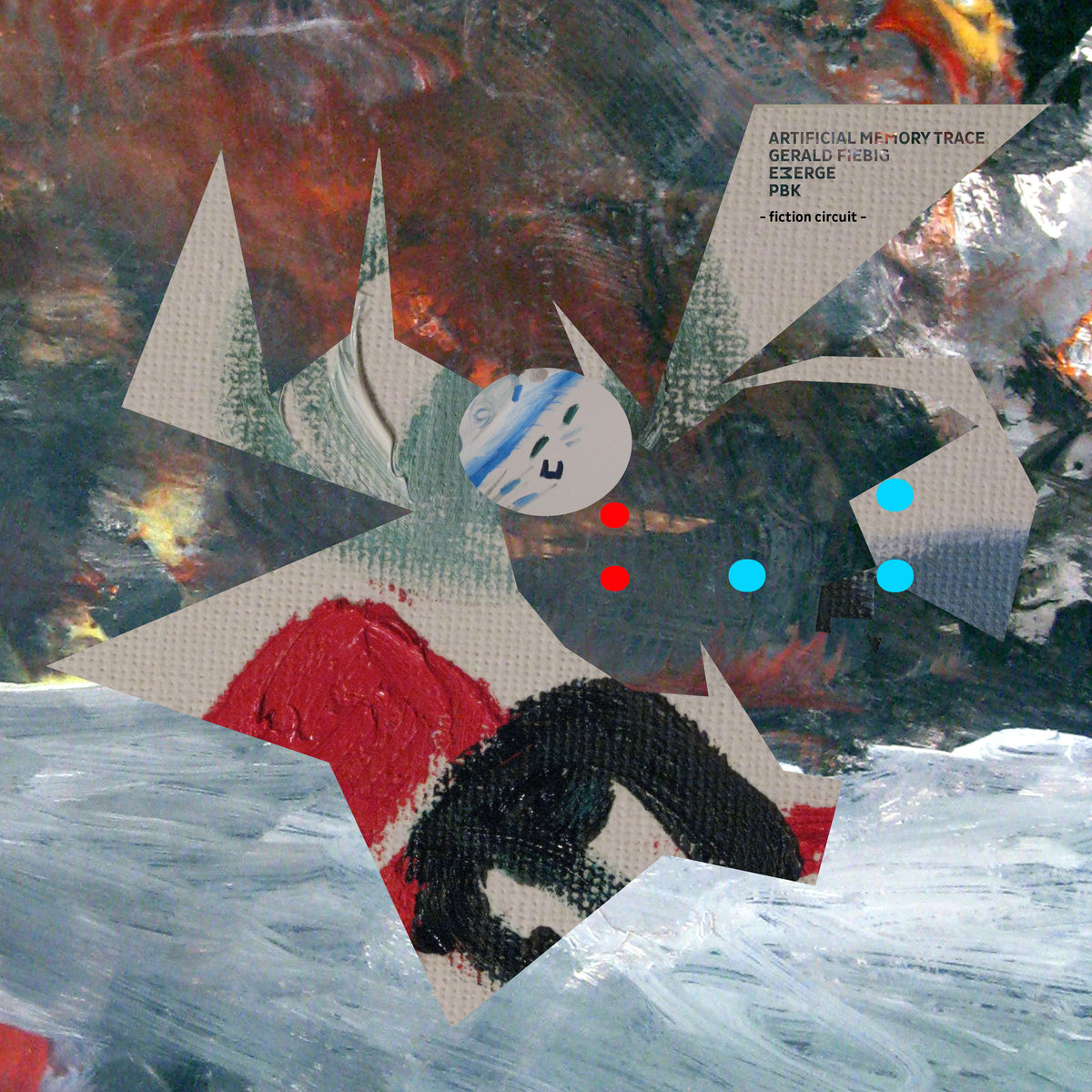


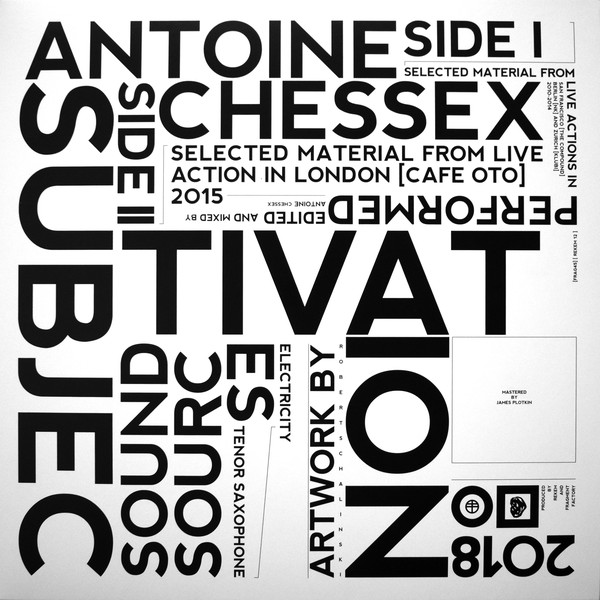
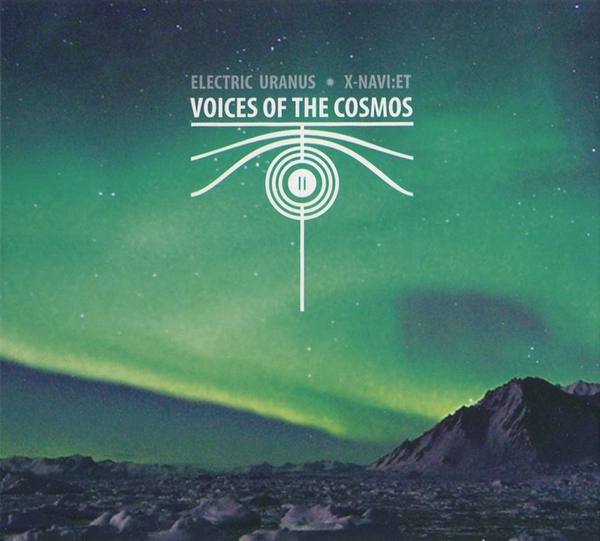
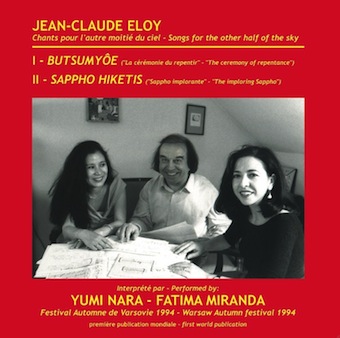

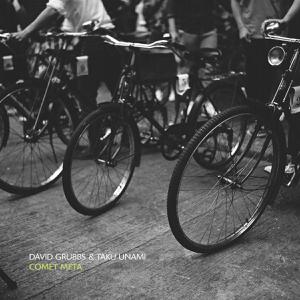


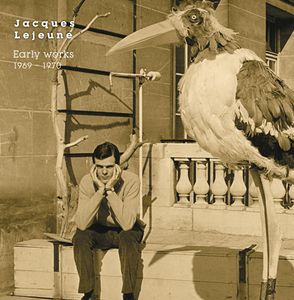
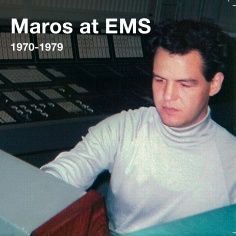

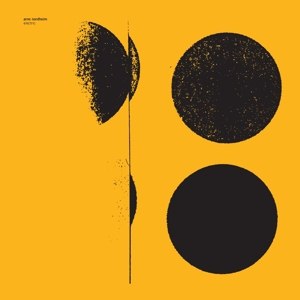

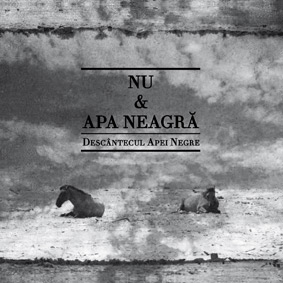
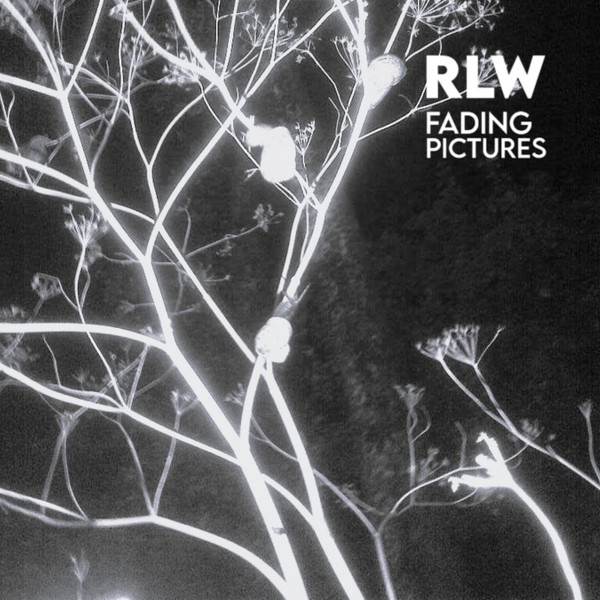

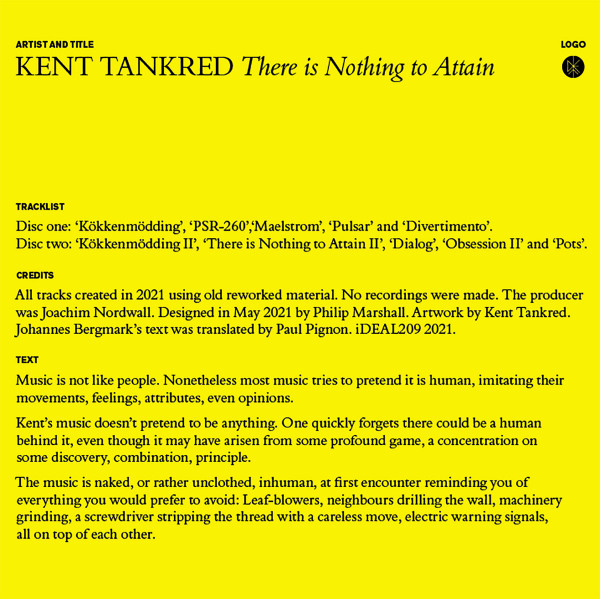
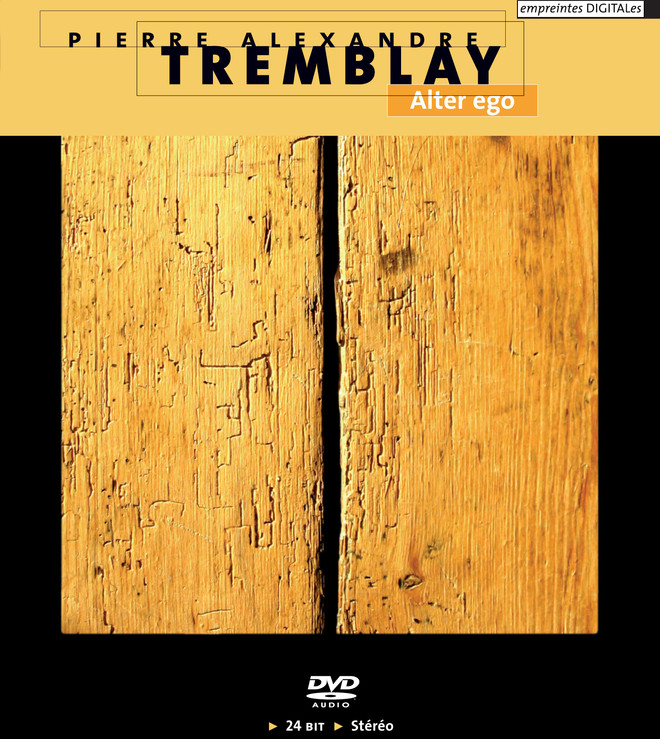

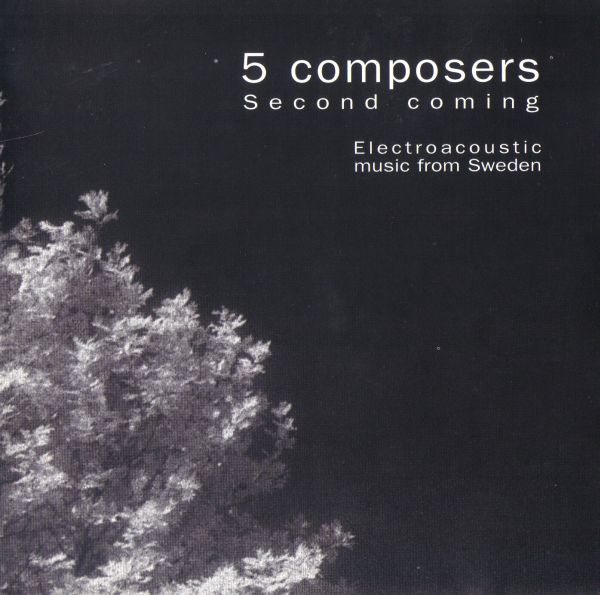


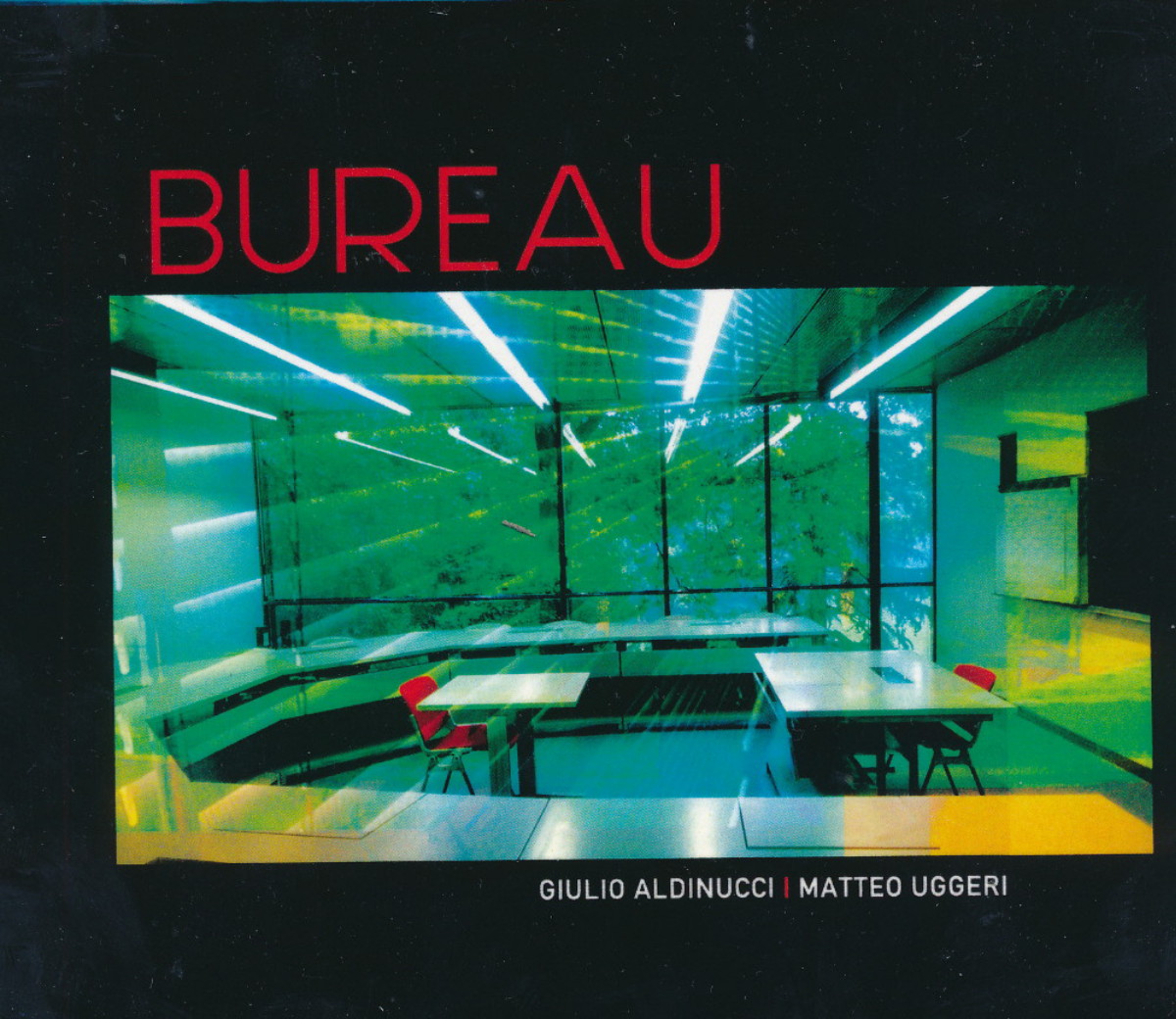
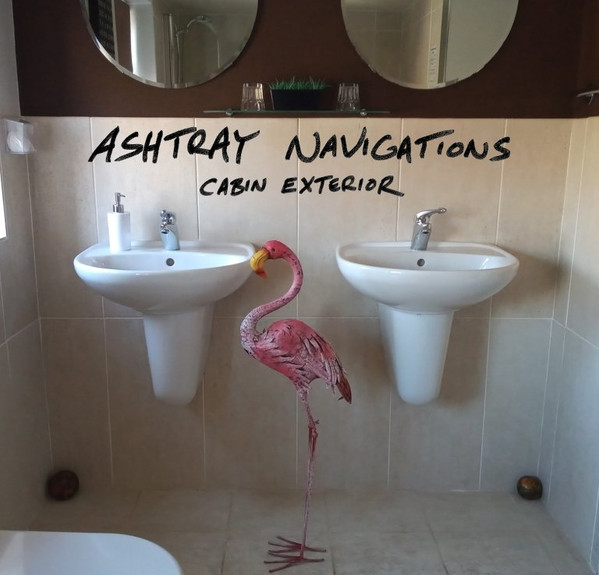
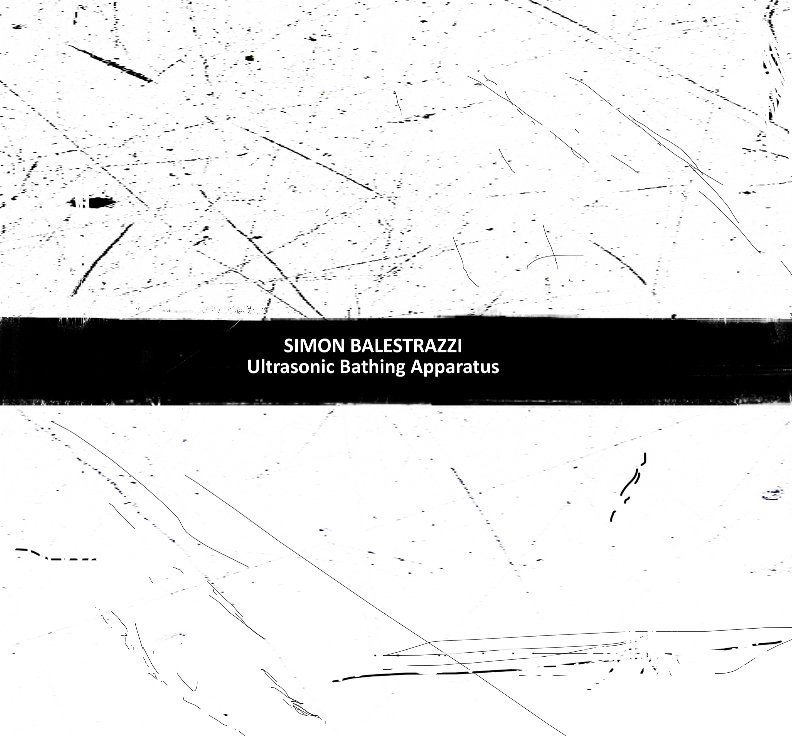


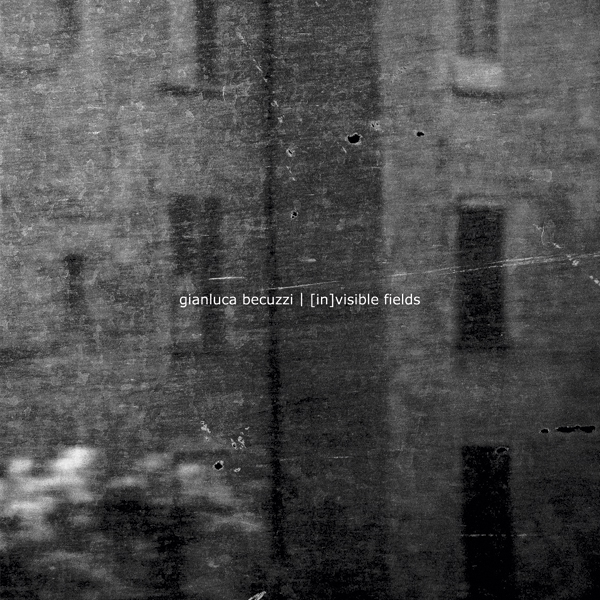
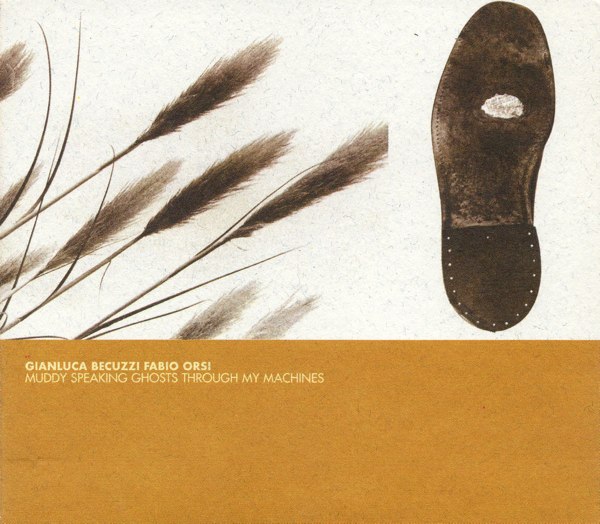
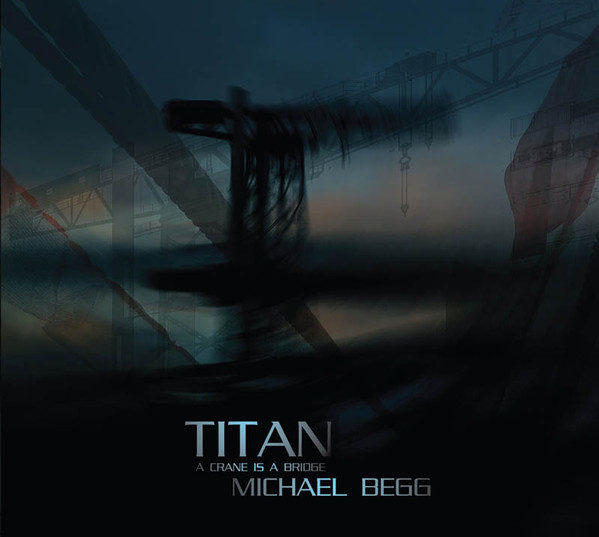
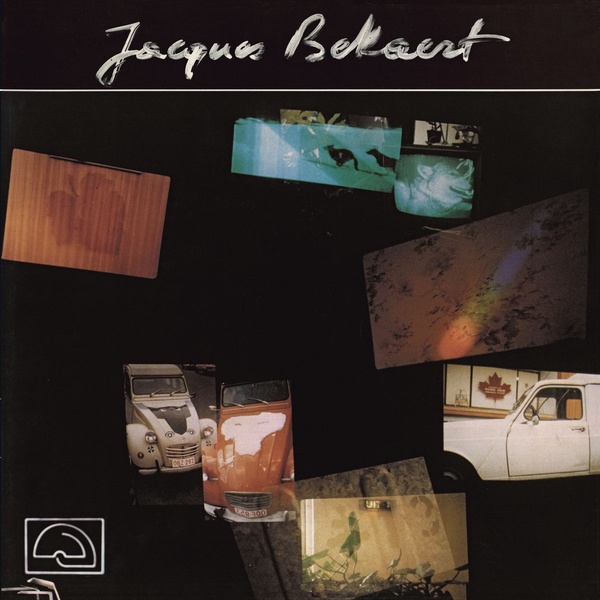















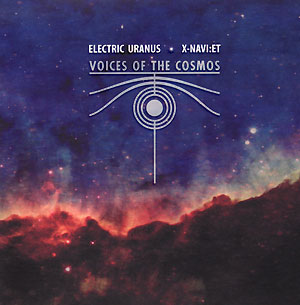







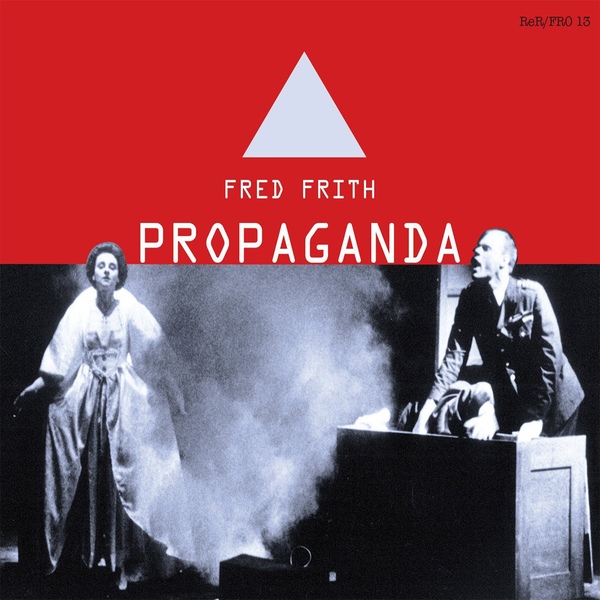
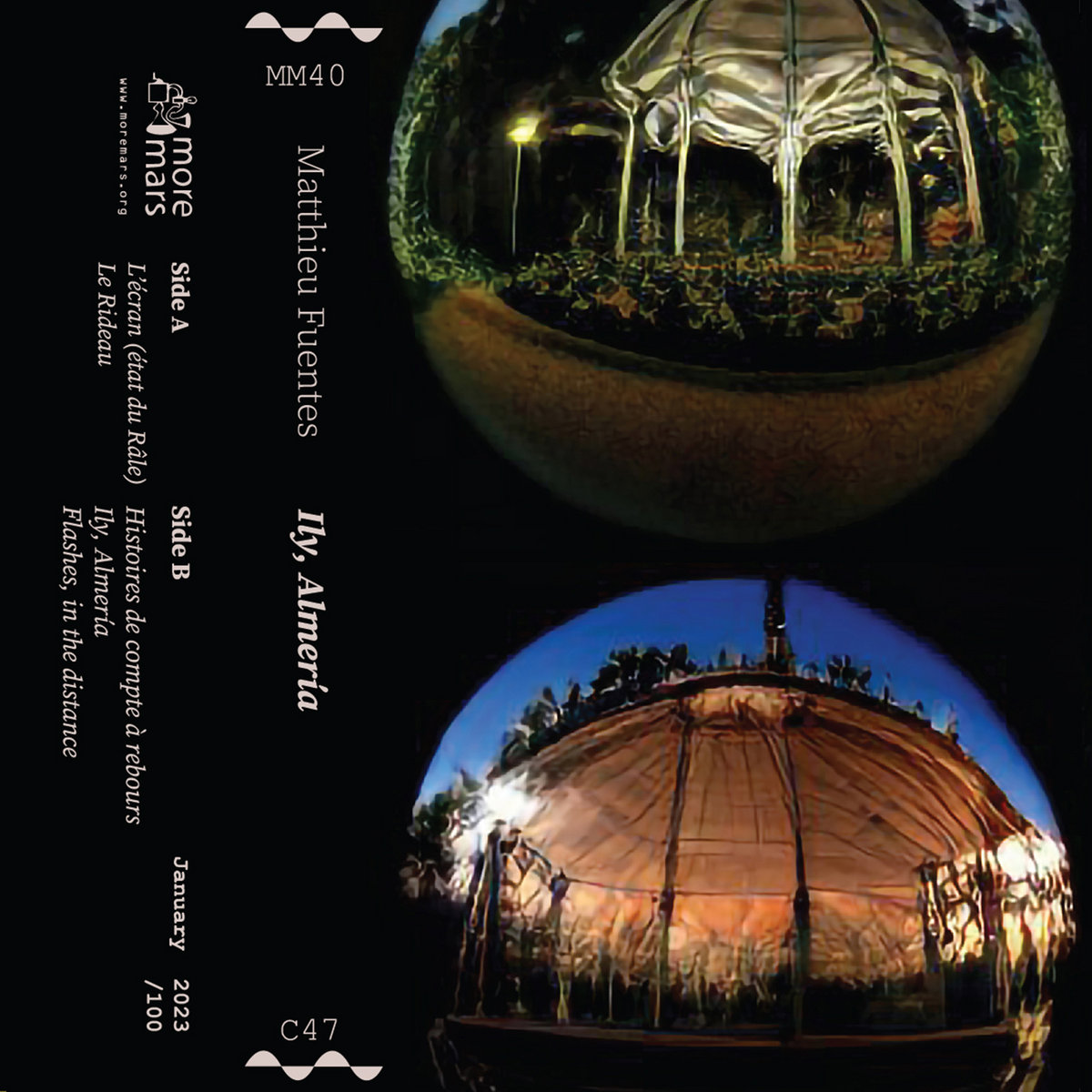

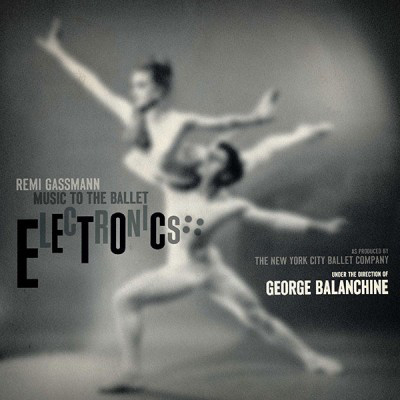
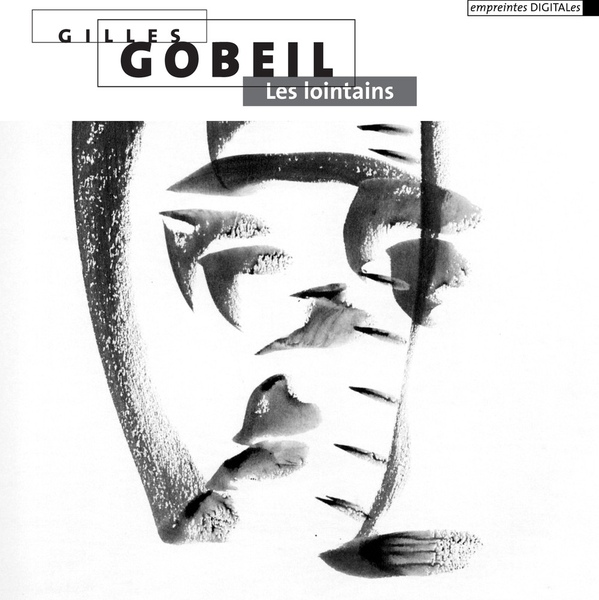




















![Periodic Exercises in (f)utility [homework 2016-2022]](/pictures/albums/21876/MURMER-Periodic Exercises do CD 2023.jpg)