| JASCH |
Shimmer
|
CD |
"Knistern, vibratorisch wummernde & hell zerfliessende Streicher-Drones, in der Tat „schimmernd“ wie Licht; sehr schön wie sich hier Flächen überlagern, vermengen & gegenseitig auslöschen zu scheinen, ab und zu kommen „konkretere“ Streicher-Klänge an die Oberfläche... 8 Stücke sehr gelungene experimental drones von diesem uns bisher unbekannten Schweizer." [old Drone Rec. info]
|
2004 |
€13.00 |

|
| BAD ALCHEMY |
No. 76 (April 2013)
|
mag |
"BA 76 enthält: Liveberichte über Ava Mendoza, Albatre, Ballister, Rupp-Müller-Fischerlehner; Schlaglichter auf die alten Helden Cassiber, Jon Rose, P16.D4 und Elliott Sharp, dazu auf Eyvind Kang, Udo Schindler und Totstellen; Schwedische Geisterbeschwörungen und Neuerscheinungen bei Hinterzimmer, Ideologic Organ, Intakt, Knistern, Leo, Mikroton, Monotype, Psych.KG, Rune Grammofon…" [Verlagsinfo]
www.badalchemy.de
|
2013 |
€3.50 |
|
| BAKER, AIDAN & GARETH DAVIS |
Invisible Cities II
|
LP |
AIDAN BAKER (NADJA, B/B/S) and bass clarinetist GARETH DAVIS continue their fruitful collaboration with „Invisible Cities II“ - five new tracks of finest ambient / chamber jazz / subtle drones of a highly meditative quality. Available as 180gr LP and download.
2 years ago, the Canadian guitar player AIDAN BAKER and clarinetist GARETH DAVIS from Belgium released their duo debut „Invisible Cities“ that surprised many by its quiet, even meditative quality. DAVIS had made himself a name in a wide range of fields, from the postrock of A-SUN AMISSA or OISEAUX-TEMPÊTE, new music (PETER ABLINGER, BERNHARD LANG), or experimentation with the likes of ELLIOTT SHARP, MERZBOW or SCANNER, while BAKER is mostly known for his drone / postmetal duo NADJA, but that‘s just one out of several steady projects (e.g.B/B/S with ANDREA BELFI and ERIK SKODVIN aka SVARTE GREINER) and a multitude of solo albums.
On „Invisible Cities“ the duo explored the calmer side of things – from chamber jazz to ambient / drone and back, giving much space and air to breathe to their respective instrument. Subtle guitar drones, sonore clarinet sounds, a sonic scenery of peacefullness and meditative introspection – all this you‘ll also find on the new album „Invisible Cities II“ which is an accomplished continuation and refinement of the duo‘s first collaborative effort from 2018.
Recorded between 2018 and 2019 in Berlin and Amsterdam, mastered and cut at D&M Berlin by KASSIAN TROYER.
https://karlrecords.bandcamp.com/album/invisible-cities-ii
"Vor zwei Jahren machten sich der bekannte Gitarrendröhner Aidan Baker und der in Belgien lebende Klarinettist Gareth Davis an die musikalische Umsetzung von Italo Calvinos Roman “Die unsichtbaren Städte” aus dem Jahr 1972. Ohne textliche Referenzen wie Lyrics entstand durch meditative Drones und den orientalisch anmutenden Ornamenten der Bassklarinette eine eher vage Interpretation der semifantastischen Reiseerzählung um den Entdecker und Geschichtenerzähler Marco Polo, bei der einem auch ohne Textkenntnis nichts entging. “Invisible Cities” wurde ein ganz eigener, von der Ausgangsidee unabhängiger Kosmos, der sich soweit verselbständigte, dass die beiden Musiker weiter an den Ideen arbeiteten. Mit “Invisible Cities II” ist nun eine Fortsetzung des Stoffs erschienen, die nahtlos an den Vorgänger anknüpft.
Mit stilvollem Rauschen und Knistern, das sich bald als Sendersuche auf einem alten Radio entpuppt, gönnen die beiden sich eine kurze Bedenkzeit, bis der Opener “Hidden” dem Titel entsprechen zunächst versteckt im Hintergrund zu dröhnen beginnt. Über längere Strecken bewahrt der Track seine mysteriöse Aura, lässt das Rauschen gemächlich auf und abebben und bleibt doch vage im Bezug auf die Soundquelle. Sind das die Geräusche einer nächtlichen Landstraße, auf der jemand auf den Spuren des berühmten Entdeckers die Seidenstraße entlang den unsichtbaren Städten entgegenfährt? Die Frage ist interessant, v.a. wenn man sie nicht beantwortet. Mit der Zeit zeichnen sich die musikalischen Strukturen deutlicher ab: von tiefen Klarinettentönen gezogene Kurven in schwermütigem Moll, undefinierte Hochtöner am nächtlichen Firmament, die warme, erdige Dröhnung der angeschlagenen Saiten und einiges mehr.
Heller, verhuschter, tremolierender gibt sich die Musik in “Eyes”, wo sich das Blasinstrument langsam vorantastet, als lauere Unheilvolles hinter jeder Biegung des Weges – eine Spannung, die im folgenden “The Dead” bestehen bleibt, dort allerdings eine geradezu trotzige Energie mobilisiert: in rauer, kreisender Dröhung, im Trillern einer imaginären Alarmsirene, im jaulenden Feedback und im Summen des Geigenbogens, der hektisch über Bakers Gitarrenhals fährt. In “Continuity” diffundiert all dies wieder in einen Nebel aus sensiblen Andeutungen, um in der Harmonie von “Names” in friedvolle Ruhe zu münden. Ist das der Sound des Ankommens in den unsichtbaren Städten, oder geht die Fahrt weiter?
Wie auf dem ersten Teil hat jedes Stück seine eigenen Geschichte voll stetig wandelnder Stimmungnuancen und subtil eingesetzter Soundideen, die bei dem kleinen Instrumentarium beeindrucken. Ich empfehle beide Teile hintereinader zu hören – auf Vinyl im von üppig duftenden Oud-Kerzen beleuchteten Salon oder als Download auf nächtlicher Fahrt durch die Weiten Zentralasiens. (U.S./African Paper]
|
2020 |
€18.00 |
|
| BURIAL |
Burial.Hdbcd001
|
CD |
„Auf "Burial. HDBCB001" schickt BURIAL die unterschwellig sexy Beats des britischen Garage über den Umweg von Funkstörungen in eine heimelige Gummizelle aus tiefem Bass, nicht ohne auf der Reise noch einen Zwischenstop im Berliner Dub von POLE einzulegen. Dabei klingt es, als würde BURIAL das Südlondon der nahen Zukunft unter Wasser setzen. Das allumfassende Knistern ist gleichzeitg das Statikgeknister eines Piratensenders und der tropische Regen, der sanft ans Fenster schlägt. Die Melancholie der Tracks öffnet ihre Arme und sucht nach ertrunkenen Liebhabern. Der Mix von BURIAL wird von den Echos aus einer anderen Zeit heimgesucht. Signale einer fremden Frequenz strecken tastend ihre Fühler aus. Eine Flutwelle aus Lärm verschlingt alles und lässt nur die schärfsten Beats zurück. Doch der Lärm schmerzt nicht; er streichelt, kitzelt und erregt die Nervenenden. Willkommen in der Welt von BURIAL.
This first album on Kode9's Hyperdub label comes from the mysterious Burial. On this self-titled CD debut, Burial carves out a sound which sends the dormant slinky syncopations of uk garage, via radio interference, into a padded cell of cushioned, muffled bass, passing through the best of Pole's Berlin crackle dub. Burial explores a tangential, parallel dimension of the growing sound of dubstep. Burial's parallel dimension sounds set in a near future South London underwater. You can never tell if the crackle is the burning static off pirate radio transmissions, or the tropical downpour of the submerged city outside the window. In their sometimes suffocating melancholy, most of these tracks seem to yearn for drowned lovers. The smouldering desire of ‚Distant Lights' is cooled only by the percussive ice sharp slicing of blades and jets of hot air blowing from the bass. Listen also for a fleeting appearance from Hyperdub's resident vocalist, the Spaceape unravelling his crypto-biography. In its loud quietness, Burial takes his kitchen crackle aesthetic neither from the digital glitch nor merely a nostalgia for vinyl's materiality. Instead, as irates' suggests, Burial crackle mutates the tactile surplus value of pirate radio transmissions. Burial's mix is haunted. Echoed voices breeze in and out, on road to another time. Pirate signal from other frequencies steams in. A tidal wave of noise submerging all but the crispest syncopations. The noise is not violent, but caressing, tickling, exciting the ends of your nerves. Seducing you in.“ [press release]
|
2006 |
€15.50 |
|
| CHRYSAKIS, THANOS |
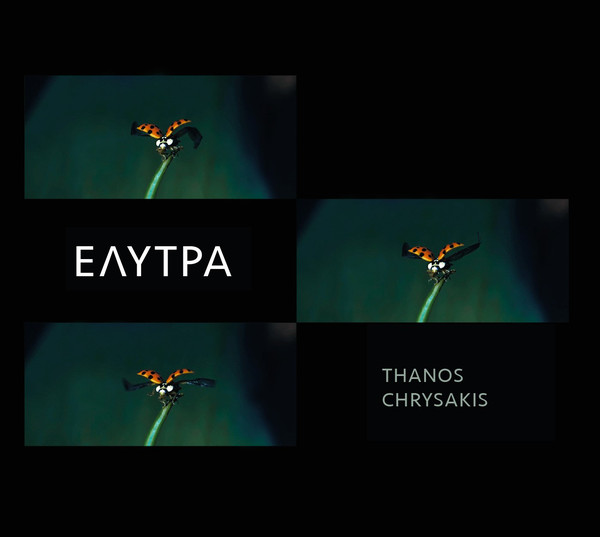
ELYTRA
|
CD |
New insect music release by Greek sound artist Thanos Chrysakis
About ΕΛΥΤΡΑ
Everyone has heard the marvelous sound of crickets in the summer especially in the countryside. The sound is produced by raising and scraping against each of their protective fore-wings the elytra.
Their burrow act as a resonator bringing at times a transcendent quality to the place.
The music in this album with myriads of sounds, regular and irregular pulses, unfolds a similar transforming quality.
Thanos Chrysakis
About Thanos Chrysakis
Thanos Chrysakis is a Greek composer, musician, producer and sound-artist. He is best known for his work in electronic and contemporary music, free improvisation, and electro-acoustic music.
With several albums to his name his work has appeared in festivals and events in many countries.
His music was among the selected works at the International Competition de Musique et d'Art Sonore Electroacoustiques de Bourges 2005, in the category oeuvre d'art sonore électroacoustique, while received an honorary mention in 2006 at the 7th International Electroacoustic Competition Musica Viva in Lisbon (the jury was constituted by Morton Subotnick (USA), François Bayle (France), and Miguel Azguime (Portugal). He operates the Aural Terrains record label since 2007 where he has released part of his work until now, alongside releases by Kim Cascone, Franscisco López, Tomas Phillips, Dan Warburton, Szilárd Mezei, Michael Edwards, Wade Matthews, Dganit Elyakim, Edith Alonso, Christian Skjødt, Luis Tabuenca, Christian Kobi, Jeff Gburek, Steve Noble, and Milo Fine. He has written music for musicians of the Hyperion Ensemble, the Stockholm Saxophone Quartet, the Konus Saxophone Quartett, and the Shadanga Duo among others. Close collaborations with Tim Hodgkinson, Vincent Royer, Chris Cundy, Yoni Silver, Lori Freedman, Jason Alder, William Lang, Wilfrido Terrazas, Philippe Brunet, Wade Matthews, Ernesto Rodrigues, Abdul Moimême, Zsolt Sőrés, Ove Volquartz to name but a few.
https://aufabwegen.bandcamp.com/track/tortoise-pilgrimage
"Insekten üben seit langem eine (nicht nur) klangliche Faszination aus: Man denke an die vielen Filme, in denen das Zirpen der Zikaden fast schon ein alternativer Soundtrack ist oder an die symbolische Bedeutung der Geräusche der Grillen in einem Stück wie Sam Shephards „True West“. Eine Reihe von Musikern wurden vom Klangpotenzial der Insekten angezogen: 1986 veröffnetlichte Graeme Revell „The Insect Musicians“, sein Versuch einer auf dem Geräusch von Insekten basierenden “micro-musique” (gerade ist das Album auf Old Europa Cafe neu herausgebracht worden), jüngst erschien noch ein Album namens “The Life Of Insects” von der in Berlin lebenden Peruanerin Ale Hop.
Der 1971 in Athen geborene Thanos Chrysakis hat zahlreiche Alben veröffentlicht und betreibt das Label Aural Terrains, “a creative space for exploratory contemporary music in its different manifestations”, auf dem er u.a. Alben von Francisco López, Tomas Phillips oder Michael Edwards veröffentlicht hat.
Auf “ΕΛΥΤΡ” basieren die Stücke auf dem Klang von Grillen, der für Chrysakis fast eine “transcendent qualitiy” hat. Das das Album eröffnende 8-minütige „Alabaster Tide“ ist eine dichte Klangfläche, die anfangs in ihrer rabiaten Unruhe durchaus an einige der perkussiven Arbeiten von Z’EV denken lässst. Hier fühlt man sich, als befinde man sich geradewegs inmitten zahlloser Insekten. Das Unruhige wird aber im Verlaufe des Stücks zurückgefahren, schließlich hört man ein paar hochfrequentere Passagen und Knirschen. „Coral Aether“ knüpft mit seinem Knistern und Flüstern daran an. „Tortoise Pilgrimage“ besteht aus flirrenden und sirrenden kristallinen Sounds, die gar nicht so weit von einigen Aufnahmen Asmus Tietchens entfernt sind, dann plötzlich meint man, ein Windspiel erklinge. Eine größere Reduktion hört man auf „Tranquil Edge“ mit seinem Knistern, das den Eindruck erweckt, als ob kleine Zweige brechen würden. Dann gibt es „Delphic Maxims“ mit fast schon wasserartigen Sounds oder das Rascheln bei „Pierian Roses, das sich im weiteren Verlauf verdichtet. Schließlich endet das Album mit „ A Shadow’s Dream“ mit erratischen perkussiven Momenten, und dann plötzlich – unerwartet – etwas, das wie ein Piano klingt. Auch ohne die Faszination, die vielleicht vom Ausgangsmaterial ausgeht, ist das ein sehr starkes Album." [MG / African Paper]
|
2020 |
€13.00 |
|
| COLLEY, JOE |
Hive
|
mCD |
Aufnahmen eines Bienenschwarms, die nachträglich elektronisch bearbeitet wurden.... eine granular-knisternde, auf vielen Ebenen rauschende Klangwelt eröffnet sich dem staunenden Hörer - multiples, fast polyphones Summen & Knirschen, eine tausendfacher Bienen-Drone-Chor ertönt... HIVE beweist, dass die "Natur" der beste Komponist sein kann, wenn man nur Ohren hat zum hören...
"Source sounds from beehive, recorded 2003 Placer County, California using condenser, stereo contact and hive embedded contact microphones. Raw unprocessed recordings, equalization, playback trough cymbals, metal surface and Korg MS20 analog synthetiser. Dedicated to my father, the beekeeper." [joe colley]
|
2006 |
€8.00 |
|
| DI SCIPIO, AGOSTINO |
Hörbare Ökosysteme
|
CD |
" “Das komplexe Gefüge von Einflüssen, denen Schall auf seinem Weg von der Quelle zum Ohr unterworfen ist (...) ist das Aktionsfeld der Musik von Agostino Di Scipio.“ (Linernotes) Seine Kompositionen entstehen auf der Basis sich selbst steuernder und regulierender Systeme. In den live-elektronischen Studien „Hörbare Ökosysteme“ „dienen einfachste Schallsignale oder gar nur der Geräuschhintergrund des die Mikrophone beherbergenden Raumes als Input für autopoietische Prozesse, in deren Verlauf die Parameter der digitalen Signalverarbeitung sich stets weiter den resultierenden Klangformen anpassen (...).“ Zwischen knisternden Inseln Ryoji Ikedaischer Digitalsounds entstehen punktuell oder fließend gesetzte Rückkopplungen, die kontrolliert tastenden Erkundungen der Klangmöglichkeiten durchführen. Ebenso arbeiten die Interpreten in den gemischt Instrumental/live-elektronischen Stücken. Sie lauschen ihren, von der Elektronik zurückgeworfenen Klängen und passen ihr weiteres Spiel den veränderten Sounds an. In steter Umarmung mit der signalverarbeitenden Software und in Abhängigkeit vom Raumverhalten setzen Bassflöte, Bassklarinette, Violine, Violoncello, Klavier und Vibraphon forschende Instrumentalbewegungen, welche die Konzentration der Zuhörerin/ des Zuhörers reichlich belohnen.
„Sounds making ist way from the source to the ear is subjected to a complex nexus of influences. This is the operation field for the music of Agostino Di Scipio.“ (linernotes) His compositions are built up on the basis of complicated cybernetic procedures. The newer studies „Hörbare Ökosysteme“ are purely live-electronic. „In these works the most simple sound signals, or even the background noise of the space housing the microphones, provide input for autopoetic processes which continously adjust the parameters of their digital sound synthesis and transforming processes to the resulting sound shapes.“ Between crackling islands of Ryoji Ikeda-like digital sounds you hear particular pointed or flowing feedbacks carrying out the possibilities of sound in a controlled tentativ research. Also the players of the combined instrumental/ live-electronic pieces are working in this way. Listening very closely to the transformed sounds resounding from back from the sound system, they adjust their actual sound production to those transformations. Caught up in the system of sound processing software and the spaces aural signature, bass flute, bass clarinet, violin, cello, piano and vibraphone searchable put together instrumental movements which amply reward the listeners concentration.” [Peter Schlewinski for Drone Records]
|
2005 |
€16.00 |
|
| DUHKHA |
Mariyammal
|
LP |
"Ambient-Puzzle aus Frankreich. Zahlreiche Soundlandschaften von Musikern werden zu einer Fläche verbaut. Organisch und handfest. mit einer ganz besonderen, kränklichen, geheimnisvollen Stimmung und irren Vocals. Achtung Sogwirkung!
Vor vier Jahren veröffentlichte der in Berlin lebende Franzose BENJAMIN BEX mit "Rosegger" ein Album auf TREUE UM TREUE / REUE UM REUE. Für seine neue Projektarbeit, zusammen mit befreundeten Musikern als DUHKHA auf IDÉOBLASTE erschienen, übernimmt das Label zwar 'nur' den Vertrieb. "Mariyammal" klingt aber so stark nach der mysteriösen Ambientwelt von TUT / RUR, dass das Album perfekt in die Labelwelt gepasst hätte. (Wer mit der entsprechenden Musik vertraut ist, kann sich den Rest des Artikels theoretisch sparen und blind zugreifen.)
Für mich stellt sich die Arbeit von DUHKHA wie ein großes, schönes Puzzle dar, mit BENJAMIN BEX als Chef am Tisch. Er hat sich von befreundeten Musikern Klänge, Töne, improvisierte Tonfolgen, Geräusche et cetera einspielen lassen und diese auf sehr kunstvolle, magische Weise zusammengebaut. Ergänzt durch eigene Beiträge, insbesondere durch bemerkenswerte Gesangsparts. PIERRE GORDEEFF zum Beispiel hat Aufnahmen seiner verrückten Maschinen beigesteuert. Das Turntablism-Projekt VINYL -TERROR & -HORROR lieferte einige Klanglandschaften. Andere Freunde spielten Cello-Improvisationen oder Echtzeit-Soundbasteleien ein. Der ganze Prozess, inklusive des Verwebens der Bestandteile, dauerte rund zwei Jahre.
Das ansteigende, dröhnende Rauschen im Opener "Mariyammal" (A1) lässt sich viel Zeit, bevor sich Streicher mit sirenenartigen Sounds einmischen. Eine eigenartige und recht bedrohliche Atmosphäre, die plötzlich umschwingt: Als würden Wolken weggeblasen, taucht der Gesang auf. Verletzlich, hoch, fast Falsett, und dazu ein Kratzen – als ob die Singstimme gleich wieder weggewischt werden sollte. Weitere Zutaten: Arienansätze im Hintergrund und improvisierte Streichertöne. Sehr filmisch und sehr, sehr intensiv. In "Whidama" (A2) stammen die ersten Töne zwar von einer Akustikgitarre (nicht von Streichern), ansonsten bleibt vieles gleich. Die knarzenden, fordernden Sounds, der hohe Gesang (kurze Momente lang erinnert er mich an DAVID TIBET), und später quietscht auch das Cello wieder, zu- und abnehmend. "Teufelssee" (A3) bleibt instrumental, mit bearbeitetem Piano und einem Potpourri aus bisherigen Klängen, etwas enervierend mutet dabei das heftige Vinylknacken an.
Die B-Seite startet ("Dans La Nuit Et L'Oubli", B1) mit Gitarrendrones, dem Klirren von Münzen und extrem hingebungsvollem, mystischem und beschwörendem Gesang. Durch längere Instrumentalparts, repetitive Geräusche mit Streicherimprovisation und später wieder dem verrückt machenden Plattenknistern und -knacken ist das Stück zerhackter, collagenartiger als die Tracks auf der ersten Seite. In "De La Lumière Et De La Mémoire" (B2) übt ein ganzes Orchester, mit fanfarenartigen, sägenden Tönen im Vordergrund. Der Gesang: noch höher, lyrisch und manisch, dagegen geschnitten sind ängstliche, fliehende Frauengeräusche und schräge Engelschöre.
"Mariyammal" ist ein organisches, handfestes Werk zum Anfassen. Gleichzeitig scheint es mir durchzogen von Vergangenem, Morbidem und erinnert phasenweise an unsaubere, entfernte Schellackaufnahmen. Erstaunlich, dass sich die ungeheure Vielfalt stets zu dieser ganz besonderen, kränklichen, geheimnisvollen Stimmung mischt. Sorgfältig geschichtete Ambientmusik, bei der vor allem die Stimme – im Vergleich zu vielen sonstigen Basteleien auf dem Markt – den Unterschied macht. Achtung Sogwirkung."
[Michael We. für nonpop.de ]
https://vimeo.com/116551690 |
2015 |
€15.00 |
|
| EMERGE |
Steps
|
CD |
What is it that we're hearing? Is it the wind? Is it the sea? Is it the crackle of a burning fire? Where are we? A great sense of loneliness pervades the quiet setting which we cannot quite make out. And then suddenly living creatures enter the sonic scene. Birds and people, their voices and their steps. They seem to be walking, walking past us, towards a destination we do not know. We cannot understand in what language or languages they are speaking – or can we? It is hard to make out, because everything they say is strangely muffled, although they are not speaking in a low voice. Everything we hear feels either too loud or too quiet, too close or too distant. As if some shock had happened to our hearing before we started listening to this album. Like a bomb exploding in close proximity to our ears. Or something so unimaginably terrible that it bent the acoustic space in the place from which these sounds come through to us. This is how the album “steps” begins.
The album “steps” is composed exclusively from field recordings made at the Dachau Concentration Camp memorial site. It is not possible to represent the horrors of concentration camps in music, and – a lesson learned from the many failures in the history of “industrial music” – the attempt to do so will inevitably result in trivialising kitsch, at best. Therefore, the album “steps” does not claim to be an album “about” a concentration camp, it is an album about a memorial site. Like the modern-day classic on the subject, “Gurs. Drancy. Gare de Bobigny. Auschwitz. Birkenau. Chelmo-Kulmhof. Majdaneck. Sobibor. Treblinka” by Stéphane Garin & Sylvestre Gobart (2011), “steps” goes to show to what extent contextual information about the sonic subject matter of a piece influences our listening. This artistic strategy can also be read in political terms: Only if we know the history behind these sounds – and the history of the place where they were recorded – are we able to make sense of the present.
For part 2, EMERGE invited sound artists from all over Europe to give their characteristic processing to the original audio field recordings. The resulting audio fragments are fed into the performance, symbolising a peaceful, solidary encounter of cultures – in deliberate contrast to the fact that people from many European countries were brought together in the Dachau concentration camp by utmost force.
File under: electroacoustic music, field recordings
-----
Was hören wir da? Ist es der Wind? Ist es das Knistern von offenem Feuer? Wo sind wir? Der Ort lässt sich nicht genau bestimmen, aber er ist ziemlich still und fühlt sich sehr einsam an. Und dann treten plötzlich lebendige Wesen auf den Plan. Vogel- und Menschenstimmen, Schritte. Anscheinend gehen Leute an uns vorbei in Richtung eines Ziels, das wir nicht kennen. Wir können nicht erkennen, in welcher Sprache oder welchen Sprachen sie reden – oder doch? Es ist nicht leicht auszumachen, denn alles, was sie sagen, ist irgendwie eigenartig gedämpft, obwohl sie nicht leise sprechen. Alles, was wir hören, scheint entweder zu laut oder zu leise, zu nah oder zu weit weg. Als ob sich ein Schock ereignet hätte, bevor wir begonnen haben, das Album anzuhören. Wie eine Bombenexplosion ganz nah an unseren Ohren. Oder etwas, das so unvorstellbar schrecklich ist, dass es den Raum verbogen hat, aus dem diese Klänge zu uns dringen. So beginnt das Album “steps”.
Das Album “steps” wurde ausschließlich aus Fieldrecordings komponiert, die in der KZ-Gedenkstätte Dachau aufgenommen wurden. Das Grauen der Konzentrationslager musikalisch darzustellen, ist unmöglich, und der Versuch muss unweigerlich in verharmlosendem Kitsch münden – oder Schlimmerem. (Die vielen Negativbeispiele in der Geschichte der Industrial-Musik sprechen hier für sich.) Das Album “steps” maßt sich jedoch gar nicht an, ein Album “über” ein Konzentrationslager zu sein. Es ist ausdrücklich ein Album über eine Gedenkstätte. Ähnlich wie das Referenzwerk der letzten Jahre zu diesem Thema, “Gurs. Drancy. Gare de Bobigny. Auschwitz. Birkenau. Chelmo-Kulmhof. Majdaneck. Sobibor. Treblinka” von Stéphane Garin & Sylvestre Gobart (2011) zeigt auch “steps” auf, wie stark Kontextinformationen über das Klangmaterial unser Hören prägen. Diese künstlerische Strategie kann auch politisch verstanden werden: Nur, wenn wir die Geschichte hinter diesen Klängen kennen – und die der Orte, an denen sie aufgenommen wurden –, können wir die Gegenwart verstehen.
Für Teil 2 hat EMERGE Soundkünstler*innen aus ganz Europa eingeladen, die originalen Fieldrecordings auf ihre jeweils charakteristische Weise zu bearbeiten. Die dadurch entstandenen Audiofragmente sind in die Komposition mit eingeflossen und symbolisieren so eine friedliche, solidarische Begegnung der Kulturen – als bewusster Gegenentwurf zu der Tatsache, dass Menschen aus vielen Ländern Europas im KZ Dachau mit äußerster Gewalt zusammengezwungen wurden.
File under: elektroakustische Musik, Fieldrecordings
https://emerge.bandcamp.com/album/steps
|
2020 |
€13.00 |
|
| EVAPORI |
Rehearsals for Objects
|
CD |
"1000füsslers industriell gefertigte Releases erreichen einen neuen Maßstab. Neben Tietchens und der sehr schön angelegten Heizungs-CD ist Evaporis Beitrag zum CD-Labelkatalog ein weiteres ungewohnt klingendes Zeugnis Neuer Musik. Völlig losgelöst vom Digitalkrach oder jedweder PlugIn-Klangmasse erscheinen die hier versammelten Stücke wie alte Schneidetischexzesse eines digital aufgemöbelten Walter Ruttmanns. Die raumklangtechnisch ausgesteuerten Klänge und Geräusche werden mittels ihrer Aufnahmeposition verfremdet und steuern damit gegen den sonst allgegenwärtigen digitalen Verfremdungsprozess. Klanglich angesiedelt zwischen einer ausziselierten Kapotte Muziek Komposition und einer Esseiva Etude passiert im zeitlichen Rahmen dieser CD anfangs eine Menge: feine Schleifklänge wechseln teils in rapiden Wechseln ihre Soundzustände, lösen sich auf und bilden feine Schnittkanten, an deren teils gratfreien Oberflächen allerlei konkretes Material sich ansammelt, ehe es mit einem schnellen Schnitt in andere Ebenen gehoben wird. Der zweite Satz zeigt die stärkste Dekonstruktion mittels Audioschnitt und Collaging, weicht doch der geschickte Einsatz der Stille teilweise radikalen Rückwärtsrichtungen des Quellmaterials, ehe der letzte Akt der CD in teilweise recht droniges Basisbrummen gleitet und etwas schlüpfrig den Weg aus der Komposition weist. Evaporis Ansatz einer völlig raumklangbezogenen Kompositionsweise macht vor allem dann Sinn, wenn die ohnehin sehr liquiden und scharf gestellten (Rest)geräusche in teilweise verzweifelt wirkender Flucht ihre Plätze suchen. Die in endloser Rotation wiederholten Brummschleifen unter den gestreuten Sounds macht es fast schon wieder interessant, mal selber die Lautsprecher um einige Zoll im Raum zu verschieben und den damit verbundenen Akustiksituationen zu lauschen. Ganz schön interaktives Material." [Thorsten Soltau, AEMAG]
"The aim while composing was to create a sound landscape that is exclusively made up of recordings which are not processed by computer effects (so-called plug-ins). The sounds are influenced by the way they are recorded, e.g. by the positions of the microphone and the sound source in a room. The resulting sonic situations are the basis of the the composition. The sounds – most of them of an everyday nature – were transformed using computer editing only, in order to leave the recognizability of the sounds untouched, create tension and to arouse the listener‘s curiosity through different atmospheric cadences.
Recordings were made at Rauchhaus / Berlin, Fundbureau and Christianskirche / Hamburg
Mastering by Guy Saldanha
Artwork by Nicolas Wiese
Thanks to Celia Herrero and Christoph Lohse"
[label info / credits]
www.tausend-fuessler.de
"Das nenn ich doch mal eine Produktinformation: „Die größtenteils aus dem Alltag stammenden Klänge wurden am Computer ausschließlich durch Schnitttechnik verfremdet, um die Erkennbarkeit der Klangquellen offen zu halten, Spannung aufzubauen und durch verschiedene Stimmungsbögen bei dem Hörer Neugier zu wecken.“ Das hat man nicht oft, dass ein Geräuschkunstmacher auch mal an seine (potentiellen) Hörer denkt und dass er das Ziel seiner Bemühungen angibt - Stimmung, Spannung, Neugier. Oliver Peters ist in BA schon bekannt als AIC-Macher und, obwohl in Berlin aktiv, für seine guten Verbindungen zur Hamburger Szene, zur Hörbar, zu Guy Saldanha (Knistern), der hier das Mastering besorgte, zu Uli Rehbergs Walter Ulbricht Schallfolien, wo zuletzt seine LP Fumes (2007) herauskam, zu Gregory Büttner, der ihm auf 1000füssler bereits zum zweiten Mal ein Forum bietet. Was hier die Neugier weckt, sind Übungen, Turn- oder Tanzübungen von Gegenständen in einem menschenleeren Raum. Nur die vermeintliche Abwesenheit von Beobachtern oder Lauschern ermöglicht diese leicht gespenstischen, zumindest ominösen und odradekhaften Verspieltheiten. Es huscht, trappelt, kullert, von ganz feinen Drones umspielt. Vielgliedrig tockt, ratscht, schabt und klickt Holz an Holz, Metall an Metall, Was? an Was? -kreuz und quer durch den Raum, an Wänden und an der Decke. Odradek-Hockey? Odradek-Mikado oder -Kampfsport? Ein ‚interlude‘ zwischen ‚rehearsal I & II‘ lässt keine Atempause, sondern verdichtet sogar die Aktionen, mit fast menschlichen Zischlauten. Das hat nichts ‚Ambientes‘, sondern eine spielerische Dramaturgie, die allerdings ihr Geheimnis - wer sind die Spieler und was proben sie? - nicht Preis gibt, denn wir sehen nichts, wir können nur lauschen und rätseln." [Bad Alchemy]
"Oliver Peters, the man behind the AIC label and the musical project Evapori, likes his sounds to be free of computer plug ins. Take an object, place a microphone and record the object. The placing of the microphone is essential as it alters the sound. Take a whole bunch of objects, record them and then make a CD out of these recordings. The computer is merely a recording device, where, in good musique concrete tradition, cuts can be made, stereo adjustment and balancing the various sounds. That is most commendable, I think, as most computer plug ins do tend to sound too similar. What Peters does here, is not done a lot. Using natural space to create reverb, he carefully touches his objects and makes a very intense sound collage out of it. One that requires full attention. At times I was reminded of the live sound of Kapotte Muziek, but then multi-layered and with more concentration - but then of course the computer here can cut out all the unwanted sounds, which live is more difficult. By adding machine hum towards the end of 'Rehearsal 1', he manages to sound like drone music too. I think this is a great CD, but there is one thing I don't understand: why call this rehearsals? Rehearsal for what? It gives the impression that this is unfinished business, unless Peters wants us to cut further in this material, but somehow I don't think that this the case here. Why not go full on and state that these are 'compositions'? " [FdW / Vital Weekly]
|
2009 |
€13.00 |
|
| FEINE TRINKERS BEI PINKELS DAHEIM (F.T.B.P.D.) |
A Bug's Life
|
CD |
"Jürgen Eberhard aka Feine Trinkers Bei Pinkels Daheim celebrates 25 years of his artistic activity with the first full-length album on Zoharum entitled "A Bug's Life". keen observers of our activity certainly know his name, for instance from a common vinyl 7-incher entitled "Both Sides of The Looking Glass" shared with Bisclaveret duo or from the composition "Enigmatic Visions", which appeared on a commemorative compilation "07|100|15".
"A Bug's Life" is the tenth full-length album in the discography of Feine Trinkers Bei Pinkels Daheim. It was being created, like the previous ones, for several years and is another conscious artistic statement. Seven compositions included here are of a collage nature and combine echoes of post-industrial ambient, drone music, musique concrete, field recordings and even plunderphonics. On his first studio album since "Die Legende vom Heiligen Trinker" from 2011, Jürgen Eberhard consciously continues his sonic quest on a depleted terrain and he manages to avoid traps of empty experiments. "A Bug's Life" is at the same time an atmospheric, and even accessible, album, and sonically elaborate and demanding of the listener." [label info]
www.zoharum.com
"FEINE TRINKERS BEI PINKELS DAHEIM ist ein Projekt, das ja eher unregelmäßig in der Musiklandschaft auftaucht, dabei aber bereits recht langlebig ist. Das letzte reguläre Album von JÜRGEN EBERHARD unter diesem Banner erschien 2011. „A Bug’s Life“ – so hieß übrigens auch der Pixar-Film „Das große Krabbeln“ im Original – widmet sich dem Namen entsprechend den Geräuschen von Insekten, die Grundlage für die Soundgestaltung des Albums gewesen sein sollen. Hierbei sollte man aber kein dauerndes, möglichst naturnahes Gezirpe oder Gesirre im Kopf haben – quasi ein Field-Recording-Overkill, sondern Klänge, die extrem stark bearbeitet und verfremdet wurden, wobei am Ende dennoch der Charakter von Sounds, die von Insekten erzeugt werden – auch knisternde, schabende Geräusche –, erhalten bleibt.
Tatsächlich ist der Sound auf „A Bug’s Life“ aber relativ vielschichtig, teils auch wuchtig und massiv oder mit Drones durchsetzt, sodass das Ganze recht gut funktioniert und eben nicht an einen Abend auf der Terrasse erinnert. Auch Stimmen werden – verfremdet oder nicht – eingesetzt und Abwechslung kommt zusätzlich durch Stücke ins Spiel, die mit weiblichen Gesangslinien, die quasi als Zusatzinstrument fungieren, ausgestattet sind. Hier wäre wohl auch der Punkt, an dem man die Unterstützung von diversen Gästen wie u.a. MISS POLYESTER, FRL. LINIENTREU oder GENEVIÈVE PASQUIER erwähnen könnte. Das Klangspektrum reicht letztendlich von orientalisch angehauchten Sounds inklusive Rhythmus („Metallifekuwagamon“) bis hin zu düsteren Soundcollagen, die auch aufgrund der Bilder, die im Kopf entstehen, Unruhe auslösen können. Somit ist „A Bug’s Life“ eine spannende Sache für Freunde des Ambient oder der experimentellen Elektronik. Idee und Ausführung passen in jedem Fall hervorragend zueinander und die Qualität stimmt hier sowieso."
[Tony F. für nonpop.de]
"In der Geräuschmusik und überall sonst, wo mit Samples gearbeitet wird, sind Tiergeräusche eine beliebte Soundquelle, und zu den gefragtesten Geräuschproduzenten zählen seit jeher Insekten – was wäre ein sommerliches Kitschkolorit ohne das Zirpen von Grillen und Zikaden, und dass man aus dem Summen fliegender Insekten Noise und elektroakustiche Musik machen kann, ist hinlänglich bekannt.
Beliebt sind Feldaufnahmen, bei denen die Sounds weitgehend naturbelassen bleiben und nur gelegentlich etwas Struktur eingebracht wird wie bei Dave Phillips’ und Hasegawa Hiroshis “Insect Apocalypse” oder “The Progeny of Flies” von Daniel Manche und Andrew Liles. Seltener sind Aufnahmen, bei denen die Sounds so stark verfremdet sind, dass man ohne Hintergrundwissen die Quelle kaum erkennen kann. Etwas derartiges hat der feine Pinkel, ähm: Trinker Jürgen Eberhard vor Kurzem unter dem Titel “A Bug’s Life” zustande gebracht.
Die komplette CD wirkt wie ein Zoom, bei dem die Kamera dem lebenden Objekt so nah auf den Panzer rückt, dass man nur noch kleinteilige Strukturen in Übergröße erkennt, während größere Zusammenhänge nur noch zu erahnen sind. Vieles klingt wie ins Monströße vergrößert: Maschinell klingendes Summen, dass zeitweise in Noisewände übergeht, Detonationen, verursacht von einem enormen Insekt, das gegen eine überdimensionierte Scheibe knallt. Zirpen und Flattern, das eher nach einem Vogel klingt, und dem Tier, dessen rhythmischer Flügenschlag gegen Ende zu hören ist, möchte ich nicht im Dunkeln begegnen. So furchteinflößend es hier zugeht, hat die bizarre Szenerie auch irrsinnig Komisches zu bieten.
Neben all dem gibt es zahlreiche Stellen, an denen kaum zu erkennen ist, ob die Aufnahmen ganz unkenntlich gemacht wurden oder anderen, z.B. elektronischen Ursprungs sind. Dies gilt für geschliffenen Ambientsound und zirkushafte Melodien ebenso wie für den entspannten Ethnosound, der irgendwann ganz überraschend eine Sängerin begleitet (die meisten Stimmbeiträge von Geneviève Pasquier, Allseits vs Troum, Frl. Linientreu und Joke Lanz sind spoken words). Ebenso gilt dies für monströses Brüllen, dass hoffentlich von einem Wirbeltier stammt.
Aber warum eigentlich? Im Unterschied zu naturbelassenen Insektensounds lassen die Aufnahmen hier die Tiere enorm groß erscheinen und brechen so mit gänigen Wahrnehmungsgewohnheiten. Die nachhaltige, über den bloßen Schock weit hinausgehende Wirkung, kann im besten Fall in einem veränderten Blick auf das Tierreich münden." [J.G./U.S./African Paper] |
2016 |
€12.00 |
|
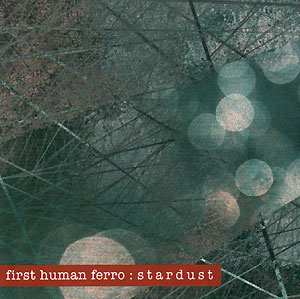
| FIRST HUMAN FERRO |
Stardust
|
CD |
"Dedicated to the 50th anniversary of the manned flight into space a Russian label Nitkie presents a new recording by a Ukrainian project First Human Ferro. "Stardust" is an ambient anthem tribute to the scientists, engineers and space pilots who contributed to the remarkable date. Their earthly dust is drifting like particles of god in the infinite space now, endlessly multiplying through the minds eye of the enthusiasts to come and carry the banner of scientific and technological revolution further. The album was recorded in 2004-2010 and featured by collaborations with Claustrum, Oda Relicta, and Louisa John-Krol. Designed by Marcin Lojek the release is limited to 500 copies in a digisleeve." [label info]
www.nitkie.ru
"Vor einiger Zeit hat OLEGH KOLYADA im NONPOP-Interview Bedenken geäußert, dass ihn sein Studium wohl zukünftig von musikalischen Aktivitäten abhalten würde. Dies scheint nicht der Fall zu sein, denn die Dichte an Veröffentlichungen, die auf den Ukrainer zurückgehen, hat eher noch zugenommen. Immerhin kümmert sich OLEGH mit seinem zweiten Hauptprojekt FIRST HUMAN FERRO nun schon zum zweiten Mal innerhalb kurzer Zeit um eines seiner Lieblingsthemen, den Weltraum. Erst vor wenigen Monaten erschien mit "Homo Shargey" (NONPOP-Besprechung) die Hommage an den ukrainischen Raumfahrtvordenker YURI KONDRATYUK, nun folgt mit "Stardust" eine allgemeine Reminiszenz an die bemannte Raumfahrt, die am 12. April 2011 ihren 50sten Jahrestag feierte; JURI GAGARIN umkreiste 1961 als erster Mensch in einem Raumschiff die Erde.
Von der Anlage her ist "Stardust" ähnlich wie "Homo Shargey": OLEGH hat Stücke zusammengestellt, an denen er schon seit einigen Jahren arbeitet und die klanglich gut zusammen passen. Die zehn neuen Tracks sind in den Jahren 2004 bis 2010 entstanden, und wie auch auf dem Vorgänger merkt man dem Album diese Zeitspanne nicht an, es klingt wie aus einem Guss. Neu sind dagegen die Gäste: OLEGH KOLYADA war ja schon immer ein Bastler, hat mit seinem anderen Großprojekt ODA RELICTA mehrfach bewiesen, wie er ganz unterschiedliche Puzzleteile zusammenfügen kann. Diese Eigenschaft schlägt nun auch bei FIRST HUMAN FERRO durch, denn "Stardust" ist eine wohldosierte Mischung aus Dark Ambient, majestätisch-sakralen Klängen und einigen weiteren Einflüssen von CLAUSTRUM und LOUISA JOHN-KROL, die – neben dem eigenen Projekt ODA RELICTA – auf dem Cover genannt werden. Mit dem Dark Ambient-Projekt CLAUSTRUM aus Lettland ist es nicht die erste Zusammenarbeit, wohl aber mit der australischen Folk Pop-Nymphe LOUISA JOHN-KROL, die das hier schon häufiger besprochene PRIKOSNOVÉNIE-Programm ziert.
Mit den ersten Tönen fängt die Reise an, alles klingt und riecht nach kühlen, fremden Welten und Sternenstaub. Flirrende Synthieklänge werden ab und an unterbrochen von Morsezeichen, später setzen auch bedrohlichere Klänge ein, dröhnend navigiert das Sonar durch unbekannte Sonnensysteme. Überraschend, aber nicht unpassend sind die sich langsam einschleichenden, klassischen Klänge, militärische Bläserfanfaren wie aus einem Filmsoundtrack mit Verweis auf das erste (Marsch)Album von ODA RELICTA (NONPOP-Besprechung). Die Stimmung wechselt im weiteren Verlauf, hinter bedrohlichen Drones lauert ein Knistern und Kratzen, der eingespielte Funkverkehr eines Weltraumspaziergangs mit dem Klassiker "one small step for man" klingt wie ein Original, und die zahlreichen Geräusche symbolisieren perfekt die Zerbrechlichkeit und Gefährlichkeit des Unterfangens.
Über klassischen, höhligen und grollenden Dark Ambient arbeitet sich OLEGH in geheimnisvollere Gefilde vor, russischer Funkverkehr kratzt zwischen militärischen Trommeln und weichen, gleitenden Drones, dann dringt "Stardust" endgültig in die unendlichen Weiten vor. Einzelne Signale verschwinden im All, hinterlassen trommelnde Schallwellen. Eines der beeindruckendsten Stücke des Albums ist "Spectra Of Sferics" (08), Weltraumgefühl mit wenigen Mitteln: nur ein leises Knistern, dazu fremde, schöne und schwerelose Töne. Die Feenstimme macht "Of Earth Pristine" (09) zum ätherischsten Stück auf "Stardust"; wenige Keyboarddrones, auf die die Stimme von LOUISA JOHN-KROL vor sich hinsummt. Erinnert ein wenig an JACK OR JIVE. Das eindeutig ergreifendste Stück ist das letzte und längste, "Stars Scattered Pain" (10) zusammen mit CLAUSTRUM. Wunderschön und glänzend wird der Moment im Spacefilm vertont, an dem in der Einsamkeit ein Planet sichtbar wird und die Crew ahnt, dass sie doch nicht den Kältetod sterben muss. Eine langsame und majestätische Melodie, viele Klänge und Geräusche dazugepackt, wie ein 'Best Of' des ganzen Albums.
OLEGH kann es halt, so einfach ist das. Seine All-Epen verkörpern immer die richtige Mischung aus Erhabenheit, Melancholie und düsteren Gedanken. "Stardust" sticht dabei noch einmal besonders hervor, weil zusätzliche Elemente beigemischt wurden, die einzelnen Songs – vor allem den drei letzten – ein besonderes Gesicht geben. Feines Album!" [Michael We. für nonpop.de]
|
2011 |
€12.00 |
|
| FREIBAND |
Replicas
|
CD |
"Wenn ich das recht verstehe, dann entstand FREIBAND, eines der Soloprojekte des umtriebigen Frans de Waard, aus einem per Scrollrad erzeugten Geräusch, das ihn an Asmus Tietchens‘ Daseinsverfehlung (Stille Andacht, 1993) erinnerte. Der Hamburger hatte dieses Album aus den kratzenden Klängen fabriziert, die entstehen, wenn man eine Tonbandspule über den Tonkopf zieht, und die 13 Tracks allesamt ‚Freiband‘ getauft. De Waard wollte als einmaliges Projekt etwas Ähnliches probieren, woraus dann Microbes (Ritornell, 2001) entstand. Wie das bei FdW so ist, wurde daraus ein Fass ohne Boden, in das nun nach dem Gesetz der Unvermeidlichkeit auch Replicas (Monochrome Vision, mv19) eintaucht, das tatsächlich den Ausgangspunkt, nämlich Tietchens‘ Freiband-Tracks, als 13-faches ‚Re‘ remixt. Selbst das Cover ist eine Revision des Originals, jenem Haus mit Fenstern wie zwei aufgerissenene Augen und ein großes Maul. Inzwischen ist es eine Ruine mit eingeworfenen Fensterscheiben, herbstlich gesäumt von Ahorn. Wenn hier etwas einschlägig ist, dann A.C. Dantos Begriff ‚Aboutness‘ - Kunst ist immer ein Über-Etwas - , gesteigert, aber gleichzeitig auch implodiert, zu: Kunst ist Über-Kunst. But what is it all about? Schleifende, knisternde, pulsierende, blasende, kristallin funklende Geräusche, dazu - mit etwas Phantasie - aber auch paranormal, d.h. verhuscht und verzerrt ‚singende‘ oder ‚sprechende‘. Das leerstehende Haus wird da zum Geisterhaus, auch wenn de Waards nüchterne und spröde Akribie diesen hauntologischen Schluss selbst nicht nahelegt." [Bad Alchemy]
"Highly conceptual project that combines features of remix, recycling and plagiarism - the re-interpretation of classic album by Asmus Tietchens “Daseinsverfehlung”. All what can be heard on this CD, as always in case of Frans de Waard framework, is made from music that already existed: every sound, word in titles and even the cover picture - all is just processing and manipulation techniques. Freiband is one of solo projects by Frans de Waard. Besides Kapotte Muziek, Frans currently also plays in Beequeen duo with Freek Kinkelaar, runs Plinkity Plonk and other small labels, writes tons of reviews for the Vital Weekly newsletter. When just get some free time, he becomes active with various side-projects like Goem (minimal techno), Quest (ambient), Shifts (post-rock), Captain Black (remixes) etc." [label notes ]
"... Without getting too trippy or spacey, I would like to propose that this is the kind of music that alters your state of mind and being. Not the kind of album that you'll play in the background, 'cause it wants your full attention. It freezes your body and at same time makes you experience it from head to toe. In this way it has the same effect as most of Francisco Lopez' work has on me: it grabs you by the ears and sucks you right in." [SdT, Vital Weekly]
label-website:
www.monochromevision.ru
|
2008 |
€13.00 |
|
| GRÖHN, COSTA |
2+1
|
mCD-R |
"Während Asmus Tietchens nur manchmal dafür gehalten wird, ist COSTA GRÖHN tatsächlich ein Mann der Kirche, nämlich Pastor von St. Johannis-Harvestehude. Weit davon entfernt, ein heimliches Laster zu sein, ist sein offenes Ohr für die Dinge des Lebens um ihn herum eine Tugend, der man weitere Verbreitung wünscht. 2 + 1 (1000füssler 016, 3“ mCD-R) hat Grillen und Vögel erlauscht, Schritte, Stimmen, brausenden Wind, auch eine maunzende Katze, knisterndes Feuer. Draußen, daheim. Alles zart und geheimnisvoll genug, um unter die Rubrik ‚Ohrenblicke der Schöpfung‘ zu fallen (so hieß 2003 ein Projekt in der Hamburger Petruskirche, an dem Gröhn mitgewirkt hatte). Der Alltagsklang ist nicht allein collagiert, er ist detailreich bearbeitet, mit Vinyl-Samples beschichtet, mit fein schwebendem Feedback durchfädelt und durchwellt. ‚Discounterbeat‘ mischt das typische Piepen einer Supermarktkasse mit Drummachine und einem Hauch von Chor. Das hat seine eigene Art von Frömmigkeit. Weltfremd ist es definitiv nicht." [Rigobert Dittmann, Bad Alchemy]
"Costa Gröhn makes field recordings on the road, at home, in the city or in the forest. On "2+1" he processed recordings from his archive and added feedbacks and vinyl record samples to 2 and 1 soundscape compositions.
[P] January 2009.
1. Chirring calls at home 8'25
2. Within a circle of fire (disrupted playback) 3‘10
3. Discounterbeat 3‘44
About the Artist:
Costa Gröhn was born 1976 in Bad Segeberg (northern Germany). He is a pastor at the St. Johannis Church in Hamburg. He has been composing soundscapes and doing performances since 2000. Besides tracks for compilations and remix-projects, he has also released two full length CD-R albums "Im Gehölz" and "Bouboukas" on the Gruenrekorder label." [label info]
|
2010 |
€6.00 |
|
| JOAQUIM, VITOR |
La Strada is on Fire (And We Are All Naked)
|
CD |
Elektroakustisch anmutende Stimm- & Gesangexperimente, schöne schwungvolle Loops, Knistern und Piano-tunes; in magischer, leicht melancholisierter Atmosphäre, inkl. Saxophon und Bass real-time Integrierung, 8 Stücke, jedes aussergewöhnlich und gut!
Another very good album from this portugesian composer, combining electro-acoustic voice-experiments with loops, more concrete sounds and real time saxophone & bass-sounds.
“Vitor Joaquim: piano, electronics, singer table
Martin Archer: saxophone on 3 & 4
(processed by Chris Bywater + Charlie Collins)
Rodrigo Amado: saxophone on 5 & 7
Victor Coimbra: bass on 4 & 5
Mariana F: voice on 1
Vitor Joaquim started performing improvised music in 1982 with Em’dio Buchinho. For some years he studied cinema and produced sound for cinema, video and advertising, while also working as a video director.
He first started composing for dance at the Lisbon Dance Company (CDL) with the choreographer Mark Haim that would later take his work to the Coogan Dancers of Munich. Since then Vitor Joaquim has been composing for dance, theater, cinema, video, installations and multimedia, having worked with such creators as: Andreas Stocklein, M—nica Calle, Mark Haim, Vera Mantero, Paulo Ribeiro, Maria Jo‹o Pires, çlvaro Correia, Luis Fonseca, Alfredo Kraus, Michie Nakamaru, Gerard Uginet, Vitor Garcia, S—nia Rocha, Keith Vyse, Ana Sendas, Joana Novaes, Sandro Aguilar, Stephanie Tiersch - Mouvoir and Rui Horta. Since 1990 he is teaching audiovisual techniques in Lisbon.
In 1997 his release Tales From Chaos, as Free Field, is considered by the Portuguese newspaper Pœblico as one of the 10 fundamental records of Portuguese electronic music.
In 1998 he becomes a member of the Electronic Music Foundation, by invitation of it's president, Joel Chabade.
In 2000 he produced the first EME - Experimental Music Encounters, in Setœbal, a festival dedicated to the new musical languages.
Live or recorded he collaborated with such musicians or collectives as Carlos Z’ngaro, Nuno Rebelo, Rodrigo Amado, Carlos Santos, Em’dio Buchinho, Ernesto Rodrigues, Jose Oliveira, Jeffrey Morgan, Marco Franco, Gregg Moore, @c , Ulrich Mitzlaff, Pedro Rebelo, Franziska Schroeder, Paolo Angeli, Martin Archer, Sergi Jordˆ, Harald Sack Ziegler, Miguel Carvalhais, Robin Rimbaud (Scanner) and Pure.” [label info]
|
2003 |
€15.00 |
|
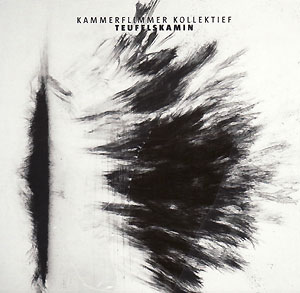
| KAMMERFLIMMER KOLLEKTIEF |
Teufelskamin
|
CD |
"Als Teufelskamin wird eine natürliche Felsformation bezeichnet, durch die Meerwasser mit gewaltigem Druck nach oben steigt und dort als Fontäne hinausgepresst wird. Die unmittelbare Übertragung des Begriffes auf das aktuelle Album des Karlsruher Trios KAMMERFLIMMER KOLLEKTIEF scheitert, denn weder Meeresgewalt noch Steinlandschaften kommen hier vor. Durchaus aber sind Assoziationen möglich mit einem winterlichen Kaminfeuer, in dem ab und an der Teufel, vielmehr ein Teufelchen steckt, welches die Funken stieben lässt.
"Teufelskamin" ist das entspannteste, wenn man so will: das winterlichste Album der letzten Jahre, nach dem experimentellen "Jinx" (2007, Besprechung) und dem schon sehr friedlichen, erdigen "Wildling" (2010, Besprechung). Neu ist die RY COODER-Gitarre, dieses surfige 'Twang', der Beach ein Winterwald natürlich. Sie verleiht dem ganzen einen Hauch von Country, von gediegenem Landleben.
An der Kernbesetzung hat sich nichts geändert: HEIKE AUMÜLLER ist zuständig für den entrückten, silbenhaften Gesang, JOHANNES FRISCH für Bass und Perkussion und THOMAS WEBER für Gitarre, Elektronik und Klavier. (In genau dieser Stammformation ist das KOLLEKTIEF übrigens auch live zu sehen.)
Mit der erwähnten Roadmovie-Gitarre beginnt "Teufelskamin", der "Coricidin Boogie" (01) wärmt und entspannt. Schlagzeugbesen und der gewohnt traumhafte Gesang von HEIKE AUMÜLLER – ob Text oder Silben lässt sich nicht genau deuten, ist aber eigentlich auch egal – sorgen für ein wohliges Gefühl, hier ist Heimat, ein Feuer im Kamin (noch ohne Teufel), nur leichtes Quietschen und Knarzen. "Never Collapse, Always Dazzle!" (02) wechselt in die Nacht, es schwirren eindeutig Silben durchs Dunkel. Geheimnisvolle Ambientmusik, bis dato still und leise, ohne Ausbrüche. "Teufelskamin Jam #1" (03) – das 'Jam' deutet es an – klingt jazzig und im Verlauf improvisiert. Nach drei Minuten tauchen die ersten Störgeräusche auf, psychedelische Gitarre und Kratzen, dazu ein 70er Fender-Rhodes-Piano. Immer noch das knarzende, wohlige, manchmal aber auch unheimlich flackernde Kaminfeuer. "Shangrila" ist kurz und wunderbar (04), ein melancholischer Wattebausch, Musik wie ein warmer (Schnee)Regenschauer. "Soft Machine" (05) ist Jazz zu später Stunde, nur mit Piano und Contrabass, getragen von einer anheimelnden, umwerfenden Melancholie.
Auch die zweite Hälfte des Albums birgt diesen neuen KAMMERFLIMMER-Ambient, erinnert übrigens während mancher Instrumentalpassagen (etwa in "New Ghosts", 09) an die stets unterschätzten DAS HOLZ – passt ja wiederum zum Thema 'Kamin'. Allerdings lodern die Flammen nach hinten etwas aufgeregter, knistern und knastern, die knarzigen und quietschenden Instrumente nehmen zu.
Seit 1996 existiert das KAMMERFLIMMER KOLLEKTIEF und erfindet sich trotz aller Wiedererkennbarkeit, vor allem durch den Gesang, für jedes Album neu. Nach "Jinx" und "Wildling" ist "Teufelskamin" innerhalb weniger Jahre das dritte hochkarätige Album, typisch KOLLEKTIEF und doch wieder anders, diesmal mit dem Schwerpunkt eindeutig auf wohligem Ambient im winterlichen Landhaus. Der Cowboy am Lagerfeuer für Zuhause. Herzerwärmend! Und im ausgehenden Sommer schon meine Lieblingswinterplatte." [Michael We./NONPOP]
|
2011 |
€15.00 |
|
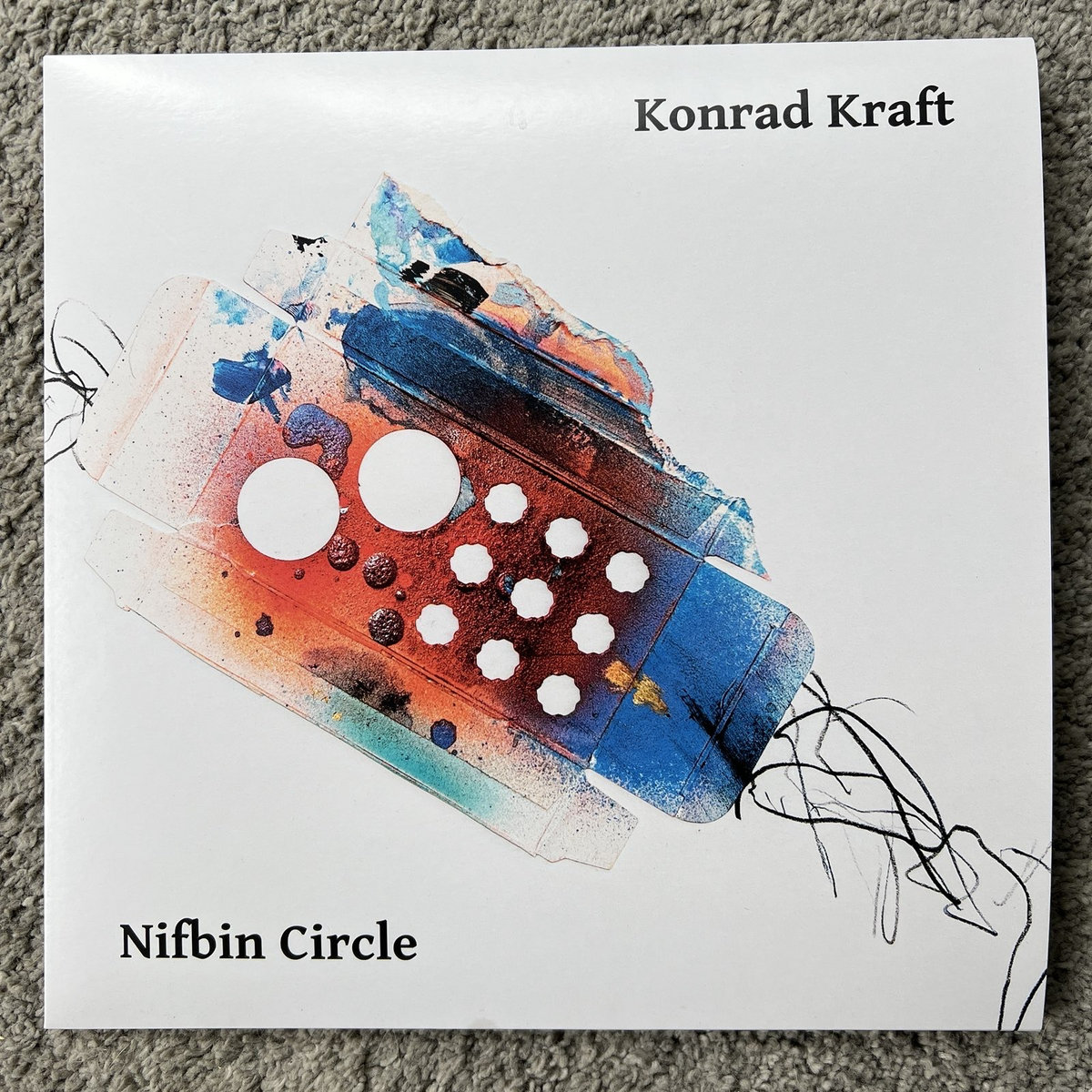
| KONRAD KRAFT |
Nifbin Circle (coloured)
|
LP |
Nifbin Circle is the fourth release by Detlef Funder, aka Konrad Kraft, on the Cologne label Aufabwegen.
Sounds generated with two apps on the iPad, provided the basic structures and the sound space. The strangely enraptured textures created in this way, with a subtle percussive touch, were partly combined with supporting beats in the course of further processing. Thus, after more than 30 years, tracks with rudimentary melodies and rhythms were created again.
Biography - Konrad Kraft (aka Detlef Funder)
1980, First tape productions in the field of Experimental/Industrial under the moniker Konrad Kraft.
1983, Assemblage of own first studio to realize tape recordings
1985 – 1994, Founding and managing Düsseldorf record store and label SDV-Tonträger.
Expanding the studio to 16 track facility; recording, production and release of various internationally renowned projects like Konrad Kraft & Dino Oon, Mynox Layh, TUU, Paul Schütze etc.
1992 – 1999, Various Voice-over productionen for german TV (arte, ZDF, ARD etc.)
1992 – 2006, Numerous productions iin the area of Techno/Trance for different labels, internationally booked DJ and live act
1999 – 2007, Founding and managing of 4CN-Studios Bochum for audio productionsa and mastering
2011, Konrad Kraft CD Temorary Audiosculptures And Artifacts released on Cologne based label aufabwegen
2016, Founding of „Paraschall“ label and studio for mastering and sound design.
Quadrat 12“ Vinyl released on aufabwegen
2016, Collaboration with Kai Angermann and formation of the duo Angermann/Kraft (prior Elektrofrühstück) and publication of CD Algorithm on Paraschall/Düsseldorf
2018, Reissue of Konrad Kraft Arctica tape on CD and LP via TAL, Düsseldorf
2019, OVAL 12“ Vinyl released on aufabwegen
2021, OBTAAL 2X12“ Vinyl Para002, Paraschall Records. Lim ed. of 250 copies with handmade cover.
2023, Nifbin Circle 12“ Vinyl, aatp09 is published by aufabwegen
2023, Stumm, Detlef Funder und Bernd Sevens, TAL Music (forthcoming)
2011- ongoing, selected live appearance at international festivals and venues, such as A/B Brüssels - Bel., Meakusma Festival - Bel., Image Movement – Berlin, Stadtgarten Cologne, Salon Des Amateurs – Düsseldorf, Weltkunstzimmer – Düsseldorf, BlackBox - Münster and more.
https://aufabwegen.bandcamp.com/album/nifbin-circle
"Nach „Oval“ erscheint auf Auf Abwegen mit „Nifbin Circle“ das neue Album von Konrad Kraft und das insgesamt vierte auf dem kleinen Kölner Label. Kraft, bürgerlich Detlef Funder, dessen Pseudonym auf Conrad Schnitzler und Kraftwerk verweist, beschreibt die Stücke als „tracks with rudimentary melodies and rhythms“, resultierend aus der Arbeit mit „two apps on the iPad, [which] provided the basic structures and the sound space“.
Tatsächlich ist schon direkt der Opener „Flabdragon Level 3“ ein verspielt klingendes Stück, das fast schon an ein Depeche Mode -Instrumental aus den frühen 80ern, so in etwa zur Zeit von „A Broken Frame“, klingt, das man vielleicht in einer alternativen Realität als B-Seite einer Single verwendet hätte. B-Seite nicht verstanden als etwas (nur) Sekundäres, sondern im Sinne von weniger kommerziell, aber eventuell spannender als die A-Seite. Es gibt ein tolles Zusammenspiel von perkussiven Momenten und leicht melancholischen Melodien. Das darauf folgende Titelstück mit bassartigen Sounds scheint aus vielen Schichten und Ebenen zu bestehen. „Fanznel Re“ ist mit Knistern und melodischen Flächen etwas reduzierter und erzeugt eine leicht dunkel-melancholische Atmosphäre. „Imrobial Connected“ besticht durch pulsierende flächige Sounds und pochende Rhythmik „Ilsimits II“ lässt kurzzeitig an Coils „Paranoid Inlay“ denken. Auf acht Stücken kreiert Kraft eine ganz eigene wie eigenwillige Form von abstraktem Elektropop, dessen oben zitierte „rudimentären Melodien“, an denen er sich laut Selbstauskunft erstmalig seit 30 Jahren versuchte, überzeugen." (MG)
"There is a great interplay of percussive moments and slightly melancholic melodies... crackling and melodic pads create a slightly dark-melancholic atmosphere... Kraft creates a very unique and idiosyncratic form of abstract electro-pop, whose "rudimentary melodies" are convincing." (African Paper). |
2023 |
€23.00 |
|
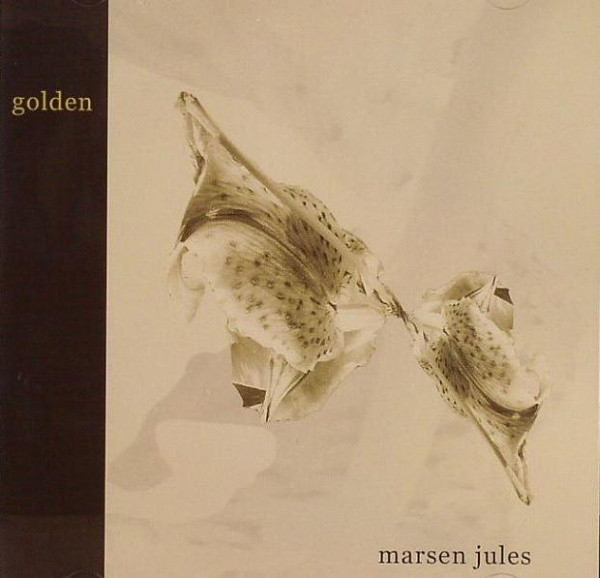
| MARSEN JULES |
Golden
|
CD |
"Den Sommer begrüßt das Genesungswerk friedlich mit diesem Album von Marsen Jules. Auf GOLDEN treffen sich Gitarre, Piano und Elektronik zu einer harmonischen ménage à trois. Gelegentlich unterstützt von Ziehharmonika, Flöte und Geige finden sie sich nach einer Winterwanderung vor dem Kamin ein. Leise knisternd entzündet sich ein Feuer und vertreibt die Kälte aus unseren Gehörgängen. Akustikgitarre und Piano zeichnen die melodischen Linien, während sich die Elektronik einfühlend der Klangfarbe des Interieurs annimmt. GOLDEN ist wahrlich ein treffender Titel , funkeln und glimmen doch bei allen sieben Stücken die Klänge, ohne ihre Hörer je zu blenden. Sehr intim, sehr nah, zugleich klar und transparent taucht die Schönheit der Instrumente den Sommer in ein neues Licht." [label info]
Electronica-Ambience reminding at times of newer ULTRA MILKMAIDS or a more poppy WILLIAM BASINSKI...
"Close followers of these pages will already be intimately familiar with the work of Marsen Jules, responsible as he is for two of the loveliest albums we've had the pleasure of stocking these last few years. His debut album "Herbstlaub" strolled into an autumnal tundra of layered strings and neo-classical arrangements that best brought to mind the work of Arvo Part, attaining both critical and commercial acclaim from all quarters of the music scene. His dense follow-up "Les Fleurs" approached similar terrain but with a more colourful sound-pallette, creating an aural bloom of dense orchestral reductions that kept the minimal composure intact despite the rays of aural sunlight allowed to seep into Jules' unique, inspiring studio. This long awaited new album "Golden" takes little time in declaring its place as a worthy successor to both its predecessors - it's a breathtaking collection of pieces that begin from the same neo-classical starting point and unfurl in different directions, taking in acoustic guitar, barely audible electronic pulses, dense orchestral reductions and heavy filtering along the way. You'd find it difficult to get past the album's incredible opening track "Birkengefluster" without finding yourself incredibly moved by what's in front of you - another shimmering weave of elongated midnight strings and subliminal melodies consorting to force you to abandon all resistance in the face of its relentless beauty. By the time second track "Wharend" wheezes into life with its prepared piano passages and other-worldly washes of sound, you'll be unable to acknowledge anything else in your surroundings bar the music. Marsen Jules is just one of those rare artists who manages to achieve so much with such limited material at his disposal - it's both the simplicity and timeless quality of the 7 long tracks here that make "Golden" not only one of the most beautiful albums you'll hear this summer, but also one that you'll find hard to let go of come autumn. Sublime music - essential listening.'' [Boomkat]
www.genesungswerk.de
|
2007 |
€10.00 |
|
| NO XIVIC |
I do blame you
|
mCD-R |
Noisiger & apokalyptisch wummernder als auf der Drone 7”, tönt es bei diesem One-Tracker des finnischen Projekts. Metallische Sirenen & knisternde Lava-Massen von Sound in diesem
Gänsehaut-Drone-Sumpf ! Ein einziges Knirschen, Dehnen & Ächzen. Grosses Hörkino !
“no Xivic is Henkka Kyllönen, a finnish artist you may have discovered thanks to his untitled 7" released last year by Drone Records, described by the label as "underground 'dronish' experimental sounds, based on long & moving metallic drones mixed with higher, near-distorted frequencies and low rumblings. this results in pure & elegant floating dronescapes that never stands still, giving you nothing to fix upon from your completely immersed mind.". "i do blame you" might be harsher & noisier than this previous piece of vinyl. here, no Xivic proposes us a near 24min long track, perfect blend of noise and dark ambience, piercing frequencies and rumbling drones. "try this in supermarket or some place filled with people ! (works everytime)" [label info]
|
2004 |
€5.00 |
|
| NOISE CLUSTER / STIGMATE |
Extreme Sleepwalking
|
MC |
"Extreme Sleepwalking" by Noise Cluster (der bekannte postindustrielle Trompeter & Xxena) and Stigmate from Italy are ready.
Nightmareish Sounds and Rhythms on black c40 Tapes in hand dyed, blue cotton bags with cover art by Fabian Blobel and a card with more pictures inside. Lim. to 50 copies
https://grubenwehrfreiburg.bandcamp.com/album/extreme-sleepwalking
Die beiden Projekte, die sich auf dem vorliegenden Tape zusammen dem Phänomen des Schlafwandelns widmen, sind schon länger in der elektronischen Musik Italiens aktiv und lernten sich doch erst vor kurzem kennen. Sowohl die Römer Flavio Derbekannte und Arianna Degni Lombardo (Noise Cluster) als auch der Sardinier Nicola Locci (Stigmate) sind Hörer und gelegentlich Mitwirkende einer bekannten Radiosendung für experimentellen Lärm (Elettrodo auf Radio Onda Rossa) und wurden so aufeinander aufmerksam.
Trotz ihrer unterschiedlichen Arbeitsweise – Noise Cluster kombinieren gerne Digitales mit akustischen Sounds wie denen der Trompete, Stigmate ist leidenschaftlicher Bastler an analogem Gerät – entdeckten sie schnell die Gemeinsamkeiten, die für eine spontane Kollaboration sprechen. Diese hat mit dem auf 50 Tapes und digital erhältlichen “Extreme Sleepwalking” nun ihr erstes Resultat herausgebracht, und dieses klingt in der Tat so, als wären die drei schon immer eine feste Band gewesen.
Schlafwandel wird gerne metaphorisch für einen apathischen Zustand verwendet, und eine solche Bedeutung klingt durchaus an, wenn das Label in Anspielung an die immer noch aktuelle Pandemie von “the nightmares, bad dreams, and gloomy and depressive feelings this particular historical moment has brought about” spricht. Die Musik selbst – und das von dieser inspirierte Artwork von Fablian Blobel – hat allerdings einiges von echten heftigen Alpträumen – schon gleich zu Beginn, wenn Schreie und andere angstinflößende Elemente über einem schmissigen, kratzigen Loop aus den Boxen dringen.
Auf “Extreme Sleepwalking” herrschen die Mächte des Grauens, und das kehrt auch der straighte Takt des Openers “Mindbender” nicht unter den Teppich, vielmehr hat man den Eindruck, dass die schleifenden und prasselnden Industrialsounds erst auf ihren endgültigen Ausbruch warten. In “Sleep (Mutation)” erzeugen schrille Sounds eine futuristische (oder paläontologische) Klanglandschaft, die droht, in Elektroclash umzukippen, was aber – auch dank elektrifizierter Noiselawinen und Flavios wie meist recht smoothen Trompete – nicht passiert. “Moving Target” startet spannungsvoll pulsierend, doch die vielen Soundideen und Melodiefragmente führen all das noch mal in eine andere Richtung. Die hier spürbare Nervosität kehrt später in “Dim Light” wieder, das eher an die grellen Scheinwerfer schweren Kriegsgerätes erinnert.
Alle Tracks offenbaren einen komplett eigenen Charakter und bleiben in ihrem Verlauf selten unverändert: Die beiden mit Knacken und Knistern beginnenden Teile von “Death Vision”, die irgendwann zu einem monumentalen Inferno an brachialem Pauken und Ariannas gehauchter Stimme anwachsen, finden später ihre (nur scheinbar friedliche) Erdung, bis sich der kratzige Kreis wieder schließt – diese Stücke, bei denen riesige Metallandroiden durch die Landschaft marschieren, würden in großen Hallen funktionieren und müssten, im Unterschied zu etwas subtileren, zurückgenommeneren Stücken wie “Where Am I?” oder “The Fall”, nicht einmal durch ihren ausgeklügelten Detailreichtum überzeugen.
Der “Brain Damage” im abschließend so betitelten Track entpuppt sich als starker Sog, der einen mit Pauken und (buchstäblichen) Trompeten in eine traumhafte Parallelwelt zieht, die an die pathologischen Visionen am Ende von Hoffmanns Der Goldene Topf denken lässt. Dies gelingt wohl v.a. deshalb, weil der Track ein wirklich kraftvolles und mitreißendes Album abschließt. (U.S.)
|
2021 |
€9.50 |
|
| NORTHAM, MICHAEL [MNORTHAM] |
 Suhina Suhina
|
10inch |
Brilliant new recordings by the prolific cosmopolitan (currently residing in Berlin) MICHAEL NORTHAM. "Suhina" is a notion for the sound of the wind moving through the trees. Instead of doing field recordings of wind MICHAEL NORTHAM tried to capture this feeling & the essence of this process through instrumental recordings from Indonesian flute & keyboard. Nature phenomena seen as the true manifestation of the Unknown. Stunning full colour artwork by Indian artist ROHINI DEVASHER. White vinyl, edition of 500 copies, incl. inlay with text by M. NORTHAM.
"Das Thema der Platte hätte auch von der K Foundation stammen können. Michael Northam vertont hier den Wind zwischen den Bäumen, auf finnisch suhina genannt. Was sich als schöngeistiges Ambientexperiment versteigen möchte, ist in der Endsumme erstaunlich unesotherisch geworden. Northam zieht alle Register seines musikalischen Könnens und scheint zu den wenigen zu gehören , die eine Komposition über den Zeitraum mehrerer Jahre gedeihen lassen können ohne der Verlegenheit zu verfallen, nach wenigen Wochen den Abschluss herbeizuzerren.
Beide Vinylseiten wirken dabei sehr transluzent und klar abgegrenzt. Bisweilen hat man das Gefühl, die leisen Zwischentöne der Feedbacks und trudelnden Dronecluster reichern sich mit dem Knistern des Vinyls an, so fragil erscheinen die Zwischenbrücken der jeweiligen Komposition. Wie GAS ohne Beats, wohl aber um das 10fache am Pitchregler hochgeschraubt und mit einer majestätischen Würde, die man sonst nur in den leiseren Backgroundklangarien der frühen Tortoise und ihren »Millions Now…« wieder findet. Orgelähnliche Töne wechseln in malströmartigen Verschiebungen ihren Standort und verwischen auf diese Art und Weise Gefühl für Zeit und Raum, bilden auf diese Art und Weise den Soundtrack für den einsamen Spaziergänger im Wald ohne ein Klischee zu bedienen.
Das Northam sein Stück im Sommer für das Vinyl editierte kommt auch tiefenpsychologisch dem Material zugute. Selten hat eine so ausufernde Komposition eine so hohe Ereignisdichte aufgewiesen, ohne dabei zum Sturm zu mutieren. Auf diese Weise hört man den Wind weniger im Gebälk, dafür mehr im Gemüt." [Thorsten Soltau / AEMAG]
"Every once in a while you bump into a masterpiece, Suhina is one of those times.
The cover has amazing artwork by the Indian artist: Rohini Devasher. Bizarre beautiful flower lifeforms in full color on the front, and in black and white on the back. The vinyl itself is white and nice sturdy and thick.
The 10” is a Drone Records release and is part of the substantia-innominata series.
A concept that deals with concepts like” unknown / unthinkable / unidentifiable / unspeakable etc.
The story behind this record is very interesting. Michael Northam was camping in Finland in 2005 and a friend told him that the sound of the wind moving through the trees was called “suhina” in their language. From that moment Michael wanted to capture that feeling in sound.
Starting with field recordings what was difficult to do, and then moving to blowing on Indian flutes and the use of keyboards. While working on these two tracks Michael has been traveling through Belgium, Slovenia, India and France through 2006 and 2007. The final result was constructed in Berlin in the summer of 2008.
The record has two tracks, called “Through” and “Within”. Both are beautiful very carefully constructed pieces that run over ten minutes of playing time. Side A“Through” is distorted and blissful, full of harmony and truly uplifting and carrying you away with the wind, through forests and plains. It feels like there is lots of wind, gray skies and rain, but also lots of sun rays and rainbows. And total melancholic euphoria. The B side “Within” is a nice continuation. All i can say is that this release is a beautiful, carefully constructed emotional masterpiece." [Nil Pavlov / Hourglass Drops]
"These two tracks of hypnotizing dronemusik from the wandering sound artist Michael Northam originated from a night camping in the Finnish hinterlands, where he became fascinated with the sound of wind whipping through the trees. Field recordings have long been central to
Northam's work dating back to his tactile compositions of corroded ambience and titanic drone arcing; and even the aspects of wind had
featured heavily in work through the Aeolian harps he built in a bunker on a desolate Finnish island. Where those recordings were
attempting to harness to power of wind as something of an intersection between technology and the landscape, these two beautiful recordings of brightly shimmering ambience are more of a poetic response to the dynamics of wind. So those whispings and scatterings of summertime arctic winds introduce the first side of this 10" and quickly subside amidst Northam's billowing drones from his Indonesian flute and an overblown Casio keyboard. The resulting waving tones flicker with the
lingering glow of the sun arching toward the horizon at twilight, with golds, oranges, and reds radiating through each timbre. So striking are the colors that Northam gets through these tones, it can almost distract from his conceptual anchor. No matter, as he's creating one of his finest pieces in a long time. Nice!" [Aquarius Rec.]
|
2009 |
€12.00 |
|
| PAN AMERICAN |
For waiting, for chasing
|
LP |
„Mark Nelson, früher Labradford, hat es gefunden, so scheint es. Pan-American-Alben waren immer großartig, aber man spürte immer die Verbundenheit zu seiner alten Band, die Weite und Schwere der Songs. Das ist jetzt anders und es fühlt sich nach einem großen Schritt an. Nelson klingt elektronischer und denkt dabei immer noch akustisch, spielt seine dronigen Trümpfe anders aus, ist nicht mehr offensichtlich vom Berliner Dub beeinflusst, lässt das Knistern der Steine für Minuten im Track einfach stehen und betupft diese ungelenken Gebilde nur sehr zurückhaltend mit weichen Haltegurten. Die Sehnsucht nach Stille klang nie so aufregend. Ein großes Album.“ [Thaddi / DeBug]
"For Waiting, For Chasing was originally issued in a limited pressing by the Stefan Németh (Radian) curated Mosz label in 2006. This is the first time it is being made widely available and also the first time it is being issued on the vinyl LP format. As Mosz eloquently stated at the time of release, "...it is not about the process or the media, which have been used. It is about how elements and structures are put in a detailed relation to each other, ending up in a slow-moving, breathing organism. Filaments of percussive elements condense to polyrhythmic elements, layers of sound, instruments and field recordings merge to build up a mystic parallel, not so much fictional world." Perhaps the most skeletal and minimal of all of the works in the PanAmerican canon, it may also be the most compelling. Released on CD and 140g black vinyl." [label info]
www.brainwashed.com/kranky
|
2010 |
€15.00 |
|
| |
For waiting, for chasing
|
CD |
„Mark Nelson, früher Labradford, hat es gefunden, so scheint es. Pan-American-Alben waren immer großartig, aber man spürte immer die Verbundenheit zu seiner alten Band, die Weite und Schwere der Songs. Das ist jetzt anders und es fühlt sich nach einem großen Schritt an. Nelson klingt elektronischer und denkt dabei immer noch akustisch, spielt seine dronigen Trümpfe anders aus, ist nicht mehr offensichtlich vom Berliner Dub beeinflusst, lässt das Knistern der Steine für Minuten im Track einfach stehen und betupft diese ungelenken Gebilde nur sehr zurückhaltend mit weichen Haltegurten. Die Sehnsucht nach Stille klang nie so aufregend. Ein großes Album.“ [Thaddi / DeBug]
"For Waiting, For Chasing was originally issued in a limited pressing by the Stefan Németh (Radian) curated Mosz label in 2006. This is the first time it is being made widely available and also the first time it is being issued on the vinyl LP format. As Mosz eloquently stated at the time of release, "...it is not about the process or the media, which have been used. It is about how elements and structures are put in a detailed relation to each other, ending up in a slow-moving, breathing organism. Filaments of percussive elements condense to polyrhythmic elements, layers of sound, instruments and field recordings merge to build up a mystic parallel, not so much fictional world." Perhaps the most skeletal and minimal of all of the works in the PanAmerican canon, it may also be the most compelling. Released on CD and 140g black vinyl." [label info]
www.brainwashed.com/kranky
|
2010 |
€15.00 |
|
| PARLANE, ROSY |
Jessamine
|
CD |
"Wie schon am ebenfalls bei Touch verlegten Vorgänger »Iris« finden sich auf »Jessamine« lediglich drei Tracks, nach der Betitelung wohl als Teile eines großen Ganzen zu hören, die vom Umfang her wieder eine Spieldauer von fast fünfzig Minuten erreichen. Dabei weisen deren durchwegs von Rhythmus und Melodie befreite Konturen recht eindeutige Züge klassischer Drones auf, die in den entscheidenden Momenten von monolithischem Dröhnen weg in Richtung konzentriert geschichteter Textur-Overloads tendieren und großzügig angelegte Spannungsbögen vornehmlich aus gekonnt inszenierten Intensitätsverläufen zwischen Loslassen und Verdichtung rekrutieren. Das dazu notwendige Instrumentarium ist zum Großteil akustisch und reicht von Gitarre und Piano bis hin zu Field Recordings, Radios oder verschiedenen Haushaltsobjekten. So bleibt auch nach dem digitalen Reißwolf eine, durch die glasklare Produktion eigenartig verstärkte, organische Grundstimmung erhalten, die durchaus im Widerstreit zur fokussierten, geradlinigen Ausrichtung der Tracks steht. Da gibt es kein Ausfransen, kein flächiges Abschweifen; Parlane entwirft einen beeindruckend konsequenten, fast schon ökonomischen Flow, zurrt die unruhigen Kleinstbestandteile, knackend, knisternd und Obertonfunken schlagend, zu drei hypnotischen HighTech-Ambient-Monstern zusammen und setzt auf die Dramaturgie der Dynamik. Oder umgekehrt? Während jedenfalls der erste Track noch vor dem Klimax ein trotzdem versöhnliches Ende findet und die große Erlösung im folgenden lediglich spärlich angedeutet wird, eigentlich nicht mehr als ein digitales Bäuerchen darstellt, explodiert das beinahe zwanzigminütige Schlussstück aus mittels Kaminfeuerknistern geerdetem, euphorisch verstrichenen Klanglayern zu einer wahrhaft infernalischen Wall of Sound, aufgezogen mit Hilfe von acht Gastmusikern, die ihre elektronisch verstärkten Streich- und Saiteninstrumente hier zu einem Crescendo auflaufen lassen, das seines gleichen sucht. Die Sicherheit und Konsequenz, mit der Parlane seine Soundskulpturen bearbeitet, sowie eine herbe, oft schwer fassbare Schönheit, die sich gleichermaßen durch harsche Noisewälle und entschlackte Ambientpassagen streckt, machen »Jessamine« zu einer enorm intensiven Erfahrung und darüber hinaus zu einem der besten Alben an den Outskirts elektronischer Avantgarde des vergangenen Jahres." [Tobias Bolt / Quietnoise]
"This is New Zealand-based (and former Thela member) Rosy Parlane's second full-length release on Touch. His previous album, Iris (2004), was hailed by Jim Haynes in The Wire who wrote: "Jon Wozencroft's impeccable photography and design packages Rosy Parlane's Iris inside a predominantly blue package, inextricably linking the music to the emotional resonance of the color... He flushes his soundfields with cascades of digital fragments which he separates into two distinct compositional categories. On the one hand, Parlane stretches sounds from guitar, piano and organ into unrecognizable drones that swell into dense layerings, every once in a while coalescing into fluttering half-melodies. On the other, he emphasizes the textural qualities of those digital fragments, simulating the natural acoustics of ice crackling from trees in winter or the gentle patter of rain on a windowsill. When fusing these together by placing the textures against the backdrop of the drone, Parlane effectively builds pointillist sound environments with a profoundly human melancholia." With Jessamine, Rosy develops these themes, and continues to incorporate new musical elements from unconventional as well as orchestral instrumentation. To him, everything is an instrument: from household objects to nature sounds. But it is the human element which gives his work such a distinctive sound. Ranging from ambient to noise, he gives full rein to textures of living; to start, languid and mournful; later harsh and assertive. Jessamine is a magnificent follow-up to a classic Touch debut. Rosy Parlane: electric and acoustic guitars, piano, melodica, accordion, violin, trombone, snare drum, shimsaw, amplified sawblade, bowed metal, household objects, contact microphones, field recordings, radio, computer. Additional contributions by Marcel Bear, Tetuzi Akiyama, Lasse Marhaug, Anthony Guerra, Michael Morley, Donald McPherson, Matthew Hyland, David Mitchell, Stefan Neville and Campbell Kneale." [press release]
"A little over two years ago, Rosy Parlane, made his debut on Touch with 'Iris', following solo releases on Sigma, and a membership of such bands as Thela and Parmetier. Three tracks back then, and on 'Jessamine' again three tracks. Rosy plays here electric and acoustic guitars, piano, melodica, accordion, violin, trombone, snare drum, shimsaw (an instrument designed by Marcel Bear), bowed metal, household objects, field recordings, radio, computer and contact microphone, and if that isn't enough there is also help from a whole bunch of people who played guitar. The first track starts out in common territory: ambient glitch made with bowed guitars, violins, but Parlane's music is more angular. It has a sharper edge, already in this first piece. Even a bit of old Organum could be traced in these scraping and bowing sounds. It's hard to say if all the instruments mentioned on the cover are also there, but guitars are definitely there. In the loudest part, 'Part Three' things become orgasmic loud, almost in a Merzbow manner, but Parlane keeps things nicely under control. Overall, Parlane has a richer sound than on 'Iris', there is more happening and he is stepping out of the more safer microsound glitch. Quite a leap forward!" [FdW / Vital Weekly]
|
2006 |
€14.50 |
|
| REYNOLS |
Fire Music Reloaded
|
CD |
Fire Music Reloaded, by REYNOLS
Fire Music was composed by Reynols in 2002 with fire recordings made at Tigre (Río Capitán) and different locations in Buenos Aires city and around. With some of this material, a CD EP appeared in Japan in 2002 through the Digital Narcis label, however the complete version of this piece remained unreleased for decades. In a recent research the masters of the whole work were found and rescued from the group's archives. So twenty years later, finally the full version of this piece is now ready to see the light on a brand new CD album carefully released by German label Aufabwegen. Fire Music Reloaded stands on the most conceptual side of Reynols' catalogue, along with works such as: 10.000 Chickens Symphony, Whistling Kettle Quartet, Computer Music, Gordura Vegetal Hidrogenada or Blank Tapes. In its four parts journey, the group explores a wide range of frequencies coming from fire as the only sound source. A release which pays tribute to the igneous aurality. Let your ears get on fire!
REYNOLS
Reynols is one of the most notable experimental music groups to ever emerge from Argentina. The band started in 1993 in Buenos Aires and was formed by Miguel Tomasín, Roberto Conlazo, Pacu Conlazo and Alan Courtis. The project counts over 150 releases by labels from Japan, Europe, USA, Oceania and Latin America. Reynols has been tagged as a “cult group” by British magazine The Wire, while the French festival Sonic Protest proclaimed it as groupe phare (lighthouse group) of inclusive music. Throughout 2003, Reynols occupied the 1st place on the “Top 10 Downloads” section of former website Space-Rock (UK). A year later, their song “Manisero Mufuso” was #1 on Larry “Fuzz-O” Dolman’s Blastitude Top10 (USA). Japanese magazine Studio Voice included Reynols’ album Barbatrulos in their “Best 100 Western Alternative Music Records” ranking, and Reynols/No Reynols among the “300 Legendary Discs” of all times, while The Wire ranked their boxset Minecxcio Emanations 1993-2018 in their 2019 Top50.Reynols has appeared in countless exhibitions, radio shows, TV shows, magazines, newspapers, books and documentary films from around the world. Reynols has collaborated live and in studio with acclaimed artists such as Pauline Oliveros, Lee Ranaldo, The Nihilist Spasm Band, Damo Suzuki, Paul Dutton, John Oswald, Michael Snow, Alan Licht, Birchville Cat Motel and Acid Mothers Temple, amongst others
https://aufabwegen.bandcamp.com/album/fire-music-reloaded
"Die aus Argentinien stammende und seit der ersten Hälfte der 90er aktive Band Reynols hat ein umfangreiches Werk veröffentlicht, das zwischen Stilen und Genres hin- und herspringt: Von skurillem Noise-/Anti-Rock bis zu Drone. Das jetzt auf Auf Abwegen erschienene Album „Fire Music Reloaded“ ist eine vollständige Version der 2002 auf dem japanischen Label Digital Narcis Corporation,. Ltd. erschienenen 20-minütigen EP „Fire Music“. Vielleicht spielt die sehr niedrige Auf Abwegen-Katalognummer auf das Alter der Aufnahmen an. Reynols bearbeitete -wie der Titel vermuten lässt – den Klang von Feuer; insofern knüpft diese Veröffentlichung mit der Konzentration auf ein Ausgangsmatrial an die „10.000 Chickens’ Symphony“-7” auf Drone oder etwa „Whistling Kettle Quartet“ an.
Der erste kurze Teil mit seinem helllen und transparenten Klang lässt einen denken, ein knisterndes Feuer brenne im Raum und hier wirkt das Ausgangsmaterial (scheinbar) wenig bis gar nicht bearbeitet. Teil 2 dagegen ist eine dichte wie verdichtete Klangwand, in der man zwischendurch immer wieder das Knistern von Flammen hört. „Fire Music Part III“ ist wieder fragiler, hier lässt das Knistern der Flammen an einen Gang durchs Unterholz denken oder an das Zirpen von Zikaden. Darauf folgt Teil 4 als dunkles Dröhnen und Brummen: das ist ein zähflüssiger Klangsud, so als lausche man dem Ächzen eines Gletschers und man fühlt sich durchaus an den frühen Thomas Köner erinnert. Die neun Minuten von „Fire Music V“ sind hektisch, während Teil 6 das Album fast schon mit einer Art Noisestück beendet: Der Track ist eine Kakophonie, bei der man sich vorkommt, als stünde man in einer Turbine. Diese nun vollständige “Fire Music” ist sowohl in ihrer konzeptionellen Konsistenz als auch in ihrer (zumindest partiellen) Heterogenität beeindruckend." [MG / African Paper]
|
2022 |
€13.00 |
|
| ROWE, KEITH & CHRISTIAN FENNESZ |
Live at the LU
|
CD |
Verzerrtes Rauschen & Knistern; abstraktes Elektro-Sirren; konkret geheimnisvolle Soundobjekte; leise, schwelende Feedbacks; plötzliche Brüche & Übergänge. So lässt sich vielleicht die akustische Dimension dieser live-Improvisation umschreiben.
"Keith Rowe and Christian Fennesz are recognized as two of the most prominent and influential musicians in experimental music. However, despite their joint participation in the 12 person MIMEO collective, their commercially released work has rarely intersected, which is why Live at the LU, a document of their first duo show together, is so revealing. Recorded in May 2002 in Nantes, Live at the LU finds the two musicians revisiting old pathways, further exploring territory they've separately mapped on records such as The Crypt, Harsh, and Hotel Paral.lel. Together they construct a soundworld that is jagged yet bright, stark and jarring, but in the end, somehow still soothing. Rowe's cover painting is deeply symbolic, rife with subtle references, many of which are fleshed out in Friederike Paetzold's brash pop design."[press release]
|
2004 |
€13.00 |
|
| SHIFTS |
Vertonen 10
|
CD-R |
Sehr schönes neues Material von diesem Projekt des immer noch hyperaktiven FRANS DE WAARD, der bei SHIFTS nur Saiteninstrumente einsetzt.. ein fast 60minütiger, mikrosound-artiger multipler Drone ertönt hier, der sich vom knisternden Anfang zu dunkel-bedächtige Flächen mit infiniten Effekten in verschiedenen Phasen und Ebenen bewegt. Grossartig !! Das ganze kommt in einer kunstvoll gefalteten blauen Hülle, lim. & nummeriert 60 Exemplare.
“Exquisitely packed comes this new work by Frans de Waard's string based project Shifts. And the question that immediately rises upon listening is: where are the strings? But as said before, Shifts is based on strings, so one may assume that the origins of these wide, drony and shimmering sounds are indeed strings. This short rant is meant only to mark a shift in Shift's appraoch to sound: this is definitely digitalised material, whereas his earlier works were obviously analog. OK, having said that, the work on this disc is an almost one hour piece of drony arctic sound, with small rattlesnakes moving about in the snow. I know this doesn't make sense but that's exactly the point: these sounds have the same incongruity and don't seem to belong together, but they go together very well. Further into the piece we are taken away from the desert snowfields and seem to be hovering at some height above them. And at a certain altitude the winds are taking over the sound scenery, adding resonance to the original drones. This is basically how the piece develops. A classic ambient drone piece that makes the mind go on its own trip and makes time seem to originate from another universe.” (MR, Vital Weekly) Address: http://www.verato-project.de
|
2004 |
€10.00 |
|
| SMALL CRUEL PARTY |
(before the dream...)
(SOLD OUT) |
7inch |
released February 1995
"This obscure project from Seattle may be known to some through several strangely and wonderfully packaged vinyl and tape releases (and one CD), as well as through installations and sound works presented in many galleries and other locations. On this nameless E.P. we find two tracks, 'Before the Dream' and 'Of the still Earth' in the typically unique SMALL CRUEL PARTY-style, here working with water-sounds as well as unidentifiable sources, thus creating a very particular language of noise, a special dimension that be must entered 'soul to soul', a very personal communication.
What is expressed by this kind of music you can find in your own treasury! SMALL CRUEL PARTY delivers the KEY (sic!) to open it!
The E.P. is accompanied by a full discography. SMALL CRUEL PARTY also played a rather short but fantastic gig at the first Drone-Extrakt Festival, at Tara (Emden), in October 1993. We'll never forget it.
'SMALL CRUEL PARTY teaches you to listen to a different language.' "[label info]
" SMALL CRUEL PARTY BANNTEN DEN SOUND DER KERAMIKWANNE. IN IHR SITZT MAN, INMITTEN VON WILD ÜBER DEN MENSCHEN NOCH UNBEKANNTEN DICHTERN DISKUTIERENDEN, KLEINEN SCHWARZ GEPANZERTEN TIEREN. SICH STETIG DEM HAHNE ENTREISSENDE WASSERTROPFEN MISCHEN SICH MIT IHREM KLANG UNTER DIE KNISTERNDEN STIMMEN. INMITTEN DIESER GROTTENGERÄUSCHE LIEGT DER HÖRER UND BEGINNT ZU BEGREIFEN, INDES DIE SCHEINBAR ENDLOSE OFFENBARUNG SCHLIESSLICH DURCH DIE BEGRENZTE AUFNAHMEKAPAZITÄT DER SINGLE AUSBLEIBT UND ERKENNTNIS IM BRODELNDEN SOG DES ABFLUSSES MIT HINABRAUSCHT."
(Peter Schlewinski, Vertigo)
" WICHTIG FÜR DAS VERSTÄNDNIS DER MUSIK VON SMALL CRUEL PARTY (ICH BIN MIR SICHER, ER WÜRDE ES NICHT MUSIK NENNEN) IST EINERSEITS DIE KONZEPTIONELLE ARBEIT MIT KLÄNGEN UND UMWELTGERÄUSCHEN, ANDERERSEITS DER SCHEINBAR MEDITATIVE CHARAKTER SEINER AUFNAHMEN. SCHEINBAR DESHALB, WEIL GERADE BEI SEINEN BESSEREN STÜCKEN MEDITATIV TATSÄCHLICH NUR EINE UMSCHREIBUNG IST: SIE REIZEN DIE SINNE ZU EINEM GENAUEN HINHÖREN, SIE SIND STIMULANZEN DER SINNE, DIE SICH VORNEHM ZU PHANTASTISCHEN KLANGLANDSCHAFTEN ENTWICKELN. DER HERRSCHENDE MINIMALISMUS DER MITTEL IN DEN ARBEITEN VON SMALL CRUEL PARTY ERLEICHTERT ES, DAS ANLIEGEN HINTER DER MUSIK ZU DEUTEN. "
(Thomas Beck, Odradek)
|
1995 |
|
|
| THE [LAW-RAH] COLLECTIVE & CINEMA PERDU |
Invocation
|
CD |
"in our lives we meet various people and we get to spend some quality time with a couple of them. depending on who we spend our time with and in what state of mind the time together is spent, we talk about friendship. and the more honest and unconditional this friendship is, the more it adds to the quality of our respective lives. it's a rare thing when you meet someone and right from the first moment you know you add to each others lives. it only happens a few times - and maybe not even that often - but we have all been there and we all recognize those moments; as well as the people it concerns. and yes, those times bring back a warm and fuzzy feeling. but then there are the many ways a friendship can end: a wrongfully interpreted word, a misunderstood thought, incompatible visions or simply because it started to cost more energy then it gave back. as incomprehensible a friendship can begin, it can also end. sadly there are also true and deep friendships that have never ended, even when said friend has left this dimension. the feeling that we're left with is just about the worst feeling ever ... with 'invocation' the [law-rah] collective and cinema perdu present a split album with personal views and interpretations of the emptiness that remains. finding closure in a process of grief. not the most happy of feelings, but it's a feeling we all recognize, an emotion we can all relate to and maybe the one thing we all have problems with giving it a place in our lives. the process of composing, writing, producing and finishing 'invocation' has helped us seeing things in perspective again after loosing loved ones. 'invocation' - simply to have that final conversation, to share that final drink, or just to say you care ..." [label info]
"So today we will be looking at (and listening to, of course) some darkly pulsing ambient and asking, “just what is it about this music that makes it so great for processing inarticulate emotions?” Well before I answer that, and while I try not to ‘zone out’ entirely, let me just articulate my feelings right now by saying: This... Is... Great. And, furthermore, it pulses darkly and in all the right places. Ahhh…
It’s a collaborative effort, this, between The [Law-Rah] Collective (Bauke van der Wal) and Cinema Perdu (Martijn Pieck) -- each performing and contributing two individual tracks and a fifth track wherein they combine their compositional efforts. Opening track, ‘1’, by [Law-Rah], pleasantly and gently throbs like the aural equivalent of a deep red Rothko painting. For musical touchstones, think Nurse With Wound and Locust. His second individual track, ‘5’, drones slightly more ominously and is accompanied by a glitchy ‘popping’ sound which is not unlike that made earlier when we were preparing the post here at Norman and a trolley rolled over a long sheet of bubble wrap. These sounds phase in and out and pan woozily to leave the listener a little disorientated.
Cinema Perdu similarly explores the empty psychological spaces which remain once you are all cried out. Really, this is perfect for the final part of the day when this reviewer has precious little more strength to muster. The two tracks Martijn Pieck brings to this disc are as sublime as the previous two by Bauke, in that the music is the contemplative, irresistible, seemingly boundless evocation of space, of internal conflicts easing and resolving themselves outside of time. Plus, his second track features metallic chiming under mallets. I’m a sucker for resonating metal and mallets.
Martijn and Bauke’s collaborative track, ‘4’, is possibly the most affecting of all. What sounds like a sample from a long lost choral masterpiece is used as a bed for found sounds and plucked electroacoustic instruments, with an industrial throb underpinning it all… there’s an organ playing. For a minute there, I thought it was coming from the cathedral in my mind. Then silence. The CD whirrs its death throes and I feel a little more alive." [Norman Rec.]
"THE [LAW-RAH] COLLECTIVE ist ein mehr oder weniger loser Zusammenschluss von Künstlern rings um den niederländischen Musiker BAUKE VAN DER WAL, der das Projekt mit dem enigmatischen Namen um das Jahr 2000 herum gründete. Bevorzugt tummelt man sich im Experimental-, Drone- und Dark Ambient-Sektor, zeigt aber auch keine Berührungsängste mit harscheren, ja dezidiert noisigen Spielarten, was exemplarischen Ausdruck in Kollaborationen mit NAVICON TORTURE TECHNOLOGIES (Box Edition von "The Gospels Of The Gash" und "Your Suffering Will Be Legendary") findet. Überhaupt ist man, was die stilistischen Details betrifft, um relativen Abwechslungsreichtum bemüht, und so reicht das bei discogs aufgespannte Genre-Spektrum von "Elektronik, Pop" über "Experimental, Abstract" bis hin zu "Dark Ambient, Drone". Seiner Grundrichtung bleibt das Kollektiv nichtsdestoweniger treu; nicht umsonst hat man schließlich – nomen est omen – der eigenen Homepage die Adresse "darkambient.net" verpasst. Entsprechend gerne arbeitet man freilich mit stilistisch benachbarten Künstlern wie CISFINITUM oder eben CINEMA PERDU zusammen. Der Mann dahinter, MARTIJN PIECK, ist langjähriger Freund VAN DER WALs, seit 2008 Vollmitglied von THE [LAW-RAH] COLLECTIVE und seit 2011 unter dem nom de guerre CINEMA PERDU aktiv, unter dem er bislang mehrere Alben im File- und Tape-Format veröffentlicht hat.
Die vorliegende CD "Invocation" ist nach dem gemeinsamen Split mit WOODBNDR, "Blue Ruins Under Yellow Skies" von 2014, die zweite dezidierte Zusammenarbeit mit CINEMA PERDU und folgt stringent jener kontemplativen Drone-Programmatik, die im Großen und Ganzen das Leitmotiv für die Arbeit VAN DER WALs mit dem [LAW-RAH] COLLECTIVE abgibt, hier allerdings in ganz besonders vielschichtiger, facettenreicher Form zelebriert wird. Das Thema der CD fordert eine gewisse Besinnlichkeit freilich nachgerade heraus, beschäftigt sich die inhaltliche Ebene von "Invocation" doch mit dem Zerbrechen, Erlöschen, in jedem Fall aber mit dem Ende intensiver Freundschaften und enger Beziehungen, sowie insbesondere mit jener gähnenden Leere, die eine solche, mehr oder weniger gewaltsame Trennung einer tiefen emotionalen Verbindung nach sich zieht – egal, ob sie "nur" einem menschlichen Zerwürfnis, einer individuellen, existenziellen Krise oder gar dem physischen Ableben eines der Beteiligten geschuldet ist: "Invocation" versteht sich, so führt der Promotext aus, als "split album with personal views and interpretations of the emptiness that remains. Finding closure in a process of grief." Vor diesem Hintergrund erschließt sich denn auch ganz zwanglos der Hintersinn jener Sentenz, die sich auf der Innenseite des CD-Kartonschubers findet: "Some things were never meant to change but here we are" ...
Das beim Berliner RAUBBAU-Label erschienene Album enthält sechs unbetitelte, lediglich durchnummerierte Tracks zwischen knapp acht und knapp zwölf Minuten Länge – etwas Zeit, Muße und Geduld sollte der interessierte Hörer also schon mitbringen, möchte er sich mit dieser, ohne Worte auskommenden, "conversation about what really matters" auseinandersetzen. Wer nun allerdings vom leidlich bekannten, sich über die komplette Laufzeit spannenden, mediokren Einheitsgebrumme ausgeht, das so betrüblich oft unter der Bezeichnung "Dark Ambient" firmiert, wird erfreulicherweise eines besseren belehrt: Lediglich das erste und das letzte Stück, beide von THE [LAW-RAH] COLLECTIVE eingespielt, präsentieren sich als ausgesprochen dronige, tiefenentspannte, einzig durch allerlei Rascheln, Knistern und anderweitige Störfrequenzen in minimale Regung versetzte, dabei jedoch niemals langweilige Soundmeditationen, während die von CINEMA PERDU beigesteuerten Beiträge 2 und 3 deutlich experimenteller und collagenhafter daherkommen – streckenweise fühlte sich der Rezensent durchaus ein wenig an NURSE WITH WOUND erinnert. Die eigentliche Zusammenarbeit zwischen den beiden Outfits, Track Numero 4, gibt denn auch das interessanteste Stück des Albums ab und entwickelt sich, ausgehend von einem sakralen, durch rotorartiges Flattern fragmentierten Choraleinstieg, hin zu einem, schon fast treibend-rhythmischen Mittelteil, um schließlich in einem amorphen, alle Strukturen wieder einschmelzenden Klangbad zu verhallen. Nicht alles auf "Invocation" ist also gar so meditativ, wie es auf den ersten Eindruck und nach Lektüre des zitierten Begleittextes scheinen mag – nach einigen Hördurchgängen entpuppt sich das versammelte Material in der Gesamtschau vielmehr als erfreulich abwechslungsreich und immer wieder für das eine oder andere überraschte "Oho!" gut.
Fazit: THE [LAW-RAH] COLLECTIVE & CINEMA PERDU legen mit "Invocation" ein rundum gelungenes Werk vor, das routiniert mit den Genregrenzen spielt, sie ausweitet und bisweilen beinahe transzendiert, ohne dabei jemals bemüht zu klingen, sich in Beliebigkeiten zu verheddern oder in akademischen Frickeleien zu verlieren. Beide Projekte interagieren perfekt miteinander und realisieren so ein bemerkenswertes, ebenso meditativ-hypnotisches wie dramatisch dichtes Album, das durch seine implizite Programmatik und die unprätentiöse Art & Weise, in der diese präsentiert wird, noch zusätzlich punktet: "the process of composing, writing, producing and finishing 'invocation' has helped us seeing things in perspective again after loosing loved ones. we hope it can do the same to you." – Irgendwie ist die ganze Veröffentlichung ... einfach ... sympathisch. Und wer kann schon etwas gegen sympathische Musik haben? Der Autor dieser Zeilen jedenfalls nicht." [Endsal/NON-POP]
|
2016 |
€13.00 |
|
| TOY BIZARRE |
kdi dctb 039
|
mCD |
"Der Code kdi dctb ist bei Cédric Peyronnets Fieldrecordings so obligatorisch wie in gewissen Parallelwelten das BWV oder dergl. ‚kdi dctb 039‘ speziell ist der Mittelteil einer Trilogie, die mit ’kdi dctb 151’ auf dem Split mit Dale Lloyd auf Bremsstrahlung in San Diego begann. Dass Peyronnet auf puren Naturklang (keine Synthesizer, Sampler etc.) pocht, wurde schon als bewusste Abkehr aufgefasst von der erzfranzösischen Pariser Musique- Concrète-Schule. Aber die Lauschangriffe auf die akustische Umwelt, hier nur deklariert mit ‚made in various places from 1994 to 2007‘, sind nicht weniger "typisch französisch". Oben propellert ein Flieger, unten knistern Laub und Ästchen, dazwischen ein Hüsteln, Klackern und Knurschen, ein Zwitschern, Bitzeln und Zirpen, wie ein Glas prall gefüllt mit ‚Wald & Wiese‘. Duchamp hat 1919 in einer Apothekenambulle ‚Pariser Luft‘ als Readymade-Gastgeschenk mit in die USA genommen. Peyronnet könnte entsprechend 20 Minuten ‚Heimatklang‘ verschenken, so komprimiert, dass er explosiv verpufft, dass es wie ein Percussionorchester aufrauscht und dann minutenlang nachbebt, als synästhetisches Konzentrat von ‚Natur‘, über die hinweg erneut Flugzeuge ihre Bahn ziehen" [Bad Alchemy]
"kdi dctb 039 is a part of a trilogy made up of 'kdi dctb 151' (See bremsstrahlung recordings), 'kdi dctb 039' & 'kdi dctb 180' (TBR).
Another piece about childhood memories composed only with field recordings made in various places visited from 1994 to 2007 : acoustic spaces, sound objects, sound auscultations, bits of soundscapes... Microphone and recorder as the primary tools. It's sometimes good to make a pause, seat and take a look at the
past - then, some sound fragments may appear... our sound memory. toy.bizarre (Cédric Peyronnet / ingeos) - sometimes qualified as "rural headphone electro(acoustro)nic music" - works on field recordings, phonography, soundscapes, sound art, since 1985. He has released more than 40 works on CDs, tapes, videos, compilations...Contact : http://www.ingeos.org" [label info]
"Throughout the '90s, Cedric Peyronnet would boldy announce that none of his Toy Bizarre recordings were made with synthesizers or samplers, instead with field recordings and collage techniques as his twin media. It has been speculated that this notion comes from a
punk attitude against France's institutional avant-garde which evolved out of the work of Pierre Schaefer and Pierre Henri; but at the same time, Peyronnet's recordings focus on the specificity of sound locations, and the technology of samplers and synthesizers didn't have the ability to reflect the unpredictability that Peyronnet witnessed in environmental sound. While Peyronnet doesn't mentioned his aversion to technology on this 3" from Ferns, he's retained the same adventurous sensibility for dynamic edits coupled with nocturnal, slippery ambience. From the jump-start opening of crackling twigs and grasses with an airplane's Doppler-effected
engine roaring in the distance, Peyronnet's 20 minute composition dissolves into elegantly fluid timbres weaving out of tactile sounds
from sand, grit, gravel, and other bits of detritus. Once all of the sounds have all settled into a drift of stasis, a quick jump to another set of textures and abrasions begins with a corresponding set of sympathetic drones. Fans of Loren Chasse's field recording work,
Tarab, and Steve Roden should all take note of this exceptional release." [Aquarius Records]
|
2007 |
€6.50 |
|
| TROUM & RAISON D'ETRE |
De Aeris In Sublunaria Influxu
|
CD |
"...Troum und Raison dêtre, das Yin und das Yang des Unbewussten." [Sibylle Bölling]
"Ever wondered how a mix of Troum and raison d’être would sound like? Here is the long awaited answer.
Four years in the making – carefully forged between 2011 and 2014 -, De Aeris In Sublunaria Influxu showcases a magically crafted alchemy between these two titans of the drone and ambient realms.
Troum navigate through cavernous, subterranean spaces where cyclical sounds reverberate towards impressive crescendos of icy noise, luminous drones and dramatic, guitar-driven ghostly melodies. Their truly unique gorgeous soundscapes shine in a perfect symbiotic movement with the Swedish dark ambient maestro Peter Andersson. Engulfed in a hauntingly beautiful kaleidoscope of grey-ish melancholia, raison d’être comfortably walks deeply into Troum’s vast territory, delivering his very own trademark of eerie tones, ominous sacral ambience and crystal clear constructions.
Airy lush enigmatic atmospheres live together with dark breathing, reverberant transformative drones. Rich and gorgeously layered.
Mastered using the K-14 level standard, the album comes lavishly assembled in a custom, sturdy 6-panel digisleeve packaging with amazing minimal artwork by the award-winning Spanish designer Ritxi Ostáriz. Limited to 700 copies." [label info]
www.essence-music.com
"Schön, wenn vorab kaum Worte nötig sind, weil allein die Tatsache der Zusammenarbeit zweier namhafter Künstler oder Bands für sich steht. Das deutsche Duo TROUM trifft auf den Schweden PETER ANDERSSON. Meine persönlichen Drone-Helden, die wie kaum eine andere Gruppe den Begriff 'Drone' mit Leben füllen, treffen einen der wichtigsten Dark Ambient-Workaholics mit seinem Hauptprojekt RAISON D'ÊTRE. Obwohl 'aufeinander treffen' eigentlich nicht das richtige Wording ist. Viel eher passt zum Beispiel 'aneinander schmiegen', denn entsprechend verwoben und organisch ist die über vier Jahre sorgfältig vorbereitete Zusammenarbeit ausgefallen.
"Folia" (01), der Opener und eines der zwei kurzen Stücke, beginnt mit schwebenden Drones, die ich sofort TROUM zuordnen würde. Das Knistern und Knastern wiederum, welches unterschwellig für Unruhe und Grautöne sorgt, gehört zu RAISON D'ÊTRE. Diese Zuordnung lässt sich über weite Teile des Albums vornehmen. Nach dem dezenten Vorspiel entsteht mit "Alio Tempore" (02) das Bild einer riesigen Kathedrale: abwechselnd tönen schwere und leichte Gongs, Soundcluster im Stile eines Chores schieben sich langsam nach vorne. Im Untergrund ergänzt ein Klirren die Szenerie. Über spacige, flirrende (Gitarren?)Sounds ergibt sich ein ruhiger, gleitender Ausklang. Auch "Oculum Mundi" (03) arbeitet mit Kirchenglocken-ähnlichen Loops, wie überhaupt die Stücke oft sakral wirken. Hier folgt allerdings eine hektischere Wendung, mit Dramatik durch mehr Geschwindigkeit inklusive eines mächtigen Trötens. "Atmosphaera" (04) ist warm und weich, sehr dronig eben, mit diesem kleinen Maschinen-Rattern anbei. In "Meditationum" (05), dem längsten Track, bilden atmende, singende Drones eine chorale Fläche, sorgen für weites und gelöstes Ambiente. Konkretere, schnarrende Klänge schieben sich nach einigen Minuten hinein, und die im Verlauf zunehmend längeren, gleißenden Drones erinnern mich an Musik für (oder von) Eisberge(n), untermalt von an dieser Stelle sehr organischen Sounds wie Grillenzirpen. "Flammae" (06) ist mit seinen drei Minuten für mich das schönste und auch wehmütigste Stück des Albums, die Drones formen eine betörende Melodie. Und "Ad Infinitum" (07) wirkt zum Abschluss auf mich besonders mächtig, fast bedrohlich oder unheimlich. Der Track hat was von einer Verabschiedung, von Dahinfloaten, insbesondere am Ende mit eisigem Krächzen und Schieben, mit fast menschlichen, stöhnenden Drones.
Als hätten TROUM und RAISON D'ÊTRE schon immer miteinander gearbeitet, klingt "De Aeris In Sublunaria Influxu" in der Summe seiner Bestandteile äußerst harmonisch. Die angesprochene Aufteilung der Sounds in deutsch und schwedisch, in flächige Drones und Dark Ambient-Geräusche ist zwar möglich, beides ergänzt sich aber durchweg hervorragend und ist so sauber aufeinander abgestimmt und gut produziert, dass die Atmosphäre dadurch gewinnt. Hypnotisierende Soundlandschaften, oder lyrischer: Ein Schweben in warmen Grautönen für dunkle Novemberabende.
Das Album kommt auch in einer limitierten Box mit zusätzlichen Tracks auf den Markt..."
[Michael We. für nonpop.de]
|
2015 |
€15.00 |
|
| TSUNODA, TOSHIYA / JUSTIN BENNETT |
Cleavage of Acoustics / Cacerolada
|
LP |
Nr. 3 in der Mixer Split LP Reihe ! JUSTIN BENNETT hat einem Protestmarsch in Barcelona gegen den Irak-Krieg im März 2003 beigewohnt, eine unglaubliche detailreicher Soundkulissensumpf aus Sirenen, Autohupen, Perkussion, Pfeifen & Gegröhl. T. TSUNODA arbeitet diesmal nicht mit reinen field recordings, sondern lässt Sinuswellen auf konkretes Material treffen, was zu knisternd-resonanzbildenden Effekten und merkwürdigen „small sounds“ führt.
Tolle Geräuschmusikplatte !
“Both Justin Bennett and Toshiya Tsunoda have gained a reputation when it comes to fieldrecording-based soundworks. Using their sonic surroundings as the startingpoint for their work, both are unique in approach and result. "Cacerolada" is based on a noise-protest against the Iraq-war, recorded in Barcelona. It wakes up and dies out as any day does, gradually moving along all kinds of sonic occurrences in between. Compared to Tsunoda's, Bennett's work comes from a more contemplative approach, outlining to his listener the beauty, absurdness or musicality of the everyday soundtrack he's living in. Originally these protests served a highly political goal, to record them and treat these recordings as a piece, is what made "Cacerolada" into a sound-object, to be listened to with different ears. This is the core of Bennett's work. Using hardly any processing-tools (Bennett composes with the raw building-blocks he records), these environmental-pieces are very much like documents, with specific artistic or aesthetical qualities. He hunts for certain scenes or situations and captures moments in time that contain a specific type of gesture he is looking for. The reference to daily life might be very much upfront, though Bennett's work is much more than a highly associative collection of recorded sounds. His recordings easily keep up as complete compositions with a strong musical form, taking the listener beyond what is heard at first sight and this is exactly where the strength in Bennett's work as a composer and sound-artist lies. These works show a delicate timespam, organically interpolating from scene to scene. The so familiar sounding material constructs and underlines compositional shape and development, adding a rare compositional richness to environmental-soundworks.
Tsunoda's "Cleavage of Acoustics" stands in close relation to previous works in which he tries to integrate somewhat technical concepts into the everyday beauty of singing birds and chirping crickets. Tsunoda adds to the body of these compositions of the public domain, as Justin Bennett does, but takes a different route to get there. He experiments to find out the musical relevance of technicality for natural sounds and forces a symbiosis between the two. The results still contain the associative character and organic development so typical for environmental recordings, but have a new, more abstract, mimicry. The sometime subtle, sometimes clashing, but always interesting interference between these two worlds, is what gives Tsunoda's work a very unique twist. It can exist as a completely autonomous entity while grafted upon the soundmaterial we all know so well. Tsunoda, like Bennett, makes us hear our surrounding acoustic reality in a different way. Not by fencing off certain parts of it, as Bennett does, but through simple yet very effective technical interventions, making it's appearance shift a bit or two.
"When listening to field recordings, I am always surprised by the richness of it's acoustics. Vibrations echoe from various places, in mixed complexity, changing constantly over time. In some way, it looks like stratum. I would like to sharply cleave the stratum to see the surface of the crevice. This work shows the audibility of sound vibrations through an uncommon process. I tried to cut off the source (field recording) material using a gate device and sine-waves. In each track, specific sine-waves have been mixed with the source-material.
In this work, I regard the sine-wave as the standard speed signal for the source. This has made any alternation within the audio signal detectable for the gate device. The linear audio signal (monoral) is cut horizontally into the advance direction, turning it into two signals. The amplitude of the alternating current has a separated + and - side, with 0 volt as base for the gate device. This split signal is simultaneously reproduced through the right- and left- channel of stereophonic audio equipment. Try mixing these 2 channels. The waveform is almost restored to it's original form, giving a peculiar result compared to the separated signal playback." [press release]
|
2004 |
€12.00 |
|
| TWELVE THOUSAND DAYS |
Insect Silence
|
CD |
"MARTYN BATES (Eyeless In Gaza) & ALAN TRENCH (Orchis, Howling Larsons) return after a long hiatus with the fourth TWELVE THOUSAND DAYS album. From the opening “Death Went Fishing” (a free translation of “vgíke o cháros na psarépsei”, the classic rebetiko by Giannis Papaioannou) to the closing, haunting notes of “Red And Golden Fire”, the listener is taken on a journey made up of a thousand journeys, a thousand side trips, a thousand destinations, hinging around the sprawling central trip of “Pathless”, in which the ramifications of choices made swim into hazy view. The 13 tracks that make up “Insect Silence” are a concatenation of dulcimers, whistles, guitars, synths, disturbing digital background noise (“Night Harmonium”) and other instrumentation with slices of pure, aching melody echoing through strange darkened corners, all enlivened and enlit by the wondrous tones of Martyn Bates.
MARTYN BATES is well-known for his brilliant long-time work with EYELESS IN GAZA, for his solo albums and for collaborations with MICK HARRIS and ANNE CLARK.
ALAN TRENCH: co-founder of World Serpent Distribution and musician with brilliant projects/groups ORCHIS, HOWLING LARSONS, TEMPLE MUSIC." [label info]
https://finalmuzik.bandcamp.com/album/twelve-thousand-days-insect-silence
"It's been quite some time since Martyn Bates (Eyeless in Gaza) and Alan Trench (Temple Music, Orchis) have come together as Twelve Thousand Days. It's fair to say much water has passed under the bridge since their last album From The Walled Garden in 2006. Insect Silence follows a ditched compilation release with the same title scheduled for release a number of years back. Insect Silence continues with the folk based music provided by Alan Trench and fronted by the distinctive voice of Martyn Bates but Insect Silence more so than their previous albums doesn't dwell solely in folk music. It may be its starting point but Insect Silence differs with passages of psych guitar and its layering of synths and electronics, as well as in the ambient interludes which feature throughout and often open up the tracks way beyond its grounding in folk music. Lyrically Insect Silence is couched in an English familiarity and in the eternal themes of life, love and death. Just shy of 70 minutes it's a long winding path of 13 tracks involving a large assortment of instrumentation which are woven into a complex and intricate tapestry of sound. You will be surprised by the pathways Twelve Thousand Days roam on .
Insect Silence opens to the spirited acoustic folk and percussive tambourine bashing of 'Death Went Fishing', outwitting death as it rushes onwards, weaving soaring psych guitars, which return throughout Insect Silence, as Bates implores that "he will return again". Its sets the scene for Insect Silence an album loosely based around folk music employing a rich multitude of instrumentation including guitars, dulcimers, harmonium, whistles as well as electronics. Twelve Thousand Days stretch the parameters of folk music with psych-guitar and ambient and instrumental interludes sprinkled throughout the 13 tracks. At times it likes listening to a Krautrock inspired psych-folk album with space rock leanings. In a good way, of course.
Opening to an ambient interlude 'Mad As The Mist' is the first of three musical settings of the words of Irish poet W.B. Yeats. Dreamy folk guitars entwine twang and strum, as Bates in his pure folk tones recalls philosophers such as Plato, Homer, Tully and Cicero, swelling into another passage of soaring solo of psych guitar and back again to dreamy folk song. More restless psych-guitar features on 'A Coat'. There's more of an experimental edge to the Yeats setting here pitching Bates' strained (and occasionally treated) voice to the fore, embellished by the pluck of guitar notes augmented by glinting electronics, bass throb and a needling guitar casting vibrations of psychedelic proportions. 'Arrow', the final piece in the Yeats trilogy is starker and played more straightforward with the beautiful folk voice over ringing acoustic guitar and warm synth backing.
Away from the Yeats tracks, a number of which Bates recorded with Troum in different musical forms, 'Errant Desires' moves to graceful ambience with flourishes of guitar notes. Bates' pure mournful tones add a sleepy lamentful melody, as faint electronics flicker behind the gentle flurry of guitar notes and assorted instrumentation. Beautifully atmospheric, it's one of my favourites on Insect Silence. Bates' voice is measured and melodic illuminating the sense of life passing in the evocative lyrics of rain falling, captured in our hands and gladly falling to the earth. More timeless folk arrives in the form of 'She Raises Her Eyes' where in captivating melodic tones Bates sings of a longing recalling long cold December months over duelling dulcimer chime.
One of the more surprising tracks appearing in the first half of the album is 'Invoke Hecate' where over passages of whistle and rousing, beating strum, Twelve Thousand Days sounding not unlike Ostara invoke the Goddess of Witchcraft, through an assortment of occult techniques. Alan Trench in past endeavours has facilitated many musicians in the apocalyptic folk genre but this rare sojourn, even with it blistering psych solo, can still raise an eyebrow and something of a smirk.
As mentioned earlier, Insect Silence is interspersed with instrumentals taking the music down alternate pathways, straying far off the beaten track. The first of these 'Night Harmonium' carries an air of arcane English mysticism with its loose folk stylings where strings chime and whistle billows merge over background synths and static clicks. The instrumental 'Old Ladies As Birds' is another brooding mystical moment where layers of whistles and flutes cast an age old melody over wheezing harmonium while loose guitar notes chime and ring out as distant electronics shudder underneath. While 'Old Ladies As Birds' is evocative of transforming souls and spirits, the jaunty folk offering of 'Fieldwork' is celebratory. Based on whistles and acoustic strum it comes across like a folk dance or Pagan procession. If 'Fieldwork' revels in a lost Englishness 'Descent' is dealing with nostalgia. A vintage crackling recording of 'See, The Conqu'ring Hero Comes' shrouds the descending organ scales of 'Descent'. Bates' voice is quiet, distant and softly murmured amidst the eerie disembodied voices of the choir as percussion rattles. You can almost picture the landscape on the pastoral 'Red and Golden Fire' another experimental offering mixing lulling electronics with whistles and flutes which closes the album.
Insect Silence hinges around 'Pathless' an epic experimental 16-minute musical and lyrical journey which we all make on our travels through life. Set in the middle of the album it continues the theme first introduced on the opener 'Death Went Fishing'. With the huntsman at our heels, we try to outwit death to no avail. Travelling from ringing guitar with Bates' voice, wrapped in layered accompaniment, veering between passages of Krautrock electronics and wavering synths to psaltery, whistles and location recordings. All the elements of Insect Silence emanate from and come together on this track to great effect. As it flows together seamlessly it's difficult to pinpoint where 'Pathless Part I' ends and 'Pathless Part II' begins but it may be when a heartbeat bass pulses and acoustic guitars ring out and the spoken word of Lisa (I think this is Elizabeth S who features on releases from Eyeless In Gaza) surfaces amidst guitars and layers of spacey synths which lull, crash and wail, before Bates returns, to close this epic track in high registered tones.
Insect Silence bustles with an immediacy, there's a sense of freshness of getting it all down on tape before the additional sound layers of instrumentation are added. Ambient, electronics, psych guitar, whistles, location recordings are all here embellishing the tracks making it intricate and complex. At the heart of it is an open-ended folk sound reflected in Bates' beautiful, distinctive voice which illuminate the timeless themes. Insect Silence is by far the best I've heard from Twelve Thousand Days and though the tracks are disparate there's an arching basis in folk music which traverses into other areas which holds it all together. As we said, Insect Silence is a journey, a pathway laid down just waiting for us to follow. Insect Silence is released digitally and on CD by Final Muzik in an edition of 500 copies. For more information go to Final Muzik and to download go to Final Muzik Bandcamp." [Compulsion Online]
"Man neigt gerne dazu, Bands, die sich nur alle Schaltjahre oder seltener zu neuen Aktivitäten zusammentun, als klammheimlich aufgelöst zu betrachten, erst recht dann, wenn es sich dabei um noch anderweitig aktive Musiker handelt – so wie Sänger Martyn Bates mit Eyeless in Gaza und seinem Soloprojekt und Instrumentalist Alan Trench mit seinen Folk- und Psychedelic-Gruppen Temple Music, Orchis und Black Lesbian Fishermen. Nachdem mit ihrem Duo Twelve Thousand Days wahrscheinlich nur noch wenige gerechnet hätten, steht mit „Insect Silence“ nun ganz überraschend ein neues Album in den Regalen, das fast da anknüpft, wo die beiden vor gut zwölf Jahren mit „From the Walled Garden“ aufhörten. Fast, denn gerade bei Alan sind doch ein paar Spuren seiner neuen Arbeiten herauszuhören.
Wie man es von früheren Aufnahmen her kennt, wechseln sich schmissige, fast frohsinnige Folksongs ab mit verträumt melancholischen Klageliedern und geheimnisvollen ambienten Soundscapes, und zusammen mit Bates’ unverkennbarer Stimme, die so klar und jugendlich wie eh und je klingt, kreiert die Musik ein verzaubertes Setting, das an ein langsam vor dem Auge verschwimmendes Jugenstilgemälde erinnert.
„Death Went Fishing“ und „Invoce Hecate“ zählen zu den eingängigen Folkstücken, die mit feurigem Geschrammel und ekstatischen Rasseln nach vorn galoppieren – mystische oder makabre Töne schleichen sich über sanft gesungene Textzeilen in die Szenerie und bilden mit der harmonischen Musik eine heikle Mischung, und schon mit den allerorts spürbaren heidnischen Untertönen sind die Stücke vor jedem Indie- und Pop-Appeal gefeit. Impressionistische Tableaus wie „Mad as the Mist“, dessen anfangs noch ziellos umhertastendes Gitarrenspiel sich erst nach und nach zu einem anmutigen Stimmungsbild zusammensetzt, bilden einen Gegenpol dazu, ebenfalls das aus einer balladesken Märchenwelt herübergewehte „Old Ladies as Birds“ und das mit Knacken und Knistern leicht verfremdete Zwischenspiel „Night Harmonium“ – beide Stücke gewinnen noch an Charisma durch Alans berührendes Flötenspiel.
In einigen dieser Tracks sind aber auch räudige Psych Rock-Elemente zuhören, die der Musik eine Kantigkeit verleihen, die in den klassischen Zeiten des englischen Folk nichts ungewöhnliches gewesen wären – zünftige E-Gitarrensoli und dröhnende Riffs, die die Folkmelodien, die sie spielen, gleichsam zerschreddern, als wären sie eine nationalhymne in Woodstock. Weder Eyeless in Gaza noch Orchis waren frei von solch rauen Beigaben, doch hier hat sich v.a. die Sprache jüngerer Temple Music in die Stilpalette geschlichen und gibt dem naturverbundenen Sound eine deutliche Prise Realismus.
Es gäbe einiges, das sich in den einzelnen Songs hervorheben ließ, die anrührende Melodie in „Errant Desires“, die cinematischen Verfremdungseffekte in „Red and Golden Fire“ und der melierte Orgelsound in „Descent“, der in ein verwehtes Sample des Liedes „Hail the Conquering Hero!“ (im Deutschen die Melodie von „Tochter Zion, freue dich“) übergeht, sind nur einige davon, doch alles in allem funktioniert „Insect Silence“ am besten als zusammenhängendes Werk, das mit mehrmaligem Hören immer mehr zu verzaubern weiß." [U.S., African Paper]
|
2018 |
€13.00 |
|
| V.A. (VARIOUS ARTISTS) (COMPILATIONS) |
DRONE-MIND // MIND-DRONE Vol. 8: AUME, K. ISHIGAMI, HIROSHIMABEND, BALDRUIN
|
LP |
Four "Drones" on one record! Volume EIGHT (MIND-08) is OUT NOW (11/2021) feat.:
KAZUYA ISHIGAMI ҉ AUME ҉
HIROSHIMABEND ҉ BALDRUIN
Drone on! We're finally back with a more 'pulsative' and post industrial-influenced issue, presenting the following artists: KAZUYA ISHIGAMI (*1972 / Osaka / Japan) is a prolific composer, engineer, sound designer and performer active for many years (also under the name DARUIN), with broadcasts of his works around the globe. His track 'Clean2020' works on the theme of 'memories" and is based on the idea to accept and acknowledge even the painful memories to reach a state of ease and to transform the subjective past...
AUME is the duo of SCOT JENERIK (23five Inc. / Mobilization Records) and ALEPH OMEGA (ex CHROME), from the US west coast, both also active in F-SPACE before, creating stunning audio-visual 'immersion dark ambience" with true archaic energy..
HIROSHIMABEND (aka 'puppy38') hails from Austin, Texas but has been based in Vienna for many years now, and has impressed with many long-form works in the field of electronic / esoteric emanations, mostly self-released via Opiumdenpluto. He is also active as a visual and mastering artist...- "Listening to the music of hiroshimabend has been likened to swimming in a milky lake of black ink."
BALDRUIN is a German project with a very electronic and musical edge. His pieces appear to be like excursions into a (bad) fairy-tale world.. - "well constructed cosmic ambient-scapes with a dark psychedelic / cinematic / surrealistic touch; when strange voices, subtle percussion and whistling noises enter the scenery.."
Let your MIND be surrounded by adventurous sonic landscapes - organic repetitions as coming from a ghostly otherworld, oriental field recordings, layers of pipe organ-like drones, mysterious electric ether-potentials etc..- "Vier feine Synapsenputzer machen einem mal wieder so manches klar.." [Bad Alchemy}
cover-art & mastering by puppy38 using two paintings by British artist PETE GREENING
https://www.saatchiart.com/Pete_G
Edition of 400 copies on VELVET PURPLE (solid purple and solid red mixed) coloured VINYL.
listen: soundcloud.com/drone-records order: www.dronerecords.de
basic concept:
DRONE-MIND // MIND-DRONE - Volume 8 LP
The series shows the various sides of today's experimental drone-music
This LP-series from Drone Records is dedicated to the Drones of the World, and the Drones of our Minds. A kind of continuation of the Drone 7"-series, with artwork based on paintings by British artist PETE GREENING.
Drone Music is seen as more than a mere 'music style', it expresses an approach to perceive and understand the world. DRONE-MIND and MIND-DRONE build a circle of diverse inter-relations. The Drone as a metaphor for everything that vibrates, that releases energy - from atoms and elementary particles to the hum of the earth and the universe. The Drone as an entity that connects everthing that exists within our own "mind-space", perception and self.
#########################################
"Würden Drone Records den Begriff, der von Beginn an so etwas wie ihr Motto werden sollte, enger fassen, dann wäre ihre Reihe “Drone-Mind // Mind-Drone” wahrscheinlich auf viel weniger Interesse gestoßen und vielleicht sogar eine kurzweilige Angelegenheit geblieben. Stattdessen setzte das Bremer Label von Beginn an auf eine Idee des Drone, die, wie es in einer früheren Besprechung bereits zitiert wurde, pars-pro-toto für verschiedene Arten der Vibration und der Freisetzung von Energie im buchstäblichen wie im übertragenen Sinne stand. Und so sind auch auf dem gerade erschienenen achten Teil der Reihe wieder vier Geheimtipps aus drei Kontinenten vertreten, die die Dröhnung als eine Art verbindendes Element gemeinsam haben, diese jedoch in ganz unterschiedlichem Maß und auf unterschiedliche Art mit anderen Aspekten verknüpfen.
Bereits in der Ankündigung hieß es, dass die neue LP pulsierender ausfallen und Einflüsse des Post-Industrial aufweisen sollte, und den Opener “Clean2020″ des aus Osaka stammenden Sound Designers Kazuya Ishigami kann man da bereits exemplarisch anführen. Der Track, der sich mit dem Thema (auch schmerzhafter) Erinnerugen und ihrer Akzeptanz befasst, entwift ein über zwölf Minuten langes, ansatzweise episodisches Narrativ, das mit Samples und zahlreichen Effekten ein veränderliches Stimmungsbild entwirft. Das an Zikaden (vielleicht nicht nur) erinnernde Zirpen zu Beginn zieht sich durch weite Teile des Stücks, lässt ein durchaus angenehmes Alltagskolorit entstehen, doch ein zwiespältiges Gemisch anderer Sounds – mechanisch anmutendes Klappern, beklemmende Hochtöner, Vögel, das Dudeln einer versteckten Melodie – kommt hinzu, und da die eizelnen Sequenzen in ihrer Dauer und Veränderlichkeit kaum vorhersehbar wirken, ist eine der zentralen Stimmungskomponenten Spannung.
Ein ähnlich veränderliches Soundpanorama entwirft das amerikanische Duo Aume – namentlich Scot Jenerik und Aleph Omega aus dem F-Space-Umfeld. Ihr Beitrag wirft die auditiven Antennen mit rauem Knarren in die Mitte eines Geschehens, dessen Richtung man in den Sprachsamples und dem industriellen Hantieren zunächst noch nicht ausmachen kann. Während es unablässig reibt und schabt und knackt und ein unterschwelliges Dröhnen immer mehr anschwillt und irgendwann den ganzen Raum ausfüllt, treiben die Stimmen einen merkwürdigen Schabernack, scheinen wie Schafe zu blöken, bis alles in Kriegsgeschrei mündet. Doch in der zweiten Hälfte bekommt der Track noch einmal eine überraschende Wendung und prescht mit monoton-rhythmischer Perkussion dem Horizont entgegen.
Insgesamt ist die zweite Seite um einiges “schöngeistiger”. “Puppy38″ des in Wien lebenden Amerikaners Hiroshimabend beginnt mit entrückten Orgelsounds, in die sich ein undefinierbares Summen mischt. Just wenn sich eine hypnotische Wirkung einstellt, setzt eine eindringliche Melodie ein und entführt den entsprechend angefixten auf einen Trip durch einen imaginären Raum voll mit plastischen, knisternden, vibrierenden Sounds und etwas, das wie menschlicher Atem klingt. Hier scheint jede Raumwahrnehmung (bzw. Projektion) so unsicher, das sich kaum sagen lässt, ob die so entrückt anmutenden Sounds nicht doch der Sog eines abgründigen Höllenschlundes sein könnte. Rituelles Pochen holt den Hörer zurück auf vertrauten Boden, wo ein beruhigender Abspann erfolgt.
Baldruin ist das Projekt des deutschen Künstlers Johannes Schebler, der auch musikalisch – sowohl solo als auch mit seiner Band Diamantener Oberhof – sehr umtriebig ist. Seine drei etwas kürzeren Track offenbaren eine Schlagseite in Richtung Psychedelic und World Music eine weitere Facette offenbaren. Fast wie eine perfekte Miniatur führt das mit mollastigen Bläsersounds (einer Duduk?) beginnende “Die Katakomben von Tesco Libra” mit entspannten Handdrums zu einem kleinen Höhepunkt hin, kein Ton ist hier zu viel. Elektronischer und von einer gefahrvollen Spannung durchzogen mutet “Verstecken” an. Die schöne Loungemelodie, die einen mit Lärm, basslastigem Knarren, fiesen Hochtönern und Stimmen gefüllten Raum in einen Traum aus Plastik verwandelt, reizt fast zu einem NWW-Vergleich. Das abschließende “Klima und Psyche” dagegen zeigt Baldruin hier von seiner folkigsten Seite und lässt die Sammlung mit tremolierenden Bläsern, Saitenpicking und klapperden Handdrums in wehmütiger Heiterkeit – falls es so etwas gibt – ausklingen.
Es scheint, als würde dem Phänomen Drone vielerorts eine große Ausschließlichkeit angedichtet: Musik ist entweder Drone oder nicht, und wenn, dann ist sie nur dies. Tatsächlich aber kann Drone sehr unterschiedliches bedeuten und in sehr unterschiedlicher Musik eine Rolle spielen – eine Rolle, die keineswegs an Bedeutung einbüßt, wenn sie ein Aspekt unter mehreren ist. Drone kann den Aufbau einer Musik gestalten, ihre Materialität prägen, eine Musik hypnotischer machen und ihr Rückgrad verleihen, und immer besteht eine starke Wechselbeziehung zwischen dem Dröhnen und dem suchenden, repziperenden und interpretierenden Geist. Dies unter der Formel “Drone-Mind // Mind-Drone” zu vereinen, ist auch beim achten Teil ein starkes Argument gegen alle, die behaupten, Drone hätte sich über die Jahre totgedröhnt." [U.S. / African Paper]
|
2021 |
€16.00 |
|