

DOCKSTADER, TOD & JAMES REICHERT — Omniphony 1

More Info
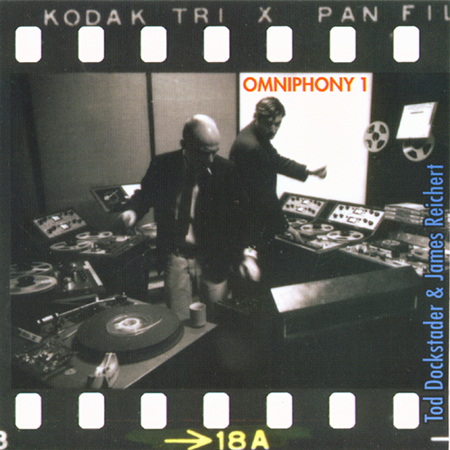
„Omniphony 1“ ist die Neuauflage der gleichnamigen, 1966 auf OWL Records erschienenen LP. 1963 komponierte Tod Dockstader eine Reihe von Tonbandstücken, „cells“, bestehend aus natürlichen Klangquellen (Glocken, menschliche Stimmen etc.) und elektronischen Klängen (z.B. Oszillatoren). Der Filmkomponist James Reichert (1932 ¬ 1995) entwarf, der Klangintention der „cells“ entsprechende Orchesterstücke, sogenannte „inparts“, die anschließend nochmals durch Filter und Ringmodulatoren gejagt wurden, um den instrumentalen Klangumfang und die Dynamiken zu verändern. Die
anschließende Re-Komposition zeitigte ein sehr homogen angelegtes Ergebnis, das auch heute noch in Erstaunen versetzt. Elekronisches umschwirrt reißend und manchmal ein bischen frech die moog-manipulierten Bläsergruppen. Ständige Wechsel der Dynamik verwirren die Fäden der Klänge so weit, dass Elektronik und konkreter Instrumentalklang jeweils mit der Sprache des anderen zu sprechen scheinen. So wirken manche Stellen glatt wahnwitzig: wenn die kammermusikalischen „inparts“ im Zusammenspiel mit Dockstaders
prä-Industrial-elektronischen „cells“ eher Hollywood denn Donau-Eschingen beschwören, werden Bereiche des Grotesken befühlt. Das ist nicht schlimm, sondern erzählt vielmehr von der Besessenheit mit der echte Freaks am Werke waren, um in einem Jahr 100.000 Fuß an Tapematerial zu bearbeiten. Als Bonusmaterial gibt es Dockstaders „Study no.7“ (1961) in einer Stereoversion, sowie seine dringliche „Past prelude“ von 1990. //
„Omniphony 1“ is the rerelease of the OWL-LP from 1966. In 1963, Tod Dockstader composed a set of taped sounds which he called „cells“ consisting of natural sounds (bells, wind, voice) and electronically sounds (as from oscillators, recording circuitry, etc.). James Reichert (1932 ¬ 1995) composed a series of orchestrated parts which were based upon the sound intention of Dockstader’s „cells“. Those „inparts“ were transmuted using R.A. Moog music processing equipment to change the instrumental ranges and dynamics. With the following re-composition they produced a very homogeneous result wich is today still amazing. Electronically sounds pungent and sometimes a kind of saucy are flowing through a moog-manipulated brass group. The permanent changing of dynamics entangles the sounds. It seems that electronic and concrete instruments have particular swapped their very own sound. So some parts might have a strange atmosphere: when the chamber music -like „inparts“ together with Dockstader’s prä-industrial-electronically „cells“ evoke Hollywood more than Donau-Eschingen it is getting grotesque. But it is cool, because it tells from the truly obsessive fashion of two music freaks who edited and mixed down over 100.000 feet oftapes for that release. Further bonus tracks are Dockstader’s „study no.7“ (1961) in a stereo version and his „past prelude“ from 1990." [Peter Schlewinski for Drone Records]
"In the early 1960's Tod Dockstader was a young maverick composer of electronic 'organised sound', and James Reichert a film composer and music supervisor. They met in New York in 1963, and launched one of the most extraordinary collaborations in modern music, a unique attempt to integrate electronic sounds and the classical orchestra. Unlike Varese's Deserts, and Stockhausen's Kontakte, it does not merely have the orchestra play along with a tape, or even process orchestral sounds live. What makes this project unique is that the orchestra was transformed by electronic processes at a fundamental level, and organically fused with the purely electronic sounds. The completed work is a bizarre blend of Dockstader's fundamentally intuitive approach to sound, and Reichert's more conservatoire-based feeling for melody and orchestration. It often sounds like an unlikely collaboration between Stravinsky and Frank Zappa in avant garde mode, or Stockhausen and his alter-egos, Stock, Hausen and Walkman. Its not simply an important historical document, but an intriguing and entirely convincing listen; a truly extraordinary combination of electronic and orchestral textures, in which the orchestra seems to have been drenched in Technicolor, and dragged through a cartoon sound studio." [label
info]
anschließende Re-Komposition zeitigte ein sehr homogen angelegtes Ergebnis, das auch heute noch in Erstaunen versetzt. Elekronisches umschwirrt reißend und manchmal ein bischen frech die moog-manipulierten Bläsergruppen. Ständige Wechsel der Dynamik verwirren die Fäden der Klänge so weit, dass Elektronik und konkreter Instrumentalklang jeweils mit der Sprache des anderen zu sprechen scheinen. So wirken manche Stellen glatt wahnwitzig: wenn die kammermusikalischen „inparts“ im Zusammenspiel mit Dockstaders
prä-Industrial-elektronischen „cells“ eher Hollywood denn Donau-Eschingen beschwören, werden Bereiche des Grotesken befühlt. Das ist nicht schlimm, sondern erzählt vielmehr von der Besessenheit mit der echte Freaks am Werke waren, um in einem Jahr 100.000 Fuß an Tapematerial zu bearbeiten. Als Bonusmaterial gibt es Dockstaders „Study no.7“ (1961) in einer Stereoversion, sowie seine dringliche „Past prelude“ von 1990. //
„Omniphony 1“ is the rerelease of the OWL-LP from 1966. In 1963, Tod Dockstader composed a set of taped sounds which he called „cells“ consisting of natural sounds (bells, wind, voice) and electronically sounds (as from oscillators, recording circuitry, etc.). James Reichert (1932 ¬ 1995) composed a series of orchestrated parts which were based upon the sound intention of Dockstader’s „cells“. Those „inparts“ were transmuted using R.A. Moog music processing equipment to change the instrumental ranges and dynamics. With the following re-composition they produced a very homogeneous result wich is today still amazing. Electronically sounds pungent and sometimes a kind of saucy are flowing through a moog-manipulated brass group. The permanent changing of dynamics entangles the sounds. It seems that electronic and concrete instruments have particular swapped their very own sound. So some parts might have a strange atmosphere: when the chamber music -like „inparts“ together with Dockstader’s prä-industrial-electronically „cells“ evoke Hollywood more than Donau-Eschingen it is getting grotesque. But it is cool, because it tells from the truly obsessive fashion of two music freaks who edited and mixed down over 100.000 feet oftapes for that release. Further bonus tracks are Dockstader’s „study no.7“ (1961) in a stereo version and his „past prelude“ from 1990." [Peter Schlewinski for Drone Records]
"In the early 1960's Tod Dockstader was a young maverick composer of electronic 'organised sound', and James Reichert a film composer and music supervisor. They met in New York in 1963, and launched one of the most extraordinary collaborations in modern music, a unique attempt to integrate electronic sounds and the classical orchestra. Unlike Varese's Deserts, and Stockhausen's Kontakte, it does not merely have the orchestra play along with a tape, or even process orchestral sounds live. What makes this project unique is that the orchestra was transformed by electronic processes at a fundamental level, and organically fused with the purely electronic sounds. The completed work is a bizarre blend of Dockstader's fundamentally intuitive approach to sound, and Reichert's more conservatoire-based feeling for melody and orchestration. It often sounds like an unlikely collaboration between Stravinsky and Frank Zappa in avant garde mode, or Stockhausen and his alter-egos, Stock, Hausen and Walkman. Its not simply an important historical document, but an intriguing and entirely convincing listen; a truly extraordinary combination of electronic and orchestral textures, in which the orchestra seems to have been drenched in Technicolor, and dragged through a cartoon sound studio." [label
info]