

RLW — Fading Pictures

More Info
New release on Black Rose Recordings. This is a cinematic and inspiring musical journey which combines beautiful ambience interspersed with haunting atmospheres and electro-acoustic soundscapes.
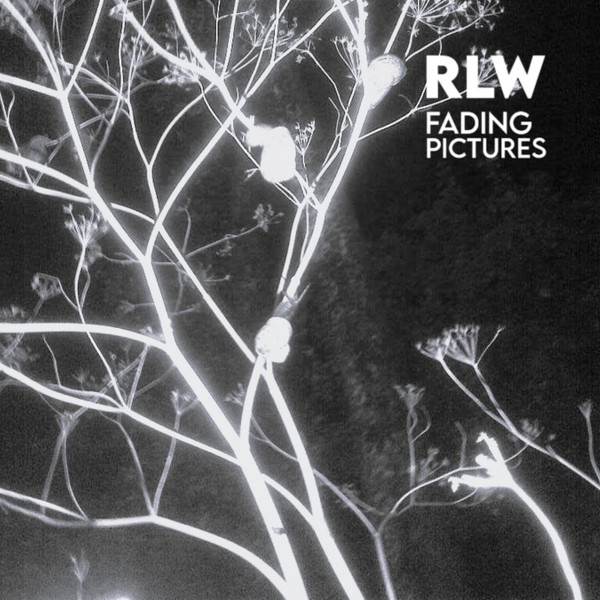
Comes with great artwork by Chris Low.
Electroacoustic music and the concept of cinema d'oreilles have always had a close relationship. From Walter Ruttmann’s Weekend (1939) to Jerome Noetinger's series of MCD releases of the same name (Metamkine, 1992 - 2002), right through to the present day. It is important to note that electroacoustic music is not programme music, but autonomous: it does not condition the listener's imagination to a film score (as most film music does) but opens paths for the listener's own ideas and projections. The listener is encouraged to develop their own creativity; it is not about manipulating his ideas in predetermined ways. The compositions on this CD and their sequence offer the opportunity for free associations, their titles can serve as clues or be ignored, and pure musical listening is also possible: ... pictures might be fading. Or not. It's up to you.
Ralf Wehowsky is one of the most respected electronic composers of our day and was one of the founder members of the seminal German group P16.D4 and the label Selektion, whose ground-breaking releases influenced many working in today’s experimental music scene. Previous releases have seen him collaborate with such well known and diverse artists such as Merzbow, Bernhard Guenter, Jim O’Rourke, Achim Wollscheid and Lionel Marchetti. His music is impossible to pigeonhole into one simple bracket. It is neither industrial or musique concrete, nor computer music nor improvisation.
~~~~~~~~~~~~~~~~~~~~~~
"It appears that with Black Rose Recordings, Ralf Wehowsky, better known as RLW, has found a steady home for releasing his music. It seems there aren't as many as there were years ago, for reasons I am unaware of. I believe liner notes for his work are pretty rare, although they have become less uncommon with recent releases. On the cover of 'Fading Pictures', RLW writes about electroacoustic music, describing it as cinema for the ears and explaining how it differs from program music, as understood in the classical sense of the term. You write a symphonic poem, called 'The Moldau', and listeners see the flow of the river from a small creek ending in the black sea. The opposite of this is absolute music, even when RLW doesn't mention this word. Francisco Lopez's 'untitled' compositions are a radical, contemporary example of this. The listener is free to develop any narrative here, any picture and is even encouraged to fiddle with the frequency range and alter the work further.
Furthermore, writes RLW, electronic instruments were once the playground for individual ideas, but these days, for standardisation: autotune, quantisation, and AI to recreate your favourite artists. "Therefore, common virtual instruments are used for fading pictures. Although the effort required to 'brush against the grain' is considerable, aesthetically it is comparable to the remodelling of conventional electric instruments in post-punk of unusual instrumental playing styles in free and new and therefore worth the effort". I am unsure what this means, which is a pity as it explains, I think, the title of the CD. Does RLW use virtual electronic instruments? As he says, the listener is free to have any associations, and titles are merely suggestions or clues to be disregarded. We can listen to this as purely musical pleasure. I go for that last option, because, to be honest, that's what I do most of the time. I admit I don't play as much of RLW's back catalogue as I probably should (but the future looks bright in that respect), I always play his releases with much interest, as, regardless of what he's using, it always sounds compelling. There are feedback-like sounds in the opening piece, 'ertraeumtes intro, vorzeitig abgebrochen', a reminder of the early days of musique concrète, but also recordings of stringed instruments, played with bows, played in a somewhat improvised way, but hacked into fine little pieces, edited and served as the next course in this fine dinner. Between these ends, the pure electronic sounds and the improvised recordings, all extensively processed, is where we find RLW at work. Sometimes loud, sometimes quiet, with lots of dynamics, and an extreme eye for detail. I am the kind of listener who sees no images with this kind of music, but I enjoy it on a purely musical level. This is a highly diverse and excellent work." [FdW / Vital Weekly]
~~~~~~~~~~~~~~~~~~~~~~~~~~~~~~~~~~~~
"Zuletzt hatte uns rlw (bürgerlich Ralf Wehowsky – vor vielen Jahren bei P16.D4 aktiv und seitdem auf zahlreichen Veröffentlichungen als kaum kategorisierbarer Geräuschmusiker aktiv – auf diesen Seiten mit seinem Album „Satanic Inventions“ begeistert. Nun erscheint – wieder auf Stephen Meixners Label Black Rose Recordings – mit „Fading Pictures“ ein ebenso konzeptionell dichtes Album.
Wehowsky beschreibt in den Linernotes die enge Verbindung zwischen Elektroakustik und dem Cinéma L’Oreille. Dabei versteht er elektroakustische Musik als „autonome“ Musik – nicht als „Programmmusik“, also nicht als Mittel zum Zweck. Viel eher sollen die einzelnen Stücke des Albums beim Hörer Raum für freie Assoziationen lassen, man soll seine eigene „Kreativität“ entwickeln. Die Titel der insgesamt neun Stücke können, müssen dem Hörenden aber nicht unbedingt Deutungshinweise geben, dürfen also ebenso ignoriert werden.
Der erste Track „erträumtes intro, vorzeitig abgebrochen“ beginnt mit hochfrequentem Fiepen, kristallinen Sounds, dazu dann Brummen und unruhige Passagen. Der Neologismus „vorzimmern # 1“ beschreibt ein Stück, von dem mein jüngster Sohn meinte, es klinge, als würde eine Platte mit einer Gabel „verquietscht“, die Sounds wirken wie zerhäckselt. Dagegen ist „absurdes bekanntes # 1“ wesentlich dunkler: Es ertönen an Streicher erinnernde Klänge, denen durchaus ein Moment des Bedrohlichen innewohnt. Im weiteren Verlauf des Stücks meint man, bearbeitete klagende Stimmen zu hören. Das ist vielleicht ein Chor aus Schmerzen. Diese Stimmung wird bedingt auf „absurdes bekanntes # 2“ mit fast schon leiernden Sounds fortgesetzt. Verglichen mit diesem sehr dichten und verdichteten Stück ist „schein-kristall # 1“ reduzierter und klingt so, als werde vereinzelt auf Metall geschlagen, als erklinge eine Glocke in einem Kloster. Der Track „vorzimmern # 2“ dröhnt, während „absurdes bekanntes # 3“ von Streichern durchzogen ist und sich zu einem dissonanten Monster steigert. Tönt ein Saxophon? Der vorletzte Track „schein-kristall # 2“ ist wieder etwas minimalistischer, erinnert kurzzeitig an ElpHs „Worship The Glitch“-Album, bevor das Album mit „offenes ende, vorzeitig abgebrochen“ und dunklen Cellopassagen und Stimmen endet.
Das Label spricht von „haunting atmospheres“ (das von Chris Low designte Artwork scheint das insbesondere auf der Rückseite zu unterstreichen) und das ist durchaus das richtige Attribut für diese Stücke, die immer auch etwas im positiven Sinne Verstörendes haben, wobei man das auch so verstehen kann, dass Konventionen gestört werden." [MG / African Paper]
Comes with great artwork by Chris Low.
Electroacoustic music and the concept of cinema d'oreilles have always had a close relationship. From Walter Ruttmann’s Weekend (1939) to Jerome Noetinger's series of MCD releases of the same name (Metamkine, 1992 - 2002), right through to the present day. It is important to note that electroacoustic music is not programme music, but autonomous: it does not condition the listener's imagination to a film score (as most film music does) but opens paths for the listener's own ideas and projections. The listener is encouraged to develop their own creativity; it is not about manipulating his ideas in predetermined ways. The compositions on this CD and their sequence offer the opportunity for free associations, their titles can serve as clues or be ignored, and pure musical listening is also possible: ... pictures might be fading. Or not. It's up to you.
Ralf Wehowsky is one of the most respected electronic composers of our day and was one of the founder members of the seminal German group P16.D4 and the label Selektion, whose ground-breaking releases influenced many working in today’s experimental music scene. Previous releases have seen him collaborate with such well known and diverse artists such as Merzbow, Bernhard Guenter, Jim O’Rourke, Achim Wollscheid and Lionel Marchetti. His music is impossible to pigeonhole into one simple bracket. It is neither industrial or musique concrete, nor computer music nor improvisation.
~~~~~~~~~~~~~~~~~~~~~~
"It appears that with Black Rose Recordings, Ralf Wehowsky, better known as RLW, has found a steady home for releasing his music. It seems there aren't as many as there were years ago, for reasons I am unaware of. I believe liner notes for his work are pretty rare, although they have become less uncommon with recent releases. On the cover of 'Fading Pictures', RLW writes about electroacoustic music, describing it as cinema for the ears and explaining how it differs from program music, as understood in the classical sense of the term. You write a symphonic poem, called 'The Moldau', and listeners see the flow of the river from a small creek ending in the black sea. The opposite of this is absolute music, even when RLW doesn't mention this word. Francisco Lopez's 'untitled' compositions are a radical, contemporary example of this. The listener is free to develop any narrative here, any picture and is even encouraged to fiddle with the frequency range and alter the work further.
Furthermore, writes RLW, electronic instruments were once the playground for individual ideas, but these days, for standardisation: autotune, quantisation, and AI to recreate your favourite artists. "Therefore, common virtual instruments are used for fading pictures. Although the effort required to 'brush against the grain' is considerable, aesthetically it is comparable to the remodelling of conventional electric instruments in post-punk of unusual instrumental playing styles in free and new and therefore worth the effort". I am unsure what this means, which is a pity as it explains, I think, the title of the CD. Does RLW use virtual electronic instruments? As he says, the listener is free to have any associations, and titles are merely suggestions or clues to be disregarded. We can listen to this as purely musical pleasure. I go for that last option, because, to be honest, that's what I do most of the time. I admit I don't play as much of RLW's back catalogue as I probably should (but the future looks bright in that respect), I always play his releases with much interest, as, regardless of what he's using, it always sounds compelling. There are feedback-like sounds in the opening piece, 'ertraeumtes intro, vorzeitig abgebrochen', a reminder of the early days of musique concrète, but also recordings of stringed instruments, played with bows, played in a somewhat improvised way, but hacked into fine little pieces, edited and served as the next course in this fine dinner. Between these ends, the pure electronic sounds and the improvised recordings, all extensively processed, is where we find RLW at work. Sometimes loud, sometimes quiet, with lots of dynamics, and an extreme eye for detail. I am the kind of listener who sees no images with this kind of music, but I enjoy it on a purely musical level. This is a highly diverse and excellent work." [FdW / Vital Weekly]
~~~~~~~~~~~~~~~~~~~~~~~~~~~~~~~~~~~~
"Zuletzt hatte uns rlw (bürgerlich Ralf Wehowsky – vor vielen Jahren bei P16.D4 aktiv und seitdem auf zahlreichen Veröffentlichungen als kaum kategorisierbarer Geräuschmusiker aktiv – auf diesen Seiten mit seinem Album „Satanic Inventions“ begeistert. Nun erscheint – wieder auf Stephen Meixners Label Black Rose Recordings – mit „Fading Pictures“ ein ebenso konzeptionell dichtes Album.
Wehowsky beschreibt in den Linernotes die enge Verbindung zwischen Elektroakustik und dem Cinéma L’Oreille. Dabei versteht er elektroakustische Musik als „autonome“ Musik – nicht als „Programmmusik“, also nicht als Mittel zum Zweck. Viel eher sollen die einzelnen Stücke des Albums beim Hörer Raum für freie Assoziationen lassen, man soll seine eigene „Kreativität“ entwickeln. Die Titel der insgesamt neun Stücke können, müssen dem Hörenden aber nicht unbedingt Deutungshinweise geben, dürfen also ebenso ignoriert werden.
Der erste Track „erträumtes intro, vorzeitig abgebrochen“ beginnt mit hochfrequentem Fiepen, kristallinen Sounds, dazu dann Brummen und unruhige Passagen. Der Neologismus „vorzimmern # 1“ beschreibt ein Stück, von dem mein jüngster Sohn meinte, es klinge, als würde eine Platte mit einer Gabel „verquietscht“, die Sounds wirken wie zerhäckselt. Dagegen ist „absurdes bekanntes # 1“ wesentlich dunkler: Es ertönen an Streicher erinnernde Klänge, denen durchaus ein Moment des Bedrohlichen innewohnt. Im weiteren Verlauf des Stücks meint man, bearbeitete klagende Stimmen zu hören. Das ist vielleicht ein Chor aus Schmerzen. Diese Stimmung wird bedingt auf „absurdes bekanntes # 2“ mit fast schon leiernden Sounds fortgesetzt. Verglichen mit diesem sehr dichten und verdichteten Stück ist „schein-kristall # 1“ reduzierter und klingt so, als werde vereinzelt auf Metall geschlagen, als erklinge eine Glocke in einem Kloster. Der Track „vorzimmern # 2“ dröhnt, während „absurdes bekanntes # 3“ von Streichern durchzogen ist und sich zu einem dissonanten Monster steigert. Tönt ein Saxophon? Der vorletzte Track „schein-kristall # 2“ ist wieder etwas minimalistischer, erinnert kurzzeitig an ElpHs „Worship The Glitch“-Album, bevor das Album mit „offenes ende, vorzeitig abgebrochen“ und dunklen Cellopassagen und Stimmen endet.
Das Label spricht von „haunting atmospheres“ (das von Chris Low designte Artwork scheint das insbesondere auf der Rückseite zu unterstreichen) und das ist durchaus das richtige Attribut für diese Stücke, die immer auch etwas im positiven Sinne Verstörendes haben, wobei man das auch so verstehen kann, dass Konventionen gestört werden." [MG / African Paper]