

HECKER, TIM — No Highs
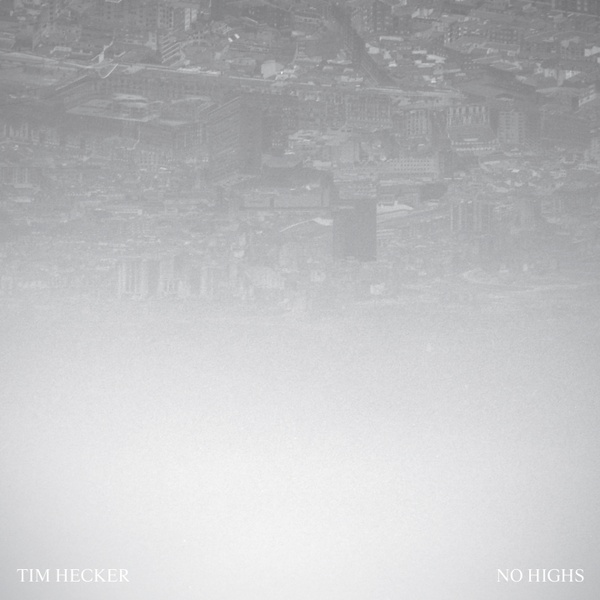

More Info
"The latest by Canadian composer Tim Hecker serves as a beacon of unease against the deluge of false positive corporate ambient currently in vogue. Whether taken as warning or promise, No Highs delivers -- this is music of austerity and ambiguity, purgatorial and seasick. A jagged anti-relaxant for our medicated age, rough-hewn and undefined. Morse code pulse programming flickers like distress signals while a gathering storm of strings, noise, and low-end looms in the distance. Processed electronics shiver and shudder against pitch-shifting assemblages of crackling voltage, mantric horns (including exquisite modal sax by Colin Stetson), and cathedral keys. Throughout, the pieces both accrue and avoid drama, more attuned to undertow than crescendo. Hecker mentions \'negation\' as a muse of sorts -- the sense of tumult without bombast, tethered ecstasies, an escape from escapism. His is an antagonism both brusque and beguiling, devoid of resolution, beckoning the listener ever deeper into its greyscale alchemies of magisterial disquiet.
https://timhecker.bandcamp.com/album/no-highs
#########################
The veteran ambient musician pushes back at the hollowing out of the form with a burly, physically imposing release peppered with moments of gentle beauty.
Ambient music is in crisis. Passive listening is no longer an alternative or fringe idea but the model on which the entire streaming industry is built. YouTube radio stations guarantee hours of chilled-out, challenge-free audio, and albums on Spotify fade into endless loops of sound-alikes. How to preserve the tradition of thoughtfully made ambient music in a market inundated with corporate-friendly fluff, or to convince listeners of the importance of artistic vision when an AI program can churn out a perfectly good drone? On No Highs, a self-described “beacon of unease against the deluge of false positive corporate ambient,” Tim Hecker gives his answer.
The Canadian musician’s first album in four years isn’t a grouchy get-off-my-lawn statement, nor is it an abrasive audience-thinner like Vladislav Delay’s Rakka. In fact, it’s less confrontational than a lot of Hecker’s albums, even ones that don’t seem intended to be difficult, like his recent experiments in Japanese gagaku music Konoyo and Anoyo. What No Highs argues for instead is the importance of a wizard behind the curtain. The album is strongest when it makes you aware of the artist’s invisible presence, standing behind the scenes and summoning thunder and lightning at will, playing the audience like the director of a good thriller.
The most satisfying passage comes less than two and a half minutes in. “Monotony” begins with one of the many Morse code-like, single-note sequencer patterns we’ll hear throughout. Atop that, Hecker creates a wilderness of sirens and street sweepers that begin to slow and morph into grand minor chords. Then—here is the moment—Hecker introduces the magisterial growl of a church organ, blowing the track’s low end wide open with vivid color and high drama. It’s a sound he’s used many times over, and it comes across here as a personal stamp, like Shinichi Atobe’s echoing piano or GAS’s kick drum. It’s his way of saying, You are listening to a Tim Hecker album, a reminder that this stuff couldn’t be made by just anyone.
No Highs can be physically discomforting to listen to, not because it’s particularly noisy or dissonant but because it seems to consciously resist syncing with the bodily rhythms of the listener. “In Your Mind” introduces a throbbing sequencer pattern in its first few seconds, but Hecker keeps slowing it down and speeding it up, fading it in out, preventing the brain from getting a foothold. Saxophonist Colin Stetson appears throughout the album, exhibiting his usual burly, physical approach to his instrument. As he commences his endless runs on “Monotony II,” the clack of his keys clear as day, the listener might actually find themselves contracting their lungs in sympathy with his gobstopping breath control. This music is not going to align with your chakras.
WATCH
The One Song Jeff Tweedy Wishes He Wrote
But No Highs can be beautiful in passing, and its last 10 minutes are devoted to two remarkable tracks that conjure the spirit of ambient’s early years. Mewling steel guitars make “Sense Suppression” a cousin of Daniel Lanois’ work on Brian Eno’s Apollo, a ghost of a country song drifting on the wind. “Living Spa Water,” meanwhile, is based on a metallic twinkle reminiscent of Laraaji’s zither, even if Hecker undergirds it with big synth blats that that gentle soul would probably find disquieting. These two tracks nod to ambient as a tradition—a noun rather than an adjective.
For a state-of-the-genre address like this to work, the music has to present a viable alternative to whatever it’s railing against, and the physicality of Hecker’s approach allows the music greater range and freedom than if it were merely trying to set a mood. But Hecker’s primary concern here appears to be staking out a certain patch of turf rather than experimenting or expanding the possibilities of his music, and he shies away from extremes. No Highs is muted in comparison to the Gothic grandeur of Harmony in Ultraviolet, the buffeting noise of Ravedeath, 1972, the thorny ruggedness of the underloved An Imaginary Country. But Hecker’s title seems to already anticipate this criticism, and No Highs ultimately works as an example of what ambient music can be, rather than a suggestion of where it might go.
[ Daniel Bromfield / Pitchfork ]
https://timhecker.bandcamp.com/album/no-highs
#########################
The veteran ambient musician pushes back at the hollowing out of the form with a burly, physically imposing release peppered with moments of gentle beauty.
Ambient music is in crisis. Passive listening is no longer an alternative or fringe idea but the model on which the entire streaming industry is built. YouTube radio stations guarantee hours of chilled-out, challenge-free audio, and albums on Spotify fade into endless loops of sound-alikes. How to preserve the tradition of thoughtfully made ambient music in a market inundated with corporate-friendly fluff, or to convince listeners of the importance of artistic vision when an AI program can churn out a perfectly good drone? On No Highs, a self-described “beacon of unease against the deluge of false positive corporate ambient,” Tim Hecker gives his answer.
The Canadian musician’s first album in four years isn’t a grouchy get-off-my-lawn statement, nor is it an abrasive audience-thinner like Vladislav Delay’s Rakka. In fact, it’s less confrontational than a lot of Hecker’s albums, even ones that don’t seem intended to be difficult, like his recent experiments in Japanese gagaku music Konoyo and Anoyo. What No Highs argues for instead is the importance of a wizard behind the curtain. The album is strongest when it makes you aware of the artist’s invisible presence, standing behind the scenes and summoning thunder and lightning at will, playing the audience like the director of a good thriller.
The most satisfying passage comes less than two and a half minutes in. “Monotony” begins with one of the many Morse code-like, single-note sequencer patterns we’ll hear throughout. Atop that, Hecker creates a wilderness of sirens and street sweepers that begin to slow and morph into grand minor chords. Then—here is the moment—Hecker introduces the magisterial growl of a church organ, blowing the track’s low end wide open with vivid color and high drama. It’s a sound he’s used many times over, and it comes across here as a personal stamp, like Shinichi Atobe’s echoing piano or GAS’s kick drum. It’s his way of saying, You are listening to a Tim Hecker album, a reminder that this stuff couldn’t be made by just anyone.
No Highs can be physically discomforting to listen to, not because it’s particularly noisy or dissonant but because it seems to consciously resist syncing with the bodily rhythms of the listener. “In Your Mind” introduces a throbbing sequencer pattern in its first few seconds, but Hecker keeps slowing it down and speeding it up, fading it in out, preventing the brain from getting a foothold. Saxophonist Colin Stetson appears throughout the album, exhibiting his usual burly, physical approach to his instrument. As he commences his endless runs on “Monotony II,” the clack of his keys clear as day, the listener might actually find themselves contracting their lungs in sympathy with his gobstopping breath control. This music is not going to align with your chakras.
WATCH
The One Song Jeff Tweedy Wishes He Wrote
But No Highs can be beautiful in passing, and its last 10 minutes are devoted to two remarkable tracks that conjure the spirit of ambient’s early years. Mewling steel guitars make “Sense Suppression” a cousin of Daniel Lanois’ work on Brian Eno’s Apollo, a ghost of a country song drifting on the wind. “Living Spa Water,” meanwhile, is based on a metallic twinkle reminiscent of Laraaji’s zither, even if Hecker undergirds it with big synth blats that that gentle soul would probably find disquieting. These two tracks nod to ambient as a tradition—a noun rather than an adjective.
For a state-of-the-genre address like this to work, the music has to present a viable alternative to whatever it’s railing against, and the physicality of Hecker’s approach allows the music greater range and freedom than if it were merely trying to set a mood. But Hecker’s primary concern here appears to be staking out a certain patch of turf rather than experimenting or expanding the possibilities of his music, and he shies away from extremes. No Highs is muted in comparison to the Gothic grandeur of Harmony in Ultraviolet, the buffeting noise of Ravedeath, 1972, the thorny ruggedness of the underloved An Imaginary Country. But Hecker’s title seems to already anticipate this criticism, and No Highs ultimately works as an example of what ambient music can be, rather than a suggestion of where it might go.
[ Daniel Bromfield / Pitchfork ]