

BIOTA — Fragment for Balance
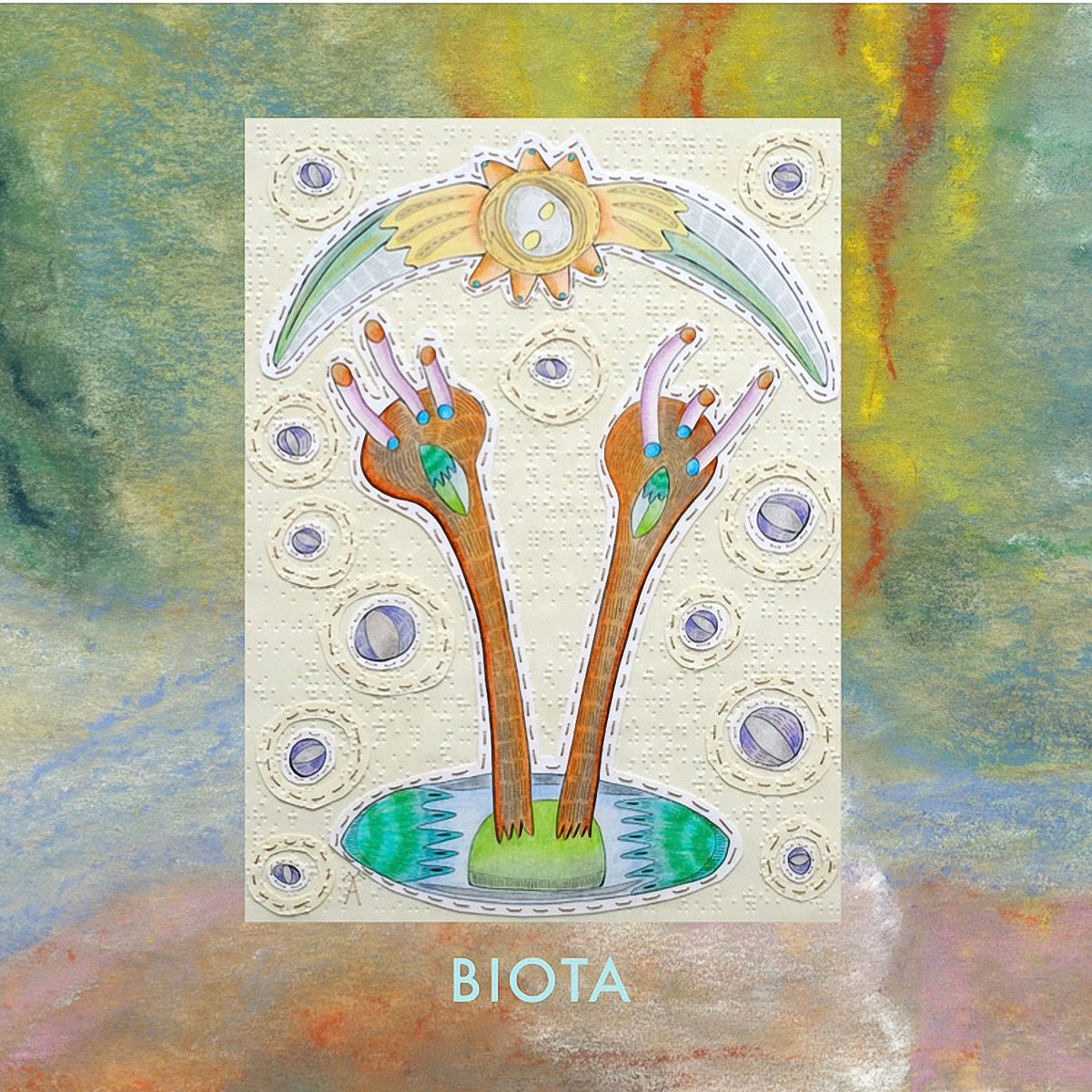

More Info
After 4 years of work on their 11th release for ReR, this extraordinary, reclusive, and highly individual audio-visual collective continues to evolve through the painstaking accumulation and disposition of a seemingly incompatible range of both exotic and familiar musical languages, instruments, techniques and studio manipulations into one of the few genuinely original bands at work today. It took a long time to refine their unique process of composition to this level of ambiguity and depth and newcomers will wonder how they strayed so far from orthodoxy and yet managed to retain a lucidity and transparency that is quite rare in contemporary music. Timeless, almost weightless - yet teeming with life, motion and complexity - this is a music that suggests an untroubled world in which nostalgia, tragedy and agon, while rudely present, remain subservient to deeper, calmer currents. Sic transit gloria mundi.
The bullet points are that Biota is a unique project, defying genre with, like all such cult artists, a small but extremely dedicated public that, over the last 15 years has grown continuously as new listeners discover them.
BIOTA
Founded in Colorado in the late 1970s, Biota's first recordings were released under the name of the Mnemonist Orchestra who, between 1980 and 1984, released five albums on its own label, before linking up with ReR in 1984. That was also the year in which they split into an independent visual arts collective - retaining the Mnemonist name - and the recording project, Biota. Since then, their releases have presented the work of both groups in tandem.
http://biotamusic.com/
https://biota.bandcamp.com/album/fragment-for-balance
"Für ihren 11ten bei Recommended Records (oder ReR Megacorp) veröffentlichen Tonträger (EP, LP oder CD) haben sich Biota aus Fort Collins in Colorado wieder etwas mehr Zeit gelassen. Nachdem 2014 "Funnel to a Thread" erschienen war, legte man erst einmal eine längere Pause ein, um dann vom Frühjahr 2016 bis in den Herbst 2018 hinein das neue Album einzuspielen. Das Ergebnis - "Fragment for Balance" - wurde schließlich im Frühling 2019 veröffentlicht. Das Album kommt in einem bunten Digipack, versehen mit einem dicken Beiheft voller expressionistisch-tiefsinniger Bilderwerke. Die ersten 150 Exemplare beinhalten - wenn man direkt beim Label bestellt - zudem einen kleinen Pappschuber, in dem ein originale, von Tom Katsimpalis gestaltete Bildcollage steckt. Sehr edel!
Offenhörlich haben Biota ihren Stil gefunden, bewegt sich doch die auf "Fragment for Balance" zu findende Musik in sehr ähnlichen Gefilden, wie die des direkten Vorgängers. Die Besetzung ist zudem identisch. Allerdings scheint mir "Fragment for Balance" etwas homogener und klangvoller voran zu fließen.
Eine recht eigenartige folkig-elektronische Kammermusik gibt es auf "Fragment for Balance" zu hören, oder einen seltsamen elektronisch-kammermusikalischen Avant-Folk, bestimmt von filigranem Akustikgitarrengeschrammel, Violinenklängen, allerlei Blaswerk, analog-elektronischen Tastensounds, Piano, Harmonium, Akkordeon und diverser Perkussion. Deren Tonerzeugnisse werden (teilweise effektverfremdet) mit verschiedensten Elektronikgebilden, komplexen Tonskulpturen und prozessierten Klangfragmenten unterlegt, bzw. von diesen verwoben, so dass sich das Album als lange und vielteilige, elektronisch-akustische Suite voran arbeitet, bei der die einzelnen Nummern ineinander übergehen. Über all dem schwebt Kristianne Gales wunderbarer, gälisch-folkiger und ätherisch-luftiger Gesang.
Im Vergleich zu früheren Alben, insbesondere denen aus den 80er- und 90er-Jahren des letzten Jahrhunderts, ist die rezentere Musik von Biota eher ruhig, fast sanft gehalten, wobei dieselbe immer ausgesprochen unkonventionell dahin gleitet. Dies trifft auch auf "Fragment for Balance" zu, welches stilistisch Folk, experimentelle Elektronik, moderne Kammermusik und eine Art von Avantrock zu einem dichten, sehr homogenen und seltsam gewichtslosen Ganzen vereinigt. Sorgfältig geplant und komponiert arbeitet sich die Musik voran, dissonant aber friedlich, gleichzeitig erstaunlich harmonisch, rund und vertraut, dann aber wieder sperrig und ausgesprochen fremdartig. E-Gitarre, Bass und Schlagzeug sorgen dafür, dass es immer mal wieder rockt, doch arbeitet sich der Großteil der Musik eher formlos voran, ohne aber auf Struktur und Zielstrebigkeit zu verzichten. Momente unglaublicher, fast absurder Schönheit wechseln sich mit schrägem Plingen und Hallen ab, mit voluminös-symphonischen Tonschüben, wolkigen Klanggebilden, akustisch-kammermusikalischen Abschnitten, dynamischen RIO-Prog-Momentaufnahmen, repetitiv-minimalistischen Exkursen und wirren Tondurcheinandern.
Chris Cutler bezeichnet Biota als eine der 'few genuinely original bands at work today', und dem möchte ich durchaus zustimmen. So wie Biota klingt derzeit keine andere Band auf dieser Welt. Wer progressive Musik in einem folkig-elektronisch-freiformatigen Kontext schätzt, der sollte "Fragment for Balance" (und "Funnel to a Thread") kennen." [Achim Breiling / Babyblaue Seiten]
"As obvious as this may sound, the years run way faster as one grows older. When Biota announced the release of Fragment For Balance, my delight in receiving a new bulletin from the collective “after not so long” was soon replaced by the mild shock of realizing that their previous outing Funnel To A Thread had been published in 2014. I wasn’t paying attention to all those months flying away (to paraphrase another title from the group’s discography).
Even worse, this period was rendered heavier by two major losses in Biota’s universe. In 2015, visual artist Joy Ann Froding left this planet following the successful surfing of an ocean wave; in 2018, multi-instrumentalist Charles “Chuck” O’Meara (formerly Vrtacek) suffered a heart attack while he was cutting wood to warm his winter. In the sadness, it is somewhat relieving to note the natural ambience of these occurrences, presuming that Froding and O’Meara were in a comfortable place inside when the call from nowhere came. The album is dedicated to them, and the artwork commemorating the pair on the accompanying booklet – a flower and a bird embedded in unique Mnemonists shades – nearly caused this writer’s tired eyes to well up. That ear-gracing piano inevitably puts the soul in “still here with us” mode; Chuck was, and forever will be, a certified Biot.
Every single snippet of the multitude of sketches, proposals and fully fledged visions represents a piece of fertile ground for sensible roots. Yet the process of absorption doesn’t really happen through the listener’s mind, exploiting instead the most unconventional features of sympathetic resonance. There’s always been a touch of magic in William Sharp’s slight defacement of arrangement and equalization, be it a chiaroscuro of off-key echoes or the enhancement of quietly intertwining arpeggios. Throughout the 26 (!) consecutive tracks comprised by the program – duration from 0’38” to 9’48” – the achievement of a flawless amalgamation of tunings, melodic intelligibility and aural daydreaming remains at the core. The instruments shine brighter than ever, with particular regard to guitars (Tom Katsimpalis and Mark Piersel) and violin (David Zekman). They seem to trace coordinates and paths to places of blinding light amidst the hand-woven textural patchworks and gentle superimpositions informing the orchestration.
Apropos of that, flashes of enlightenment are born from the melting of a larger number of voices (including Kristianne Gale’s apparitions, a singing mermaid in a sea of wistful refractions). Keyboard constructions totally deprived of preset futility lie at the basis of revealing harmonic disseminations, Gordon Whitlow’s accordion and Hammond organ strengthening the sonic tissue with typical wisdom. Also notable is the role of Randy Miotke, his trumpet and flugelhorn supporting the contrapuntal constitution, and its various transmutations. Larry Wilson’s drums emerge in unexpected spots, attributing hues of temporal non-existence to otherwise regular rhythmic cells.
And so on and so forth, one would have to conclude. It’s been decades by now, yet attempting to describe the essences emanated by Biota’s garden still makes me feel stupid, or useless, or both. Nevertheless, the sensation of understanding a little morsel every time – of the music itself, of the fight against big-mouthed superficiality, of the painful impossibility of communicating with lesser levels of perception – is incomparable. In less than ten minutes, a track like “Walking Is Missing” teaches much more than the millions of words spewed by cretins most everywhere.
When that packet from Colorado materializes, my gradually greying beard doesn’t matter anymore. All it takes is sniffing the cover’s scent, observing once again the profound art of human beings who do not accept commands, or foolish indications, by anyone. And, of course, spinning the disc without putting the finger on the whys and the whos. Just intuiting the actual reasons of aliveness, and envisioning our future merging with the meaningful consequences of the acoustic laws.
Or, as good ol’ Chuck would have it, “learning to be silent”." [Massimo Ricci]
The bullet points are that Biota is a unique project, defying genre with, like all such cult artists, a small but extremely dedicated public that, over the last 15 years has grown continuously as new listeners discover them.
BIOTA
Founded in Colorado in the late 1970s, Biota's first recordings were released under the name of the Mnemonist Orchestra who, between 1980 and 1984, released five albums on its own label, before linking up with ReR in 1984. That was also the year in which they split into an independent visual arts collective - retaining the Mnemonist name - and the recording project, Biota. Since then, their releases have presented the work of both groups in tandem.
http://biotamusic.com/
https://biota.bandcamp.com/album/fragment-for-balance
"Für ihren 11ten bei Recommended Records (oder ReR Megacorp) veröffentlichen Tonträger (EP, LP oder CD) haben sich Biota aus Fort Collins in Colorado wieder etwas mehr Zeit gelassen. Nachdem 2014 "Funnel to a Thread" erschienen war, legte man erst einmal eine längere Pause ein, um dann vom Frühjahr 2016 bis in den Herbst 2018 hinein das neue Album einzuspielen. Das Ergebnis - "Fragment for Balance" - wurde schließlich im Frühling 2019 veröffentlicht. Das Album kommt in einem bunten Digipack, versehen mit einem dicken Beiheft voller expressionistisch-tiefsinniger Bilderwerke. Die ersten 150 Exemplare beinhalten - wenn man direkt beim Label bestellt - zudem einen kleinen Pappschuber, in dem ein originale, von Tom Katsimpalis gestaltete Bildcollage steckt. Sehr edel!
Offenhörlich haben Biota ihren Stil gefunden, bewegt sich doch die auf "Fragment for Balance" zu findende Musik in sehr ähnlichen Gefilden, wie die des direkten Vorgängers. Die Besetzung ist zudem identisch. Allerdings scheint mir "Fragment for Balance" etwas homogener und klangvoller voran zu fließen.
Eine recht eigenartige folkig-elektronische Kammermusik gibt es auf "Fragment for Balance" zu hören, oder einen seltsamen elektronisch-kammermusikalischen Avant-Folk, bestimmt von filigranem Akustikgitarrengeschrammel, Violinenklängen, allerlei Blaswerk, analog-elektronischen Tastensounds, Piano, Harmonium, Akkordeon und diverser Perkussion. Deren Tonerzeugnisse werden (teilweise effektverfremdet) mit verschiedensten Elektronikgebilden, komplexen Tonskulpturen und prozessierten Klangfragmenten unterlegt, bzw. von diesen verwoben, so dass sich das Album als lange und vielteilige, elektronisch-akustische Suite voran arbeitet, bei der die einzelnen Nummern ineinander übergehen. Über all dem schwebt Kristianne Gales wunderbarer, gälisch-folkiger und ätherisch-luftiger Gesang.
Im Vergleich zu früheren Alben, insbesondere denen aus den 80er- und 90er-Jahren des letzten Jahrhunderts, ist die rezentere Musik von Biota eher ruhig, fast sanft gehalten, wobei dieselbe immer ausgesprochen unkonventionell dahin gleitet. Dies trifft auch auf "Fragment for Balance" zu, welches stilistisch Folk, experimentelle Elektronik, moderne Kammermusik und eine Art von Avantrock zu einem dichten, sehr homogenen und seltsam gewichtslosen Ganzen vereinigt. Sorgfältig geplant und komponiert arbeitet sich die Musik voran, dissonant aber friedlich, gleichzeitig erstaunlich harmonisch, rund und vertraut, dann aber wieder sperrig und ausgesprochen fremdartig. E-Gitarre, Bass und Schlagzeug sorgen dafür, dass es immer mal wieder rockt, doch arbeitet sich der Großteil der Musik eher formlos voran, ohne aber auf Struktur und Zielstrebigkeit zu verzichten. Momente unglaublicher, fast absurder Schönheit wechseln sich mit schrägem Plingen und Hallen ab, mit voluminös-symphonischen Tonschüben, wolkigen Klanggebilden, akustisch-kammermusikalischen Abschnitten, dynamischen RIO-Prog-Momentaufnahmen, repetitiv-minimalistischen Exkursen und wirren Tondurcheinandern.
Chris Cutler bezeichnet Biota als eine der 'few genuinely original bands at work today', und dem möchte ich durchaus zustimmen. So wie Biota klingt derzeit keine andere Band auf dieser Welt. Wer progressive Musik in einem folkig-elektronisch-freiformatigen Kontext schätzt, der sollte "Fragment for Balance" (und "Funnel to a Thread") kennen." [Achim Breiling / Babyblaue Seiten]
"As obvious as this may sound, the years run way faster as one grows older. When Biota announced the release of Fragment For Balance, my delight in receiving a new bulletin from the collective “after not so long” was soon replaced by the mild shock of realizing that their previous outing Funnel To A Thread had been published in 2014. I wasn’t paying attention to all those months flying away (to paraphrase another title from the group’s discography).
Even worse, this period was rendered heavier by two major losses in Biota’s universe. In 2015, visual artist Joy Ann Froding left this planet following the successful surfing of an ocean wave; in 2018, multi-instrumentalist Charles “Chuck” O’Meara (formerly Vrtacek) suffered a heart attack while he was cutting wood to warm his winter. In the sadness, it is somewhat relieving to note the natural ambience of these occurrences, presuming that Froding and O’Meara were in a comfortable place inside when the call from nowhere came. The album is dedicated to them, and the artwork commemorating the pair on the accompanying booklet – a flower and a bird embedded in unique Mnemonists shades – nearly caused this writer’s tired eyes to well up. That ear-gracing piano inevitably puts the soul in “still here with us” mode; Chuck was, and forever will be, a certified Biot.
Every single snippet of the multitude of sketches, proposals and fully fledged visions represents a piece of fertile ground for sensible roots. Yet the process of absorption doesn’t really happen through the listener’s mind, exploiting instead the most unconventional features of sympathetic resonance. There’s always been a touch of magic in William Sharp’s slight defacement of arrangement and equalization, be it a chiaroscuro of off-key echoes or the enhancement of quietly intertwining arpeggios. Throughout the 26 (!) consecutive tracks comprised by the program – duration from 0’38” to 9’48” – the achievement of a flawless amalgamation of tunings, melodic intelligibility and aural daydreaming remains at the core. The instruments shine brighter than ever, with particular regard to guitars (Tom Katsimpalis and Mark Piersel) and violin (David Zekman). They seem to trace coordinates and paths to places of blinding light amidst the hand-woven textural patchworks and gentle superimpositions informing the orchestration.
Apropos of that, flashes of enlightenment are born from the melting of a larger number of voices (including Kristianne Gale’s apparitions, a singing mermaid in a sea of wistful refractions). Keyboard constructions totally deprived of preset futility lie at the basis of revealing harmonic disseminations, Gordon Whitlow’s accordion and Hammond organ strengthening the sonic tissue with typical wisdom. Also notable is the role of Randy Miotke, his trumpet and flugelhorn supporting the contrapuntal constitution, and its various transmutations. Larry Wilson’s drums emerge in unexpected spots, attributing hues of temporal non-existence to otherwise regular rhythmic cells.
And so on and so forth, one would have to conclude. It’s been decades by now, yet attempting to describe the essences emanated by Biota’s garden still makes me feel stupid, or useless, or both. Nevertheless, the sensation of understanding a little morsel every time – of the music itself, of the fight against big-mouthed superficiality, of the painful impossibility of communicating with lesser levels of perception – is incomparable. In less than ten minutes, a track like “Walking Is Missing” teaches much more than the millions of words spewed by cretins most everywhere.
When that packet from Colorado materializes, my gradually greying beard doesn’t matter anymore. All it takes is sniffing the cover’s scent, observing once again the profound art of human beings who do not accept commands, or foolish indications, by anyone. And, of course, spinning the disc without putting the finger on the whys and the whos. Just intuiting the actual reasons of aliveness, and envisioning our future merging with the meaningful consequences of the acoustic laws.
Or, as good ol’ Chuck would have it, “learning to be silent”." [Massimo Ricci]