

BIOTA — Funnel to a Thread
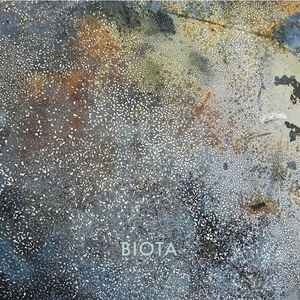

More Info
"Gut zwei Jahre nach „Cape Flyaway“ meldet sich das amerikanische Avant-Rock-Kollektiv BIOTA mit einem neuen Album zurück. „Funnel To A Thread“ erscheint als CD auf RER. Seit ihrer Gründung 1979 (unter dem Namen MNEMONIST ORCHESTRA, später MNEMONISTS) beglücken BIOTA ihre weltweite, treu ergebene Fan-Schar mit in unregelmäßigen Abständen erscheinenden Alben, die stets als Gesamtkunstwerke aus Musik und Artwork zu verstehen sind. So vielseitig wie die musikalischen Einflüsse ist auch das Instrumentarium der elfköpfigen Formation: elektrische und akustische Gitarren, Hammond-Orgel, Micromoog, Trompete, Geigen, Bass, Akkordeon, Klavier, Percussion und gelegentlich Gesang schichten sich zu frei fl ießenden, kollagenartigen Songs, wobei Folk-Elemente als Leitmotiv dienen. BIOTA kreieren ihre ganz eigene Musikform, in der Zeit als dauerhaftes Kontinuum erscheint und nicht als stringente Abfolge von Ereignissen - experimentelle Psychedelia der ganz besonderen Art.
Kristianne Gale: voice, strumstick; James Gardner: trumpet, kim; Tom Katsimpalis: electric, nylon, 12-string guitars, Crown bass, Clavioline, zither; Randy Miotke: Rhodes, trumpet, flutes; Charles O’Meara: piano; Mark Piersel: resophonic guitar, editing; William Sharp: mix, editing, electronic processing; Gordon Whitlow: Hammond electric & Estey pump organs, accordion, kaen, autoharp; Larry Wilson: kit drums, percussion, ranat, xylophone; Randy Yeates: Biomellodrone keyboard, Roland Space Echo; David Zekman: violin, mandolin, banjolin
Since the late 1970s Biota has ploughed its own furrow, producing a body of work that resembles nothing anyone else has done or is yet doing. Their compositions evolve in long, constantly shifting timbral blocks filled with fragments and echoes of quasi-familiar musical languages. They use instrumental resources bridging half a millennium and two thirds of the planet to create unique combinations of texture, colour and movement. It’s a music of constant flux, dissolving, re-forming and mutating without agitation or stress, where motion and stasis blend into a single ambiguous condition. And although it will never arrive, the path, with its simultaneous familiarity and strangeness has an eerie power to compel.
The recordings, as always from the Dys Studio, are meticulous and carefully constructed - the fused product of generation after generation of processing and mixing. There’s an almost Feldmanesque quality of necessity and unpredictabilty. The band now takes, on average, five years to prepare, record and finalise a new release. They’re in no hurry.
BIOTA
Founded in Colorado in the late 1970s, Biota's first recordings were released under the name of the Mnemonist Orchestra which, between 1980 and 1984, released five albums on its own label, before linking up with ReR in1984. That was also the year in which they split into an independent visual arts collective - which retained the Mnemonist name - and the recording project, Biota. Since which time, their releases have presented the work of both groups in tandem." [label info]
www.rermegacorp.com
"We should have known better. If Biota decide to come out with a new CD after “just” three years instead of leaving us to wait for the large part of a decade as always, the occurrence is presumably concealing specific implications. As if they were anxious of re-establishing a connection with preceding issues without losing the grip on the chain of circumstantial matters that originates the current visions.
So here we are, celebrating Funnel To A Thread as a foundational chapter in the collective’s history, possibly standing among their all-time best if such prosaicness makes sense. But maybe – just maybe – this will encourage at least a portion of the populations still shamefully unfamiliar with the subject to ultimately deepen it. Let me be straight. Someone as, say, The Residents have managed to reach cult status via marketable mysteries and a body of work which, in terms of musical depth, is mainly insignificant. What are Biota to do – besides producing beautiful, fulfilling, seriously groundbreaking albums accompanied by jaw-dropping artworks – to be formally welcomed in the elite of veritable contemporary innovators?
The connoisseur will never cease to fight against the ignorance surrounding this rewarding acoustic macrocosm. A place where past, present and future are literally embraced by the same kind of emotional reverberation. Where conscious species of listeners inevitably find answers to essential questions that appeared impossible to decode before. Where a concatenation of short episodes streaming without solution of continuity leads through a lifetime of intuitions that had been kept for ourselves to date, and now – at last – we can stamp as “right”, not really caring about sharing them. These people produce sounds that naturally regulate our synchronous response to a physical energy directly connected with what the trade brands as “cosmic vibe”, in spite of an external appearance often relating to finely aging forms of folk expression. How they manage to do this remains an enigma.
Twenty-one tracks conscientiously played and painstakingly assembled, rooted in clearly perceptible influences, morphing as clouds in an autumn sky. Katsimpalis and Piersel’s guitars are a conspicuously driving presence, textbooks of heartfelt arpeggios and bucolic phrases which made me consider the bygone existence of a John Fahey / Neil Young hybrid. Gale’s vocal shards appear suddenly to instantly run away, a grace too shy to be evaluated. Whitlow’s accordion scientifically places signposts of reassurance when things seem to turn towards a mild turbulence. Zekman’s violin tells of the inevitability of a goodbye, minus the tears. O’Meara’s pianistic interventions are simple and unresolved at once, magniloquence removed from the vocabulary. Sharp’s typically masterful hands and ears exalt details that usually stay unnoticed, the audio landscape disclosing a palette of ineffable amorphousness around precisely defined arrangements and spatializations, more than anywhere else in the band’s recorded output. Mixing skills that nobody knows, except those who smile instinctively hearing words like “Tumble” or “Tinct”. Favorites? Quite absurd to ask: a Biota album is, by definition, a whole movie. However, in truth there are scenes that linger on; were this writer forced to choose with a gun pointed at his temple, the transition between “Understory” and “Numberless Years” might liquefy a hardened heart at any given moment.
Biota is an entity that attributes fresh meanings to the concept of altruism, for this music is a richness for anybody willing to dive in. An unpretentious assertion of confidence surrounded by colors conveying humanity and nostalgia, with an unremitting focus on clever ways to distil sonic significance from the forthcoming." [Massimo Ricci / touching extremes]
Kristianne Gale: voice, strumstick; James Gardner: trumpet, kim; Tom Katsimpalis: electric, nylon, 12-string guitars, Crown bass, Clavioline, zither; Randy Miotke: Rhodes, trumpet, flutes; Charles O’Meara: piano; Mark Piersel: resophonic guitar, editing; William Sharp: mix, editing, electronic processing; Gordon Whitlow: Hammond electric & Estey pump organs, accordion, kaen, autoharp; Larry Wilson: kit drums, percussion, ranat, xylophone; Randy Yeates: Biomellodrone keyboard, Roland Space Echo; David Zekman: violin, mandolin, banjolin
Since the late 1970s Biota has ploughed its own furrow, producing a body of work that resembles nothing anyone else has done or is yet doing. Their compositions evolve in long, constantly shifting timbral blocks filled with fragments and echoes of quasi-familiar musical languages. They use instrumental resources bridging half a millennium and two thirds of the planet to create unique combinations of texture, colour and movement. It’s a music of constant flux, dissolving, re-forming and mutating without agitation or stress, where motion and stasis blend into a single ambiguous condition. And although it will never arrive, the path, with its simultaneous familiarity and strangeness has an eerie power to compel.
The recordings, as always from the Dys Studio, are meticulous and carefully constructed - the fused product of generation after generation of processing and mixing. There’s an almost Feldmanesque quality of necessity and unpredictabilty. The band now takes, on average, five years to prepare, record and finalise a new release. They’re in no hurry.
BIOTA
Founded in Colorado in the late 1970s, Biota's first recordings were released under the name of the Mnemonist Orchestra which, between 1980 and 1984, released five albums on its own label, before linking up with ReR in1984. That was also the year in which they split into an independent visual arts collective - which retained the Mnemonist name - and the recording project, Biota. Since which time, their releases have presented the work of both groups in tandem." [label info]
www.rermegacorp.com
"We should have known better. If Biota decide to come out with a new CD after “just” three years instead of leaving us to wait for the large part of a decade as always, the occurrence is presumably concealing specific implications. As if they were anxious of re-establishing a connection with preceding issues without losing the grip on the chain of circumstantial matters that originates the current visions.
So here we are, celebrating Funnel To A Thread as a foundational chapter in the collective’s history, possibly standing among their all-time best if such prosaicness makes sense. But maybe – just maybe – this will encourage at least a portion of the populations still shamefully unfamiliar with the subject to ultimately deepen it. Let me be straight. Someone as, say, The Residents have managed to reach cult status via marketable mysteries and a body of work which, in terms of musical depth, is mainly insignificant. What are Biota to do – besides producing beautiful, fulfilling, seriously groundbreaking albums accompanied by jaw-dropping artworks – to be formally welcomed in the elite of veritable contemporary innovators?
The connoisseur will never cease to fight against the ignorance surrounding this rewarding acoustic macrocosm. A place where past, present and future are literally embraced by the same kind of emotional reverberation. Where conscious species of listeners inevitably find answers to essential questions that appeared impossible to decode before. Where a concatenation of short episodes streaming without solution of continuity leads through a lifetime of intuitions that had been kept for ourselves to date, and now – at last – we can stamp as “right”, not really caring about sharing them. These people produce sounds that naturally regulate our synchronous response to a physical energy directly connected with what the trade brands as “cosmic vibe”, in spite of an external appearance often relating to finely aging forms of folk expression. How they manage to do this remains an enigma.
Twenty-one tracks conscientiously played and painstakingly assembled, rooted in clearly perceptible influences, morphing as clouds in an autumn sky. Katsimpalis and Piersel’s guitars are a conspicuously driving presence, textbooks of heartfelt arpeggios and bucolic phrases which made me consider the bygone existence of a John Fahey / Neil Young hybrid. Gale’s vocal shards appear suddenly to instantly run away, a grace too shy to be evaluated. Whitlow’s accordion scientifically places signposts of reassurance when things seem to turn towards a mild turbulence. Zekman’s violin tells of the inevitability of a goodbye, minus the tears. O’Meara’s pianistic interventions are simple and unresolved at once, magniloquence removed from the vocabulary. Sharp’s typically masterful hands and ears exalt details that usually stay unnoticed, the audio landscape disclosing a palette of ineffable amorphousness around precisely defined arrangements and spatializations, more than anywhere else in the band’s recorded output. Mixing skills that nobody knows, except those who smile instinctively hearing words like “Tumble” or “Tinct”. Favorites? Quite absurd to ask: a Biota album is, by definition, a whole movie. However, in truth there are scenes that linger on; were this writer forced to choose with a gun pointed at his temple, the transition between “Understory” and “Numberless Years” might liquefy a hardened heart at any given moment.
Biota is an entity that attributes fresh meanings to the concept of altruism, for this music is a richness for anybody willing to dive in. An unpretentious assertion of confidence surrounded by colors conveying humanity and nostalgia, with an unremitting focus on clever ways to distil sonic significance from the forthcoming." [Massimo Ricci / touching extremes]